

Image of 1948 Buick Special Series 40, Note: These illustrations use artistic license and may differ from actual historical models.
Performance Metrics
Fundamental Metrics
Emotional Appeal
MMP Rating
| Engine Specifications | |
|---|---|
| Engine Options: | Straight 8 |
| Displacement Range: | 248 cu in (4.1 L) |
| Horsepower Range: | 110 hp |
| Torque: | Estimated 200 lb-ft |
| Compression Ratio: | 6.6:1 |
| Ignition System: | Distributor and coil |
| Cooling System: | Liquid-cooled |
| Performance Specifications | |
| 0-60 Time: | Estimated 15 seconds |
| 1/4 Mile Time: | Not available |
| Top Speed: | 90 mph |
| Transmission and Drive | |
| Drive Type: | Rear-wheel drive |
| Transmission Type: | 3-speed manual |
| Fuel and Efficiency | |
| Fuel System Type: | Carburetor |
| MPG: | Estimated 15-20 mpg |
| Dimensions and Brakes | |
| Brakes: | Drum brakes |
| Wheelbase: | 124 inches |
| Weight: | 3,600 lbs |
Note: Specifications for classic cars are given to the best of our ability, considering the limited and variant data available.
1948 Buick Special Series 40: A Postwar Buick with Eight-Cylinder Confidence
The 1948 Buick Special Series 40 brought the comfort and presence of a full-size American car to Buick’s most accessible model line. Built by the Buick Motor Division of General Motors, it paired rounded postwar styling with a smooth straight-eight engine, making it a distinctive choice for families who wanted more than basic transportation.
The Special’s roots reach back to Buick’s prewar Series 40 cars. After wartime production shifted to military needs, Buick returned to civilian cars in 1945, and its late-1940s models carried familiar engineering into a country eager to buy new cars again. The 1948 Special was part of that transition: substantial, carefully trimmed, and powered by an eight-cylinder engine at a time when many more affordable cars relied on sixes.
One notable development arrived elsewhere in Buick’s 1948 lineup: the company introduced its Dynaflow automatic transmission on the premium Roadmaster. The Special did not share that headline feature in its first year, but the introduction signaled Buick’s growing focus on effortless, low-shift driving. The 1948 Special itself stayed closer to conventional mechanicals, with a three-speed manual transmission.
Exterior Styling: Rounded Fenders and Buick Chrome
The Special wears the smooth, rounded look that defined many immediate postwar cars. Its front fenders blend into the body rather than appearing as separate, sharply defined forms. A broad, bright grille gives the nose a confident face, while generous chrome trim, sculpted hood contours, and a prominent Buick grille emblem add polish without making the car look overly ornate.
From the side, the long hood and flowing fender lines create a substantial profile. The roofline varies by body style, from the upright four-door sedan to the more swept-back two-door Sedanette. Buick’s distinctive VentiPorts, the small fender openings that became a familiar marque signature, are associated with the 1949 redesign and should not be confused with the 1948 Special’s styling.
Factory paint choices varied by body style and production period. Period palettes included dark and medium tones such as black, blue, green, gray, and maroon, alongside lighter colors. Black and deep, saturated shades suit the car’s formal character particularly well, while lighter finishes show off the rounded bodywork. For a restoration, confirm the correct color against the car’s data and paint records rather than relying on a generic list.
Body Styles and Cabin Details
The Series 40 range included several body configurations, with availability varying across the model lineup. Buyers could find four-door sedans, two-door Sedanettes, business coupes, and convertibles. The Sedanette is one of the most recognizable versions, thanks to its sleek fastback roof, while the convertible combines the Special’s broad proportions with open-air motoring. Sedans were practical choices for family use.
Inside, the Special delivered a comfortable, well-finished environment rather than a stripped-down economy-car cabin. Depending on body style and equipment, upholstery could include cloth, patterned fabrics, or leather in open models. A broad dashboard, large analog gauges, a generous bench seat, and bright trim gave the interior a distinctly prewar-to-postwar American character. Materials and details can differ between cars today, especially after decades of repairs and retrimming, so inspect originality closely.
By modern standards, the equipment is straightforward. The driver gets a steering wheel, column-mounted gearshift, mechanical controls, and clear, easy-to-read instruments. Features such as a radio, heater, and upgraded trim were options or depended on the particular car. The overall emphasis was on space and comfort, not an abundance of electrical conveniences.
Engineering and Historical Significance
At the heart of the 1948 Special is Buick’s 248-cubic-inch (4.1-liter) overhead-valve inline-eight, rated at about 110 horsepower. Buick promoted its engines as “Fireball” powerplants, highlighting the company’s valve-in-head design. The engine’s long, smooth power delivery suited the Special’s role as a quiet, comfortable road car.
Power went through a conventional three-speed manual transmission to the rear wheels. Buick’s robust chassis and suspension were designed for American roads, including the imperfect surfaces common in the years immediately after the war. The Special was not a technological showpiece in the way the later Dynaflow-equipped Roadmaster could be, but it offered a refined eight-cylinder package in a lower-priced Buick series.
Its significance lies partly in that balance. The Special gave buyers a way into Buick ownership without stepping up to the larger, more expensive Super or Roadmaster. It also reflects a pivotal moment in U.S. automotive history: manufacturers were returning to civilian production, consumers had money to spend, and cars were once again becoming symbols of prosperity and personal freedom. The Special helped Buick serve that expanding postwar market.
Performance and Road Manners
Period performance figures vary with body style, gearing, condition, and testing method. As a useful general estimate, a healthy 1948 Special could reach roughly 80 to 85 mph, with a 0-to-60-mph time in the neighborhood of 18 to 20 seconds. Those numbers are estimates, not a promise for every surviving car. A modern example’s performance depends heavily on engine condition, compression, carburetion, and whether its drivetrain remains original.
The straight-eight is best understood as a relaxed cruising engine. It delivers power smoothly and quietly rather than with a sharp burst of acceleration. The three-speed manual requires deliberate shifting, and the car’s size and age call for a measured driving style. Braking, steering precision, and tire grip are also a world away from those of a contemporary sedan.
On a reasonably smooth road, the Special feels substantial and composed. Its suspension softens many bumps, though worn shocks, tired springs, or old tires can make a particular car float or wander. On winding roads, the long wheelbase and weight encourage steady, unhurried cornering rather than quick direction changes. Drivers should leave extra room for braking and take time to learn the car’s steering response.
Behind the wheel, the experience is as much about sound and sensation as speed: the low, even note of the inline-eight, the broad bench seat, the large steering wheel, and the rhythm of a manual gear change. It feels like a car built to cover distance in comfort, not to attack a tight bend.
Owning and Maintaining a 1948 Special
Today, most 1948 Specials are used for weekend drives, classic-car shows, tours, and occasional local errands. Some are carefully restored show cars; others remain honest drivers with older paint and mechanical updates. The model is not a natural choice for modern daily commuting, given its age, fuel consumption, braking capability, and lack of contemporary safety equipment.
Mechanical work is generally approachable for an owner with experience in older American cars. The engine and chassis use traditional technology, and many routine jobs can be completed with standard tools and a workshop manual. That does not make every repair simple: parts availability varies, engine work demands specialist knowledge, and trim, glass, interior pieces, and body panels can take time to source.
Before buying, inspect the frame and body for rust, particularly around floors, rocker panels, lower body seams, and trunk areas. Check the engine for oil pressure, smoke, overheating, and unusual noises. Test the transmission, brakes, steering, electrical system, and cooling system, and confirm that the car has a clear title. On an older car, evidence of sound maintenance is often more valuable than a shiny cosmetic restoration.
Buick Special Facts and Common Criticisms
The Special’s straight-eight is a defining feature: it gives the car a smooth, distinctive character that differs from the V8 sound many people associate with later American classics. The fastback Sedanette and open convertible are especially evocative body styles, while the four-door sedan shows the model’s practical, family-oriented side.
There are no widely recognized speed or endurance records associated specifically with the 1948 Special Series 40. Its importance is better measured through Buick’s postwar sales success and its place in the company’s model hierarchy. Exact production totals can be difficult to pin down across body styles and configurations, but a reasonable broad estimate for Series 40 production is around 190,000 to 220,000 cars. Treat that as an approximate range, not a definitive factory total.
Common criticisms are typical of large prewar-designed cars: leisurely acceleration, heavy controls compared with modern vehicles, modest fuel economy, and limited modern safety features. Rust and aging electrical or brake components can also turn an inexpensive project into a costly restoration. The best examples reward careful upkeep, but originality and condition matter greatly.
Collector Values and Market Outlook
Collector values vary widely by body style, originality, restoration quality, and location. As a broad U.S. market estimate for 2026, a project car may sell for roughly $5,000 to $12,000. A usable driver often falls around $12,000 to $25,000, while a well-restored sedan or coupe may reach approximately $25,000 to $40,000. A particularly attractive, high-quality convertible can command more, with exceptional examples potentially exceeding $50,000.
These figures are guideposts rather than appraisals. A car with rust, incomplete trim, or undocumented mechanical work may be worth substantially less. Conversely, a documented restoration, excellent bodywork, correct components, and a desirable body style can raise the price. Specials are not scarce in the same sense as rare coachbuilt cars, but clean, complete examples are less common than the broad production estimate might suggest.
Values have generally been selective rather than explosive. Strong convertibles and high-quality restorations tend to attract the most interest, while ordinary sedans can be more affordable to buy than to restore. The market rewards condition and usability, so prospective owners should compare the cost of a finished car with the full expense of bringing a project back to life.
Why the 1948 Buick Special Still Matters
The 1948 Buick Special Series 40 combines postwar American style, a smooth overhead-valve straight-eight, and the comfort of a full-size car in Buick’s more accessible series. Its rounded bodywork and roomy cabin give it unmistakable period presence, while its traditional mechanical layout makes it an engaging classic for owners who enjoy hands-on care.
It may not be the fastest Buick of its era or the rarest, but the Special captures a moment when the country was rebuilding its civilian car industry and families were returning to the road. In a well-kept 1948 Special, the journey is the point: a steady eight-cylinder hum, a broad sweep of hood, and a direct connection to Buick’s postwar history.
1948 Buick Special Series 40 Catalog of Parts
 1948 Buick Special Series 40 Flexible glass-run channel-WC 11-72Flexible glass-run channel. Mohair lined, cloth covered with stainless steel bead. Used on side windows. 72 in. long. Each. NOTE: $20 special shipping charge applies for domestic orders. Call or email for overseas shipping costs. Part can be sectioned in two equal lengths to reduce overseas shipping costs.
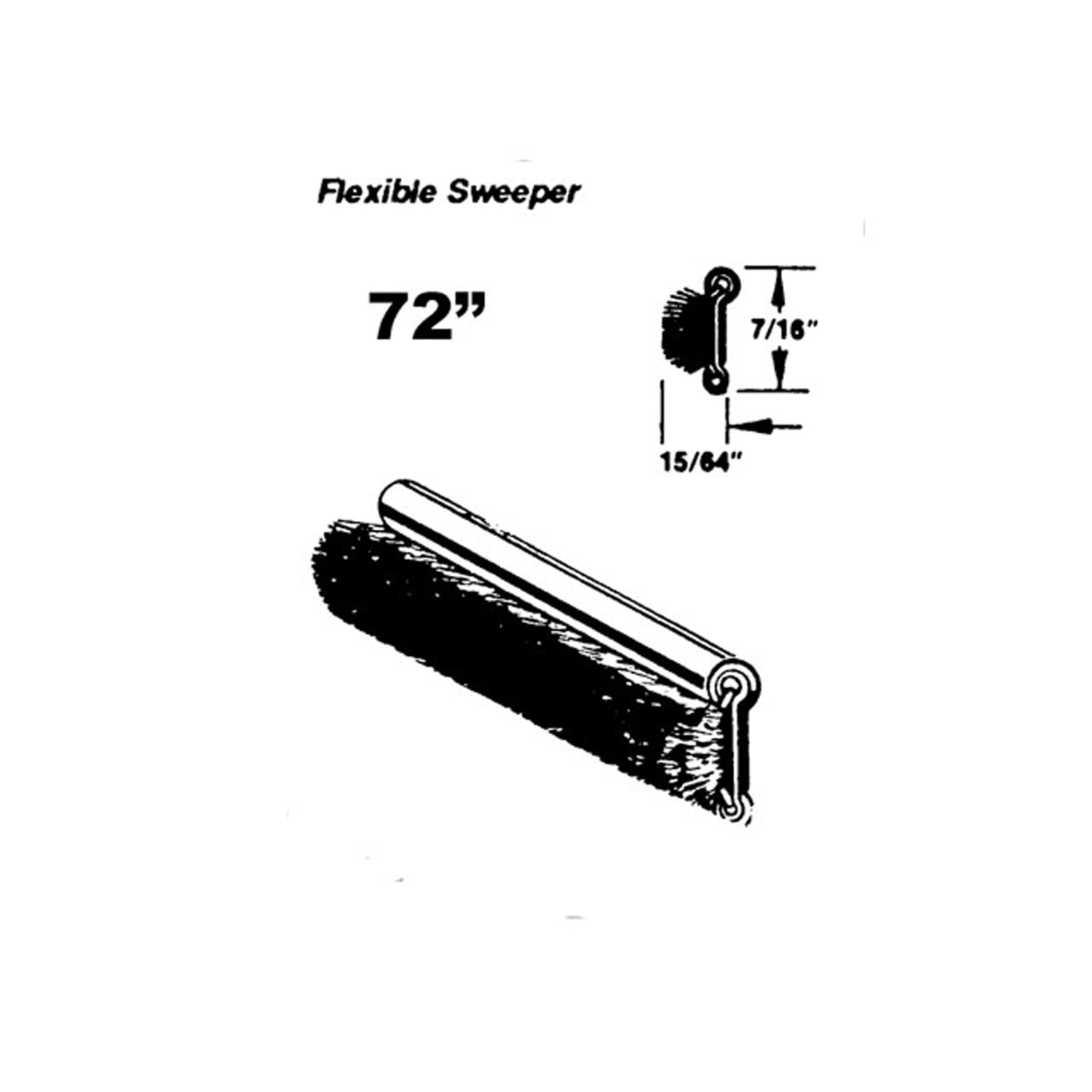 1948 Buick Special Series 40 Flexible sweeper. Made with stainless steel bead-WC 8-72Flexible sweeper. Made with stainless steel bead. Used on inner and outer beltlines. Also forms easily for use with sliding quarter windows. 72 in. long. Each. NOTE: $20 special shipping charge applies for domestic orders. Call or email for overseas shipping costs. Part can be sectioned into two equal lengths to reduce overseas shipping costs.
Why Choose Metro?
For over 100 years, Metro Moulded Parts has been the pinnacle of quality in classic car restoration parts. Our commitment to precision and authenticity in every component ensures a perfect fit and an OEM-level appearance.
- Expert Craftsmanship & Quality: Each part is a testament to our dedication to reliability and perfection, crafted from original designs and thoroughly tested.
- Advanced Technology: We use cutting-edge techniques to create flawless, long-lasting parts that surpass others in performance.
- SuperSoft Sponge – The Ultimate Door Seal: Not only are our door seals 30% softer than competitors', but they're also guaranteed to never leak. They effectively reduce wind and road noise, enhancing your classic car's comfort and driving experience.
- Proudly American: Our parts are a product of American craftsmanship, made in the USA with a spirit of excellence and heritage.
- Unrivaled Warranty: We back our products with a 30-year industry-leading warranty, a testament to our confidence in their quality.
Join us in preserving the legacy of classic cars with parts that are crafted for perfection, not just made.