

Image of 1950 Buick Roadmaster, Note: These illustrations use artistic license and may differ from actual historical models.
Performance Metrics
Fundamental Metrics
Emotional Appeal
MMP Rating
| Engine Specifications | |
|---|---|
| Engine: | Straight 8 |
| Displacement: | 320.2 cu in (5.2 L) |
| Horsepower: | 152 HP |
| Torque: | 280 lb-ft |
| Compression Ratio: | 7.2:1 |
| Ignition System: | Battery Ignition |
| Cooling System: | Liquid Cooled |
| Performance Specifications | |
| 0-60 Time: | Estimated 12 seconds |
| 1/4 Mile Time: | Not available |
| Top Speed: | 100 mph |
| Transmission and Drive | |
| Drive Type: | Rear Wheel Drive |
| Transmission Type: | Dynaflow automatic |
| Fuel and Efficiency | |
| Fuel System Type: | Carburetor |
| MPG: | Estimated 15 MPG |
| Dimensions and Brakes | |
| Brakes: | Drum Brakes |
| Wheelbase: | 129.5 in |
| Weight: | 4300 lbs |
Note: Specifications for classic cars are given to the best of our ability, considering the limited and variant data available.
1950 Buick Roadmaster: The Postwar American Luxury Cruiser
The 1950 Buick Roadmaster turned a long, chrome-bright body and a smooth straight-eight engine into a rolling statement of postwar prosperity. Built by Buick, a division of General Motors, the Roadmaster sat near the top of the company’s lineup, above the Special and Super. It offered substantial size, upscale appointments, and an easygoing kind of performance suited to America’s expanding highways.
Its roots reached back to Buick’s prewar prestige cars, but the 1950 model belonged to a new era. American buyers were returning to showrooms after years of wartime production restrictions, and demand for larger, more comfortable cars was strong. The Roadmaster answered with broad fenders, generous interior space, and an imposing grille. One especially notable feature was its available Riviera body style: a pillarless hardtop that delivered the open-sided look of a convertible without a fabric roof.
Bold Buick Styling and Cabin Comfort
The Roadmaster’s front end makes an unmistakable first impression. A broad, heavily chromed grille sits between rounded front fenders, while the sculpted hood and substantial bumpers give the car a confident, almost architectural presence. Buick’s signature VentiPorts appear on the front fenders. The Roadmaster carried four on each side, a visual cue that distinguished this senior model from less expensive Buicks.
Along the body, sweeping chrome trim emphasizes the car’s length and flowing profile. The design is elegant rather than restrained: brightwork outlines the windows and body sides, and the rounded rear fenders lead the eye toward a wide trunk. On the Riviera hardtop, the absence of a fixed center roof pillar creates a particularly clean side view with the windows lowered.
Inside, the Roadmaster was designed for comfortable long-distance travel. Buyers found wide bench seats, generous legroom, a large steering wheel, and a substantial dashboard finished with painted surfaces and bright metal trim. Upholstery materials and combinations varied by body style and trim, with cloth, broadcloth, and leather used across the range. The overall effect was plush and formal, though not as lavish as the coachbuilt interiors of much more expensive luxury cars.
Factory color choices varied by model and production run. Buyers could choose from classic shades such as black, blue, green, gray, and maroon, with contrasting or two-tone combinations also available. Dark, dignified colors suited the Roadmaster’s executive image, while lighter combinations showed off the car’s chrome and sweeping body lines.
Body Styles and Period Technology
The Roadmaster range included a four-door sedan, a two-door Riviera hardtop, and a convertible. Buick also offered the rare Estate Wagon, a striking premium wagon with a wood-bodied appearance. Some model listings and markets include additional two-door configurations, so exact availability can depend on the specific production record being consulted. The four-door sedan was the practical choice for families and formal use, while the Riviera is among the most recognizable versions today.
Under the hood was Buick’s 320.2-cubic-inch Fireball inline-eight, rated at about 152 horsepower. The long, low-revving engine was built to deliver smooth, steady power rather than a high-strung rush. Dynaflow automatic transmission was a major part of the Roadmaster’s appeal and was standard on many Roadmaster configurations. Its fluid coupling made starts exceptionally smooth, although it could feel less eager off the line than a conventional geared automatic.
Other equipment reflected the technology of the period. The Roadmaster used hydraulic drum brakes, a conventional rear axle, and a chassis tuned for comfort. A heater, radio, clock, and other convenience equipment could be specified, depending on the car’s original order. Modern conveniences such as power steering and air conditioning should not be assumed on a 1950 example; many cars relied on muscle, ventilation, and the substantial cushioning of their suspension.
Why the Roadmaster Mattered
The 1950 Roadmaster helped define the American luxury car as a comfortable, full-size machine with a strong visual identity. Its broad proportions and extensive chrome reflected the optimism of the early postwar years, while its interior and smooth powertrain emphasized relaxed travel. It was not a sports sedan, nor was it intended to be. Its purpose was to make distance feel less demanding.
The Riviera hardtop was an important part of Buick’s design influence. The pillarless roofline gave buyers the airy appearance of a convertible while retaining a fixed metal roof. Buick was among the early GM divisions to bring this style to production, and the format quickly became a popular choice across the industry. The Riviera name would later become closely associated with Buick’s personal luxury cars, but in 1950 it was already helping establish a distinctive hardtop identity.
The Roadmaster also stood apart from many contemporaries through its combination of a large-displacement straight-eight and Dynaflow’s unusually smooth operation. Rivals could offer comparable size and luxury, but Buick’s drivetrain gave the car a distinctive, almost effortless character. Its influence is less about a single revolutionary mechanical breakthrough and more about how it combined comfort, presence, and new body styling in a highly desirable package.
Performance and the Dynaflow Driving Feel
Period performance figures vary with body style, equipment, vehicle condition, and testing method. As a useful guide, a healthy 1950 Roadmaster can reach roughly 90 to 95 mph, with a 0-to-60-mph time in the neighborhood of 16 to 18 seconds. Those numbers are estimates, not modern standardized test results. The car’s considerable weight and comfort-focused gearing make it feel calmer than those figures might suggest.
On the road, the straight-eight produces a deep, even hum rather than a sharp or aggressive engine note. Dynaflow softens gear changes so effectively that acceleration feels like a continuous swell. The tradeoff is a relaxed launch: press the accelerator and the Roadmaster gathers speed smoothly instead of leaping forward. Drivers accustomed to contemporary cars may need to plan overtakes well in advance.
The suspension is happiest on open roads and gently rolling pavement. It absorbs ordinary bumps with a soft, floating motion, although large potholes and broken pavement can unsettle the big body. On winding roads, the Roadmaster feels substantial and deliberate, with noticeable body lean and slower steering response than a modern car. Crosswinds can also make a tall, broad-bodied vehicle feel less settled. Its drum brakes and period tires call for extra following distance, especially in wet conditions.
Living With a 1950 Roadmaster
Today, Roadmasters are most often used as show cars, parade vehicles, weekend cruisers, and entries in classic-car tours. A well-sorted example can make local drives and highway trips enjoyable, but it is not automatically an easy daily driver. Its size, fuel consumption, braking distances, and lack of modern safety equipment make routine use a commitment rather than a casual choice.
Maintenance is manageable for an owner familiar with older American cars. The straight-eight is a conventional, durable design, and many mechanical components are serviceable by an experienced classic-car mechanic. Routine jobs include ignition and carburetor tuning, cooling-system care, brake work, lubrication, and attention to the transmission. Parts availability is generally better for common service items than for unique trim, interior pieces, or Estate Wagon woodwork.
Condition matters more than the odometer reading on a car of this age. Inspect the frame and body for corrosion, check that the cooling system holds temperature, and make sure the Dynaflow engages and operates smoothly. A Roadmaster that has sat unused may need extensive work even if it appears complete. The best ownership experience usually begins with a careful inspection and a realistic restoration budget.
Roadmaster Facts and Common Criticisms
One quick way to identify a Roadmaster is to count the VentiPorts: the 1950 model has four on each front fender. The Riviera hardtop is another landmark feature, combining a fixed roof with the open, pillarless look that buyers increasingly wanted. The Estate Wagon is especially distinctive, and its wood construction and trim make it far less common than the sedans.
Buick built approximately 75,000 Roadmasters across the 1950 model range. That is a useful production estimate rather than a claim that every body-style total is equally certain. The Estate Wagon and convertible are much harder to encounter than ordinary sedans, and surviving examples can be rarer still because decades of use and weather took their toll.
There is no widely recognized speed or endurance record associated with the 1950 Roadmaster. Its significance lies instead in its styling, its role in Buick’s postwar lineup, and the early popularity of the Riviera hardtop. Common criticisms are familiar to anyone considering a large postwar car: it is thirsty, slow by modern standards, cumbersome in tight spaces, and equipped with brakes that require more anticipation than a contemporary system.
Collector Values and Market Outlook
Collector values depend heavily on body style, originality, mechanical condition, and restoration quality. As a broad U.S. market guide, a project car may fall around $5,000 to $15,000. A usable driver-quality sedan might bring roughly $15,000 to $35,000, while a very good or professionally restored sedan or Riviera can land around $35,000 to $75,000. Strong convertibles and rare Estate Wagons can command approximately $75,000 to $200,000 or more when exceptionally presented. These are broad estimates, not appraisals, and individual sales can vary considerably.
The sedan is generally the easiest body style to find. Riviera hardtops are more sought after, while convertibles and Estate Wagons attract buyers looking for the most distinctive versions. Over time, the market has tended to reward top-quality, uncommon cars more reliably than ordinary examples. In inflation-adjusted terms, values for standard sedans have been mixed, while rare body styles and excellent restorations have held stronger appeal. As with most classics, originality and documented work can matter as much as shine.
A Buick Built for the Long View
The 1950 Buick Roadmaster brought together a commanding postwar design, a smooth Fireball straight-eight, and the relaxed character of Dynaflow. Its VentiPorts and flowing chrome make it unmistakably Buick, while the Riviera hardtop and rare Estate Wagon give collectors several compelling versions to pursue. It is large, leisurely, and unmistakably of its era, which is exactly why it remains memorable. The Roadmaster does more than recall the open road of the 1950s: it shows how American automakers made comfort and style feel like an event.
1950 Buick Roadmaster Catalog of Parts
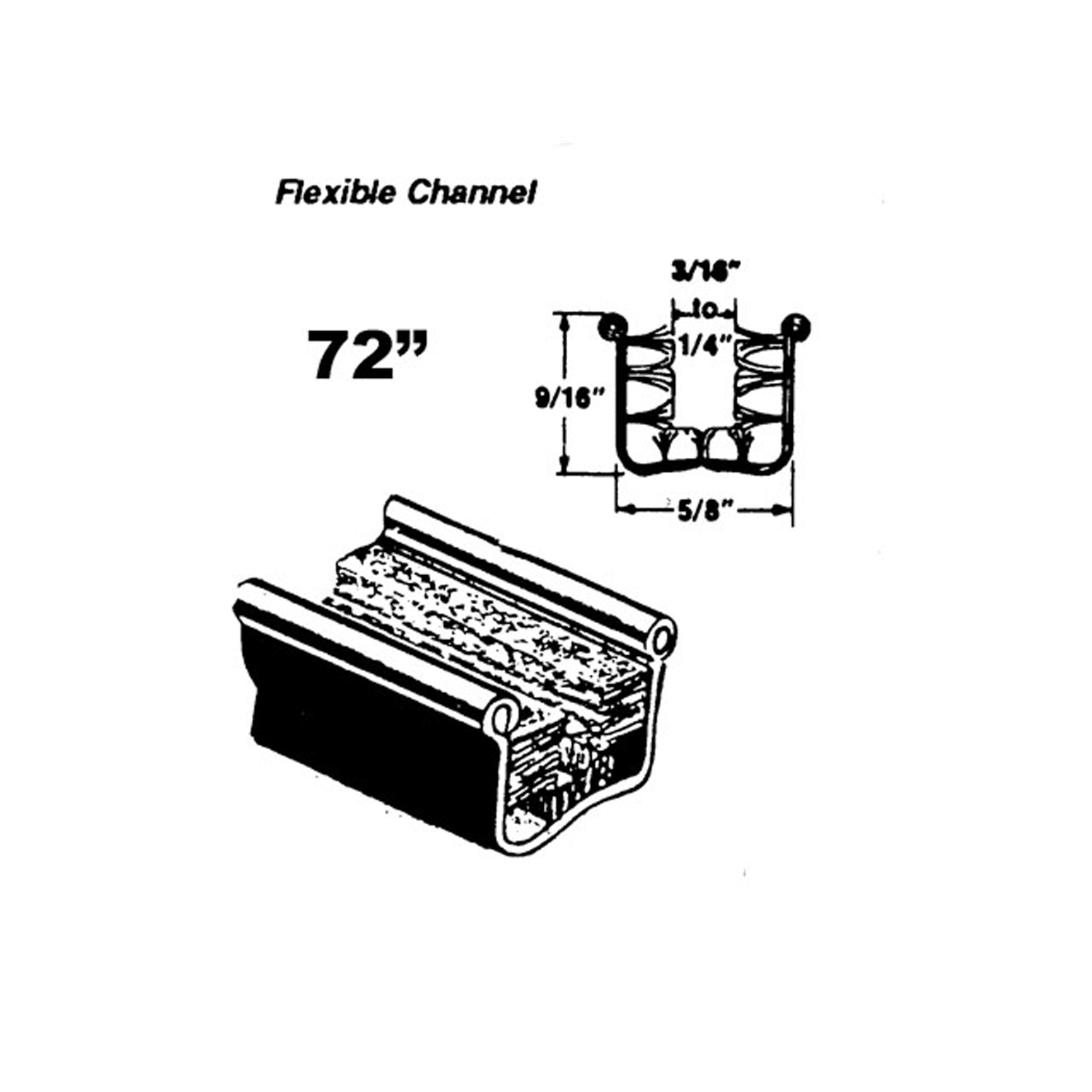 1950 Buick Roadmaster Flexible glass-run channel-WC 11-72Flexible glass-run channel. Mohair lined, cloth covered with stainless steel bead. Used on side windows. 72 in. long. Each. NOTE: $20 special shipping charge applies for domestic orders. Call or email for overseas shipping costs. Part can be sectioned in two equal lengths to reduce overseas shipping costs.
Why Choose Metro?
For over 100 years, Metro Moulded Parts has been the pinnacle of quality in classic car restoration parts. Our commitment to precision and authenticity in every component ensures a perfect fit and an OEM-level appearance.
- Expert Craftsmanship & Quality: Each part is a testament to our dedication to reliability and perfection, crafted from original designs and thoroughly tested.
- Advanced Technology: We use cutting-edge techniques to create flawless, long-lasting parts that surpass others in performance.
- SuperSoft Sponge – The Ultimate Door Seal: Not only are our door seals 30% softer than competitors', but they're also guaranteed to never leak. They effectively reduce wind and road noise, enhancing your classic car's comfort and driving experience.
- Proudly American: Our parts are a product of American craftsmanship, made in the USA with a spirit of excellence and heritage.
- Unrivaled Warranty: We back our products with a 30-year industry-leading warranty, a testament to our confidence in their quality.
Join us in preserving the legacy of classic cars with parts that are crafted for perfection, not just made.