
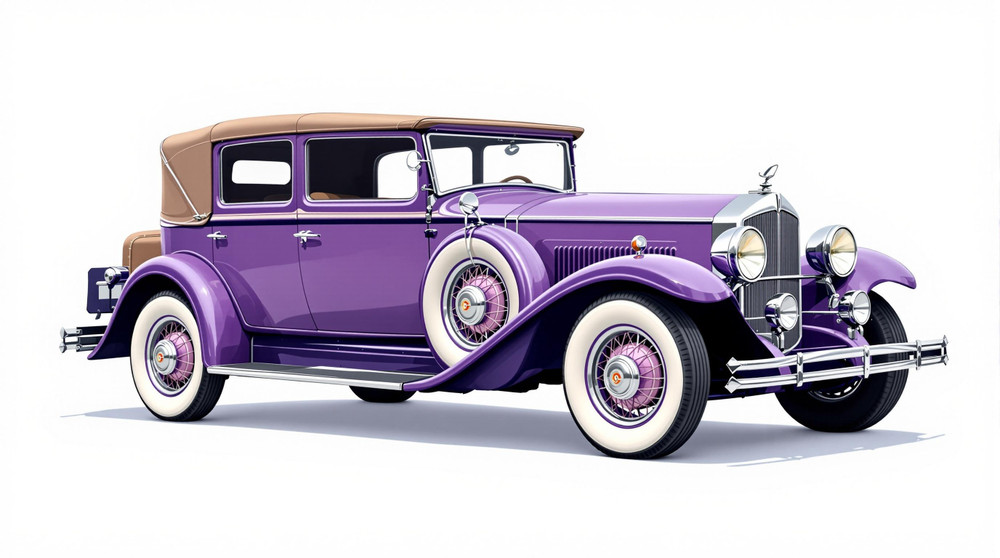
Image of 1929 Cadillac Fleetwood, Note: These illustrations use artistic license and may differ from actual historical models.
Performance Metrics
Fundamental Metrics
Emotional Appeal
MMP Rating
| Engine Specifications | |
|---|---|
| Engine: | L-head V8 |
| Displacement: | 341 cubic inches (5.6 liters) |
| Horsepower: | Estimated 90 HP |
| Torque: | Not available |
| Compression Ratio: | Not available |
| Ignition System: | Battery and coil |
| Cooling System: | Water-cooled |
| Performance Specifications | |
| 0-60 Time: | Not available |
| 1/4 Mile Time: | Not available |
| Top Speed: | 60-65 mph |
| Transmission and Drive | |
| Drive Type: | Rear-wheel drive |
| Transmission Type: | 3-speed manual |
| Fuel and Efficiency | |
| Fuel System Type: | Carburetor |
| MPG: | Not available |
| Dimensions and Brakes | |
| Brakes: | Mechanical drum brakes |
| Wheelbase: | 140 inches |
| Weight: | 5,300 lbs |
Note: Specifications for classic cars are given to the best of our ability, considering the limited and variant data available.
1929 Cadillac Fleetwood: The Coachbuilt Cadillac
A 1929 Cadillac Fleetwood is less a single fixed model than a Cadillac wearing the work of one of America’s most respected custom coachbuilders. The name combines Cadillac’s engineering and prestige with Fleetwood’s finely tailored bodies, creating a car that could be ordered as a formal limousine, a handsome sedan, or another body style to suit its first owner.
Fleetwood began as a coachbuilding company in Fleetwood, Pennsylvania, and earned a reputation for carefully crafted bodies for luxury-car makers. By 1929, it had become part of the Cadillac and General Motors organization. That connection gave Cadillac customers access to distinctive Fleetwood designs while preserving the finish and fit expected of a top-tier automobile.
The timing is significant. The car arrived at the end of the prosperous 1920s, just before the October 1929 stock-market crash and the Great Depression reshaped the luxury-car business. Cadillac’s next major milestone would be the V-16, introduced in 1930. A 1929 Fleetwood therefore stands at the close of one grand era and the threshold of another.
Long Hoods and Hand-Finished Coachwork
From the outside, the car has the confident proportions of a late-1920s luxury automobile: a tall, upright radiator, a long hood, large headlamps, sweeping front fenders, running boards, and a cabin set well back from the front axle. The effect is stately rather than sporty. Fleetwood’s contribution was in the body’s details and proportions, which could give two Cadillacs built on the same chassis very different personalities.
Inside, buyers could expect quality materials chosen to suit the body style and order. Leather upholstery was common in open or more formal interiors, while fine cloth and plush broadcloth suited many closed cars. Polished wood trim, carefully fitted door panels, substantial carpets, and bright metal hardware helped distinguish the cabin from a mass-market automobile. Equipment and finishes varied, since Fleetwood bodies could be tailored to a customer’s preferences.
Factory colors and combinations depended on the particular body and order, so there is no single definitive Fleetwood palette. Solid dark colors, including black and deep blues or greens, suited the formal image, while contrasting body and trim colors could emphasize the car’s sweeping fenders and long profile. Two-tone schemes were an especially effective choice on open cars and more sporting body styles.
Available bodies varied with the Cadillac chassis and the year’s catalog. Fleetwood-bodied cars could include sedans, limousines, town cars, coupes, and open styles such as phaetons or roadsters. Formal sedans and limousines are among the most recognizable today, but the exact menu depended on the chassis and coachwork catalog. It is important to remember that “Fleetwood” describes the body’s maker and style, not one universal 1929 trim level.
Cadillac Engineering in 1929
Many 1929 Cadillac Fleetwoods were built on the V-8-powered Series 341-B chassis. Its 341-cubic-inch L-head V-8 produced about 90 horsepower. That was substantial output for the period, and the engine’s smooth, low-speed torque suited a heavy luxury car better than a high-strung, racing-style powerplant would have.
One of the era’s important innovations was Cadillac’s synchromesh transmission. Synchronizers helped bring the gears to matching speeds during shifts, reducing the need for the driver to double-clutch and making gear changes quieter and easier. It was an unusually useful refinement at a time when many drivers were still expected to master more demanding manual transmissions.
The car also came with equipment that would have felt modern to many motorists of the day, including electric starting and lighting. Four-wheel brakes and a sturdy chassis were essential parts of its road-going package. Even with those improvements, the controls required more physical effort and anticipation than a modern driver would expect.
Why the Fleetwood Name Mattered
Fleetwood’s significance lies in the combination of large-scale automobile engineering and individualized coachwork. Cadillac supplied the mechanical foundation, while Fleetwood offered a level of design choice and finish associated with custom-built luxury cars. That approach helped Cadillac compete not only on power and price, but also on appearance, craftsmanship, and social status.
The Fleetwood relationship also helped establish a lasting identity within Cadillac. Later generations of Cadillac used Fleetwood as a model name, but the 1929 car belongs to an earlier coachbuilding tradition, when the name pointed directly to the source and character of the body. Its influence can be seen in the continued appeal of formal, long-wheelbase Cadillacs and in the brand’s long association with American luxury.
Compared with many contemporaries, a Fleetwood-bodied Cadillac offered a compelling mix of engineering, spaciousness, and customization. It was not simply transportation. It was a carefully presented possession, designed to make an impression when it arrived at a hotel, country club, or private estate.
Road Manners and Performance
With roughly 90 horsepower and a heavy coachbuilt body, a 1929 Cadillac Fleetwood was built for smooth progress rather than quick acceleration. A reasonable estimate for top speed is around 70 to 80 mph, depending on the body, gearing, condition, and load. A modern-style 0-to-60-mph time was not generally a defining factory measure for cars of this age; based on the engine output and vehicle weight, roughly 25 to 35 seconds is a sensible estimate, with substantial variation between examples.
On a clear road, the V-8’s character is likely to feel steady and unhurried. The engine produces a deep, measured rumble rather than a sharp sporting bark, and the three-speed manual rewards deliberate shifts. Synchromesh makes the experience more forgiving than many earlier cars, though clutch and gear-lever technique still matter.
The long wheelbase helps the Cadillac settle over rolling pavement, but it cannot erase the effects of large bumps or rough surfaces. The car is heavy, tall, and fitted with tires and suspension technology from another era. On winding roads, it is best driven smoothly: the steering takes more effort than modern power steering, the body leans through corners, and the brakes demand a longer stopping distance. A driver who leaves plenty of space and looks well ahead will find it far more comfortable than someone trying to hurry it.
Living With a 1929 Fleetwood
Today, these Cadillacs are most often used as show cars, touring vehicles, museum pieces, or occasional event cars. Some owners take them on carefully planned vintage-car tours, where the steady pace and imposing presence suit the occasion. They are not practical daily drivers by modern standards, especially in traffic or on high-speed roads.
Maintenance is manageable for an experienced vintage-car enthusiast, but it is not a casual weekend project for every owner. The mechanical layout is comparatively straightforward, and many routine jobs can be handled by a capable home mechanic with the correct manuals, tools, and patience. The greater challenge is often finding a specialist familiar with early Cadillac systems and locating the correct parts for a particular chassis or body.
Mechanical components may be easier to service than unique coachwork. Original interior trim, hardware, body panels, and decorative details can be costly or difficult to replace. Before buying, inspect the chassis and frame, engine, transmission, brakes, electrical system, and wood or metal body structure carefully. A well-documented car with sound coachwork is usually a better prospect than a superficially polished example with hidden restoration needs.
Fleetwood Facts and Misconceptions
A key point for enthusiasts is that “Fleetwood” does not identify one exact body configuration in 1929. It identifies coachwork associated with Fleetwood, and the finished car’s shape depended on its chassis and order. Two cars described as 1929 Cadillac Fleetwoods may therefore look quite different while both being correctly identified.
There is no single, reliable production total for every Fleetwood body style on every Cadillac chassis. Cadillac produced tens of thousands of cars in 1929 across its range, but Fleetwood-bodied examples were only part of that total. A cautious working estimate would place 1929 Fleetwood-bodied Cadillacs in the low thousands, perhaps around 2,000 to 5,000 across body styles and chassis. That is an informed estimate, not a verified factory count, and surviving examples are far fewer.
Unlike famous race cars, the 1929 Fleetwood’s appeal is not based on a widely known speed record or competition victory. Its distinction is the combination of Cadillac engineering and bespoke-style coachbuilding. It is also easy to confuse the car with the later Cadillac Fleetwood model line; the 1929 name reflects the body-building tradition rather than a modern-style trim designation.
Common criticisms are practical ones: the car is large, fuel consumption is high by modern standards, braking and steering require effort, and restoration can be expensive. Its size and formal character are part of its charm, but they also limit where and how comfortably it can be driven today.
Collector Values and Availability
Values vary widely with body style, originality, restoration quality, documentation, and mechanical condition. As a broad 2026 estimate in U.S. dollars, a project or incomplete example might fall around $20,000 to $40,000. A usable driver could be roughly $40,000 to $80,000, while a well-restored, desirable example may bring $80,000 to $150,000 or more. Rare formal bodies, exceptional provenance, or concours-quality restoration can push a car into the $150,000 to $250,000-plus range.
These figures are guides, not a price list. A common sedan in sound condition will generally attract a different buyer and price than a rare limousine or an unusually original open car. Restoration costs can also exceed the market value of an ordinary example, so condition and completeness matter greatly.
Availability is limited but not impossible. Cars appear at specialist auctions, classic-car dealers, and marque-club networks, though the exact body style a buyer wants may take time to find. The market for prewar luxury cars can be selective: exceptional cars remain desirable, while average or poorly documented examples may take longer to sell. In the long run, rarity and craftsmanship support the Fleetwood’s appeal, but values are not guaranteed to rise steadily.
A Cadillac from the End of an Era
The 1929 Cadillac Fleetwood brings together a powerful-for-its-time V-8, early synchromesh technology, and custom-minded body design. Its long hood, formal stance, and carefully finished cabin reflect a period when a luxury car could be both a machine and a statement about its owner.
More than a badge or a single model, Fleetwood represents Cadillac’s commitment to coachbuilt quality at the close of the 1920s. For collectors, it is a rolling reminder of the moment when American luxury cars grew more refined, more technically capable, and unmistakably grand.
1929 Cadillac Fleetwood Catalog of Parts
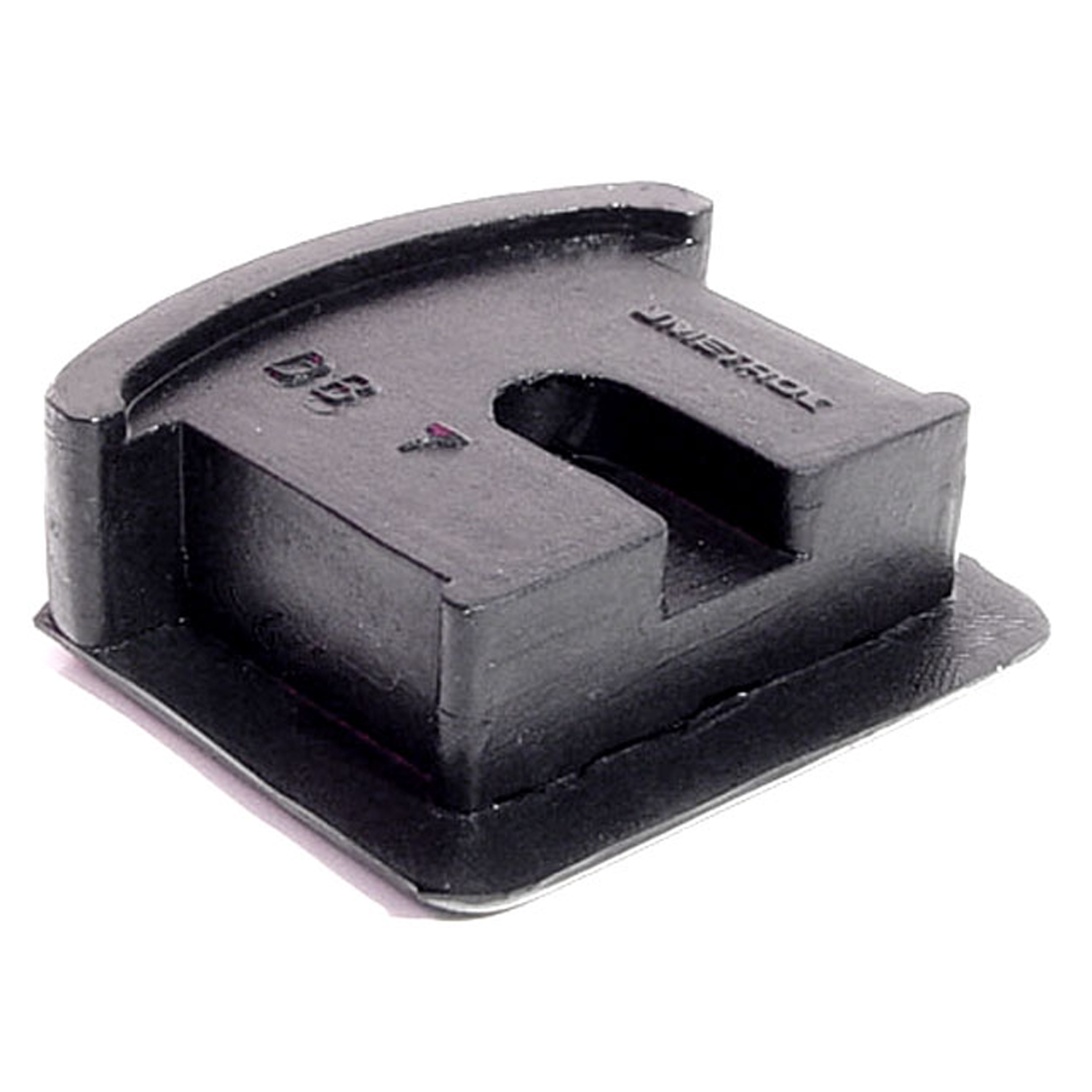 1929 Cadillac Fleetwood Door Bumper. 1-7/16" high X 1-9/16" wide X 9/16" thick-DB 7Door Bumper. 1-7/16" high X 1-9/16" wide X 9/16" thick. Each
 1929 Cadillac Fleetwood Door Handle Ferrule Grommet. I.D. 11/16", O.D. 1-3/16"-MP 546-IDoor Handle Ferrule Grommet. I.D. 11/16", O.D. 1-3/16". Each
 1929 Cadillac Fleetwood Flexible Rubber Window Channel-WC 32-14Flexible Rubber Window Channel. For Fisher Closed Bodies, except those using a stainless bead type. Used on side windows. 13/16" outer width X 6/16" outer depth, with a 5/16" inner channel width X 14" long. Each
Why Choose Metro?
For over 100 years, Metro Moulded Parts has been the pinnacle of quality in classic car restoration parts. Our commitment to precision and authenticity in every component ensures a perfect fit and an OEM-level appearance.
- Expert Craftsmanship & Quality: Each part is a testament to our dedication to reliability and perfection, crafted from original designs and thoroughly tested.
- Advanced Technology: We use cutting-edge techniques to create flawless, long-lasting parts that surpass others in performance.
- SuperSoft Sponge – The Ultimate Door Seal: Not only are our door seals 30% softer than competitors', but they're also guaranteed to never leak. They effectively reduce wind and road noise, enhancing your classic car's comfort and driving experience.
- Proudly American: Our parts are a product of American craftsmanship, made in the USA with a spirit of excellence and heritage.
- Unrivaled Warranty: We back our products with a 30-year industry-leading warranty, a testament to our confidence in their quality.
Join us in preserving the legacy of classic cars with parts that are crafted for perfection, not just made.