

Image of 1934 Cadillac Series 10, Note: These illustrations use artistic license and may differ from actual historical models.
Performance Metrics
Fundamental Metrics
Emotional Appeal
MMP Rating
| Engine Specifications | |
|---|---|
| Engine Options: | V8, V12, V16 |
| Displacement Range: | 341-452 cubic inches |
| Horsepower Range: | 120-165 hp |
| Torque: | Not available |
| Compression Ratio: | 6.25:1 |
| Ignition System: | Battery and coil |
| Cooling System: | Water-cooled |
| Performance Specifications | |
| 0-60 Time: | Not available |
| 1/4 Mile Time: | Not available |
| Top Speed: | 85-100 mph |
| Transmission and Drive | |
| Drive Type: | Rear-wheel drive |
| Transmission Type: | 3-speed manual |
| Fuel and Efficiency | |
| Fuel System Type: | Carburetor |
| MPG: | Not available |
| Dimensions and Brakes | |
| Brakes: | Mechanical drum brakes |
| Wheelbase: | 128-149 inches |
| Weight: | 4,600-6,600 lbs |
Note: Specifications for classic cars are given to the best of our ability, considering the limited and variant data available.
1934 Cadillac Series 10: A Model-Name Check
The 1934 Cadillac was a full-sized American luxury car built to make even a long journey feel like a special occasion. But there is an important wrinkle: Cadillac did not list a “Series 10” in its official 1934 lineup. That year’s cars were identified as the Series 355D, Series 370D, and Series 452D, powered respectively by V8, V12, and V16 engines. “Series 10” may be a mistaken listing or a mix-up with another Cadillac designation.
With that clarification, this guide looks at the genuine 1934 Cadillac range, with particular attention to the Series 355D V8, the most accessible of the three. The model year arrived during the Great Depression, when expensive automobiles were a tough sell. Cadillac responded with a broad range of body styles and hand-finished luxury, while continuing to build cars that showcased the engineering and craftsmanship of General Motors’ flagship marque.
A detail that helps explain Cadillac’s ambitions is that a 1934 buyer could choose not just a powerful V8, but also a V12 or V16 Cadillac. Those multi-cylinder cars were costly and produced in small numbers, yet they made Cadillac one of the very few manufacturers offering such a choice during the period.
Art Deco Styling and Coachbuilt Choices
The 1934 Cadillacs have the poised, formal look of classic prewar luxury. Their long hoods, upright grille, sweeping front fenders, and carefully shaped running boards create a strong, unbroken profile. The grille and hood form a tall visual centerpiece, while bright trim and the Cadillac crest add polish without overwhelming the body. The overall effect is substantial rather than flashy, with the car’s size and proportions doing most of the talking.
Inside, the experience depended on the chosen body and trim, but Cadillac’s aim was consistent: a quiet, finely finished cabin. Buyers could find rich upholstery such as broadcloth, mohair, or leather, along with polished wood accents and carefully detailed hardware. Sedans and limousines offered generous room for passengers, and formal models could include a partition between the driver and rear compartment. Materials and appointments varied by body style and order, so a restored car should be judged against its original specification rather than a single assumed standard.
Cadillac offered a wide selection of bodies, with Fisher-built designs alongside more exclusive Fleetwood coachwork. Choices included sedans, coupes, convertible coupes, and formal passenger cars such as limousines. The practical sedan was a popular choice, while Fleetwood-bodied open and formal cars are among the most visually distinctive today. The exact body selection varied by chassis and series, so not every style was available with every engine.
Paint choices were broad for the era and could include dark blues, greens, maroons, black, and two-tone combinations, depending on the body and finish. Dark, formal colors suit the car’s stately character and are common among surviving examples, though period buyers had more variety than modern photographs sometimes suggest. Factory color availability differed across models and custom-body orders.
Luxury Technology in 1934
The 1934 Cadillac paired traditional craftsmanship with the technology expected of a top-tier automobile. Its three-speed manual transmission used synchromesh to make gear changes smoother than in many earlier cars. Four-wheel hydraulic brakes provided more consistent braking effort than older mechanical systems, while the large chassis, substantial wheelbase, and hydraulic shock absorbers helped deliver a composed ride.
Cadillac’s V8, V12, and V16 engines were all side-valve designs. They were engineered for smooth, quiet power rather than high-revving performance. The V16 was especially notable for its refined delivery: its many cylinders helped reduce the uneven pulses and vibration associated with less sophisticated engines. In 1934, that kind of mechanical smoothness was an important part of luxury, not just a technical talking point.
Why the 1934 Cadillac Matters
Cadillac’s significance lies in how it made advanced engineering part of a complete luxury experience. The company had built its reputation on precision manufacturing and interchangeability long before 1934, and its large-engine cars carried that reputation into an era when bespoke coachwork and powerful multi-cylinder engines still defined the top end of the market.
What set the 1934 range apart from most contemporaries was its breadth. A buyer could select a relatively conventional V8 Cadillac or step up to a V12 or V16, then pair that engine with a body ranging from practical sedan to formal limousine. Few manufacturers could match that combination of engine choice, size, and custom finish. The cars also reflect the era’s transition from upright, formal styling toward more streamlined shapes, while retaining the presence buyers expected from a luxury automobile.
The influence is less about one single feature being copied throughout the industry and more about Cadillac’s lasting role as a technology and prestige leader. The 1934 cars helped sustain the company’s image as an American luxury benchmark, an identity that continued through later generations of Cadillacs.
V8, V12, and V16 Performance
The Series 355D V8 used a 353-cubic-inch engine producing about 115 horsepower. The Series 370D V12 had approximately 368 cubic inches and around 150 horsepower, while the flagship Series 452D V16 displaced about 452 cubic inches and produced roughly 185 horsepower. Figures can vary slightly among references and configurations, and period ratings are not directly comparable to modern horsepower measurements.
Factory acceleration figures are not consistently documented, so modern estimates should be treated as approximate. A Series 355D might take roughly 20 to 25 seconds to reach 60 mph, depending on body weight, gearing, mechanical condition, and test method. A sound V8 car could reach around 80 to 85 mph in favorable conditions. The larger engines offered stronger, smoother progress, but these were heavy luxury cars, not sports cars built for quick launches.
On the road, a 1934 Cadillac feels substantial and deliberate. Its long wheelbase helps it settle over broad road imperfections, while the chassis and suspension are designed for comfort more than sharp cornering. On a winding road, the driver needs to plan ahead: the car’s size, weight, steering effort, and period tires reward smooth inputs rather than sudden maneuvers. Braking and handling should always be assessed on the individual car, since age, restoration quality, and tire condition make a major difference.
The engine experience is part of the appeal. A well-tuned V8 produces a deep, measured burble, while the V12 and V16 are prized for an even more subdued, silky sound. The steering is direct in a vintage-car sense, not light or precise by modern standards, and the driver remains closely involved with the manual gearbox and the car’s considerable dimensions. It is a relaxed, ceremonial style of motoring, especially at touring speeds.
Owning and Maintaining a Prewar Cadillac
Today, a 1934 Cadillac is most often used for concours events, club tours, historic motoring gatherings, and occasional pleasure drives. It is rarely a sensible daily driver. Its size makes urban parking awkward, and its age calls for careful operation, especially in modern traffic. A well-sorted car can cover touring distances, but owners generally plan routes and allow extra time for mechanical checks.
Maintenance is manageable for an experienced vintage-car mechanic, but it is not as simple as servicing a modern car. Parts support is generally strongest for common service items and the more frequently encountered V8 models. V12 and V16 components can be harder and more expensive to source or rebuild. Carburetion, ignition, cooling, brakes, and lubrication need regular attention, and a car that has been restored cosmetically may still require substantial mechanical work.
For a prospective owner, a detailed inspection matters more than a shiny paint finish. Check the frame and body structure for corrosion or poor repairs, confirm the engine’s identity and condition, inspect the transmission and brakes, and verify that any restoration work is documented. Specialist advice is especially valuable before buying a V12 or V16 car.
1934 Cadillac Facts and Myths
The most unusual fact about the 1934 lineup is its three-engine hierarchy: V8, V12, and V16. The V16 was the range’s technical showpiece, but it was never a mass-market car. Its rarity today reflects both its original price and the difficult economic climate of the Depression.
There is no widely recognized production-car speed record associated with the 1934 Cadillac range, and these cars were not built as racing machines. Their achievement was quiet, dependable power and luxury. Nor should every surviving car be assumed to have belonged to a celebrity or public figure. Individual ownership histories can be fascinating, but they need documentation rather than an appealing story attached to a sale.
Common criticisms are straightforward: the cars are large, heavy, thirsty, and slow to stop or change direction by modern standards. Their comfort and craftsmanship are compelling, but they demand more space and maintenance than a newer classic. The Series 10 label itself is another point of confusion; it is not the correct official name for a 1934 Cadillac model.
Collector Values and Rarity
Because “1934 Cadillac Series 10” is not an official model designation, a collector should first identify the actual car as a 355D, 370D, or 452D and confirm its body style and provenance. As a broad 2026 market estimate in U.S. dollars, a usable or older-restored Series 355D might fall around $40,000 to $100,000. A high-quality restoration or particularly desirable body can bring roughly $100,000 to $200,000 or more.
V12 cars generally command a premium, with broad estimates of about $75,000 to $250,000 depending on condition, originality, and coachwork. V16 examples can range from roughly $150,000 to $500,000 or more, with exceptional, rare-bodied, or concours-quality cars potentially exceeding that range. These are guide figures, not appraisals; auction results can vary sharply from one example to another.
Exact production totals should be treated cautiously because published figures and body breakdowns can differ. A reasonable broad estimate is that Cadillac built several thousand cars across its 1934 range, perhaps in the neighborhood of 6,000 to 8,000. The V8 Series 355D made up the largest share, while V12s were much less common and V16s were exceptionally scarce. Surviving numbers are lower still, particularly for unusual Fleetwood bodies.
Values tend to reward rarity, documented history, excellent restoration, and correct details. The market for major prewar classics is selective: outstanding cars remain desirable, while cars needing extensive work can be difficult to sell because restoration costs are high. Rather than assume every example is rapidly appreciating, buyers should think of a 1934 Cadillac as a significant collector car whose value depends heavily on condition and specification.
A Cadillac Built for Presence
The 1934 Cadillac stands out for its sweeping prewar design, carefully finished cabins, and remarkable choice of V8, V12, and V16 power. It represents Cadillac at a moment when engineering prestige and coachbuilt luxury still went hand in hand. Although “Series 10” is not the correct name for a 1934 model, the genuine cars behind the confusion are memorable machines in their own right. A well-preserved Cadillac from this year does more than recall another era: it brings that era’s craftsmanship and sense of occasion onto the road.
1934 Cadillac Series 10 Catalog of Parts
 1934 Cadillac SERIES 10 Spring and Shackle Bushing-BN 21Spring and Shackle Bushing. For front eye on rear leaf spring. 1-1/2" bottom O.D X 1-1/4" high, with 3/4" I.D. Each
 1934 Cadillac SERIES 10 Spring and Shackle Bushing-BN 22Spring and Shackle Bushing. For front or rear eyes on rear leaf spring. 1-3/4" bottom O.D X 1-3/8" high, with 3/4" I.D. Each
 1934 Cadillac SERIES 10 Upper Door Hinge Post Bumper. Held by screw-DB 60-AUpper Door Hinge Post Bumper. Held by screw. 7/8" diameter X 1/8" thick. Each
 1934 Cadillac SERIES 10 Door Bumper. 1-7/16" high X 1-9/16" wide X 9/16" thick-DB 7Door Bumper. 1-7/16" high X 1-9/16" wide X 9/16" thick. Each
 1934 Cadillac SERIES 10 Rumble Seat Step Plate Bracket Pad-MP 348-BRumble Seat Step Plate Bracket Pad. 3-1/8" wide X 4-7/8" long. Each
 1934 Cadillac SERIES 10 Tail-Light Pads. 2" wide X 8-1/2" long. Pair-MP 360Tail-Light Pads. 2" wide X 8-1/2" long. Pair
 1934 Cadillac SERIES 10 Headlight Pads. 3-7/8" wide X 12-3/8" long. Pair R&L-MP 372Headlight Pads. 3-7/8" wide X 12-3/8" long. Pair R&L
 1934 Cadillac SERIES 10 Rumble Seat Step Plate Bracket. 4-1/2" wide X 4-1/4" long-MP 374-BRumble Seat Step Plate Bracket. 4-1/2" wide X 4-1/4" long. Each
 1934 Cadillac SERIES 10 Rumble Seat Step Plate Bracket Pad. Each-MP 380-ARumble Seat Step Plate Bracket Pad. Each
 1934 Cadillac SERIES 10 Door Handle Ferrule Grommet. I.D. 11/16", O.D. 1-3/16"-MP 546-IDoor Handle Ferrule Grommet. I.D. 11/16", O.D. 1-3/16". Each
 1934 Cadillac SERIES 10 Door Bumper. 1" diameter X 1/4" thick Each-SB 60Door Bumper. 1" diameter X 1/4" thick Each
 1934 Cadillac SERIES 10 Spare Tire Mount Bumper. 5/8" square. Each-SB 80Spare Tire Mount Bumper. 5/8" square. Each
 1934 Cadillac SERIES 10 Vertical Seal for Vent Window. Each is 17" long. Pair-VS 2Vertical Seal for Vent Window. Each is 17" long. Pair
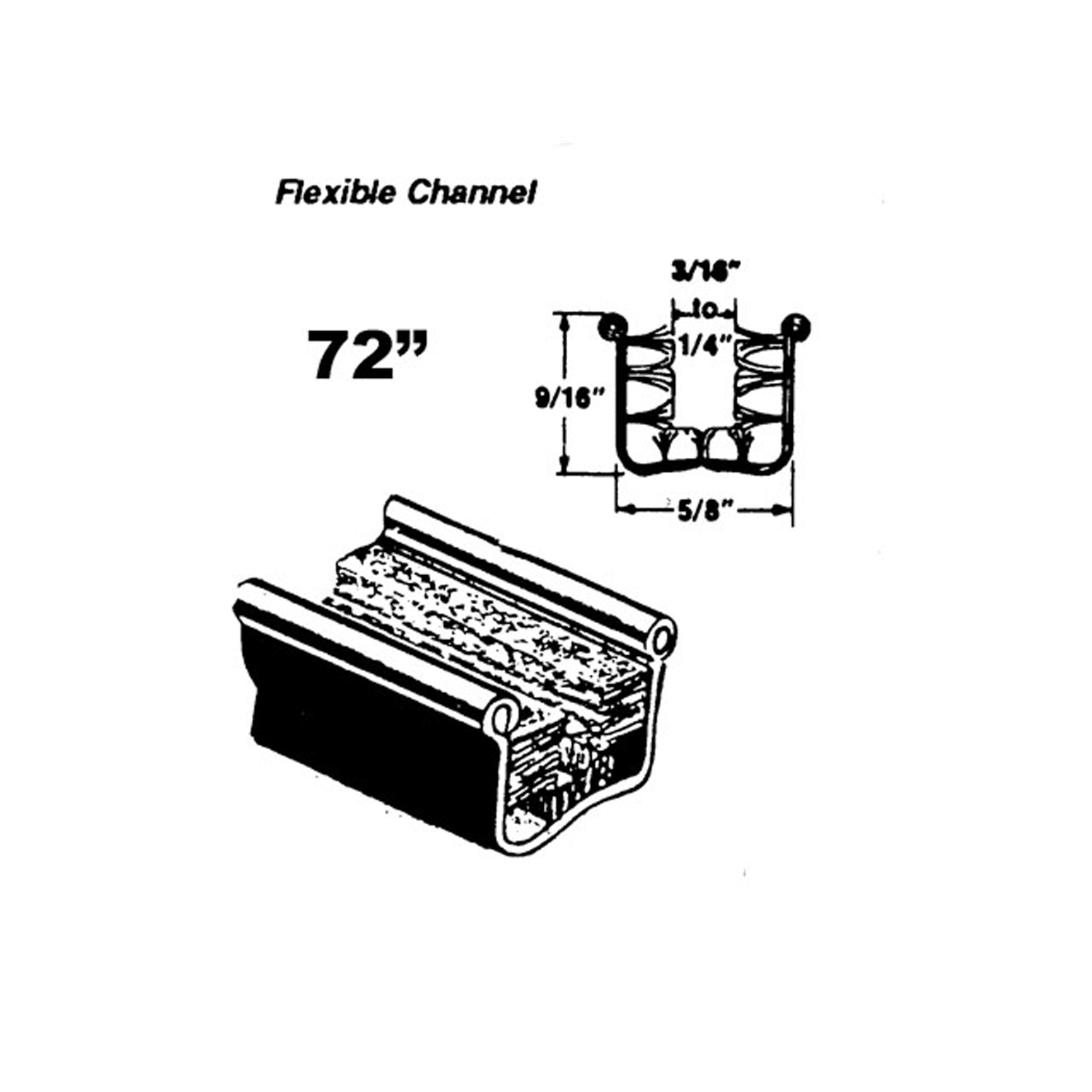 1934 Cadillac SERIES 10 Flexible glass-run channel-WC 11-72Flexible glass-run channel. Mohair lined, cloth covered with stainless steel bead. Used on side windows. 72 in. long. Each. NOTE: $20 special shipping charge applies for domestic orders. Call or email for overseas shipping costs. Part can be sectioned in two equal lengths to reduce overseas shipping costs.
 1934 Cadillac SERIES 10 Rigid division-bar channel. Made with stainless steel bead-WC 2-72Rigid division-bar channel. Made with stainless steel bead. 72 in. long. Each. NOTE: $20 special shipping charge applies for domestic orders. Call or email for overseas shipping costs. Part can be sectioned into two equal lengths to reduce overseas shipping costs.
 1934 Cadillac SERIES 10 Flexible Rubber Window Channel-WC 32-14Flexible Rubber Window Channel. For Fisher Closed Bodies, except those using a stainless bead type. Used on side windows. 13/16" outer width X 6/16" outer depth, with a 5/16" inner channel width X 14" long. Each
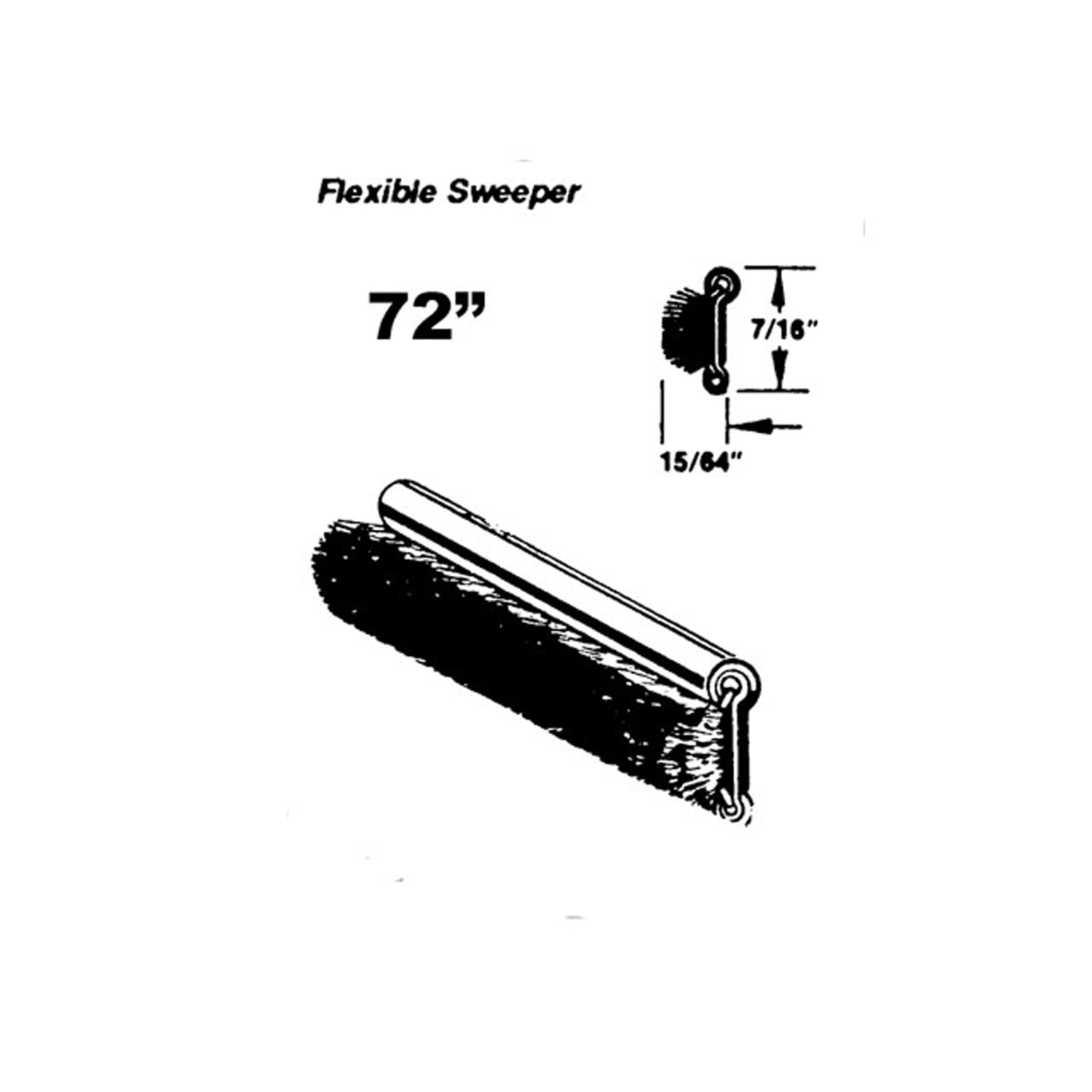 1934 Cadillac SERIES 10 Flexible sweeper. Made with stainless steel bead-WC 8-72Flexible sweeper. Made with stainless steel bead. Used on inner and outer beltlines. Also forms easily for use with sliding quarter windows. 72 in. long. Each. NOTE: $20 special shipping charge applies for domestic orders. Call or email for overseas shipping costs. Part can be sectioned into two equal lengths to reduce overseas shipping costs.
 1934 Cadillac SERIES 10 Fender Bolts. For use with Fender Bolt Washers; WF 3001-WF 3000Fender Bolts. For use with Fender Bolt Washers; WF 3001. Zinc Chromate plated, high strength. 1" X 5/16". Set of 25
 1934 Cadillac SERIES 10 Fender Bolt Washers. For use with Fender Bolts; WF 3000-WF 3001Fender Bolt Washers. For use with Fender Bolts; WF 3000. High quality, cadmium plated. 1-1/4" O.D., 3/8" I.D. Set of 25
Why Choose Metro?
For over 100 years, Metro Moulded Parts has been the pinnacle of quality in classic car restoration parts. Our commitment to precision and authenticity in every component ensures a perfect fit and an OEM-level appearance.
- Expert Craftsmanship & Quality: Each part is a testament to our dedication to reliability and perfection, crafted from original designs and thoroughly tested.
- Advanced Technology: We use cutting-edge techniques to create flawless, long-lasting parts that surpass others in performance.
- SuperSoft Sponge – The Ultimate Door Seal: Not only are our door seals 30% softer than competitors', but they're also guaranteed to never leak. They effectively reduce wind and road noise, enhancing your classic car's comfort and driving experience.
- Proudly American: Our parts are a product of American craftsmanship, made in the USA with a spirit of excellence and heritage.
- Unrivaled Warranty: We back our products with a 30-year industry-leading warranty, a testament to our confidence in their quality.
Join us in preserving the legacy of classic cars with parts that are crafted for perfection, not just made.