

Image of 1934 Cadillac Series 20, Note: These illustrations use artistic license and may differ from actual historical models.
Performance Metrics
Fundamental Metrics
Emotional Appeal
MMP Rating
| Engine Specifications | |
|---|---|
| Engine Options: | V8 |
| Displacement Range: | 353 cubic inches |
| Horsepower Range: | Estimated 95-100 HP |
| Torque: | 200 lb-ft |
| Compression Ratio: | Estimated 6.5:1 |
| Ignition System: | Battery and coil |
| Cooling System: | Water-cooled |
| Performance Specifications | |
| 0-60 Time: | Information not available |
| 1/4 Mile Time: | Information not available |
| Top Speed: | 85 mph |
| Transmission and Drive | |
| Drive Type: | Rear-wheel drive |
| Transmission Type: | 3-speed manual |
| Fuel and Efficiency | |
| Fuel System Type: | Carburetor |
| MPG: | Information not available |
| Dimensions and Brakes | |
| Brakes: | Mechanical drum brakes |
| Wheelbase: | 140 inches |
| Weight: | Estimated 4,500 lbs |
Note: Specifications for classic cars are given to the best of our ability, considering the limited and variant data available.
With a long, confident hood and the smooth pull of a big V8, the 1934 Cadillac Series 20 brought Cadillac prestige to a more attainable place in the marque’s lineup. It was a substantial, carefully finished automobile built during the Great Depression, when every luxury-car maker had to persuade buyers that comfort and craftsmanship were still worth paying for.
Where the Series 20 Fit
Cadillac built the Series 20 in 1934 as part of its V8 range. It sat above the shorter-wheelbase Series 10, while Cadillac’s V12 and V16 models occupied the more exclusive end of the catalogue. The Series 20 was not a special edition or a separate engine type. It was a longer-wheelbase V8 chassis that could be fitted with different bodies.
Cadillac was part of General Motors, and its reputation rested on engineering, refinement, and high-quality coachwork. The Series 20 reflected that position: it offered the presence and finish expected of a Cadillac without the cost and mechanical complexity of the company’s mult-cylinder flagships.
Its launch came during the difficult years of the Depression, when demand for expensive cars had fallen sharply. That makes the Series 20 a useful snapshot of Cadillac’s response to the era: retain the luxury experience, but offer it in a less extravagant form than a V16. A point worth remembering is that the Series 20’s 136-inch wheelbase was still genuinely large by ordinary-car standards.
Long Hood, Formal Lines
The Series 20 wore the upright, imposing look associated with early-1930s luxury cars. Its tall grille, broad front fenders, sweeping hood, and separate headlamps gave it a strong road presence. The proportions were formal rather than sporty, with a long bonnet leading to a roomy passenger compartment and a substantial rear body.
Cadillac’s styling was evolving toward smoother, more integrated forms, but the 1934 car still displayed the architectural details of its period. Fenders framed the wheels, running boards bridged the space between them, and exterior trim emphasized the car’s length. The result looked elegant without being delicate.
Inside, buyers could expect broad seats, quality upholstery, polished wood or wood-effect trim depending on the body and specification, and substantial metal fittings. Exact materials and details varied between bodies and coachbuilders. A Fleetwood-bodied car could have a notably more elaborate finish than a more plainly appointed Fisher-bodied example. Either way, the Series 20’s cabin was designed for comfortable, dignified travel rather than a stripped-down driving experience.
Body Styles and Factory Finish
The Series 20 chassis was offered with several body configurations, with availability depending on the catalogue, coachbuilder, and production specification. Closed sedans were the natural choice for owners who wanted weather protection and space for family or business travel. Coupes offered a more personal two-door layout, while open or more formal bodies appeared in the broader Cadillac range. When assessing an individual car, its original body style and coachbuilder are important parts of its identity.
Factory paint choices varied by body and year, but period Cadillac colors included sober dark shades as well as richer blues, greens, browns, and maroons. Black remained a popular and appropriately formal choice. Many surviving cars have been repainted, so a modern color should not automatically be assumed to be original. A careful restoration checks the body tag, surviving paint layers, and period documentation.
V8 Power and 1930s Engineering
The Series 20 used Cadillac’s side-valve, or L-head, V8. The 1934 engine is generally listed at about 353 cubic inches, or 5.8 liters, with output commonly quoted around 125 horsepower. It drove the rear wheels through a three-speed manual transmission. Cadillac’s V8 was valued for smooth, relaxed power rather than high-revving performance.
For its time, the car also benefited from features that helped make a large luxury automobile easier to use. It had hydraulic brakes, and Cadillac introduced independent front suspension to its 1934 cars. Independent front wheels could respond to road bumps more separately than a solid front axle, helping improve ride comfort and steering control. The Series 20 remained a substantial rear-wheel-drive car, however, and its size and mass were part of the driving equation.
How It Drives
Factory performance figures are not consistent across surviving references, and condition makes a major difference today. A sound, correctly tuned Series 20 might reach roughly 80 to 90 mph. A period-style 0-to-60-mph estimate is around 20 to 25 seconds. Treat those figures as practical estimates, not guaranteed test results for every body style or car.
On a smooth road, the V8’s character is the main attraction. It delivers a deep, measured note and a steady wave of torque, encouraging the driver to shift early and cruise rather than chase high engine speeds. The manual gearbox asks for deliberate movements, and the steering is likely to feel heavy at low speeds, especially without assistance.
The independent front suspension helps soften broken pavement, while the long wheelbase settles the car on open roads. It is still a prewar automobile: sharp bumps can unsettle the chassis, and narrow, winding roads demand planning and respect for its size. In crosswinds, the tall body and broad side panels can require steady attention. The experience is not nimble like a modern sports car. It is more like piloting a well-appointed touring machine, with the engine’s gentle rumble and the car’s composed, weighty ride setting the pace.
A Cadillac in a Changing Era
The Series 20 mattered because it brought Cadillac’s engineering and finish to a customer who did not need, or could not justify, a V12 or V16. Its long-wheelbase V8 format offered a useful middle ground: unmistakably a Cadillac, but less extravagant than the marque’s most elaborate models.
Its independent front suspension also reflected a broader shift in automotive engineering. Manufacturers were working to improve ride comfort and steering behavior as speeds and expectations rose. The 1934 Cadillac was part of that transition, combining traditional body-on-frame construction and a large displacement engine with a more advanced front suspension layout.
The Series 20 is sometimes overshadowed by Cadillac’s glamorous V16s, whose elaborate engines and coachwork attract more attention at shows and auctions. Yet the V8 models reveal another side of the company: a maker trying to preserve luxury and engineering quality in a difficult market. That blend of refinement and practicality is a lasting part of Cadillac’s appeal.
Living With One Today
Today, a Series 20 is most often used as a show car, a touring car for suitable events, or a carefully maintained collection piece. It can cover road miles, but it is not an effortless daily driver. Traffic, modern highway speeds, limited visibility, and the absence of contemporary safety equipment all call for a more measured approach.
Maintenance depends heavily on the car’s history. The V8 is mechanically straightforward compared with Cadillac’s V12 and V16 engines, but age brings familiar challenges: worn ignition components, fuel-system problems, cooling issues, tired brakes, and leaks. The hydraulic brake system deserves particular attention, as does the condition of suspension parts and tires. A car that has sat unused may need substantial recommissioning even if it looks polished.
Many routine jobs are within reach of an experienced home mechanic, but parts availability is not the same as it is for a common postwar American car. Specialist knowledge can be valuable for engine work, electrical repairs, correct trim, and body-specific components. Before buying, inspect the chassis, wood or structural components where applicable, engine numbers, and the quality of any restoration. A shiny paint job can hide a costly project underneath.
Curiosities and Common Misconceptions
The most important distinction is that a Series 20 is a V8 Cadillac, not a V12 or V16. It is also easy to mistake the series designation for a body style. In reality, the Series 20 identified a chassis and position within Cadillac’s range, with different bodies fitted to it.
The car is not chiefly known for a land-speed record or a single famous endurance achievement. Its story is more closely tied to Cadillac’s efforts to maintain a place in the luxury market during the Depression. It is also less likely than the top-tier models to be associated with celebrity ownership stories, so claims of a famous original owner should be checked against documentation.
Common criticisms are much the same as for other large prewar cars: the Series 20 is heavy, parts can take patience to source, and its braking, steering, and crash protection cannot match a modern car. The opposite side of those compromises is the reason people still seek one out: its presence, craftsmanship, and unhurried V8 character are difficult to reproduce in a newer vehicle.
Collector Values and Rarity
Precise production totals for the 1934 Series 20 are not consistently available in commonly used references. Cadillac’s total production that year was only in the thousands, and the Series 20 represents just part of that output. A reasonable working estimate is roughly 1,000 to 2,000 Series 20 chassis, but that should be treated as an informed estimate rather than a confirmed factory figure. Surviving cars are less common than ordinary postwar Cadillacs, and condition and body style strongly affect availability.
As a broad current-market guide, a project or incomplete example might fall around $15,000 to $30,000. A usable, presentable car could bring roughly $30,000 to $65,000, while a well-restored example may reach $65,000 to $100,000 or more. Exceptional, particularly desirable body styles can exceed that range. These are general estimates, not appraisals: originality, restoration quality, documentation, and the specific body fitted can move a price substantially.
Values for prewar luxury cars tend to be selective rather than uniformly rising. High-quality, well-documented examples have the best prospects, while cars needing major mechanical or body work can be difficult to sell at restoration-cost prices. The Series 20’s relative obscurity beside Cadillac V16s can keep its value below the marque’s headline models, but it also offers collectors an appealing route into prewar Cadillac ownership.
Why the 1934 Series 20 Endures
The 1934 Cadillac Series 20 combined a large, smooth V8, a long-wheelbase chassis, carefully finished interiors, and forward-looking independent front suspension. It was a luxury car shaped by a hard economic moment, offering Cadillac character without the complexity of the company’s most extravagant engines.
For collectors, its appeal is not a record-breaking statistic or a celebrity association. It is the way the car captures Cadillac at a turning point: still formal and imposing, yet moving toward more sophisticated road manners. The Series 20 is a reminder that sometimes the most revealing Cadillac is not the rarest one, but the one that shows how the marque made luxury work in the real world.
1934 Cadillac Series 20 Catalog of Parts
 1934 Cadillac SERIES 20 Spring and Shackle Bushing-BN 21Spring and Shackle Bushing. For front eye on rear leaf spring. 1-1/2" bottom O.D X 1-1/4" high, with 3/4" I.D. Each
 1934 Cadillac SERIES 20 Spring and Shackle Bushing-BN 22Spring and Shackle Bushing. For front or rear eyes on rear leaf spring. 1-3/4" bottom O.D X 1-3/8" high, with 3/4" I.D. Each
 1934 Cadillac SERIES 20 Upper Door Hinge Post Bumper. Held by screw-DB 60-AUpper Door Hinge Post Bumper. Held by screw. 7/8" diameter X 1/8" thick. Each
 1934 Cadillac SERIES 20 Door Bumper. 1-7/16" high X 1-9/16" wide X 9/16" thick-DB 7Door Bumper. 1-7/16" high X 1-9/16" wide X 9/16" thick. Each
 1934 Cadillac SERIES 20 Rumble Seat Step Plate Bracket Pad-MP 348-BRumble Seat Step Plate Bracket Pad. 3-1/8" wide X 4-7/8" long. Each
 1934 Cadillac SERIES 20 Tail-Light Pads. 2" wide X 8-1/2" long. Pair-MP 360Tail-Light Pads. 2" wide X 8-1/2" long. Pair
 1934 Cadillac SERIES 20 Headlight Pads. 3-7/8" wide X 12-3/8" long. Pair R&L-MP 372Headlight Pads. 3-7/8" wide X 12-3/8" long. Pair R&L
 1934 Cadillac SERIES 20 Rumble Seat Step Plate Bracket. 4-1/2" wide X 4-1/4" long-MP 374-BRumble Seat Step Plate Bracket. 4-1/2" wide X 4-1/4" long. Each
 1934 Cadillac SERIES 20 Rumble Seat Step Plate Bracket Pad. Each-MP 380-ARumble Seat Step Plate Bracket Pad. Each
 1934 Cadillac SERIES 20 Door Handle Ferrule Grommet. I.D. 11/16", O.D. 1-3/16"-MP 546-IDoor Handle Ferrule Grommet. I.D. 11/16", O.D. 1-3/16". Each
 1934 Cadillac SERIES 20 Door Bumper. 1" diameter X 1/4" thick Each-SB 60Door Bumper. 1" diameter X 1/4" thick Each
 1934 Cadillac SERIES 20 Spare Tire Mount Bumper. 5/8" square. Each-SB 80Spare Tire Mount Bumper. 5/8" square. Each
 1934 Cadillac SERIES 20 Vertical Seal for Vent Window. Each is 17" long. Pair-VS 2Vertical Seal for Vent Window. Each is 17" long. Pair
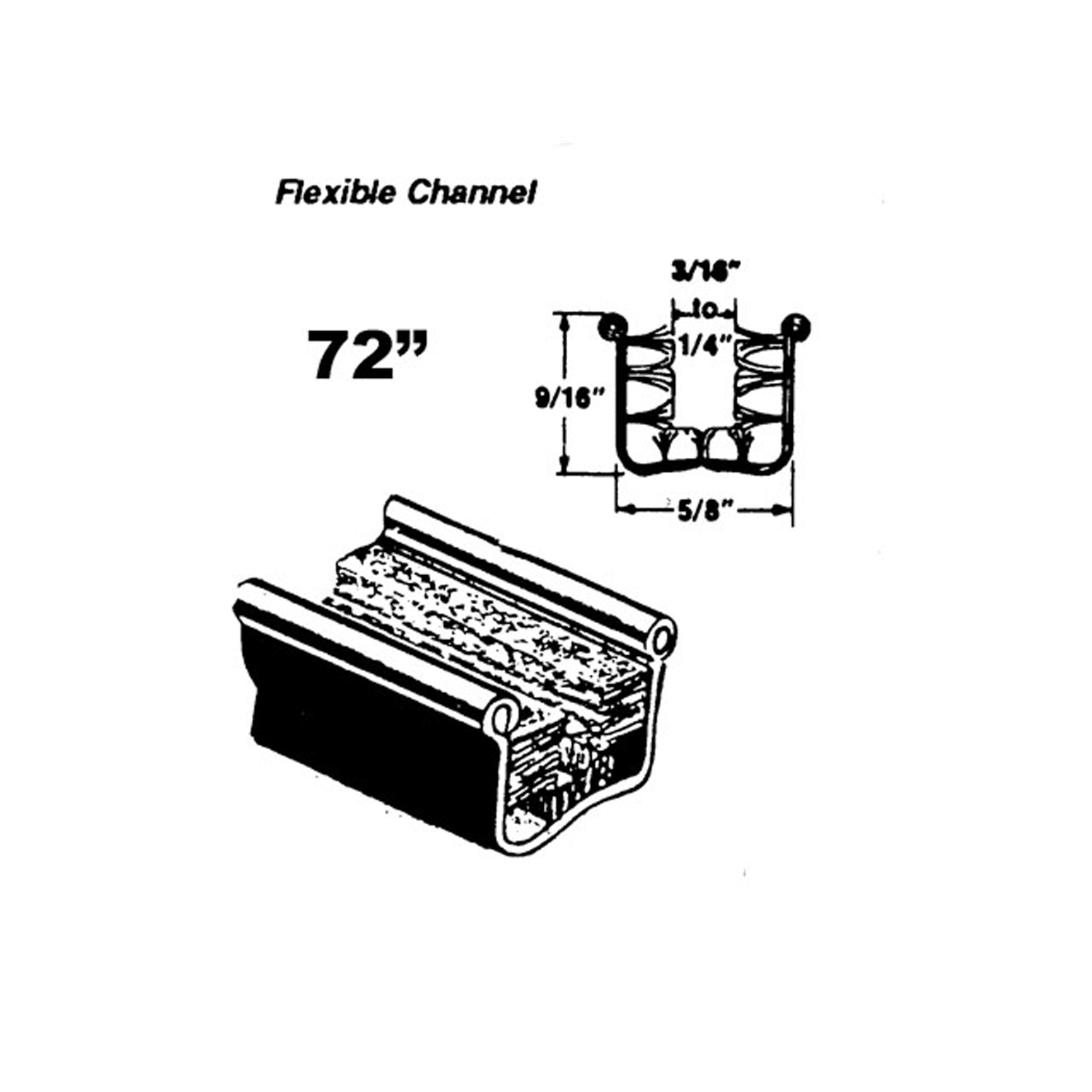 1934 Cadillac SERIES 20 Flexible glass-run channel-WC 11-72Flexible glass-run channel. Mohair lined, cloth covered with stainless steel bead. Used on side windows. 72 in. long. Each. NOTE: $20 special shipping charge applies for domestic orders. Call or email for overseas shipping costs. Part can be sectioned in two equal lengths to reduce overseas shipping costs.
 1934 Cadillac SERIES 20 Rigid division-bar channel. Made with stainless steel bead-WC 2-72Rigid division-bar channel. Made with stainless steel bead. 72 in. long. Each. NOTE: $20 special shipping charge applies for domestic orders. Call or email for overseas shipping costs. Part can be sectioned into two equal lengths to reduce overseas shipping costs.
 1934 Cadillac SERIES 20 Flexible Rubber Window Channel-WC 32-14Flexible Rubber Window Channel. For Fisher Closed Bodies, except those using a stainless bead type. Used on side windows. 13/16" outer width X 6/16" outer depth, with a 5/16" inner channel width X 14" long. Each
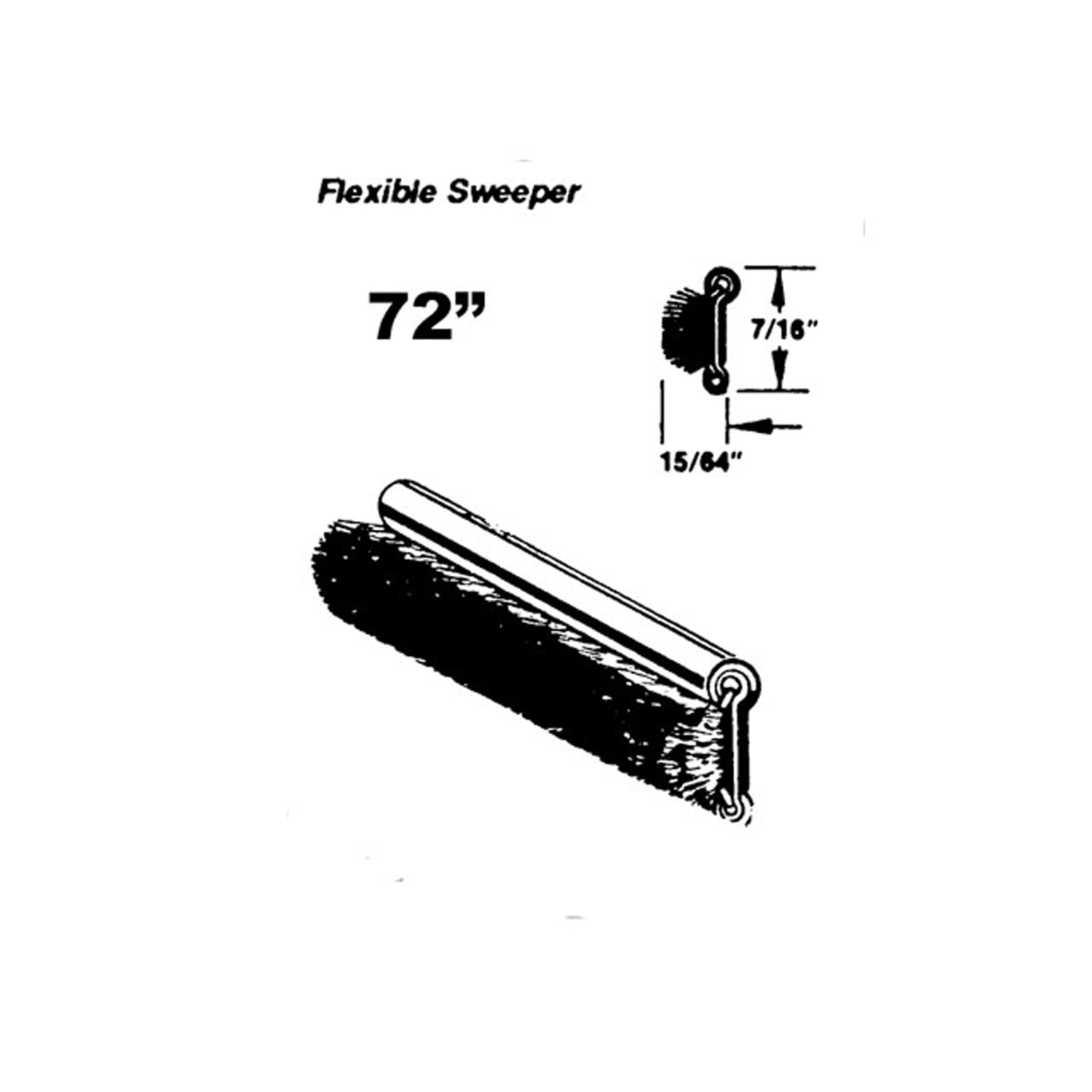 1934 Cadillac SERIES 20 Flexible sweeper. Made with stainless steel bead-WC 8-72Flexible sweeper. Made with stainless steel bead. Used on inner and outer beltlines. Also forms easily for use with sliding quarter windows. 72 in. long. Each. NOTE: $20 special shipping charge applies for domestic orders. Call or email for overseas shipping costs. Part can be sectioned into two equal lengths to reduce overseas shipping costs.
 1934 Cadillac SERIES 20 Fender Bolts. For use with Fender Bolt Washers; WF 3001-WF 3000Fender Bolts. For use with Fender Bolt Washers; WF 3001. Zinc Chromate plated, high strength. 1" X 5/16". Set of 25
 1934 Cadillac SERIES 20 Fender Bolt Washers. For use with Fender Bolts; WF 3000-WF 3001Fender Bolt Washers. For use with Fender Bolts; WF 3000. High quality, cadmium plated. 1-1/4" O.D., 3/8" I.D. Set of 25
Why Choose Metro?
For over 100 years, Metro Moulded Parts has been the pinnacle of quality in classic car restoration parts. Our commitment to precision and authenticity in every component ensures a perfect fit and an OEM-level appearance.
- Expert Craftsmanship & Quality: Each part is a testament to our dedication to reliability and perfection, crafted from original designs and thoroughly tested.
- Advanced Technology: We use cutting-edge techniques to create flawless, long-lasting parts that surpass others in performance.
- SuperSoft Sponge – The Ultimate Door Seal: Not only are our door seals 30% softer than competitors', but they're also guaranteed to never leak. They effectively reduce wind and road noise, enhancing your classic car's comfort and driving experience.
- Proudly American: Our parts are a product of American craftsmanship, made in the USA with a spirit of excellence and heritage.
- Unrivaled Warranty: We back our products with a 30-year industry-leading warranty, a testament to our confidence in their quality.
Join us in preserving the legacy of classic cars with parts that are crafted for perfection, not just made.