

Image of 1935 Cadillac Series 20, Note: These illustrations use artistic license and may differ from actual historical models.
Performance Metrics
Fundamental Metrics
Emotional Appeal
MMP Rating
| Engine Specifications | |
|---|---|
| Engine: | V8 |
| Displacement: | 5.7L |
| Horsepower: | Estimated 95-100 HP |
| Torque: | 200 lb-ft |
| Compression Ratio: | Estimated 6.5:1 |
| Ignition System: | Distributor and coil |
| Cooling System: | Liquid-cooled |
| Performance Specifications | |
| 0-60 Time: | Information not available |
| 1/4 Mile Time: | Information not available |
| Top Speed: | Estimated 75-80 mph |
| Transmission and Drive | |
| Drive Type: | Rear-wheel drive |
| Transmission Type: | 3-speed manual |
| Fuel and Efficiency | |
| Fuel System Type: | Carburetor |
| MPG: | Information not available |
| Dimensions and Brakes | |
| Brakes: | Drum brakes |
| Wheelbase: | 128 inches |
| Weight: | Estimated 4,500 lbs |
Note: Specifications for classic cars are given to the best of our ability, considering the limited and variant data available.
1935 Cadillac Series 20: A Classic American Luxury Car
The 1935 Cadillac Series 20 brought the polish of Cadillac’s big V8 cars to a roomy, well-appointed chassis, combining elegant prewar styling with engineering that made luxury motoring feel more modern. Built by the Cadillac Motor Car Division of General Motors, it belonged to the 355-D family, whose cars helped define Cadillac’s reputation for quiet power and formal comfort during the depths of the Great Depression.
One detail that makes the 1935 model especially interesting is its timing: it arrived as GM was introducing the all-steel Turret Top body, a significant step away from the fabric-covered roof construction still associated with many earlier automobiles. The result was a cleaner-looking, more solid passenger compartment and a car that felt unmistakably of a new era.
Art Deco Style and Cadillac Craftsmanship
The Series 20 wore a handsome, upright face, with a tall, carefully shaped grille, a prominent hood, and headlamps mounted in flowing front fenders. Its long hood and sweeping fenders gave it the formal proportions expected of a Cadillac, while rounded contours softened the car’s otherwise imposing profile. Chrome trim was used as an accent rather than a substitute for design, emphasizing the grille, lamps, bumpers, and window surrounds.
Inside, buyers found the generous seating and substantial finish that made Cadillacs prestige cars. Depending on body style and specification, the cabin could include rich upholstery, polished wood or wood-grain trim, broad instrument panels, and carefully finished door panels. The materials and fittings were intended to feel durable as well as luxurious. Today, the condition of original upholstery, trim, gauges, and interior hardware can make a major difference to a car’s appeal and value.
Factory paint choices varied by body and production specification. Period Cadillac colors included dark and restrained shades such as black, maroon, blue, green, and gray, with two-tone treatments available on some configurations. Black and deep, formal colors suit the car’s stately character particularly well, though restorers should check surviving paint traces or factory records before choosing a color for a historically accurate restoration.
Series 20 Body Styles
The Series 20 was one of the 355-D family’s chassis offerings, and Cadillac sold the range in several closed and open body styles. Sedans were the natural choice for buyers who wanted a comfortable family or chauffeur-driven car, while coupe and convertible forms offered a more personal, sporting look. Exact body availability depended on the model and coachwork catalog, so the name “Series 20” alone does not identify one single body design.
For many enthusiasts, the most representative Series 20 is a well-preserved sedan: it shows off the Cadillac’s long profile, formal passenger compartment, and practical side of luxury. Open cars and distinctive coupes can be especially eye-catching, but they are generally encountered less often and may command a premium when their condition and documentation are strong.
Engineering That Moved Cadillac Forward
At the heart of the 1935 Cadillac 355-D was a 353-cubic-inch side-valve V8. In period specification, it produced about 130 horsepower, with a smooth delivery that suited a heavy luxury automobile. A three-speed manual transmission with synchromesh helped make shifting less demanding than in many earlier cars, while hydraulic brakes provided more modern, consistent stopping control than mechanical systems.
The 1935 Turret Top was an important part of GM’s wider move toward all-steel closed-car construction. A solid steel roof helped create a quieter, more substantial-feeling cabin and contributed to the evolving shape of the modern automobile. Cadillac’s appeal also rested on refinement: the V8 was designed to deliver its power smoothly, rather than make a dramatic show of it.
What set the Series 20 apart from many contemporaries was the blend of size, engineering, and finish. It offered serious road presence and a large-displacement engine, but its purpose was not simply to travel fast. Cadillac aimed to make long-distance driving calmer and more comfortable, a formula that helped establish the marque as a leader in American luxury cars.
Performance and Road Manners
There are few standardized modern performance tests for every Series 20 body configuration, and weight, gearing, condition, and tire choice all affect the result. As a practical estimate, a healthy car may reach roughly 80 to 90 mph, while acceleration from 0 to 60 mph is likely to take around 20 to 25 seconds. Those figures are estimates, not guaranteed factory test results, and a 1935 Cadillac is best appreciated for its relaxed cruising rather than quick acceleration.
On a smooth road, the car’s long wheelbase and substantial mass give it a composed, stately ride. It can take ordinary bumps with the measured motion expected of a luxury car of its period, though modern drivers should not expect the isolation or precision of a contemporary sedan. On winding roads, the Series 20 rewards a steady hand and early planning. Its size and age are noticeable, particularly when cornering or braking, so smooth inputs matter.
Behind the wheel, the V8’s low, even rumble is part of the experience. The steering, controls, and shift action feel more physical than those of a modern car, and the driver needs to anticipate traffic rather than rely on quick responses. The pleasure is in the sound of the engine settling into a cruise, the view over the long hood, and the sense of motion delivered with old-fashioned dignity.
Living With a 1935 Cadillac
Today, most Series 20s are collector cars used for shows, touring events, club gatherings, and occasional fair-weather drives. A carefully maintained example can still cover meaningful distances, but regular commuting is rarely practical. Parts availability, fuel economy, weather protection, and the value of an original car all encourage owners to preserve rather than use one as an everyday vehicle.
Maintenance is manageable for an experienced vintage-car owner, but it is not quite a modern do-it-yourself job. The ignition, carburetor, cooling system, brakes, and lubrication need periodic attention, and the six-volt electrical system rewards clean connections and a healthy battery. Hydraulic brakes should be inspected carefully, especially if a car has been stored. Many repairs are straightforward in principle, but age, seized fasteners, scarce trim pieces, and the need to protect original components can make restoration work time-consuming.
Reliability depends heavily on how well the car has been restored and maintained. A recently rebuilt engine is no guarantee of a dependable car if the fuel system, wiring, tires, or brakes have been neglected. Before purchase, a specialist inspection is wise, with particular attention to the frame, body structure, engine condition, transmission, brake hydraulics, and the availability of correct replacement parts.
Notable Facts and Common Criticisms
The Series 20 is part of Cadillac’s 355-D family, rather than a separate marque or a later Cadillac model name. That distinction matters when researching the car: production records and advertisements may group figures under the broader 355-D designation instead of listing Series 20 totals separately. The 1935 all-steel Turret Top is another notable feature, reflecting a broader industry shift toward stronger, more integrated closed bodies.
There is no widely recognized Series 20 speed or endurance record that defines the model’s reputation. Its achievement was quieter: it offered prestige, V8 power, and long-distance comfort at a time when the American car industry was still navigating the Depression. Individual cars may have interesting ownership histories, but celebrity associations should be supported by documentation rather than assumed from the Cadillac name alone.
Common criticisms are familiar to anyone considering a prewar luxury car. The Series 20 is large, thirsty by modern standards, and less agile than a contemporary automobile. Braking distances are longer, visibility and controls differ from what today’s drivers expect, and good restoration work can be expensive. Those trade-offs are part of its character, but they make careful driving and realistic ownership plans essential.
Collector Value and Rarity
Exact Series 20 production totals can be difficult to isolate from the larger Cadillac 355-D figures. As a broad, informed estimate rather than a verified factory count, roughly 1,500 to 2,500 Series 20 cars may have been produced. Surviving examples are much fewer, and availability depends strongly on body style, originality, and condition.
In the current collector market, a project car or one needing substantial restoration might sell for approximately $20,000 to $40,000. A sound, presentable driver could fall around $40,000 to $75,000, while a high-quality, correctly restored example may bring roughly $75,000 to $120,000 or more. Rare body styles, exceptional provenance, and concours-level restoration can push prices higher; incomplete cars or poorly executed restorations can fall below these ranges. These are broad estimates, and actual sales vary by market and condition.
Over the long term, well-documented and correctly restored prewar Cadillacs have tended to hold collector interest, but values do not rise uniformly. Exceptional examples can appreciate, while ordinary cars may remain flat after restoration costs are considered. Buyers increasingly value authenticity, sound bodywork, and clear history over expensive but inaccurate cosmetic upgrades.
Why the 1935 Cadillac Series 20 Still Matters
The 1935 Cadillac Series 20 combines a smooth 353-cubic-inch V8, formal American styling, substantial craftsmanship, and the period’s move toward all-steel closed-car construction. It was built for comfortable travel and quiet prestige, not record-breaking acceleration, and its long, composed road manners still make that mission easy to understand.
For collectors, the Series 20 is both a handsome prewar Cadillac and a snapshot of an industry changing quickly. Its appeal lies in the details: the steel-roofed body, the measured V8 note, the sweeping fenders, and the sense that every mile should be taken at the car’s own unhurried pace.
1935 Cadillac Series 20 Catalog of Parts
 1935 Cadillac SERIES 20 Spring and Shackle Bushing-BN 21Spring and Shackle Bushing. For front eye on rear leaf spring. 1-1/2" bottom O.D X 1-1/4" high, with 3/4" I.D. Each
 1935 Cadillac SERIES 20 Spring and Shackle Bushing-BN 22Spring and Shackle Bushing. For front or rear eyes on rear leaf spring. 1-3/4" bottom O.D X 1-3/8" high, with 3/4" I.D. Each
 1935 Cadillac SERIES 20 Upper Door Hinge Post Bumper. Held by screw-DB 60-AUpper Door Hinge Post Bumper. Held by screw. 7/8" diameter X 1/8" thick. Each
 1935 Cadillac SERIES 20 Inner and Outer Center Division Bar Seals-DP 20Inner and Outer Center Division Bar Seals. Each piece 14-1/4" long. Set
 1935 Cadillac SERIES 20 Rear Hood Corners. 1-1/4" wide. Pair-HC 29Rear Hood Corners. 1-1/4" wide. Pair
 1935 Cadillac SERIES 20 Headlight/Park Light Pads. 3-1/4" wide X 7-5/8" long-MP 340Headlight/Park Light Pads. 3-1/4" wide X 7-5/8" long. Pair
 1935 Cadillac SERIES 20 Rumble Seat Step Plate Bracket Pad-MP 348-BRumble Seat Step Plate Bracket Pad. 3-1/8" wide X 4-7/8" long. Each
 1935 Cadillac SERIES 20 Tail-Light Pads. 2" wide X 8-1/2" long. Pair-MP 360Tail-Light Pads. 2" wide X 8-1/2" long. Pair
 1935 Cadillac SERIES 20 Headlight Pads. 3-7/8" wide X 12-3/8" long. Pair R&L-MP 372Headlight Pads. 3-7/8" wide X 12-3/8" long. Pair R&L
 1935 Cadillac SERIES 20 Rumble Seat Step Plate Bracket. 4-1/2" wide X 4-1/4" long-MP 374-BRumble Seat Step Plate Bracket. 4-1/2" wide X 4-1/4" long. Each
 1935 Cadillac SERIES 20 Rumble Seat Step Plate Bracket Pad. Each-MP 380-ARumble Seat Step Plate Bracket Pad. Each
 1935 Cadillac SERIES 20 Door Handle Ferrule Grommet. I.D. 11/16", O.D. 1-3/16"-MP 546-IDoor Handle Ferrule Grommet. I.D. 11/16", O.D. 1-3/16". Each
 1935 Cadillac SERIES 20 Cowl Vent Seal. 3-1/4" wide X 15-5/8" long. Each-RP 100-JCowl Vent Seal. 3-1/4" wide X 15-5/8" long. Each
 1935 Cadillac SERIES 20 Door Lock Knob. Brown. 1/2" diameter X 1" long X 1/8" hole-RP 303Door Lock Knob. Brown. 1/2" diameter X 1" long X 1/8" hole. Each
 1935 Cadillac SERIES 20 Door Bumper. 1" diameter X 1/4" thick Each-SB 60Door Bumper. 1" diameter X 1/4" thick Each
 1935 Cadillac SERIES 20 Spare Tire Mount Bumper. 5/8" square. Each-SB 80Spare Tire Mount Bumper. 5/8" square. Each
 1935 Cadillac SERIES 20 Vertical Seal for Vent Window. Each is 17" long. Pair-VS 2Vertical Seal for Vent Window. Each is 17" long. Pair
 1935 Cadillac SERIES 20 Flexible glass-run channel-WC 11-72Flexible glass-run channel. Mohair lined, cloth covered with stainless steel bead. Used on side windows. 72 in. long. Each. NOTE: $20 special shipping charge applies for domestic orders. Call or email for overseas shipping costs. Part can be sectioned in two equal lengths to reduce overseas shipping costs.
 1935 Cadillac SERIES 20 Rigid division-bar channel. Made with stainless steel bead-WC 2-72Rigid division-bar channel. Made with stainless steel bead. 72 in. long. Each. NOTE: $20 special shipping charge applies for domestic orders. Call or email for overseas shipping costs. Part can be sectioned into two equal lengths to reduce overseas shipping costs.
 1935 Cadillac SERIES 20 Flexible Rubber Window Channel-WC 32-14Flexible Rubber Window Channel. For Fisher Closed Bodies, except those using a stainless bead type. Used on side windows. 13/16" outer width X 6/16" outer depth, with a 5/16" inner channel width X 14" long. Each
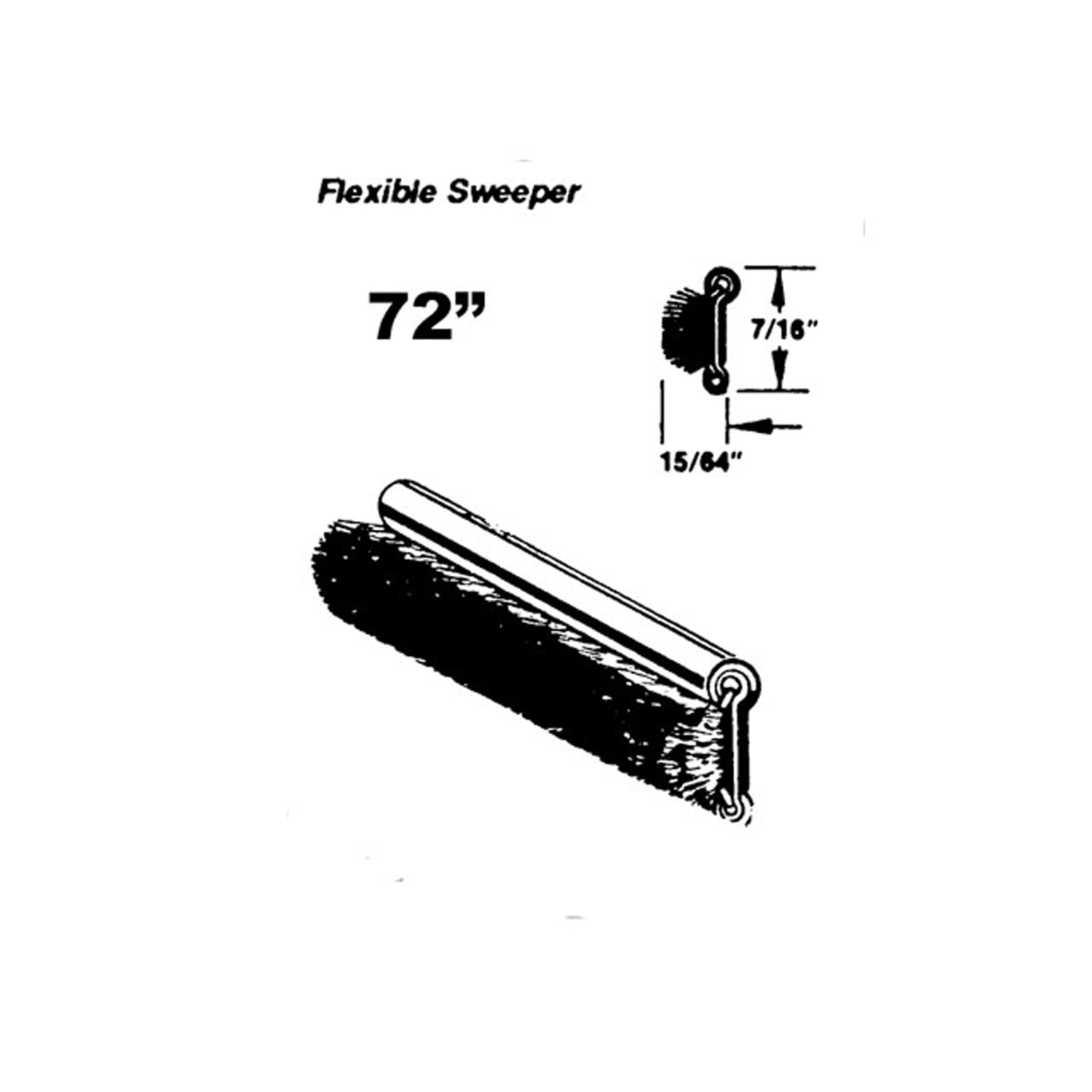 1935 Cadillac SERIES 20 Flexible sweeper. Made with stainless steel bead-WC 8-72Flexible sweeper. Made with stainless steel bead. Used on inner and outer beltlines. Also forms easily for use with sliding quarter windows. 72 in. long. Each. NOTE: $20 special shipping charge applies for domestic orders. Call or email for overseas shipping costs. Part can be sectioned into two equal lengths to reduce overseas shipping costs.
 1935 Cadillac SERIES 20 Fender Bolts. For use with Fender Bolt Washers; WF 3001-WF 3000Fender Bolts. For use with Fender Bolt Washers; WF 3001. Zinc Chromate plated, high strength. 1" X 5/16". Set of 25
 1935 Cadillac SERIES 20 Fender Bolt Washers. For use with Fender Bolts; WF 3000-WF 3001Fender Bolt Washers. For use with Fender Bolts; WF 3000. High quality, cadmium plated. 1-1/4" O.D., 3/8" I.D. Set of 25
Why Choose Metro?
For over 100 years, Metro Moulded Parts has been the pinnacle of quality in classic car restoration parts. Our commitment to precision and authenticity in every component ensures a perfect fit and an OEM-level appearance.
- Expert Craftsmanship & Quality: Each part is a testament to our dedication to reliability and perfection, crafted from original designs and thoroughly tested.
- Advanced Technology: We use cutting-edge techniques to create flawless, long-lasting parts that surpass others in performance.
- SuperSoft Sponge – The Ultimate Door Seal: Not only are our door seals 30% softer than competitors', but they're also guaranteed to never leak. They effectively reduce wind and road noise, enhancing your classic car's comfort and driving experience.
- Proudly American: Our parts are a product of American craftsmanship, made in the USA with a spirit of excellence and heritage.
- Unrivaled Warranty: We back our products with a 30-year industry-leading warranty, a testament to our confidence in their quality.
Join us in preserving the legacy of classic cars with parts that are crafted for perfection, not just made.