

Image of 1935 Cadillac Series 30 Fleetwood, Note: These illustrations use artistic license and may differ from actual historical models.
Performance Metrics
Fundamental Metrics
Emotional Appeal
MMP Rating
| Engine Specifications | |
|---|---|
| Engine: | V8 |
| Displacement: | 5.7L |
| Horsepower: | Estimated 95-100 HP |
| Torque: | 180 lb-ft |
| Compression Ratio: | Estimated 6.5:1 |
| Ignition System: | Distributor and coil |
| Cooling System: | Liquid-cooled |
| Performance Specifications | |
| 0-60 Time: | Information not available |
| 1/4 Mile Time: | Information not available |
| Top Speed: | 80 mph |
| Transmission and Drive | |
| Drive Type: | Rear-wheel drive |
| Transmission Type: | 3-speed manual |
| Fuel and Efficiency | |
| Fuel System Type: | Carburetor |
| MPG: | Information not available |
| Dimensions and Brakes | |
| Brakes: | Drum brakes |
| Wheelbase: | 140 inches |
| Weight: | Estimated 4,500 lbs |
Note: Specifications for classic cars are given to the best of our ability, considering the limited and variant data available.
1935 Cadillac Series 30 Fleetwood: A Hand-Built American Flagship
The 1935 Cadillac Fleetwood made even an ordinary arrival feel like an occasion. Long, formal, and finished with the confidence of a car built for America’s most prosperous motorists, it combined Cadillac engineering with the custom-carriage tradition of Fleetwood coachwork.
Cadillac was part of General Motors, while Fleetwood was the marque’s prestigious coachbuilding operation. By the mid-1930s, Fleetwood bodies were offered on Cadillac chassis, bringing tailored interiors and distinctive bodywork to the company’s range. Period and modern references do not always use series names consistently: the 1935 Cadillac V-8 is commonly listed as the Series 355-D, while “Series 30” also appears in some descriptions and listings. For buyers and collectors, the exact body style, chassis, and provenance are often more useful identifiers than the series label alone.
The timing matters. The Great Depression had sharply reduced demand for expensive automobiles, yet Cadillac continued to build cars that showcased advanced engineering and high-end craftsmanship. That made a 1935 Fleetwood both a luxury purchase and a statement of confidence. Its most intriguing distinction is that Fleetwood was not simply a trim package: it represented a separate coachbuilding heritage, bringing bespoke character to Cadillac’s already prestigious platform.
Fleetwood Styling and Coachbuilt Detail
The 1935 Cadillac’s shape balances upright formality with a more streamlined look than the boxier luxury cars of the previous decade. A tall, carefully shaped grille leads the eye toward the hood, while sweeping front fenders flow back toward the passenger compartment. The fenders, running boards, and broad body sides give the car a substantial stance, and the long hood makes the V-8 powerplant part of the visual story.
Fleetwood versions could add their own touches to the overall effect. Depending on the body style, details might include distinctive window arrangements, elegant moldings, formal rooflines, and carefully finished exterior trim. The result was less about flashy ornament and more about proportion and presence. A well-preserved example still looks imposing without needing brightwork on every surface.
Inside, the car was designed for comfort and ceremony. Rich upholstery, polished wood trim, quality carpeting, and substantial door panels helped create a quiet, finished cabin. Materials and specifications varied by body style and customer order, so surviving cars can differ considerably. A limousine or formal sedan might emphasize passenger comfort in the rear, while a coupe or convertible gave more attention to the driver’s seating and open-air motoring.
Factory paint choices varied by body and specification. Dark shades such as black, maroon, deep blue, green, and gray suited the car’s formal character, while two-tone combinations could emphasize the flowing fenders and body lines. Black remains a popular restoration choice, but a correctly documented original color can make a car more historically interesting and appealing to collectors.
Body Styles and Individual Character
Cadillac offered a range of body styles across its 1935 V-8 line, with Fleetwood supplying some of the more formal and individually detailed versions. Depending on the specific chassis and catalog, buyers could find sedans, coupes, convertible models, and chauffeur-oriented bodies such as limousines or town cars. Exact availability differed, and not every body style was offered on every wheelbase.
The formal sedan and limousine are among the most recognizable Fleetwood interpretations. Their long rooflines and spacious rear compartments suited owners who traveled with a chauffeur or hosted passengers. Convertible models, by contrast, brought a more social, leisure-minded character to the Cadillac formula. When shopping, confirm the body style against the car’s serial information and period documentation. A Fleetwood nameplate alone does not tell the whole story of how a particular car was originally built.
Engineering in a Changing Automotive Era
Cadillac’s reputation rested on more than elaborate interiors. The 1935 V-8 used a 353-cubic-inch side-valve engine producing approximately 130 horsepower. It was paired with a three-speed manual transmission, and the chassis reflected the era’s continuing progress in braking, suspension, and body construction. Cadillac had already established a reputation for smooth, refined V-8 power, and the 1935 engine continued that tradition with the torque needed to move a large luxury car with composure.
The wider industry was also changing quickly. All-steel body construction was becoming increasingly important, and GM’s Fisher Body organization helped bring stronger, more integrated body structures to the market. Cadillac’s premium models combined that manufacturing progress with Fleetwood’s more personalized approach to coachwork. The result was a car that felt both modern for its day and rooted in the older custom-body tradition.
What set the Fleetwood apart from many contemporaries was this blend of scale, engineering, and finish. It competed in a world of expensive Packards, Lincolns, and other luxury automobiles, but Cadillac offered a particularly strong combination of refined V-8 performance and GM’s growing production expertise. Its influence is visible in the way later luxury cars paired sophisticated mechanical design with carefully styled, well-appointed cabins.
V-8 Performance and the Road Feel
Performance figures for 1930s cars should be treated as estimates. Tires, gearing, body style, mechanical condition, and test methods all affect the result, and factory acceleration figures are not consistently available for every Fleetwood configuration. A healthy 1935 Cadillac V-8 could reach roughly 80 to 85 mph, while a 0-to-60-mph run would likely take around 18 to 22 seconds. A heavier limousine or formal sedan would generally be slower than a lighter body.
On the road, the Cadillac’s strength was not quick acceleration but smooth, relaxed progress. The V-8 delivered its power with a deep, even sound, and its torque made steady cruising feel natural. The three-speed manual requires deliberate shifts by modern standards, but the engine’s flexible character means the driver does not need to chase high revs to keep the car moving.
The ride is best understood as substantial and composed rather than sporty. The suspension can soften ordinary road imperfections, though large potholes and rough surfaces still make themselves known through the car’s weight and period chassis design. On winding roads, the Cadillac feels broad and deliberate. It rewards measured steering inputs and a calm pace rather than fast cornering. Crosswinds and uneven pavement can also remind the driver that this is a large prewar automobile, not a modern touring sedan.
From behind the wheel, the experience is wonderfully physical. The driver sits among broad fenders, a large steering wheel, and prominent period instruments, with the engine’s quiet rumble and the movement of the chassis always present. It asks for attention and anticipation, especially when braking or maneuvering in tight spaces, but that involvement is part of its appeal.
Owning and Maintaining a Prewar Cadillac
Today, a 1935 Fleetwood is more likely to be a show car, touring car, or carefully used weekend vehicle than a daily driver. Some owners take their cars on vintage rallies and regional tours, where steady speeds and prepared routes suit the Cadillac’s strengths. Regular commuting is possible in theory, but modern traffic, limited parts availability, and the value of an original car make it an impractical choice for most owners.
Maintenance is manageable for someone experienced with older vehicles, but it is not necessarily easy for an average modern-car owner. The car needs regular attention to its ignition, fuel system, cooling system, lubrication, brakes, and electrical connections. Parts for common service items may be available through specialist suppliers or enthusiast networks, while trim, body, and Fleetwood-specific components can be difficult or expensive to source. Restoration quality matters: a car with sound prior work is usually a better purchase than a superficially polished example with hidden mechanical or structural problems.
Before buying, inspect the frame and body for corrosion or poor repairs, check the engine for signs of overheating or low oil pressure, and test the transmission and brakes. Confirm that the car’s identity and body style match its documentation. A pre-purchase inspection by a mechanic familiar with prewar Cadillacs can prevent costly surprises.
Rare Details, Trivia, and Common Criticisms
Fleetwood’s name carries a particular historical meaning. The company began as an independent coachbuilder in Pennsylvania before becoming part of Cadillac’s luxury-car story. That heritage is why Fleetwood is associated with individualized craftsmanship, even as the automobile industry increasingly relied on large-scale production.
There is no widely recognized production record or headline speed achievement that defines the 1935 Fleetwood. Its significance lies instead in its place among Cadillac’s Depression-era luxury cars and in the variety of bodies and specifications offered. Production figures for the broader 1935 Cadillac V-8 range are sometimes cited at roughly ten thousand cars, but a reliable total for Fleetwood-bodied cars under the “Series 30” label is difficult to isolate. Treat any precise figure for that specific category with caution.
Common criticisms are familiar to anyone who drives a prewar luxury car: the brakes and steering require more effort than modern systems, the car is large in tight spaces, and its performance is modest by current standards. Fuel economy is also poor compared with contemporary vehicles. Those limitations are part of the period experience, but they are important realities for an owner who intends to drive the car regularly.
Collector Value and Market Outlook
Values depend heavily on body style, originality, condition, restoration quality, and documentation. As a broad current-market estimate, a project or incomplete car might sell for approximately $25,000 to $45,000. A sound driver or older restoration could fall around $50,000 to $100,000, while a top-quality restoration or especially desirable Fleetwood body may bring roughly $100,000 to $200,000 or more. Exceptional examples with rare coachwork, strong provenance, or concours-level presentation can exceed that range.
Availability is limited. The broader 1935 Cadillac V-8 production run was modest by mass-market standards, and Fleetwood-bodied examples make up only a portion of it. There is no dependable count for surviving cars, and no precise production total should be assumed for a “Series 30 Fleetwood” without supporting factory records.
Like many prewar classics, the car’s market is selective. Excellent, authentic examples tend to hold collector interest, while cars needing extensive restoration can be difficult to sell because specialist labor and correct parts are costly. Nominal prices for the best cars have generally been resilient, but values do not rise automatically. Condition, provenance, and the quality of the restoration matter more than simply owning a rare nameplate.
Why the 1935 Fleetwood Still Matters
The 1935 Cadillac Fleetwood brings together the strengths that made Cadillac a leading American luxury marque: a smooth V-8, commanding proportions, carefully finished interiors, and the extra distinction of Fleetwood coachwork. It belongs to a pivotal period when custom-carriage traditions were meeting modern factory production, and when luxury manufacturers had to prove that refinement could still matter during difficult economic times.
It is not a fast or effortless car by modern standards, and it asks its owner for patience, mechanical sympathy, and room to maneuver. In return, it offers something few newer vehicles can: the feeling of traveling in a hand-finished piece of American automotive history. On the road or at rest, a 1935 Fleetwood does more than recall a grand era. It makes that era feel vividly present.
1935 Cadillac Series 30 Fleetwood Catalog of Parts
 1935 Cadillac SERIES 30 FLEETWOOD Spring and Shackle Bushing-BN 21Spring and Shackle Bushing. For front eye on rear leaf spring. 1-1/2" bottom O.D X 1-1/4" high, with 3/4" I.D. Each
 1935 Cadillac SERIES 30 FLEETWOOD Spring and Shackle Bushing-BN 22Spring and Shackle Bushing. For front or rear eyes on rear leaf spring. 1-3/4" bottom O.D X 1-3/8" high, with 3/4" I.D. Each
 1935 Cadillac SERIES 30 FLEETWOOD Upper Door Hinge Post Bumper. Held by screw-DB 60-AUpper Door Hinge Post Bumper. Held by screw. 7/8" diameter X 1/8" thick. Each
 1935 Cadillac SERIES 30 FLEETWOOD Inner and Outer Center Division Bar Seals-DP 20Inner and Outer Center Division Bar Seals. Each piece 14-1/4" long. Set
 1935 Cadillac SERIES 30 FLEETWOOD Rear Hood Corners. 1-1/4" wide. Pair-HC 29Rear Hood Corners. 1-1/4" wide. Pair
 1935 Cadillac SERIES 30 FLEETWOOD Headlight/Park Light Pads. 3-1/4" wide X 7-5/8" long-MP 340Headlight/Park Light Pads. 3-1/4" wide X 7-5/8" long. Pair
 1935 Cadillac SERIES 30 FLEETWOOD Rumble Seat Step Plate Bracket Pad-MP 348-BRumble Seat Step Plate Bracket Pad. 3-1/8" wide X 4-7/8" long. Each
 1935 Cadillac SERIES 30 FLEETWOOD Tail-Light Pads. 2" wide X 8-1/2" long. Pair-MP 360Tail-Light Pads. 2" wide X 8-1/2" long. Pair
 1935 Cadillac SERIES 30 FLEETWOOD Headlight Pads. 3-7/8" wide X 12-3/8" long. Pair R&L-MP 372Headlight Pads. 3-7/8" wide X 12-3/8" long. Pair R&L
 1935 Cadillac SERIES 30 FLEETWOOD Rumble Seat Step Plate Bracket. 4-1/2" wide X 4-1/4" long-MP 374-BRumble Seat Step Plate Bracket. 4-1/2" wide X 4-1/4" long. Each
 1935 Cadillac SERIES 30 FLEETWOOD Rumble Seat Step Plate Bracket Pad. Each-MP 380-ARumble Seat Step Plate Bracket Pad. Each
 1935 Cadillac SERIES 30 FLEETWOOD Door Handle Ferrule Grommet. I.D. 11/16", O.D. 1-3/16"-MP 546-IDoor Handle Ferrule Grommet. I.D. 11/16", O.D. 1-3/16". Each
 1935 Cadillac SERIES 30 FLEETWOOD Cowl Vent Seal. 3-1/4" wide X 15-5/8" long. Each-RP 100-JCowl Vent Seal. 3-1/4" wide X 15-5/8" long. Each
 1935 Cadillac SERIES 30 FLEETWOOD Door Lock Knob. Brown. 1/2" diameter X 1" long X 1/8" hole-RP 303Door Lock Knob. Brown. 1/2" diameter X 1" long X 1/8" hole. Each
 1935 Cadillac SERIES 30 FLEETWOOD Door Bumper. 1" diameter X 1/4" thick Each-SB 60Door Bumper. 1" diameter X 1/4" thick Each
 1935 Cadillac SERIES 30 FLEETWOOD Spare Tire Mount Bumper. 5/8" square. Each-SB 80Spare Tire Mount Bumper. 5/8" square. Each
 1935 Cadillac SERIES 30 FLEETWOOD Vertical Seal for Vent Window. Each is 17" long. Pair-VS 2Vertical Seal for Vent Window. Each is 17" long. Pair
 1935 Cadillac SERIES 30 FLEETWOOD Flexible glass-run channel-WC 11-72Flexible glass-run channel. Mohair lined, cloth covered with stainless steel bead. Used on side windows. 72 in. long. Each. NOTE: $20 special shipping charge applies for domestic orders. Call or email for overseas shipping costs. Part can be sectioned in two equal lengths to reduce overseas shipping costs.
 1935 Cadillac SERIES 30 FLEETWOOD Rigid division-bar channel. Made with stainless steel bead-WC 2-72Rigid division-bar channel. Made with stainless steel bead. 72 in. long. Each. NOTE: $20 special shipping charge applies for domestic orders. Call or email for overseas shipping costs. Part can be sectioned into two equal lengths to reduce overseas shipping costs.
 1935 Cadillac SERIES 30 FLEETWOOD Flexible Rubber Window Channel-WC 32-14Flexible Rubber Window Channel. For Fisher Closed Bodies, except those using a stainless bead type. Used on side windows. 13/16" outer width X 6/16" outer depth, with a 5/16" inner channel width X 14" long. Each
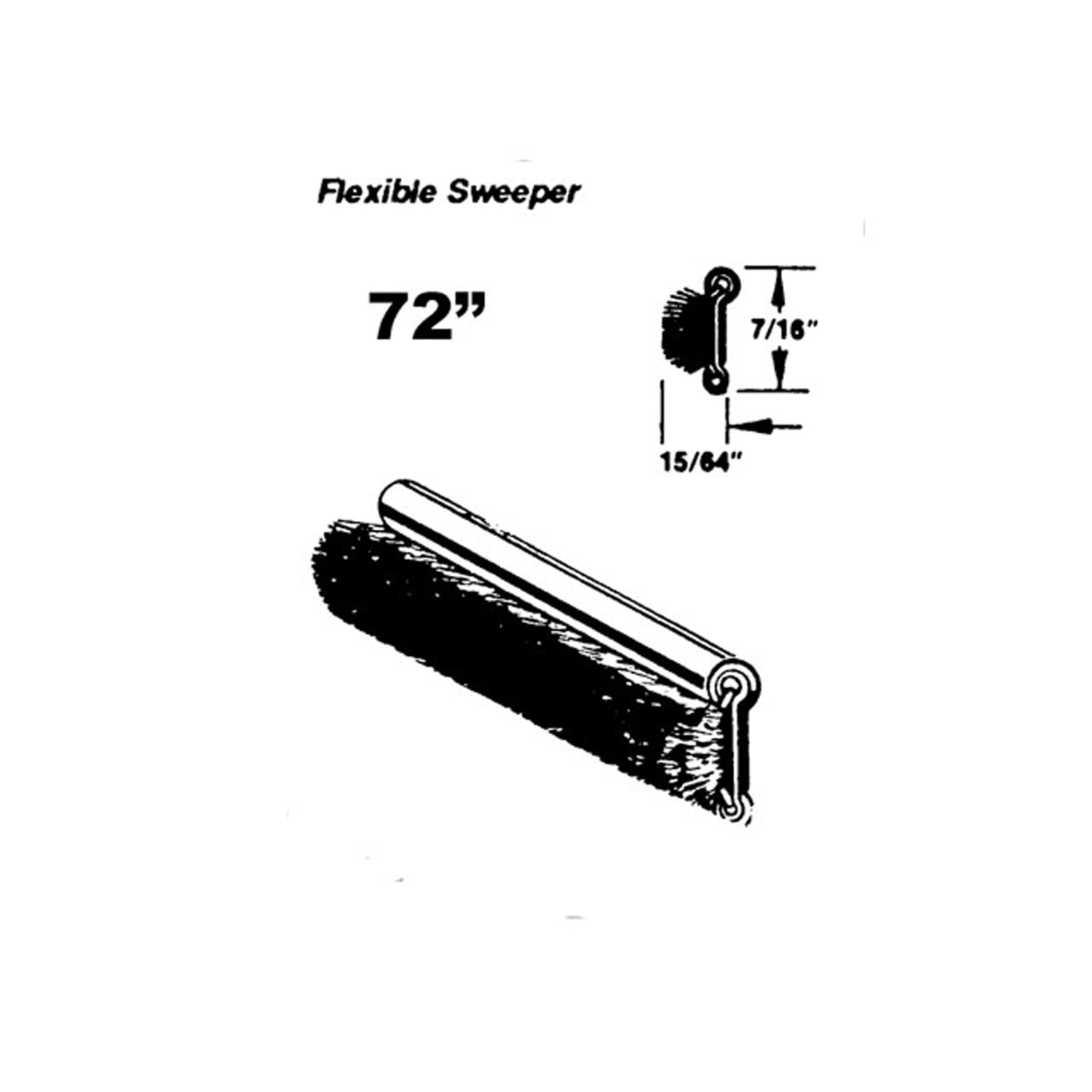 1935 Cadillac SERIES 30 FLEETWOOD Flexible sweeper. Made with stainless steel bead-WC 8-72Flexible sweeper. Made with stainless steel bead. Used on inner and outer beltlines. Also forms easily for use with sliding quarter windows. 72 in. long. Each. NOTE: $20 special shipping charge applies for domestic orders. Call or email for overseas shipping costs. Part can be sectioned into two equal lengths to reduce overseas shipping costs.
 1935 Cadillac SERIES 30 FLEETWOOD Fender Bolts. For use with Fender Bolt Washers; WF 3001-WF 3000Fender Bolts. For use with Fender Bolt Washers; WF 3001. Zinc Chromate plated, high strength. 1" X 5/16". Set of 25
 1935 Cadillac SERIES 30 FLEETWOOD Fender Bolt Washers. For use with Fender Bolts; WF 3000-WF 3001Fender Bolt Washers. For use with Fender Bolts; WF 3000. High quality, cadmium plated. 1-1/4" O.D., 3/8" I.D. Set of 25
Why Choose Metro?
For over 100 years, Metro Moulded Parts has been the pinnacle of quality in classic car restoration parts. Our commitment to precision and authenticity in every component ensures a perfect fit and an OEM-level appearance.
- Expert Craftsmanship & Quality: Each part is a testament to our dedication to reliability and perfection, crafted from original designs and thoroughly tested.
- Advanced Technology: We use cutting-edge techniques to create flawless, long-lasting parts that surpass others in performance.
- SuperSoft Sponge – The Ultimate Door Seal: Not only are our door seals 30% softer than competitors', but they're also guaranteed to never leak. They effectively reduce wind and road noise, enhancing your classic car's comfort and driving experience.
- Proudly American: Our parts are a product of American craftsmanship, made in the USA with a spirit of excellence and heritage.
- Unrivaled Warranty: We back our products with a 30-year industry-leading warranty, a testament to our confidence in their quality.
Join us in preserving the legacy of classic cars with parts that are crafted for perfection, not just made.