

Image of 1936 Cadillac Series 60, Note: These illustrations use artistic license and may differ from actual historical models.
Performance Metrics
Fundamental Metrics
Emotional Appeal
MMP Rating
| Engine Specifications | |
|---|---|
| Engine: | Monobloc V8 |
| Displacement: | 322 cu in (5.3 L) |
| Horsepower: | Estimated 125-150 HP |
| Torque: | Not available |
| Compression Ratio: | 6.25:1 |
| Ignition System: | Battery and coil |
| Cooling System: | Liquid-cooled |
| Performance Specifications | |
| 0-60 Time: | Not available |
| 1/4 Mile Time: | Not available |
| Top Speed: | Estimated 85-90 mph |
| Transmission and Drive | |
| Drive Type: | Rear-wheel drive |
| Transmission Type: | 3-speed manual |
| Fuel and Efficiency | |
| Fuel System Type: | Carburetor |
| MPG: | Not available |
| Dimensions and Brakes | |
| Brakes: | Mechanical drum brakes |
| Wheelbase: | 131 in (3,327 mm) |
| Weight: | Estimated 4,600 lbs |
Note: Specifications for classic cars are given to the best of our ability, considering the limited and variant data available.
1936 Cadillac Series 60: A New Way Into Cadillac Ownership
In 1936, Cadillac made its prestige more attainable without giving up the V8 power, carefully finished cabin, and unmistakable presence that defined the marque. The new Series 60 was the least expensive Cadillac of its year, but it was no stripped-down economy car. It paired a substantial 322-cubic-inch V8 with handsome Fisher bodywork and the kind of road manners expected from America’s leading luxury-car maker.
Cadillac was part of General Motors, and the Series 60 arrived during a competitive period when automakers were working to bring modern styling and engineering to a wider audience. It sat below Cadillac’s larger, more expensive models and gave buyers a fresh alternative to luxury cars from Lincoln, Packard, and other established rivals. A notable point in its history is that the Series 60 was a first-year model in 1936, launching a new entry point into the Cadillac range while LaSalle, Cadillac’s companion marque, continued alongside it.
Long Hoods, Rounded Fenders, and Cadillac Presence
The Series 60 looked every inch a Cadillac. Its long hood flowed into a tall, upright grille, while sweeping front fenders and integrated headlamps gave the nose a cleaner, more modern appearance than the boxier cars of the early 1930s. Chrome accents added polish without overwhelming the shape. From the side, the low roofline, generous wheelbase, and rounded fenders made the car look substantial even when parked.
Inside, the Series 60 offered a well-finished environment rather than bare-bones entry-level trim. Depending on body style and specification, upholstery could include durable broadcloth or leather, complemented by wood or wood-grain trim, a broad instrument panel, and polished metal fittings. The front bench seat was wide and comfortable, and the cabin had the quiet, formal character expected of a prewar luxury car.
Cadillac’s Fisher Body division supplied the bodies, and the Series 60 was offered in several closed and open configurations. Four-door sedans were practical and are among the most familiar today, while coupe and convertible-coupe styles offered a more personal, stylish profile. Exact body-style availability and trim details varied, so buyers looking at a particular car should check its model-year documentation and body tag.
Factory paint choices varied by body and production details. Period Cadillacs were commonly finished in colors such as black, dark blue, maroon, gray, green, and tan. Dark, formal shades suited the Series 60 especially well, while lighter colors brought out the curves of its fenders and hood. Original paint codes and surviving factory records are the best guide when assessing a car’s authenticity.
Technology for the Luxury-Car Buyer
The Series 60’s most important mechanical feature was its Cadillac V8. The L-head, or flathead, engine displaced 322 cubic inches and produced about 125 horsepower. It was paired with a three-speed manual transmission with synchromesh, which helped make shifts smoother than those in many earlier cars. Hydraulic brakes provided more consistent stopping power than the mechanical systems still found on some less expensive vehicles.
Cadillac also benefited from the industry’s growing move toward all-steel bodies and more integrated styling. Fisher’s Turret Top construction, introduced shortly before the Series 60 arrived, used an all-steel roof structure and helped create a stronger, more modern-looking passenger compartment. In combination, the V8, hydraulic brakes, and contemporary body engineering made the Series 60 feel like a thoroughly up-to-date luxury car for 1936.
A Strategic Cadillac, Not a Lesser One
The Series 60 mattered because it broadened Cadillac’s reach. Rather than asking buyers to step up to one of the company’s larger and costlier models, Cadillac offered a smaller, more affordable car that still carried the marque’s engineering and prestige. That strategy reflected a wider change in the American luxury market: buyers increasingly wanted comfort and status in cars that were easier to purchase and use than the grandest flagships.
The Series 60 was not the first American car to combine luxury with a lower price, and it did not create a single design feature that every rival immediately copied. Its significance lies in how it helped Cadillac compete across a broader price range. It brought the brand’s V8-powered character to a more accessible size and price point, reinforcing the idea that an entry-level luxury car could still feel substantial and refined.
Compared with a full-size Cadillac, the Series 60 was more manageable and less imposing. Compared with ordinary mid-priced cars, it offered a stronger engine, more elaborate finish, and the social appeal of the Cadillac name. That balance helped establish a formula that would remain important to luxury makers for decades.
V8 Performance and Prewar Road Manners
With roughly 125 horsepower moving a car that still weighed well over a ton, the Series 60 was brisk for its day, but it was not a modern performance car. Published figures vary, and condition, gearing, body style, and measurement methods all affect the result. As a reasonable period-car estimate, a sound example might reach a top speed in the neighborhood of 85 mph and accelerate from 0 to 60 mph in roughly 16 to 20 seconds. These are estimates, not guaranteed factory figures for every configuration.
The V8 delivers its power in a relaxed, steady fashion. Rather than demanding high engine speeds, it suits unhurried cruising and strong low- and mid-range pull. The sound is a smooth, subdued burble, with more mechanical presence under acceleration than a modern luxury car but without the sharp note of a high-revving engine.
On a smooth road, the Series 60 feels composed and substantial. Its long wheelbase helps it absorb broad dips and uneven pavement, while the body’s mass gives it a reassuring, settled quality. On rougher surfaces, the solid axles and period suspension cannot match the wheel control of a modern car, and sharp bumps can make the body move around. On winding roads, the driver must plan ahead: steering is slower, the car leans through corners, and the brakes require more anticipation than a contemporary system.
Driving one is an involving experience. The driver works a clutch and gear lever, reads the road well ahead, and allows extra room for braking. The reward is a relaxed, commanding ride that feels quite different from a modern car. The Series 60 is most enjoyable when treated as a refined touring car, not hurried through tight corners.
Living With a 1936 Series 60
Today, the Series 60 is most often used for classic-car tours, local shows, special events, and weekend drives. Some owners keep their cars in carefully maintained, roadworthy condition, while highly restored examples may be reserved for concours events or occasional outings. It can be driven on modern roads, but its age calls for sensible routes, moderate speeds, and a good understanding of its braking and steering limits.
Maintenance is manageable for an experienced vintage-car owner, but it is not as simple as servicing a modern classic. The engine is conventional by prewar standards, and many routine tasks can be handled by a capable home mechanic. However, parts availability varies, and items such as correct trim, body panels, gauges, and model-specific components can take time and specialist knowledge to source. A buyer should check the cooling system, brakes, electrical wiring, fuel system, transmission, and body structure carefully.
Reliability depends heavily on restoration quality and regular use. A car that has sat for years may need attention to rubber parts, fuel lines, seals, and brakes even if it looks attractive. Before a long drive, owners should confirm that the cooling system is healthy and that the brakes stop the car evenly. A pre-purchase inspection by a mechanic familiar with prewar Cadillacs is money well spent.
Production, Trivia, and Common Criticisms
Production estimates commonly place 1936 Series 60 output at about 12,800 cars, though totals can vary depending on how sources classify body styles and production figures. That makes the model uncommon today, but not impossibly rare. Sedans are generally easier to find than some of the more specialized body styles, and cars with documented history or high-quality restorations attract the most attention.
The Series 60’s intriguing distinction is its position as Cadillac’s new lower-priced model for 1936. It offered buyers a way into the Cadillac family without requiring the footprint or cost of the company’s larger cars. Its introduction also coincided with a fast-changing luxury market, as streamlined styling and more accessible premium models became increasingly important.
There is no widely recognized speed or endurance record associated with the Series 60, and claims about famous owners should be checked against reliable documentation. Its appeal is less about a single celebrity story than about its place in Cadillac’s broader history. Common criticisms are practical: it is large by modern standards, parts can be expensive or slow to find, and its acceleration and braking feel modest beside even much newer cars.
Collector Values and Market Outlook
Values depend strongly on body style, originality, restoration quality, and documentation. As a broad 2026 U.S. market estimate, a project car might fall around $15,000 to $30,000, while a usable driver could bring roughly $30,000 to $70,000. A well-restored example may be worth about $70,000 to $120,000, with especially fine, documented cars or desirable body styles potentially exceeding that range. These are general estimates, not appraisals, and actual sale prices can differ substantially.
The Series 60 is best described as scarce rather than exceptionally rare. A reasonable estimate is that roughly 12,800 were built in 1936, but the number surviving in good condition is much smaller. Buyers may need patience to find the right combination of body style, originality, and mechanical health.
Like many prewar classics, the Series 60’s market has been uneven. Exceptional restorations and attractive, well-documented cars remain desirable, while ordinary examples can be more price-sensitive because restoration costs are high. In general, the best cars have held interest better than projects, but buyers should prioritize condition and provenance over hopes of quick appreciation.
Why the 1936 Cadillac Series 60 Still Matters
The 1936 Cadillac Series 60 combined a smooth 322-cubic-inch V8, modern-for-its-time construction, carefully finished interiors, and unmistakable Cadillac styling in a more accessible package. It was comfortable, capable, and forward-looking, yet still offered the hands-on driving character of a prewar automobile.
More than a smaller Cadillac, the Series 60 represents an important shift in luxury-car thinking: prestige could be offered in a more attainable and manageable form without abandoning the engineering and finish that made a marque distinctive. That blend of substance and accessibility is why the 1936 Series 60 remains a compelling piece of Cadillac history.
1936 Cadillac Series 60 Catalog of Parts
 1936 Cadillac Series 60 Spring and Shackle Bushing-BN 22Spring and Shackle Bushing. For front or rear eyes on rear leaf spring. 1-3/4" bottom O.D X 1-3/8" high, with 3/4" I.D. Each
 1936 Cadillac Series 60 Upper Door Hinge Post Bumper. Held by screw-DB 60-AUpper Door Hinge Post Bumper. Held by screw. 7/8" diameter X 1/8" thick. Each
 1936 Cadillac Series 60 Inner and Outer Center Division Bar Seals-DP 20Inner and Outer Center Division Bar Seals. Each piece 14-1/4" long. Set
 1936 Cadillac Series 60 Gas filler grommet. Fits all models '36 Buick-GF 25Gas filler grommet. Fits all models '36 Buick. Fits '37 Buick Series 80/90. 2-1/8 in. ID; 4 in. OD. Dense black rubber. Each.
 1936 Cadillac Series 60 Rear Hood Corners. 1-1/4" wide. Pair-HC 29Rear Hood Corners. 1-1/4" wide. Pair
 1936 Cadillac Series 60 Windshield and Rear Window Channel. Used with 1/4" glass-LP 105Windshield and Rear Window Channel. Used with 1/4" glass. Fits some models. Sold by the foot
 1936 Cadillac Series 60 Trunk Seal. Sponge rubber. Sold by the foot.-LP 96-/FTTrunk Seal. Sponge rubber. Sold by the foot.
 1936 Cadillac Series 60 Rumble Seat Step Plate Bracket Pad-MP 348-BRumble Seat Step Plate Bracket Pad. 3-1/8" wide X 4-7/8" long. Each
 1936 Cadillac Series 60 Tail-Light Pads. 2" wide X 8-1/2" long. Pair-MP 360Tail-Light Pads. 2" wide X 8-1/2" long. Pair
 1936 Cadillac Series 60 Rumble Seat Step Plate Bracket. 4-1/2" wide X 4-1/4" long-MP 374-BRumble Seat Step Plate Bracket. 4-1/2" wide X 4-1/4" long. Each
 1936 Cadillac Series 60 Headlight Pads. 3-3/8" wide X 7-7/8" long. Pair-MP 380Headlight Pads. 3-3/8" wide X 7-7/8" long. Pair
 1936 Cadillac Series 60 Rumble Seat Step Plate Bracket Pad. Each-MP 380-ARumble Seat Step Plate Bracket Pad. Each
 1936 Cadillac Series 60 Headlight Pads. 3-1/4" wide X 11" long. Pair-MP 383Headlight Pads. 3-1/4" wide X 11" long. Pair
 1936 Cadillac Series 60 Park Light Pads. 2" wide X 11-1/2" long. Pair-MP 431Park Light Pads. 2" wide X 11-1/2" long. Pair
 1936 Cadillac Series 60 Tail-light Pads. 1-7/8" wide X 4-1/2" long. Pair-MP 432Tail-light Pads. 1-7/8" wide X 4-1/2" long. Pair
 1936 Cadillac Series 60 Headlight Pads. 3-1/4" wide X 6-5/8" long. Pair-MP 433Headlight Pads. 3-1/4" wide X 6-5/8" long. Pair
 1936 Cadillac Series 60 Door Handle Ferrule Grommet. I.D. 11/16", O.D. 1-3/16"-MP 546-IDoor Handle Ferrule Grommet. I.D. 11/16", O.D. 1-3/16". Each
 1936 Cadillac Series 60 Windshield Wiper Transmission Pad-MP 546-YWindshield Wiper Transmission Pad. 2-1/2" wide X 1-1/4" long. Each
 1936 Cadillac Series 60 Cowl Vent Seal. 3-1/4" wide X 15-5/8" long. Each-RP 100-JCowl Vent Seal. 3-1/4" wide X 15-5/8" long. Each
 1936 Cadillac Series 60 Rear Leaf Spring Insulator. Fabric reinforced, tough rubber-RP 23-ZRear Leaf Spring Insulator. Fabric reinforced, tough rubber. For all 2" wide leaf springs. 2" wide X 5" long. Each
 1936 Cadillac Series 60 Door Lock Knob. Brown. 1/2" diameter X 1" long X 1/8" hole-RP 303Door Lock Knob. Brown. 1/2" diameter X 1" long X 1/8" hole. Each
 1936 Cadillac Series 60 Door Bumper. 1" diameter X 1/4" thick Each-SB 60Door Bumper. 1" diameter X 1/4" thick Each
 1936 Cadillac Series 60 Spare Tire Mount Bumper. 5/8" square. Each-SB 80Spare Tire Mount Bumper. 5/8" square. Each
 1936 Cadillac Series 60 Firewall grommet for headlight and tail-light wires-SM 34Firewall grommet for headlight and tail-light wires. Fits 11/16" hole. 5/16" I.D., 15/16" O.D. Each
 1936 Cadillac Series 60 Trunk seal. '36-'40 GM coupes and convertibles only-TK 58-A/18Trunk seal. '36-'40 GM coupes and convertibles only. Does not fit Buick models (order LP 58-L per foot). 3/4 in. W x 1/2 in. Thk x 18 ft. L. Each.
 1936 Cadillac Series 60 Trunk Seal for Coupes and Convertibles Only-TK 58-B/18Trunk Seal for Coupes and Convertibles Only. 1" wide X 1/2" thick. Each
 1936 Cadillac Series 60 Trunk Seal, for Sedans. Each-TK 96-15Trunk Seal, for Sedans. Each
 1936 Cadillac Series 60 Vertical Seal for Vent Window. Each is 17" long. Pair-VS 2Vertical Seal for Vent Window. Each is 17" long. Pair
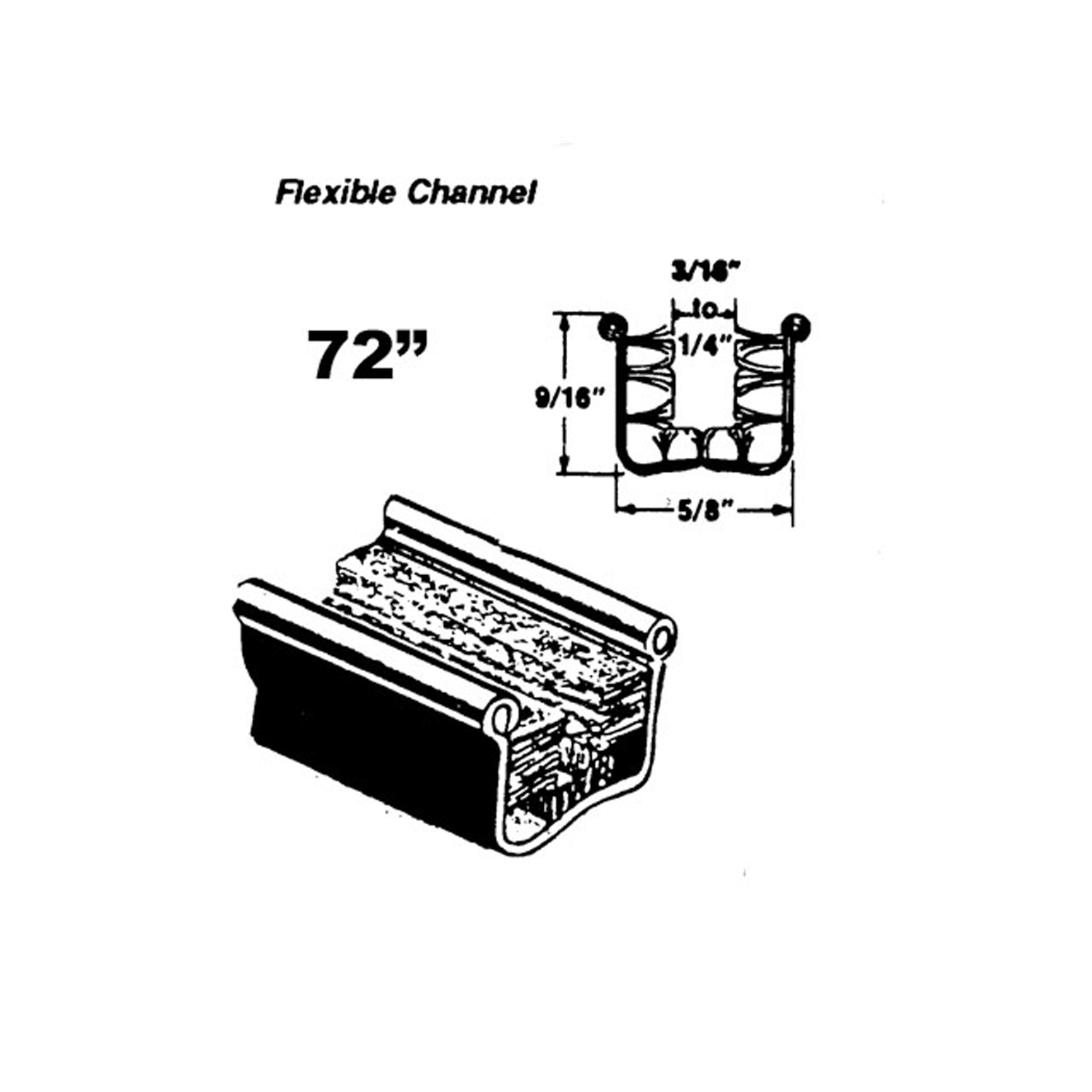 1936 Cadillac Series 60 Flexible glass-run channel-WC 11-72Flexible glass-run channel. Mohair lined, cloth covered with stainless steel bead. Used on side windows. 72 in. long. Each. NOTE: $20 special shipping charge applies for domestic orders. Call or email for overseas shipping costs. Part can be sectioned in two equal lengths to reduce overseas shipping costs.
 1936 Cadillac Series 60 Rigid division-bar channel. Made with stainless steel bead-WC 2-72Rigid division-bar channel. Made with stainless steel bead. 72 in. long. Each. NOTE: $20 special shipping charge applies for domestic orders. Call or email for overseas shipping costs. Part can be sectioned into two equal lengths to reduce overseas shipping costs.
 1936 Cadillac Series 60 Flexible Rubber Window Channel-WC 32-14Flexible Rubber Window Channel. For Fisher Closed Bodies, except those using a stainless bead type. Used on side windows. 13/16" outer width X 6/16" outer depth, with a 5/16" inner channel width X 14" long. Each
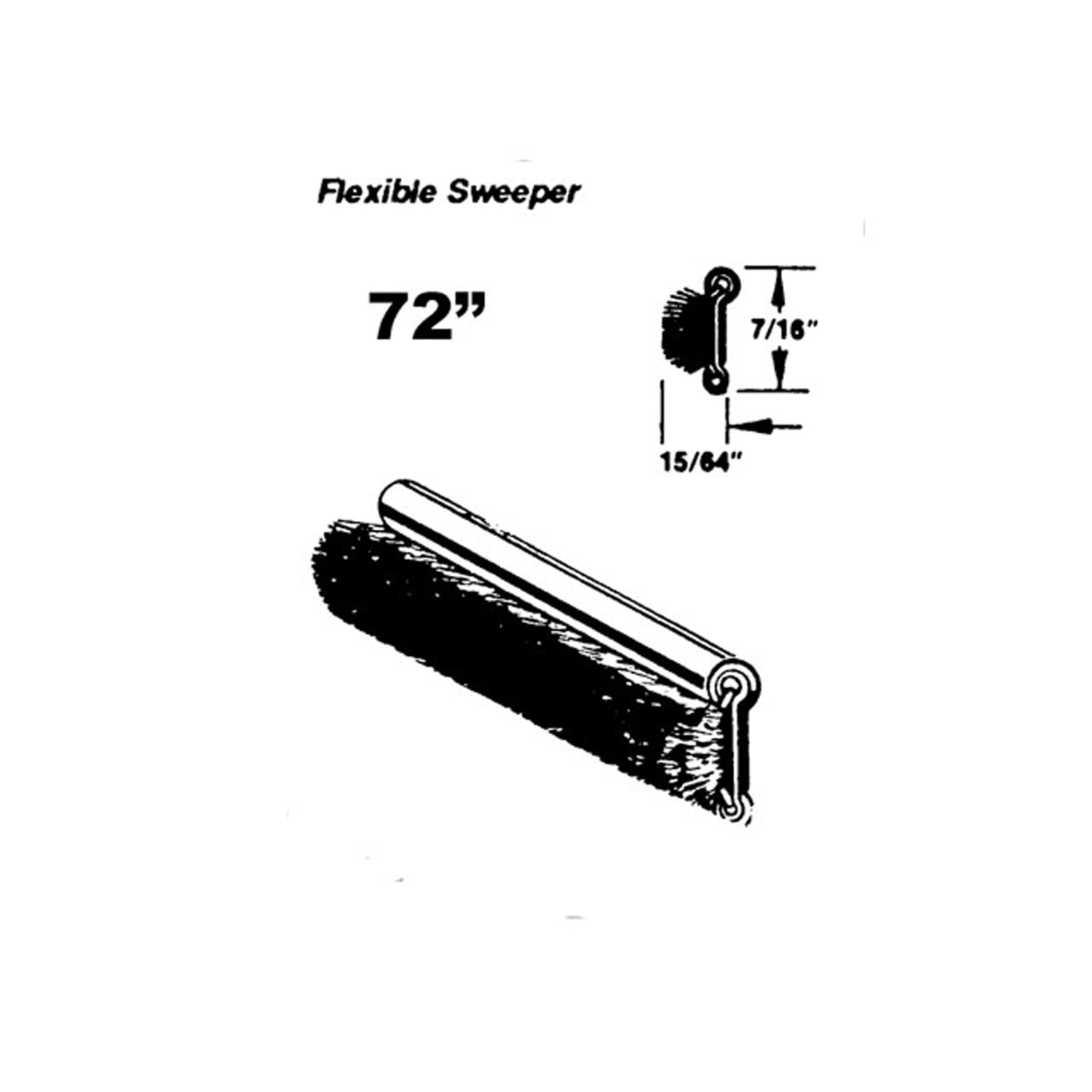 1936 Cadillac Series 60 Flexible sweeper. Made with stainless steel bead-WC 8-72Flexible sweeper. Made with stainless steel bead. Used on inner and outer beltlines. Also forms easily for use with sliding quarter windows. 72 in. long. Each. NOTE: $20 special shipping charge applies for domestic orders. Call or email for overseas shipping costs. Part can be sectioned into two equal lengths to reduce overseas shipping costs.
 1936 Cadillac Series 60 Fender Bolts. For use with Fender Bolt Washers; WF 3001-WF 3000Fender Bolts. For use with Fender Bolt Washers; WF 3001. Zinc Chromate plated, high strength. 1" X 5/16". Set of 25
 1936 Cadillac Series 60 Fender Bolt Washers. For use with Fender Bolts; WF 3000-WF 3001Fender Bolt Washers. For use with Fender Bolts; WF 3000. High quality, cadmium plated. 1-1/4" O.D., 3/8" I.D. Set of 25
 1936 Cadillac Series 60 Front Vent Window Seals, for 4-Doors. Pair R&L-WR 7304Front Vent Window Seals, for 4-Doors. Pair R&L
 1936 Cadillac Series 60 Rear Vent Window Seals, for 4-Door Sedans-WR 7304-RRear Vent Window Seals, for 4-Door Sedans. Each side has piece 41" long and 21-1/4" long. 4-Piece Set.
 1936 Cadillac Series 60 Front Vent Window Seals. Does not fit Convertible-WR 7309Front Vent Window Seals. Does not fit Convertible. Pair R&L
 1936 Cadillac Series 60 Front Suspension Bumper. For lower arm. 2-1/8" high-XB 30Front Suspension Bumper. For lower arm. 2-1/8" high. Each
Why Choose Metro?
For over 100 years, Metro Moulded Parts has been the pinnacle of quality in classic car restoration parts. Our commitment to precision and authenticity in every component ensures a perfect fit and an OEM-level appearance.
- Expert Craftsmanship & Quality: Each part is a testament to our dedication to reliability and perfection, crafted from original designs and thoroughly tested.
- Advanced Technology: We use cutting-edge techniques to create flawless, long-lasting parts that surpass others in performance.
- SuperSoft Sponge – The Ultimate Door Seal: Not only are our door seals 30% softer than competitors', but they're also guaranteed to never leak. They effectively reduce wind and road noise, enhancing your classic car's comfort and driving experience.
- Proudly American: Our parts are a product of American craftsmanship, made in the USA with a spirit of excellence and heritage.
- Unrivaled Warranty: We back our products with a 30-year industry-leading warranty, a testament to our confidence in their quality.
Join us in preserving the legacy of classic cars with parts that are crafted for perfection, not just made.