

Image of 1936 Cadillac Series 90, Note: These illustrations use artistic license and may differ from actual historical models.
Performance Metrics
Fundamental Metrics
Emotional Appeal
MMP Rating
| Engine Specifications | |
|---|---|
| Engine: | V-16 |
| Displacement: | 452 cubic inches |
| Horsepower: | Estimated 185 HP |
| Torque: | Not available |
| Compression Ratio: | 5.35:1 |
| Ignition System: | Battery and coil |
| Cooling System: | Liquid cooled |
| Performance Specifications | |
| 0-60 Time: | Not available |
| 1/4 Mile Time: | Not available |
| Top Speed: | Estimated 100 mph |
| Transmission and Drive | |
| Drive Type: | Rear-wheel drive |
| Transmission Type: | 3-speed manual |
| Fuel and Efficiency | |
| Fuel System Type: | Carburetor |
| MPG: | Not available |
| Dimensions and Brakes | |
| Brakes: | Mechanical drum brakes |
| Wheelbase: | 154 inches |
| Weight: | Estimated 6000 lbs |
Note: Specifications for classic cars are given to the best of our ability, considering the limited and variant data available.
1936 Cadillac Series 90: Cadillac’s V-16 Flagship
The 1936 Cadillac Series 90 was built for buyers who wanted the finest Cadillac could offer, and it made its case with sixteen cylinders. Known as the Series 90 V-16, it paired a hand-finished Fleetwood body with a remarkably smooth engine at a time when the Great Depression had made such extravagant cars increasingly rare. Its combination of engineering ambition and custom-carriage craftsmanship makes it one of the most distinctive American luxury cars of the prewar era.
Cadillac, part of General Motors, had introduced its first V-16 in 1930. The Series 90 continued that tradition into a much leaner luxury-car market. A particularly intriguing detail is that the V-16 used dual ignition, with two distributors and 32 spark plugs. The arrangement helped the large engine run smoothly and reliably, but it also hints at the complexity waiting for anyone who opens the hood.
Fleetwood Style and Custom Details
The Series 90 wore the long, formal proportions expected of a top-tier automobile. Its hood stretched ahead of a tall, upright grille, while sweeping fenders and carefully integrated headlamps gave the car a unified, flowing profile. Chrome trim added just enough brightwork to emphasize the grille, beltline, and lamps without overwhelming the restrained elegance of the design. The long wheelbase, approximately 154 inches, gave Fleetwood’s designers room to create bodies with impressive presence.
Fleetwood, Cadillac’s in-house coachbuilding operation, supplied the bodywork and interior finishing. Buyers could choose from several formal and open body styles, including sedans, limousines, town cars, and convertible models. Exact offerings and surviving examples vary, but the formal sedan and limousine best express the Series 90’s role as a chauffeur-driven prestige car. Convertible sedans and coupes offered a more personal, open-air interpretation of the same lavish chassis.
Inside, the emphasis was on comfort and finish rather than sporty minimalism. Depending on the body and specification, owners could expect high-quality upholstery, polished wood trim, plush carpeting, and carefully fitted hardware. Rear-seat passengers in limousine-style versions enjoyed generous legroom and a more private, club-like environment. Color choices were often tailored to the buyer, with exterior paint, upholstery, and trim selected to complement one another. Dark, dignified colors suited formal bodies, while lighter or more vivid combinations helped open cars show off their lines.
V-16 Engineering for the Luxury Class
Power came from a 431-cubic-inch V-16 producing about 185 horsepower. That output was substantial for a luxury car of its day, but Cadillac’s goal was not sharp, high-revving performance. The engine was designed to deliver its power smoothly and quietly, with sixteen cylinders contributing to an unusually even flow of torque. A three-speed manual transmission sent power to the rear wheels.
The Series 90 also reflected Cadillac’s broader focus on refinement. Its engineering, build quality, and choice of coachbuilt bodies placed it in direct competition with the most prestigious American marques, including Packard and the custom-bodied independents. At the same time, Cadillac had the manufacturing resources of General Motors behind it. The V-16 showed how a major automaker could offer individually finished luxury while drawing on large-scale engineering expertise.
Its influence is less about a single feature copied across the industry and more about the standard it set for smoothness and presentation. The car demonstrated that cylinder count could be a luxury feature in its own right, and that a production chassis could serve as the foundation for exceptionally varied coachwork. As the Depression squeezed demand for expensive automobiles, the Series 90 also became a symbol of the end of an especially lavish era in American motoring.
Road Manners and Performance
Period performance depended on body style, gearing, condition, and load. A sound Series 90 could reach roughly 90 to 100 mph, while a 0-to-60 mph run likely took around 20 to 25 seconds. Those figures are best treated as estimates rather than guaranteed specifications for every car. A heavy limousine and a lighter open body would not perform identically, and a nearly 90-year-old example may behave very differently from a freshly restored one.
On the road, the V-16’s chief impression is its smoothness. Rather than delivering a dramatic surge, it gathers speed in a quiet, steady fashion, accompanied by a subdued engine note. The long chassis and substantial weight favor a calm ride over quick changes of direction. It can absorb ordinary road irregularities with the stately composure expected of a flagship, though worn suspension components, old tires, and rough pavement can quickly spoil that experience.
On winding roads, the Series 90 asks for measured inputs. Its size, long wheelbase, and period steering make it far less nimble than a modern car, and narrow roads require planning. Braking and handling are also products of 1930s engineering, not modern safety systems. Driving one well means looking far ahead, keeping a generous following distance, and treating its considerable mass with respect.
Owning a 1936 Cadillac Series 90
Today, the Series 90 is primarily a collector and show car. It may appear at concours events, marque gatherings, and vintage tours, but regular commuting would be an expensive way to use one. Its size can make storage and maneuvering challenging, while its value and mechanical complexity encourage careful, limited use.
Maintenance is best handled by a shop familiar with prewar Cadillacs or by an experienced owner with access to specialist knowledge. The V-16’s dual ignition system, numerous spark plugs, and unusual parts can make routine service more involved than on a simpler six- or eight-cylinder car. The engine is not automatically unreliable, but neglect, incorrect parts, and improvised repairs can become costly. Body and interior restoration may be even more demanding, especially when a car has rare Fleetwood coachwork or missing custom fittings.
Parts availability is mixed. Some mechanical components can be sourced or reproduced through specialist networks, while unique trim, body panels, and interior details may require careful repair or custom fabrication. For the average owner, this is not an easy car to maintain without professional support. A thorough pre-purchase inspection should include the engine, transmission, chassis, brakes, electrical system, and the condition and originality of the body.
Rare Facts and Common Criticisms
Production was tiny. A reasonable estimate for 1936 Series 90 output is approximately 50 to 55 cars, with about 52 often cited. That figure makes every surviving example significant, though rarity alone does not determine value. Body style, originality, documented history, and restoration quality all matter greatly.
The Series 90 is not widely associated with a single record-setting race or a major public event. Its achievement was more specialized: it kept Cadillac’s sixteen-cylinder flagship in production during a period when very few buyers could afford such a car. Its most notable distinction is the ambitious V-16 package itself, including the dual-ignition system and its 32 spark plugs.
Common criticisms are practical rather than mysterious. The car is thirsty, large, complicated, and expensive to restore. Its period brakes and handling require a different driving style from a modern luxury car, and its performance should not be confused with that of a contemporary sports car. Collectors also need to verify claims about original coachwork and components, since major restoration work can blur the distinction between a highly original car and one rebuilt to a later specification.
Collector Values and Market Outlook
Values vary widely because Series 90 cars were often individually specified and are now exceptionally scarce. As a broad 2026 estimate, a project or incomplete example might fall around $75,000 to $150,000, while a presentable driver or older restoration could range from roughly $150,000 to $350,000. A high-quality, well-documented restoration may bring $350,000 to $700,000 or more. Rare coachbuilt bodies, exceptional originality, or a major concours history can push an example beyond that range, potentially above $1 million.
These figures are general guideposts, not formal appraisals. Auction results can vary sharply depending on condition, provenance, and whether the car is being sold at a specialist event. The Series 90 has enduring appeal among collectors of prewar American luxury cars, but its market is necessarily narrow. Over the long term, the best examples are likely to remain desirable, while cars needing extensive mechanical or coachwork restoration can be harder to sell because repair costs are so high.
Why the Series 90 Still Matters
The 1936 Cadillac Series 90 brought together Fleetwood craftsmanship, imposing prewar styling, and one of the era’s most ambitious engines. Its 431-cubic-inch V-16, dual ignition, custom body choices, and near-handbuilt character set it apart even among expensive contemporaries. It is not the simplest classic Cadillac to own or drive, but that complexity is part of its story.
For collectors, the Series 90 is more than a rare V-16 limousine or showpiece. It is a rolling reminder of when American luxury cars pursued smoothness, scale, and individual craftsmanship with almost theatrical ambition. Few prewar Cadillacs make that ambition more tangible.
1936 Cadillac Series 90 Catalog of Parts
 1936 Cadillac Series 90 Spring and Shackle Bushing-BN 21Spring and Shackle Bushing. For front eye on rear leaf spring. 1-1/2" bottom O.D X 1-1/4" high, with 3/4" I.D. Each
 1936 Cadillac Series 90 Spring and Shackle Bushing-BN 22Spring and Shackle Bushing. For front or rear eyes on rear leaf spring. 1-3/4" bottom O.D X 1-3/8" high, with 3/4" I.D. Each
 1936 Cadillac Series 90 Upper Door Hinge Post Bumper. Held by screw-DB 60-AUpper Door Hinge Post Bumper. Held by screw. 7/8" diameter X 1/8" thick. Each
 1936 Cadillac Series 90 Inner and Outer Center Division Bar Seals-DP 20Inner and Outer Center Division Bar Seals. Each piece 14-1/4" long. Set
 1936 Cadillac Series 90 Gas filler grommet. Fits all models '36 Buick-GF 25Gas filler grommet. Fits all models '36 Buick. Fits '37 Buick Series 80/90. 2-1/8 in. ID; 4 in. OD. Dense black rubber. Each.
 1936 Cadillac Series 90 Rear Hood Corners. 1-1/4" wide. Pair-HC 29Rear Hood Corners. 1-1/4" wide. Pair
 1936 Cadillac Series 90 Windshield and Rear Window Channel. Used with 1/4" glass-LP 105Windshield and Rear Window Channel. Used with 1/4" glass. Fits some models. Sold by the foot
 1936 Cadillac Series 90 Trunk Seal. Sponge rubber. Sold by the foot.-LP 96-/FTTrunk Seal. Sponge rubber. Sold by the foot.
 1936 Cadillac Series 90 Rumble Seat Step Plate Bracket Pad-MP 348-BRumble Seat Step Plate Bracket Pad. 3-1/8" wide X 4-7/8" long. Each
 1936 Cadillac Series 90 Tail-Light Pads. 2" wide X 8-1/2" long. Pair-MP 360Tail-Light Pads. 2" wide X 8-1/2" long. Pair
 1936 Cadillac Series 90 Rumble Seat Step Plate Bracket. 4-1/2" wide X 4-1/4" long-MP 374-BRumble Seat Step Plate Bracket. 4-1/2" wide X 4-1/4" long. Each
 1936 Cadillac Series 90 Headlight Pads. 3-3/8" wide X 7-7/8" long. Pair-MP 380Headlight Pads. 3-3/8" wide X 7-7/8" long. Pair
 1936 Cadillac Series 90 Rumble Seat Step Plate Bracket Pad. Each-MP 380-ARumble Seat Step Plate Bracket Pad. Each
 1936 Cadillac Series 90 Bumper Pad. 3-7/8" wide X 5-5/8" long. Each-MP 381Bumper Pad. 3-7/8" wide X 5-5/8" long. Each
 1936 Cadillac Series 90 Headlight Pads. 3-1/4" wide X 11" long. Pair-MP 383Headlight Pads. 3-1/4" wide X 11" long. Pair
 1936 Cadillac Series 90 Park Light Pads. 2" wide X 11-1/2" long. Pair-MP 431Park Light Pads. 2" wide X 11-1/2" long. Pair
 1936 Cadillac Series 90 Tail-light Pads. 1-7/8" wide X 4-1/2" long. Pair-MP 432Tail-light Pads. 1-7/8" wide X 4-1/2" long. Pair
 1936 Cadillac Series 90 Headlight Pads. 3-1/4" wide X 6-5/8" long. Pair-MP 433Headlight Pads. 3-1/4" wide X 6-5/8" long. Pair
 1936 Cadillac Series 90 Door Handle Ferrule Grommet. I.D. 11/16", O.D. 1-3/16"-MP 546-IDoor Handle Ferrule Grommet. I.D. 11/16", O.D. 1-3/16". Each
 1936 Cadillac Series 90 Cowl Vent Seal. 3-1/4" wide X 15-5/8" long. Each-RP 100-JCowl Vent Seal. 3-1/4" wide X 15-5/8" long. Each
 1936 Cadillac Series 90 Door Lock Knob. Brown. 1/2" diameter X 1" long X 1/8" hole-RP 303Door Lock Knob. Brown. 1/2" diameter X 1" long X 1/8" hole. Each
 1936 Cadillac Series 90 Door Bumper. 1" diameter X 1/4" thick Each-SB 60Door Bumper. 1" diameter X 1/4" thick Each
 1936 Cadillac Series 90 Spare Tire Mount Bumper. 5/8" square. Each-SB 80Spare Tire Mount Bumper. 5/8" square. Each
 1936 Cadillac Series 90 Firewall grommet for headlight and tail-light wires-SM 34Firewall grommet for headlight and tail-light wires. Fits 11/16" hole. 5/16" I.D., 15/16" O.D. Each
 1936 Cadillac Series 90 Trunk seal. '36-'40 GM coupes and convertibles only-TK 58-A/18Trunk seal. '36-'40 GM coupes and convertibles only. Does not fit Buick models (order LP 58-L per foot). 3/4 in. W x 1/2 in. Thk x 18 ft. L. Each.
 1936 Cadillac Series 90 Trunk Seal for Coupes and Convertibles Only-TK 58-B/18Trunk Seal for Coupes and Convertibles Only. 1" wide X 1/2" thick. Each
 1936 Cadillac Series 90 Trunk Seal, for Sedans. Each-TK 96-15Trunk Seal, for Sedans. Each
 1936 Cadillac Series 90 Vertical Seal for Vent Window. Each is 17" long. Pair-VS 2Vertical Seal for Vent Window. Each is 17" long. Pair
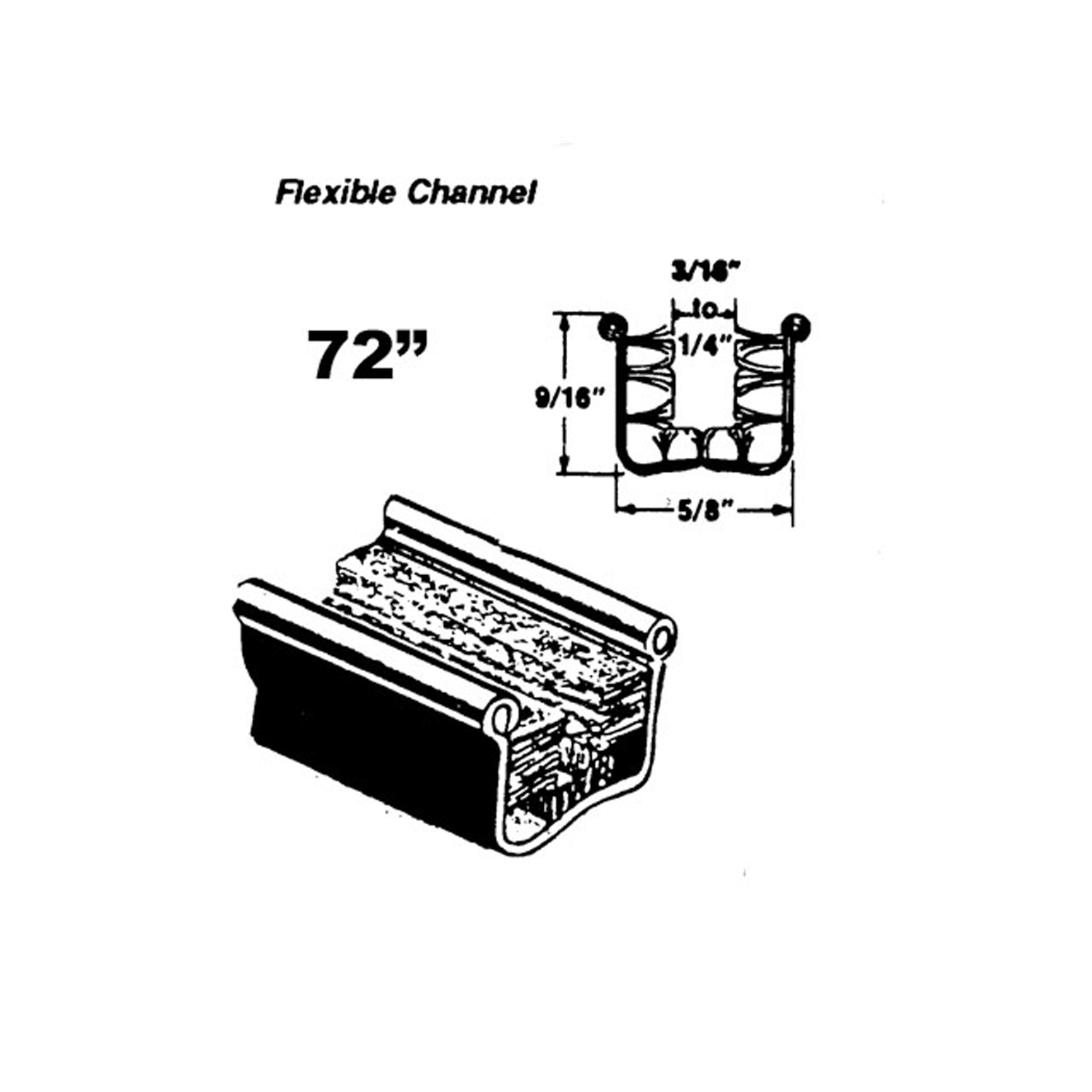 1936 Cadillac Series 90 Flexible glass-run channel-WC 11-72Flexible glass-run channel. Mohair lined, cloth covered with stainless steel bead. Used on side windows. 72 in. long. Each. NOTE: $20 special shipping charge applies for domestic orders. Call or email for overseas shipping costs. Part can be sectioned in two equal lengths to reduce overseas shipping costs.
 1936 Cadillac Series 90 Rigid division-bar channel. Made with stainless steel bead-WC 2-72Rigid division-bar channel. Made with stainless steel bead. 72 in. long. Each. NOTE: $20 special shipping charge applies for domestic orders. Call or email for overseas shipping costs. Part can be sectioned into two equal lengths to reduce overseas shipping costs.
 1936 Cadillac Series 90 Flexible Rubber Window Channel-WC 32-14Flexible Rubber Window Channel. For Fisher Closed Bodies, except those using a stainless bead type. Used on side windows. 13/16" outer width X 6/16" outer depth, with a 5/16" inner channel width X 14" long. Each
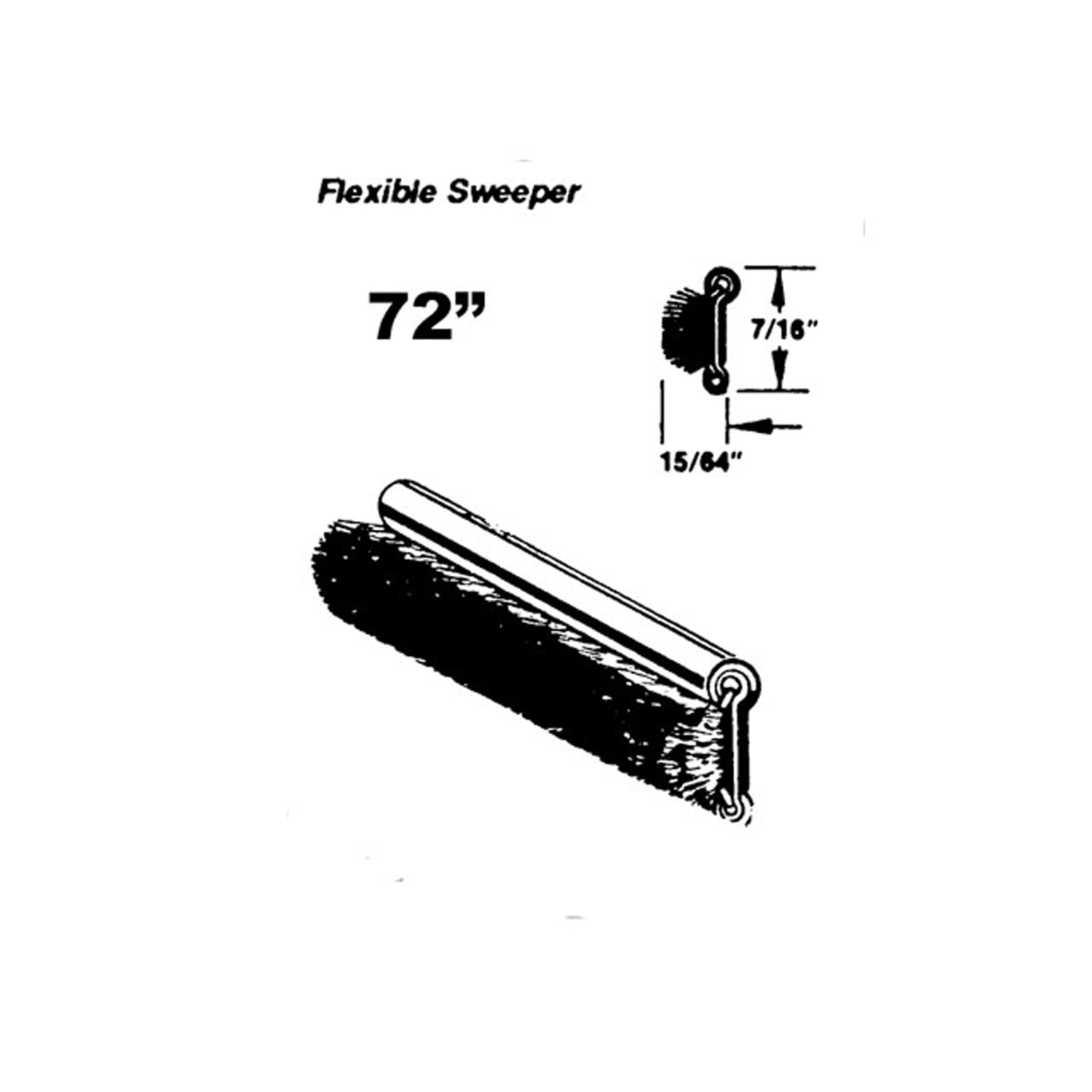 1936 Cadillac Series 90 Flexible sweeper. Made with stainless steel bead-WC 8-72Flexible sweeper. Made with stainless steel bead. Used on inner and outer beltlines. Also forms easily for use with sliding quarter windows. 72 in. long. Each. NOTE: $20 special shipping charge applies for domestic orders. Call or email for overseas shipping costs. Part can be sectioned into two equal lengths to reduce overseas shipping costs.
 1936 Cadillac Series 90 Fender Bolts. For use with Fender Bolt Washers; WF 3001-WF 3000Fender Bolts. For use with Fender Bolt Washers; WF 3001. Zinc Chromate plated, high strength. 1" X 5/16". Set of 25
 1936 Cadillac Series 90 Fender Bolt Washers. For use with Fender Bolts; WF 3000-WF 3001Fender Bolt Washers. For use with Fender Bolts; WF 3000. High quality, cadmium plated. 1-1/4" O.D., 3/8" I.D. Set of 25
Why Choose Metro?
For over 100 years, Metro Moulded Parts has been the pinnacle of quality in classic car restoration parts. Our commitment to precision and authenticity in every component ensures a perfect fit and an OEM-level appearance.
- Expert Craftsmanship & Quality: Each part is a testament to our dedication to reliability and perfection, crafted from original designs and thoroughly tested.
- Advanced Technology: We use cutting-edge techniques to create flawless, long-lasting parts that surpass others in performance.
- SuperSoft Sponge – The Ultimate Door Seal: Not only are our door seals 30% softer than competitors', but they're also guaranteed to never leak. They effectively reduce wind and road noise, enhancing your classic car's comfort and driving experience.
- Proudly American: Our parts are a product of American craftsmanship, made in the USA with a spirit of excellence and heritage.
- Unrivaled Warranty: We back our products with a 30-year industry-leading warranty, a testament to our confidence in their quality.
Join us in preserving the legacy of classic cars with parts that are crafted for perfection, not just made.