

Image of 1937 Cadillac Series 65, Note: These illustrations use artistic license and may differ from actual historical models.
Performance Metrics
Fundamental Metrics
Emotional Appeal
MMP Rating
| Engine Specifications | |
|---|---|
| Engine: | Cadillac V8 |
| Displacement: | 346 cubic inches (5.7 liters) |
| Horsepower: | Estimated 135-150 hp |
| Torque: | Not available |
| Compression Ratio: | 6.25:1 |
| Ignition System: | Battery and coil |
| Cooling System: | Liquid-cooled |
| Performance Specifications | |
| 0-60 Time: | Not available |
| 1/4 Mile Time: | Not available |
| Top Speed: | Estimated 85-90 mph |
| Transmission and Drive | |
| Drive Type: | Rear-wheel drive |
| Transmission Type: | 3-speed manual |
| Fuel and Efficiency | |
| Fuel System Type: | Carburetor |
| MPG: | Not available |
| Dimensions and Brakes | |
| Brakes: | Drum brakes |
| Wheelbase: | 131 inches |
| Weight: | Estimated 4,500 lbs |
Note: Specifications for classic cars are given to the best of our ability, considering the limited and variant data available.
1937 Cadillac Series 65: Cadillac’s Middle-Class Masterpiece
The 1937 Cadillac Series 65 brought the stature of a full-size Cadillac to buyers who wanted something less imposing than the marque’s largest models. Built by the Cadillac Motor Car Division of General Motors, it sat between the more accessible Series 60 and the larger Series 70 and Series 75. Its recipe was classic Cadillac: a long, carefully finished body, a smooth 346-cubic-inch V8, and the kind of quiet road manners that made the brand a benchmark for American luxury.
The Series 65 arrived during a challenging period for the U.S. auto industry. The country was still recovering from the Great Depression, and Cadillac had to balance prestige with a wider range of prices and body styles. One intriguing detail is that the Series 65 was part of Cadillac’s effort to make its luxury range more varied without abandoning the big-car presence buyers expected. It was not a stripped-down economy model. It was a Cadillac with a slightly more approachable place in the lineup.
Art Deco Lines and Cadillac Presence
The 1937 Series 65 wears its size with purpose. A tall, upright grille anchors the front end, while the long hood, sculpted fenders, and flowing running boards create a dignified profile. The headlights sit neatly beside the grille, and bright trim adds definition without overwhelming the body. From the rear, the broad trunk and sweeping fenders give the car a substantial, almost formal look. It is unmistakably prewar, but its cleaner surfaces and integrated details point toward the more streamlined styling that would become popular in the late 1930s.
Inside, the Series 65 was designed for comfort and occasion. Depending on body style and trim, owners could expect broad upholstered seats, quality cloth or leather surfaces, polished metal fittings, wood-grain accents, and a neatly arranged instrument panel. The cabin was generous by modern standards, especially in the rear, where passengers could settle in for a long trip rather than brace for a cramped ride. Materials and trim varied, so the exact specification of a surviving car should be checked against its original build information.
Factory colors varied by body and trim combination. Period palettes commonly included black, deep blue, maroon, green, gray, and other restrained shades, with two-tone treatments available on some configurations. Dark colors suited the car’s formal character, while maroon and green could make its long bodywork stand out without looking flashy. Original paint charts and build records are the best guides when assessing a particular car’s factory colors.
The Series 65 range was centered on substantial passenger cars, including sedan body styles. Cadillac’s 1937 catalog also offered different configurations across its model range, and body availability could vary by series. Closed sedans are the most familiar Series 65 shape today; convertible body styles, where correctly identified and documented, are especially eye-catching and collectible. Buyers should verify a car’s model designation and body style rather than relying on a seller’s description alone.
1937 Cadillac Technology and Design
Under its elegant body, the Series 65 combined proven engineering with equipment that helped define a premium American car. Its 346-cubic-inch L-head V8 used side valves and a 90-degree cylinder layout, favoring smooth, steady power over high-revving performance. A three-speed manual transmission with synchromesh made gear changes easier than in older unsynchronized gearboxes, while hydraulic brakes gave the driver more consistent stopping assistance than mechanical systems.
Cadillac had also adopted independent front suspension earlier in the decade. That design helped the front wheels respond more independently to uneven pavement, improving ride comfort and control. The car’s engineering was not a collection of experimental gadgets. It was a thoughtful package intended to make a large automobile quieter, more comfortable, and less tiring to drive.
Styling and body construction were part of the story, too. Cadillac benefited from General Motors’ close relationship between engineering, manufacturing, and its Art and Colour organization, led by Harley Earl. The result was a car whose appearance felt carefully coordinated, from grille and hood to interior trim, rather than assembled from unrelated decorative pieces.
Why the Series 65 Matters
The Series 65 helped Cadillac offer a broader ladder of luxury cars at a time when buyers wanted both prestige and choice. It shared the marque’s V8 identity and visual authority while occupying a position below the biggest, most expensive models. That strategy foreshadowed a familiar approach in the luxury market: offer customers a range of sizes and prices while keeping the brand’s core character consistent.
Its significance is less about one revolutionary invention than the way it brought established Cadillac strengths together. Independent front suspension, hydraulic brakes, synchromesh gearing, a refined V8, and carefully styled bodies all contributed to the experience. The Series 65 also reflects a key moment in American design, when the upright forms of the early 1930s were giving way to smoother, more integrated shapes. Its influence is visible in the broader movement toward cars that looked streamlined while retaining the comfort and formality luxury buyers valued.
V8 Performance and Road Manners
The Series 65’s 346-cubic-inch side-valve V8 produced about 135 horsepower in 1937, depending on the published specification and configuration. Cadillac did not provide directly comparable modern acceleration figures, and surviving cars vary in mechanical condition, gearing, tires, and body weight. As a practical estimate, a sound example may take roughly 18 to 22 seconds to reach 60 mph. Top speed is commonly estimated in the neighborhood of 80 to 90 mph, though sustained high-speed running is not advisable for an unrestored or mechanically unverified car.
On the road, the V8’s strength is its relaxed delivery. It pulls with a deep, even tone and feels happiest carrying the car smoothly rather than being hurried through the gears. The three-speed manual requires deliberate shifts by modern standards, but synchromesh helps make ordinary driving more manageable. The engine’s low-frequency rumble, combined with the soft mechanical sounds of a prewar car, gives the Series 65 a distinctive presence without needing a loud exhaust.
The long wheelbase and substantial body help it glide over broad, rolling bumps. Independent front suspension improves composure on rougher surfaces, although the car still has a tall, traditional feel compared with a modern vehicle. On winding roads, the driver needs to plan ahead: steering is slower, the body leans, and the car’s mass is always apparent. Strong crosswinds can nudge its broad sides, and stopping distances are longer than those of contemporary cars. The best approach is smooth inputs, generous following distance, and an unhurried pace.
Living With a Prewar Cadillac
Today, a 1937 Series 65 is primarily a show car, touring car, or cherished weekend driver. Some owners take their cars on organized vintage tours, where the Cadillac’s comfortable cabin and steady V8 are real advantages. It is not an ideal everyday commuter in modern traffic, where its size, slower braking response, manual transmission, and lack of current safety equipment require extra attention.
Routine maintenance is straightforward for an experienced vintage-car mechanic, but it is not quite a simple do-it-yourself project for every owner. Regular attention may include lubrication, ignition and carburetor service, cooling-system checks, brake adjustments, and careful monitoring of aging rubber, wiring, and fuel lines. The engine is generally durable when maintained and not overheated, but neglected examples can need expensive work. Parts support is available through specialist suppliers and Cadillac clubs, although trim pieces, correct body hardware, and some model-specific components can be difficult to find.
Reliability depends heavily on the quality of restoration and upkeep. A freshly rebuilt engine does not guarantee a trouble-free car if its fuel, electrical, cooling, and brake systems remain tired. Before buying, inspect the frame and body for rust, check the engine for overheating or low oil pressure, and have the brakes and steering evaluated by someone familiar with prewar Cadillacs.
Series 65 Facts and Common Criticisms
The Series 65 is remembered for pairing Cadillac’s large-car character with a place in the lineup below the flagship models. It did not set a widely recognized speed or endurance record, and its appeal was never based on racing. Its achievement was subtler: it offered a smooth V8, a refined ride, and formal styling in a well-defined midrange Cadillac package.
Exact production totals can be difficult to pin down across different references and body classifications. A reasonable working estimate for 1937 Series 65 production is around 3,000 cars, making it far less common than mass-market vehicles of the period but not necessarily a one-off rarity. Open body styles and cars with strong documentation are scarcer than ordinary sedans.
There is no single widely documented celebrity ownership story or famous historical event that defines the Series 65. Its place in history is instead tied to Cadillac’s broader reputation for engineering and luxury during the prewar era. Common criticisms are familiar to anyone considering a large 1930s car: fuel consumption is high by modern standards, maneuvering and parking take care, and the ride and braking systems demand a different driving style. It is also expensive to restore properly, particularly when upholstery, brightwork, or hard-to-source body parts need attention.
1937 Cadillac Series 65 Values
Collector values depend greatly on body style, originality, restoration quality, and documentation. As a broad U.S. market estimate, a sedan needing substantial work might sell for roughly $15,000 to $30,000. A sound driver or older restoration could fall around $30,000 to $60,000, while a high-quality, correct restoration may bring approximately $60,000 to $100,000 or more. Rare open-body examples, exceptional show cars, or cars with notable provenance can exceed those figures, potentially reaching six figures.
These are guide ranges, not guaranteed sale prices. Auction results can vary widely, and a beautiful but incorrect restoration may be worth less to a knowledgeable collector than a well-preserved, documented car. The Series 65 market is relatively specialized, so an individual car’s condition and presentation matter more than broad price headlines.
In nominal dollars, desirable prewar Cadillacs have generally held long-term collector interest, but values do not rise evenly. Restoration costs have climbed, and buyers increasingly reward originality, reliable mechanical work, and clear history. The Series 65 is best viewed as a significant and appealing classic with steady niche demand, rather than a guaranteed investment.
A Cadillac Worth Taking Slowly
The 1937 Cadillac Series 65 combines a smooth 135-horsepower V8, substantial prewar styling, a comfortable cabin, and engineering that made a large luxury car easier to live with. It helped broaden Cadillac’s range without diluting the marque’s prestige, and it captures the transition from upright early-1930s design to the more streamlined forms that followed.
It is not a car to rush. Its real rewards come from the steady V8 soundtrack, the long, composed ride, and the sense of occasion built into every detail. Nearly nine decades later, the Series 65 remains a reminder that luxury can be measured not only in speed or status, but in how gracefully a car carries its passengers down the road.
1937 Cadillac Series 65 Catalog of Parts
 1937 Cadillac Series 65 Rear Bumper Arm Grommets-BG 69Rear Bumper Arm Grommets. 2-1/8" wide X 3-7/8" long, with 1-3/4" long inner slot. Pair
 1937 Cadillac Series 65 Spring and Shackle Bushing-BN 22Spring and Shackle Bushing. For front or rear eyes on rear leaf spring. 1-3/4" bottom O.D X 1-3/8" high, with 3/4" I.D. Each
 1937 Cadillac Series 65 Upper Door Hinge Post Bumper. Held by screw-DB 60-AUpper Door Hinge Post Bumper. Held by screw. 7/8" diameter X 1/8" thick. Each
 1937 Cadillac Series 65 Windshield Center Post Gasket Outer Garnish Molding Retainer-DP 18Windshield Center Post Gasket Outer Garnish Molding Retainer. Made with threaded steel core like original, 13-1/2" long. Includes 13" flat rubber strip. Set
 1937 Cadillac Series 65 Gas filler grommet. Fits all models '36 Buick-GF 25Gas filler grommet. Fits all models '36 Buick. Fits '37 Buick Series 80/90. 2-1/8 in. ID; 4 in. OD. Dense black rubber. Each.
 1937 Cadillac Series 65 Hood Rest Pad Bumper. Metal core, tab held-HC 31-AHood Rest Pad Bumper. Metal core, tab held. Four to twelve used per car. 1-1/4" between tabs. Each
 1937 Cadillac Series 65 Door and Hood Bumper. 1" diameter X 7/8" thick. Each-HF 16Door and Hood Bumper. 1" diameter X 7/8" thick. Each
 1937 Cadillac Series 65 Windshield and Rear Window Channel. Used with 1/4" glass-LP 105Windshield and Rear Window Channel. Used with 1/4" glass. Fits some models. Sold by the foot
 1937 Cadillac Series 65 Trunk Seal. Sponge rubber. Sold by the foot.-LP 96-/FTTrunk Seal. Sponge rubber. Sold by the foot.
 1937 Cadillac Series 65 Rumble Seat Step Plate Bracket. 4-1/8" wide X 4-7/8" long-MP 376Rumble Seat Step Plate Bracket. 4-1/8" wide X 4-7/8" long. Each
 1937 Cadillac Series 65 Tail-Light Pads. 3-3/4" wide X 10-1/2" long. Pair-MP 384Tail-Light Pads. 3-3/4" wide X 10-1/2" long. Pair
 1937 Cadillac Series 65 Trunk Hinge Pads. 1-5/8" wide X 9-1/4" long. 4-Piece Set-MP 421-ATrunk Hinge Pads. 1-5/8" wide X 9-1/4" long. 4-Piece Set
 1937 Cadillac Series 65 Door Handle Ferrule Grommet. I.D. 11/16", O.D. 1-3/16"-MP 546-IDoor Handle Ferrule Grommet. I.D. 11/16", O.D. 1-3/16". Each
 1937 Cadillac Series 65 Windshield Wiper Transmission Pad-MP 546-YWindshield Wiper Transmission Pad. 2-1/2" wide X 1-1/4" long. Each
 1937 Cadillac Series 65 Cowl Vent Seal. 3-1/4" wide X 15-5/8" long. Each-RP 100-JCowl Vent Seal. 3-1/4" wide X 15-5/8" long. Each
 1937 Cadillac Series 65 Door Lock Knob. Brown. 1/2" diameter X 1" long X 1/8" hole-RP 303Door Lock Knob. Brown. 1/2" diameter X 1" long X 1/8" hole. Each
 1937 Cadillac Series 65 Sun Visor End Tube Plug. Black. Each-RP 303-DSun Visor End Tube Plug. Black. Each
 1937 Cadillac Series 65 Door Bumper. 1" diameter X 1/4" thick Each-SB 60Door Bumper. 1" diameter X 1/4" thick Each
 1937 Cadillac Series 65 Wire Harness Grommet. Each-SM 3Wire Harness Grommet. Each
 1937 Cadillac Series 65 Firewall grommet for headlight and tail-light wires-SM 34Firewall grommet for headlight and tail-light wires. Fits 11/16" hole. 5/16" I.D., 15/16" O.D. Each
 1937 Cadillac Series 65 Wire Harness Grommet-SM 38Wire Harness Grommet. For speedometer cable through toe board. Replaces OEM #594341. Each
 1937 Cadillac Series 65 Special Purpose Grommet-SM 68Special Purpose Grommet. For headlight wire loom through body. Each
 1937 Cadillac Series 65 Trunk seal. '36-'40 GM coupes and convertibles only-TK 58-A/18Trunk seal. '36-'40 GM coupes and convertibles only. Does not fit Buick models (order LP 58-L per foot). 3/4 in. W x 1/2 in. Thk x 18 ft. L. Each.
 1937 Cadillac Series 65 Trunk Seal for Coupes and Convertibles Only-TK 58-B/18Trunk Seal for Coupes and Convertibles Only. 1" wide X 1/2" thick. Each
 1937 Cadillac Series 65 Trunk Seal, for Sedans. Each-TK 96-15Trunk Seal, for Sedans. Each
 1937 Cadillac Series 65 Vertical Seal for Vent Window. Each is 17" long. Pair-VS 2Vertical Seal for Vent Window. Each is 17" long. Pair
 1937 Cadillac Series 65 Vulcanized Windshield Seal-VWS 7303Vulcanized Windshield Seal. For all models without chrome garnish, except convertibles. Each
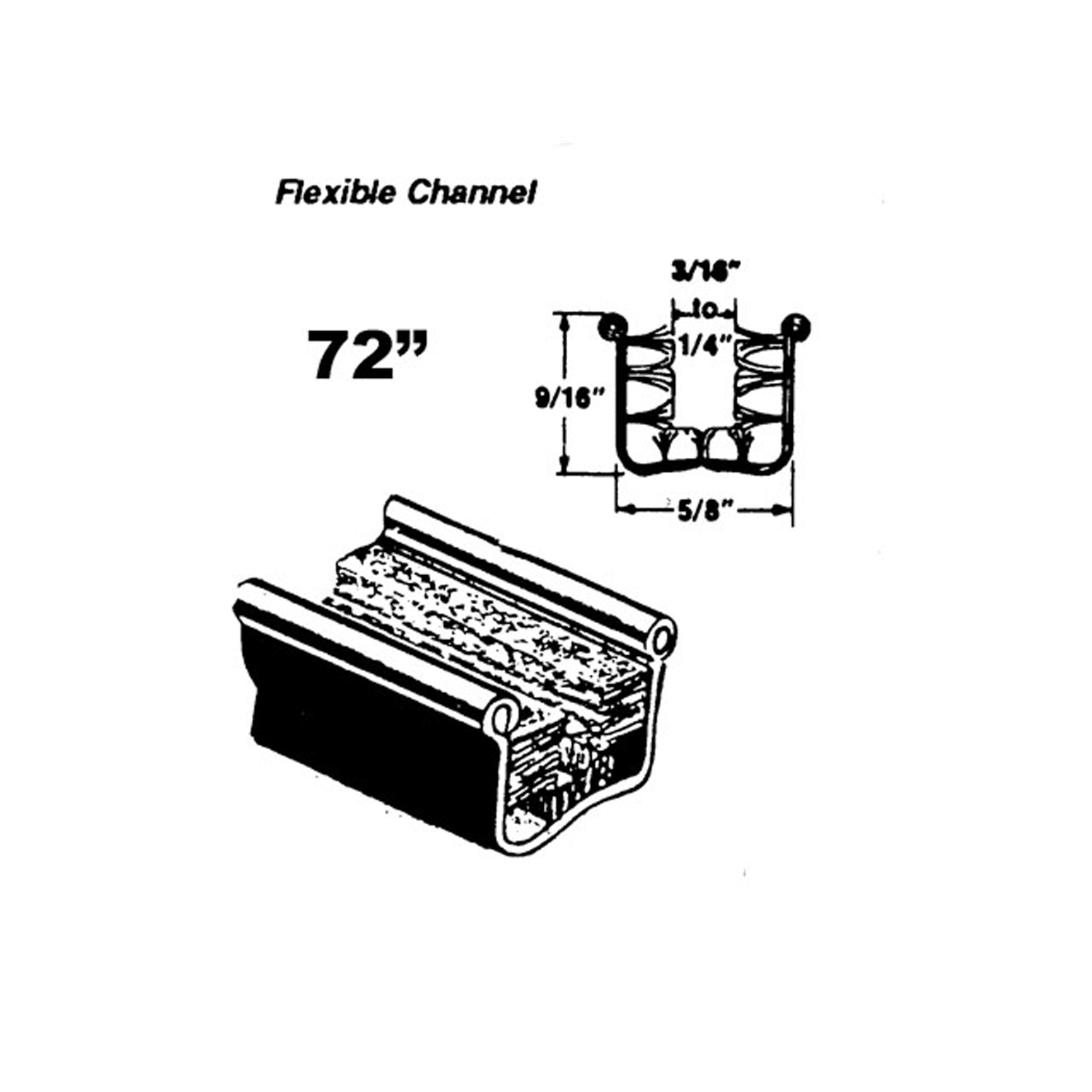 1937 Cadillac Series 65 Flexible glass-run channel-WC 11-72Flexible glass-run channel. Mohair lined, cloth covered with stainless steel bead. Used on side windows. 72 in. long. Each. NOTE: $20 special shipping charge applies for domestic orders. Call or email for overseas shipping costs. Part can be sectioned in two equal lengths to reduce overseas shipping costs.
 1937 Cadillac Series 65 Rigid division-bar channel. Made with stainless steel bead-WC 2-72Rigid division-bar channel. Made with stainless steel bead. 72 in. long. Each. NOTE: $20 special shipping charge applies for domestic orders. Call or email for overseas shipping costs. Part can be sectioned into two equal lengths to reduce overseas shipping costs.
 1937 Cadillac Series 65 Flexible Rubber Window Channel-WC 32-14Flexible Rubber Window Channel. For Fisher Closed Bodies, except those using a stainless bead type. Used on side windows. 13/16" outer width X 6/16" outer depth, with a 5/16" inner channel width X 14" long. Each
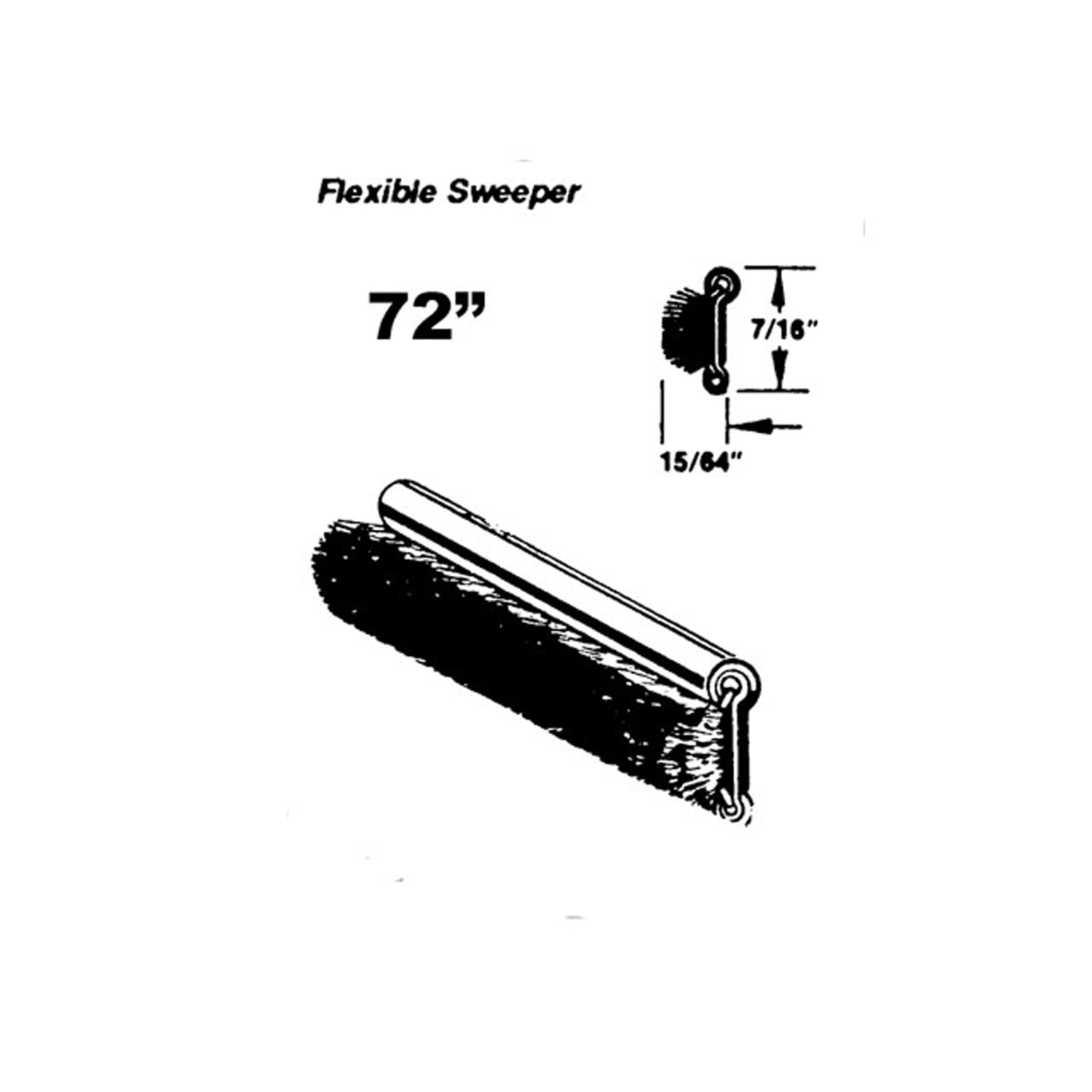 1937 Cadillac Series 65 Flexible sweeper. Made with stainless steel bead-WC 8-72Flexible sweeper. Made with stainless steel bead. Used on inner and outer beltlines. Also forms easily for use with sliding quarter windows. 72 in. long. Each. NOTE: $20 special shipping charge applies for domestic orders. Call or email for overseas shipping costs. Part can be sectioned into two equal lengths to reduce overseas shipping costs.
 1937 Cadillac Series 65 Fender Bolts. For use with Fender Bolt Washers; WF 3001-WF 3000Fender Bolts. For use with Fender Bolt Washers; WF 3001. Zinc Chromate plated, high strength. 1" X 5/16". Set of 25
 1937 Cadillac Series 65 Fender Bolt Washers. For use with Fender Bolts; WF 3000-WF 3001Fender Bolt Washers. For use with Fender Bolts; WF 3000. High quality, cadmium plated. 1-1/4" O.D., 3/8" I.D. Set of 25
 1937 Cadillac Series 65 Rear vent window seals. For 4-door touring sedans. Pair-WR 7302-RRear vent window seals. For 4-door touring sedans. Pair. R&L.
Why Choose Metro?
For over 100 years, Metro Moulded Parts has been the pinnacle of quality in classic car restoration parts. Our commitment to precision and authenticity in every component ensures a perfect fit and an OEM-level appearance.
- Expert Craftsmanship & Quality: Each part is a testament to our dedication to reliability and perfection, crafted from original designs and thoroughly tested.
- Advanced Technology: We use cutting-edge techniques to create flawless, long-lasting parts that surpass others in performance.
- SuperSoft Sponge – The Ultimate Door Seal: Not only are our door seals 30% softer than competitors', but they're also guaranteed to never leak. They effectively reduce wind and road noise, enhancing your classic car's comfort and driving experience.
- Proudly American: Our parts are a product of American craftsmanship, made in the USA with a spirit of excellence and heritage.
- Unrivaled Warranty: We back our products with a 30-year industry-leading warranty, a testament to our confidence in their quality.
Join us in preserving the legacy of classic cars with parts that are crafted for perfection, not just made.