

Image of 1937 Cadillac Series 70, Note: These illustrations use artistic license and may differ from actual historical models.
Performance Metrics
Fundamental Metrics
Emotional Appeal
MMP Rating
| Engine Specifications | |
|---|---|
| Engine Options: | V8 |
| Displacement Range: | 346 cubic inches |
| Horsepower Range: | Estimated 135-150 HP |
| Torque: | 283 lb-ft |
| Compression Ratio: | Estimated 6.25:1 |
| Ignition System: | Battery and coil |
| Cooling System: | Liquid-cooled |
| Performance Specifications | |
| 0-60 Time: | Information not available |
| 1/4 Mile Time: | Information not available |
| Top Speed: | Estimated 85-90 mph |
| Transmission and Drive | |
| Drive Type: | Rear-wheel drive |
| Transmission Type: | 3-speed manual |
| Fuel and Efficiency | |
| Fuel System Type: | Carburetor |
| MPG: | Information not available |
| Dimensions and Brakes | |
| Brakes: | Drum brakes |
| Wheelbase: | 131 inches |
| Weight: | Estimated 4,600 lbs |
Note: Specifications for classic cars are given to the best of our ability, considering the limited and variant data available.
1937 Cadillac Series 70: American Luxury in the Streamlined Era
The 1937 Cadillac Series 70 paired a commanding V8 with the long, carefully tailored proportions of a prewar luxury car. Built by Cadillac, General Motors’ flagship marque, it offered buyers substantial power, fine materials, and Fleetwood craftsmanship at a time when the country was still emerging from the Great Depression.
The Series 70 sat among Cadillac’s larger, more prestigious models. It was designed for drivers who wanted room and refinement without stepping all the way up to the most costly chauffeur-oriented cars. One detail that helps explain its appeal is its engine: Cadillac’s 346-cubic-inch V8 delivered the quiet, smooth power that became central to the brand’s reputation. In 1937, that combination made the Series 70 a serious long-distance automobile, not simply a handsome status symbol.
Distinctive Cadillac Styling and Fleetwood Finish
The Series 70 had the classic prewar Cadillac stance: a long hood, a tall, bright-metal grille, broad fenders, and a cabin set well back from the front axle. Its upright grille gave the car a formal face, while the flowing fender lines and integrated headlamps kept the profile from looking strictly old-fashioned. Depending on body style and equipment, details such as bright trim, wheel covers, and a rear-mounted spare added to its imposing appearance.
Inside, Cadillac emphasized comfort and presentation. Buyers could find quality cloth upholstery, leather in some configurations, carefully finished door panels, and a well-appointed instrument panel. Wood-grain finishes and polished metal controls helped create a cabin that felt suitably luxurious without sacrificing legibility. The exact trim depended on body style and specification, but the overall impression was one of craftsmanship rather than bare utility.
Factory colors varied by body and year, with solid dark shades and two-tone combinations among the period-appropriate choices. Deep blues, greens, maroons, and black were especially suited to the car’s formal lines. Two-tone paint could highlight the contrast between the body and fenders, though surviving cars are often repainted, so original paint documentation matters to collectors.
Series 70 bodies included closed sedans and coupes, with additional body and trim combinations available through Cadillac’s Fleetwood offerings. Exact configurations varied by catalog and coachwork. The handsome four-door sedan is a particularly recognizable choice today, while more formal passenger and chauffeur-oriented bodies have a distinct presence at shows. Buyers comparing cars should check the model designation and body tag rather than assuming every long Cadillac from 1937 is a Series 70.
Engineering for a Smoother Ride
Cadillac’s 1937 V8 used a 346-cubic-inch side-valve, or L-head, layout and produced approximately 135 horsepower. A three-speed manual transmission sent power to the rear wheels. The engine was designed for broad, usable torque and smooth operation, qualities that mattered more in a heavy luxury car than a high-revving personality.
By the late 1930s, Cadillac was also applying modern chassis and safety ideas to its cars. The Series 70 had hydraulic brakes, an important improvement over older mechanical systems, and a refined suspension intended to keep the ride composed on imperfect roads. Features and specifications could vary by model and equipment, but the overall engineering brief was clear: make a large car quiet, controllable, and comfortable over distance.
Why the Series 70 Mattered
The Series 70 belongs to an important period in Cadillac’s development. Automakers were balancing traditional luxury with increasingly modern body design and improved engineering. Cadillac’s answer was not to abandon its formal image, but to make that image more streamlined and practical. The 1937 car’s integrated details and carefully proportioned body helped move the marque toward the cleaner styling that would define the next generation.
It also stood apart through its blend of prestige and usability. Cadillac buyers received a powerful V8, quality coachwork, and a substantial cabin without necessarily choosing the very largest or most elaborate model in the range. The Series 70 helped reinforce Cadillac’s reputation for engineering refinement, a reputation that continued to influence American luxury-car design for decades.
V8 Performance and Road Manners
Period performance figures are not perfectly consistent, and today’s results depend heavily on mechanical condition, gearing, tires, and body style. A healthy 1937 Series 70 is generally estimated to reach roughly 85 to 90 mph, with a 0-to-60-mph time in the neighborhood of 18 to 22 seconds. Those figures may seem modest now, but the car’s real strength was relaxed, steady cruising rather than rapid acceleration.
On the road, the V8 delivers a deep, subdued exhaust note and pulls smoothly through the gears. The three-speed manual requires deliberate shifts, and the steering is unassisted, so parking and tight turns take more effort than in a modern car. At speed, the Cadillac feels substantial and settled. Its suspension softens rough pavement, though large bumps can still remind occupants that they are riding in a heavy machine with a body-on-frame construction.
On winding roads, the Series 70 rewards a measured driving style. It is not a sports sedan: the tall body leans, the steering is relatively slow, and braking distances are far longer than those of a contemporary car. In crosswinds, its size and broad body call for attention at the wheel. Drive it smoothly, leave generous stopping room, and the Cadillac becomes an enjoyable touring car rather than a vehicle to hurry through corners.
Living With a 1937 Cadillac
Most surviving Series 70s are used as show cars, touring vehicles, or occasional weekend drivers. They are not practical daily transportation for most owners, particularly in modern traffic. Their size, fuel consumption, vintage braking, and lack of modern safety equipment make careful route planning essential.
The mechanical layout is familiar to experienced prewar-car specialists, and many routine service tasks can be handled by a capable owner. However, parts sourcing, specialist knowledge, and the condition of the individual car matter greatly. A tired V8, worn transmission, deteriorated wiring, or neglected hydraulic brakes can turn an appealing purchase into a major project. Before buying, inspect the frame, body mounts, cooling system, engine compression, brake hydraulics, and any evidence of poorly executed restoration work.
Reliability is best understood as condition-dependent. A properly restored and maintained Cadillac can tour reliably, but it will need regular lubrication, fluid checks, and attention to age-related components. The average owner can manage basic upkeep, while engine rebuilding, bodywork, and authentic Fleetwood restoration are generally jobs for specialists.
1937 Cadillac Series 70 Facts and Myths
The Series 70’s 346 V8 is one of its defining features and part of a broader Cadillac tradition of smooth, high-capacity engines. The same basic displacement was associated with other Cadillac and LaSalle applications of the era, although specifications and tuning could differ. It is worth noting that the Series 70 should not be confused with the longer-wheelbase Series 75 or Cadillac’s more exclusive V12 and V16 models.
There is no single famous speed or endurance record that defines the Series 70. Its importance is better measured in the way it represented Cadillac’s engineering and luxury standards during a difficult economic period. Claims about celebrity ownership or a specific car’s historical appearance should be verified through vehicle documentation, photographs, or reliable provenance records. A famous name attached to an advertisement is not proof that a particular surviving car belonged to that person.
Common criticisms are straightforward: the Series 70 is large, thirsty, and slow to stop by modern standards. Its steering and controls demand more effort than a contemporary driver may expect, and original parts can be expensive or difficult to locate. Those drawbacks come with the territory of a nearly 90-year-old luxury car, but they should be understood before purchase.
Collector Values and Availability
Production totals specifically for the Series 70 can be difficult to pin down because period figures are sometimes grouped by series, body style, or coachwork. A reasonable working estimate is roughly 2,000 to 3,000 Series 70 cars for 1937, but that should be treated as an informed estimate rather than a definitive factory total. Surviving examples are uncommon, and particular body styles can be much harder to find than a general model count suggests.
In the current U.S. collector market, a project car may sell for around $20,000 to $35,000, while a sound, usable example often falls in the $40,000 to $75,000 range. A high-quality restoration, especially of a desirable or unusual body style, can reach roughly $80,000 to $120,000 or more. These are broad estimates, not guaranteed values: originality, restoration quality, provenance, and the state of the market can shift a price substantially.
Values have generally been selective rather than uniformly rising. Well-restored, correctly documented Cadillacs remain attractive, but restoration costs are high and can exceed the eventual sale price. Buyers should focus on condition and authenticity, while sellers benefit from clear records and detailed photographs. The market tends to reward a complete, honest car more consistently than an expensive restoration with uncertain details.
The Lasting Appeal of the Series 70
The 1937 Cadillac Series 70 brought together a smooth 346-cubic-inch V8, formal Fleetwood style, quality materials, and road-going comfort at a pivotal moment in American automotive history. It was imposing without being purely ceremonial, and technologically advanced without losing the grandeur expected of a Cadillac.
Today, it is best appreciated at a relaxed pace, with the V8 humming beneath its long hood and the road unfolding ahead. The Series 70 is more than a prewar luxury car: it is a rolling expression of Cadillac’s ambition to make engineering, comfort, and style feel unmistakably grand.
1937 Cadillac Series 70 Catalog of Parts
 1937 Cadillac Series 70 Rear Bumper Arm Grommets-BG 69Rear Bumper Arm Grommets. 2-1/8" wide X 3-7/8" long, with 1-3/4" long inner slot. Pair
 1937 Cadillac Series 70 Spring and Shackle Bushing-BN 22Spring and Shackle Bushing. For front or rear eyes on rear leaf spring. 1-3/4" bottom O.D X 1-3/8" high, with 3/4" I.D. Each
 1937 Cadillac Series 70 Upper Door Hinge Post Bumper. Held by screw-DB 60-AUpper Door Hinge Post Bumper. Held by screw. 7/8" diameter X 1/8" thick. Each
 1937 Cadillac Series 70 Windshield Center Post Gasket Outer Garnish Molding Retainer-DP 18Windshield Center Post Gasket Outer Garnish Molding Retainer. Made with threaded steel core like original, 13-1/2" long. Includes 13" flat rubber strip. Set
 1937 Cadillac Series 70 Gas filler grommet. Fits all models '36 Buick-GF 25Gas filler grommet. Fits all models '36 Buick. Fits '37 Buick Series 80/90. 2-1/8 in. ID; 4 in. OD. Dense black rubber. Each.
 1937 Cadillac Series 70 Hood Rest Pad Bumper. Metal core, tab held-HC 31-AHood Rest Pad Bumper. Metal core, tab held. Four to twelve used per car. 1-1/4" between tabs. Each
 1937 Cadillac Series 70 Door and Hood Bumper. 1" diameter X 7/8" thick. Each-HF 16Door and Hood Bumper. 1" diameter X 7/8" thick. Each
 1937 Cadillac Series 70 Windshield and Rear Window Channel. Used with 1/4" glass-LP 105Windshield and Rear Window Channel. Used with 1/4" glass. Fits some models. Sold by the foot
 1937 Cadillac Series 70 Trunk Seal. Sponge rubber. Sold by the foot.-LP 96-/FTTrunk Seal. Sponge rubber. Sold by the foot.
 1937 Cadillac Series 70 Rumble Seat Step Plate Bracket. 4-1/8" wide X 4-7/8" long-MP 376Rumble Seat Step Plate Bracket. 4-1/8" wide X 4-7/8" long. Each
 1937 Cadillac Series 70 Tail-Light Pads. 3-3/4" wide X 10-1/2" long. Pair-MP 384Tail-Light Pads. 3-3/4" wide X 10-1/2" long. Pair
 1937 Cadillac Series 70 Trunk Hinge Pads. 1-5/8" wide X 9-1/4" long. 4-Piece Set-MP 421-ATrunk Hinge Pads. 1-5/8" wide X 9-1/4" long. 4-Piece Set
 1937 Cadillac Series 70 Door Handle Ferrule Grommet. I.D. 11/16", O.D. 1-3/16"-MP 546-IDoor Handle Ferrule Grommet. I.D. 11/16", O.D. 1-3/16". Each
 1937 Cadillac Series 70 Windshield Wiper Transmission Pad-MP 546-YWindshield Wiper Transmission Pad. 2-1/2" wide X 1-1/4" long. Each
 1937 Cadillac Series 70 Cowl Vent Seal. 3" wide at side X 15-3/4" long. Each-RP 100-BCowl Vent Seal. 3" wide at side X 15-3/4" long. Each
 1937 Cadillac Series 70 Cowl Vent Seal. 3-1/4" wide X 15-5/8" long. Each-RP 100-JCowl Vent Seal. 3-1/4" wide X 15-5/8" long. Each
 1937 Cadillac Series 70 Door Lock Knob. Brown. 1/2" diameter X 1" long X 1/8" hole-RP 303Door Lock Knob. Brown. 1/2" diameter X 1" long X 1/8" hole. Each
 1937 Cadillac Series 70 Sun Visor End Tube Plug. Black. Each-RP 303-DSun Visor End Tube Plug. Black. Each
 1937 Cadillac Series 70 Door Bumper. 1" diameter X 1/4" thick Each-SB 60Door Bumper. 1" diameter X 1/4" thick Each
 1937 Cadillac Series 70 Wire Harness Grommet. Each-SM 3Wire Harness Grommet. Each
 1937 Cadillac Series 70 Firewall grommet for headlight and tail-light wires-SM 34Firewall grommet for headlight and tail-light wires. Fits 11/16" hole. 5/16" I.D., 15/16" O.D. Each
 1937 Cadillac Series 70 Wire Harness Grommet-SM 38Wire Harness Grommet. For speedometer cable through toe board. Replaces OEM #594341. Each
 1937 Cadillac Series 70 Special Purpose Grommet-SM 68Special Purpose Grommet. For headlight wire loom through body. Each
 1937 Cadillac Series 70 Trunk seal. '36-'40 GM coupes and convertibles only-TK 58-A/18Trunk seal. '36-'40 GM coupes and convertibles only. Does not fit Buick models (order LP 58-L per foot). 3/4 in. W x 1/2 in. Thk x 18 ft. L. Each.
 1937 Cadillac Series 70 Trunk Seal for Coupes and Convertibles Only-TK 58-B/18Trunk Seal for Coupes and Convertibles Only. 1" wide X 1/2" thick. Each
 1937 Cadillac Series 70 Trunk Seal, for Sedans. Each-TK 96-15Trunk Seal, for Sedans. Each
 1937 Cadillac Series 70 Vertical Seal for Vent Window. Each is 17" long. Pair-VS 2Vertical Seal for Vent Window. Each is 17" long. Pair
 1937 Cadillac Series 70 Vulcanized Windshield Seal, for Convertibles-VWS 7302Vulcanized Windshield Seal, for Convertibles. For cars without chrome garnish. Each
 1937 Cadillac Series 70 Vulcanized Windshield Seal-VWS 7303Vulcanized Windshield Seal. For all models without chrome garnish, except convertibles. Each
 1937 Cadillac Series 70 Flexible glass-run channel-WC 11-72Flexible glass-run channel. Mohair lined, cloth covered with stainless steel bead. Used on side windows. 72 in. long. Each. NOTE: $20 special shipping charge applies for domestic orders. Call or email for overseas shipping costs. Part can be sectioned in two equal lengths to reduce overseas shipping costs.
 1937 Cadillac Series 70 Rigid division-bar channel. Made with stainless steel bead-WC 2-72Rigid division-bar channel. Made with stainless steel bead. 72 in. long. Each. NOTE: $20 special shipping charge applies for domestic orders. Call or email for overseas shipping costs. Part can be sectioned into two equal lengths to reduce overseas shipping costs.
 1937 Cadillac Series 70 Flexible Rubber Window Channel-WC 32-14Flexible Rubber Window Channel. For Fisher Closed Bodies, except those using a stainless bead type. Used on side windows. 13/16" outer width X 6/16" outer depth, with a 5/16" inner channel width X 14" long. Each
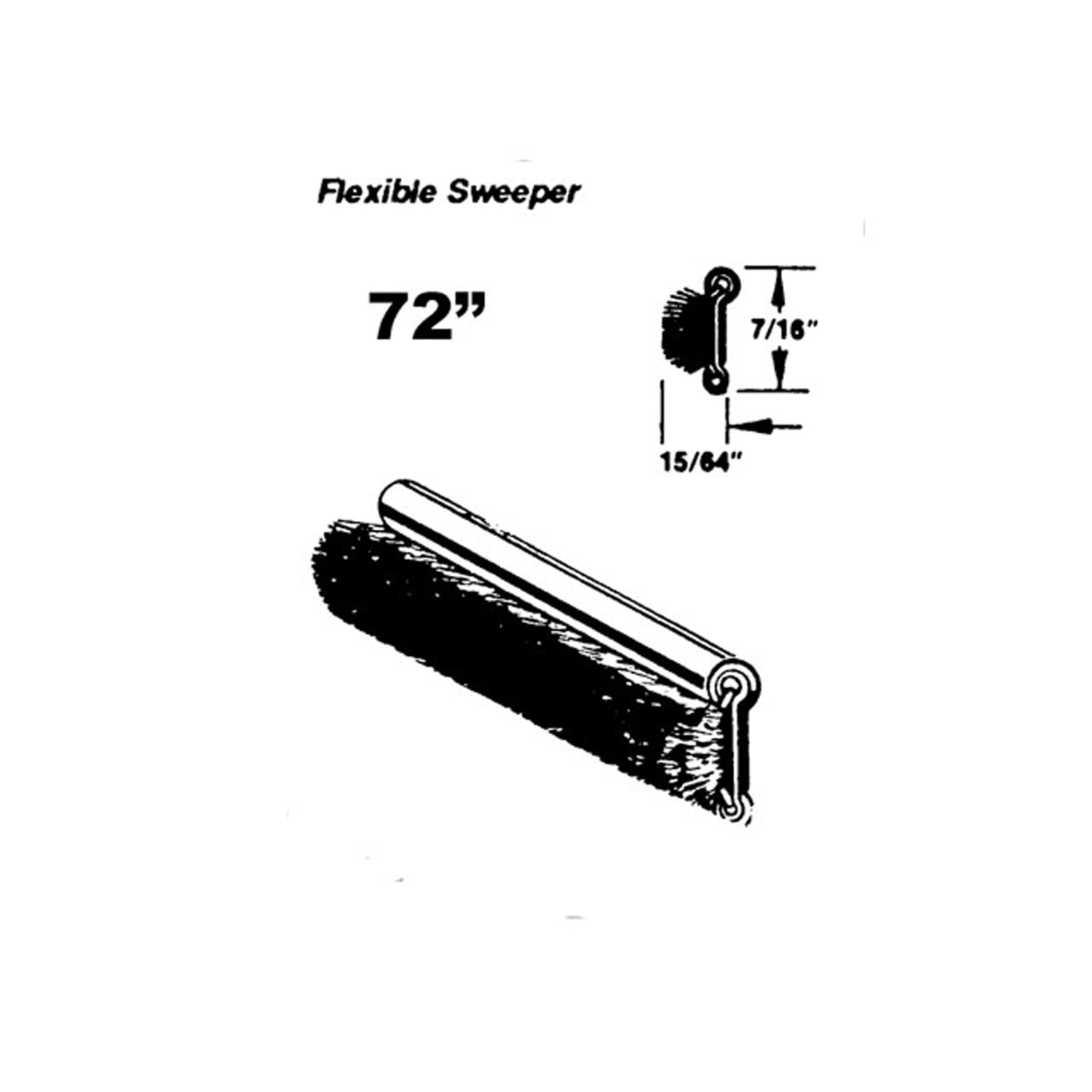 1937 Cadillac Series 70 Flexible sweeper. Made with stainless steel bead-WC 8-72Flexible sweeper. Made with stainless steel bead. Used on inner and outer beltlines. Also forms easily for use with sliding quarter windows. 72 in. long. Each. NOTE: $20 special shipping charge applies for domestic orders. Call or email for overseas shipping costs. Part can be sectioned into two equal lengths to reduce overseas shipping costs.
 1937 Cadillac Series 70 Fender Bolts. For use with Fender Bolt Washers; WF 3001-WF 3000Fender Bolts. For use with Fender Bolt Washers; WF 3001. Zinc Chromate plated, high strength. 1" X 5/16". Set of 25
 1937 Cadillac Series 70 Fender Bolt Washers. For use with Fender Bolts; WF 3000-WF 3001Fender Bolt Washers. For use with Fender Bolts; WF 3000. High quality, cadmium plated. 1-1/4" O.D., 3/8" I.D. Set of 25
 1937 Cadillac Series 70 Rear vent window seals. For 4-door touring sedans. Pair-WR 7302-RRear vent window seals. For 4-door touring sedans. Pair. R&L.
Why Choose Metro?
For over 100 years, Metro Moulded Parts has been the pinnacle of quality in classic car restoration parts. Our commitment to precision and authenticity in every component ensures a perfect fit and an OEM-level appearance.
- Expert Craftsmanship & Quality: Each part is a testament to our dedication to reliability and perfection, crafted from original designs and thoroughly tested.
- Advanced Technology: We use cutting-edge techniques to create flawless, long-lasting parts that surpass others in performance.
- SuperSoft Sponge – The Ultimate Door Seal: Not only are our door seals 30% softer than competitors', but they're also guaranteed to never leak. They effectively reduce wind and road noise, enhancing your classic car's comfort and driving experience.
- Proudly American: Our parts are a product of American craftsmanship, made in the USA with a spirit of excellence and heritage.
- Unrivaled Warranty: We back our products with a 30-year industry-leading warranty, a testament to our confidence in their quality.
Join us in preserving the legacy of classic cars with parts that are crafted for perfection, not just made.