

Image of 1938 Cadillac Series 60, Note: These illustrations use artistic license and may differ from actual historical models.
Performance Metrics
Fundamental Metrics
Emotional Appeal
MMP Rating
| Engine Specifications | |
|---|---|
| Engine: | L-head V8 |
| Displacement: | 346 cu in (5.7 L) |
| Horsepower: | Estimated 135 hp |
| Torque: | Not available |
| Compression Ratio: | 6.25:1 |
| Ignition System: | Battery and coil |
| Cooling System: | Liquid-cooled |
| Performance Specifications | |
| 0-60 Time: | Not available |
| 1/4 Mile Time: | Not available |
| Top Speed: | Estimated 85 mph |
| Transmission and Drive | |
| Drive Type: | Rear-wheel drive |
| Transmission Type: | 3-speed manual |
| Fuel and Efficiency | |
| Fuel System Type: | Carburetor |
| MPG: | Not available |
| Dimensions and Brakes | |
| Brakes: | Drum brakes |
| Wheelbase: | 129 in (3,277 mm) |
| Weight: | Estimated 4,500 lbs |
Note: Specifications for classic cars are given to the best of our ability, considering the limited and variant data available.
1938 Cadillac Series 60: An Accessible Cadillac with Lasting Style
The 1938 Cadillac Series 60 brought Cadillac’s V8 prestige to a wider audience without trimming away the marque’s trademark presence. Built by Cadillac, a division of General Motors, it sat at the more attainable end of the Cadillac range, pairing elegant prewar styling with a smooth, proven V8. Its most intriguing connection is the launch of the Sixty Special in 1938, a landmark sedan whose modern proportions would influence Cadillac design for years.
The Series 60 arrived in 1936 as Cadillac reshaped its model lineup during the Depression-era push to offer more price points. It was a full-fledged Cadillac, not a stripped-down economy car, but its shorter wheelbase and lower price distinguished it from the larger, more expensive models. The 1938 version belongs to the final years of this first Series 60 run, before Cadillac revised its range for 1939.
1938 Cadillac Styling and Interior
The Series 60 has the confident, upright look of a late-1930s luxury car. Its long hood leads to a bold, vertically detailed grille, while rounded front fenders flow back toward the passenger compartment. Headlamps sit neatly within the fenders, giving the front end a more integrated appearance than the separate-lamp designs common on earlier cars. Bright trim, sweeping fender lines, and a substantial chrome bumper add formality without making the car look overly ornate.
Inside, the cabin is spacious and carefully finished, with a broad dashboard, clear instruments, and generous seating. Closed-body cars typically used durable, well-tailored cloth upholstery, while leather was associated with certain open or more individually appointed body styles. Wood or wood-grain accents and polished metal details varied with the body and trim. Buyers could select from factory paint finishes that included restrained dark and medium tones, along with lighter choices. Black, deep blue, maroon, gray, and green are among the period-appropriate colors seen on surviving examples, though the exact palette depended on body style and production records.
Common Series 60 body styles included a two-door coupe and a four-door sedan. The most important 1938 addition was the Sixty Special, a distinctive four-door sedan developed under Cadillac’s design chief Harley Earl by stylist Bill Mitchell. It stood apart with a lower, more streamlined body, extensive glass, and a cleaner roofline than the upright sedans of its day. The Sixty Special was closely related to the Series 60 family but should be treated as its own notable model, not simply as another standard Series 60 body.
Engineering and Innovation
Power came from Cadillac’s 322-cubic-inch side-valve V8, rated at about 125 horsepower in Series 60 specification. The engine used a cast-iron block and was designed for smooth, quiet pulling power rather than high-revving performance. A three-speed manual transmission was standard. Cadillac’s Hydra-Matic automatic transmission was not yet a Series 60 feature in 1938; it arrived on selected GM cars that year and later became available in Cadillac models.
Independent front suspension, hydraulic brakes, and all-steel body construction helped make the Series 60 a modern luxury car by 1930s standards. These technologies were not exclusive to Cadillac, but the company combined them with a refined V8 and a polished driving environment. The Sixty Special’s lower, more integrated body was especially forward-looking. Its design helped move the luxury sedan away from the tall, separate-looking bodies of the earlier decade.
Why the Series 60 Matters
The Series 60’s significance is partly about access. It gave buyers a way into Cadillac ownership at a lower price than the marque’s larger models, while still delivering the V8 power, quality, and prestige associated with the name. That strategy helped Cadillac compete across a broader market and reinforced the idea that a luxury brand could offer a well-rounded range rather than only grand, expensive automobiles.
The Sixty Special added a more enduring design legacy. Its sleek, integrated proportions anticipated the modern American sedan, and the Sixty Special name continued in Cadillac’s lineup for decades. The 1938 car was not a radical engineering experiment, but it showed how thoughtful body design could make a luxury car feel fresh and progressive. Compared with many contemporaries, the Series 60 balanced traditional Cadillac formality with a more manageable size and a relatively accessible price.
V8 Performance and Road Manners
Factory performance figures varied by body, gearing, condition, and test method, and modern standardized 0-to-60 testing was not routine when the car was new. A sound 1938 Series 60 can be expected to reach roughly 80 to 85 mph, with a 0-to-60-mph time in the neighborhood of 20 seconds. Those are practical estimates, not guaranteed specifications for every surviving car.
The V8’s strength is its relaxed delivery. It builds speed steadily and pulls well at moderate engine speeds, while the manual transmission asks the driver to plan shifts rather than rush them. The engine has a subdued, low-pitched burble at idle and a deeper mechanical note under acceleration. With its long wheelbase and substantial chassis, the Series 60 feels composed on ordinary roads and absorbs small bumps comfortably. On rough surfaces, its period suspension cannot match a modern car’s control, and on winding roads its size, steering effort, and narrow tires reward smooth inputs over quick changes of direction.
Like any prewar car, it needs more space and attention than a contemporary vehicle. Braking distances are longer, visibility can be limited by the bodywork, and driving in fast modern traffic requires a defensive approach. The reward is a calm, substantial ride and a direct connection to the machinery: the driver works the clutch and gearshift, listens to the engine, and feels the road through a comparatively simple chassis.
Living with a 1938 Cadillac
Today, most Series 60s are collector cars used for touring, club events, shows, and occasional weekend drives. A well-maintained example can cover local distances reliably, but it is rarely a sensible daily driver. It lacks modern safety equipment, air conditioning, and the convenience features expected in contemporary traffic.
Routine service is straightforward for an owner or mechanic familiar with prewar American cars. The engine is accessible, and basic work such as ignition service, lubrication, and brake maintenance does not require modern diagnostic equipment. The harder jobs involve locating correct trim, body panels, interior pieces, and model-specific components. Parts support exists through specialist suppliers and the Cadillac community, but availability and cost vary. Before purchase, inspect the frame, body mounts, floor, and lower panels for corrosion, and check the engine for oil pressure, cooling-system health, and evidence of a recent rebuild.
1938 Cadillac Facts and Common Criticisms
The Sixty Special’s debut is the standout fact of the 1938 Cadillac story. Created under Harley Earl and styled by Bill Mitchell, it gave Cadillac a more modern-looking sedan and helped establish a model name that remained in use for generations. It is also important not to confuse the Sixty Special with every Series 60: the two are closely linked, but the Special had its own distinctive body and place in the lineup.
There is no widely recognized speed or endurance record associated specifically with the 1938 Series 60. Its achievement was more commercial and design-focused: it broadened Cadillac’s appeal and introduced an influential sedan. Nor is there a single well-documented celebrity ownership story that defines the model. Its historical interest rests on the car itself and the design direction it represented.
Common criticisms are typical of prewar cars. The Series 60 is heavy, its steering and brakes feel dated by modern standards, and its fuel economy is modest. Some owners also find that restoring a car to factory-correct condition takes longer and costs more than expected, especially when trim or upholstery is missing. Those drawbacks are balanced by its smooth V8, comfortable cabin, and distinctive prewar character.
1938 Cadillac Series 60 Values and Rarity
Production figures are not always separated consistently across body styles and related models, so any estimate should be treated cautiously. A reasonable working estimate is that roughly 2,500 to 3,000 standard Series 60 cars were built for 1938, with the Sixty Special counted separately in some references. That makes surviving cars uncommon, though not impossibly rare. Availability depends heavily on body style, condition, and whether the car is an ordinary Series 60 or a Sixty Special.
As a broad 2026 market estimate, a project or incomplete car might sell for around $15,000 to $25,000. A usable driver commonly falls in the $25,000 to $45,000 range, while a well-restored example can bring roughly $50,000 to $85,000. Exceptional restorations, highly original cars, and desirable Sixty Special examples may exceed $100,000, but condition, documentation, and market timing matter greatly. These are guide ranges rather than appraisals, and auction results can land outside them.
Values for sound, well-presented prewar Cadillacs have generally held up better than those for less recognized old cars, but the market is selective. Buyers pay premiums for quality restoration, originality, and complete history, while deferred maintenance and incorrect parts can sharply reduce value. The Series 60 is best viewed as a long-term enthusiast purchase, not a guaranteed investment.
A Cadillac with Two Stories
The 1938 Cadillac Series 60 combines a smooth 322-cubic-inch V8, handsome prewar styling, and the comfort of a genuine luxury car in a more accessible package than Cadillac’s largest models. Its importance grows with the arrival of the Sixty Special, a sleek sedan that helped point American luxury design toward the modern era. For collectors, it offers more than chrome and nostalgia: it captures the moment Cadillac made its style both more progressive and more widely attainable.
1938 Cadillac Series 60 Catalog of Parts
 1938 Cadillac Series 60 Rear Bumper Arm Grommets-BG 69Rear Bumper Arm Grommets. 2-1/8" wide X 3-7/8" long, with 1-3/4" long inner slot. Pair
 1938 Cadillac Series 60 Spring and Shackle Bushing-BN 22Spring and Shackle Bushing. For front or rear eyes on rear leaf spring. 1-3/4" bottom O.D X 1-3/8" high, with 3/4" I.D. Each
 1938 Cadillac Series 60 Upper Door Hinge Post Bumper. Held by screw-DB 60-AUpper Door Hinge Post Bumper. Held by screw. 7/8" diameter X 1/8" thick. Each
 1938 Cadillac Series 60 Windshield Center Post Gasket Outer Garnish Molding Retainer-DP 18Windshield Center Post Gasket Outer Garnish Molding Retainer. Made with threaded steel core like original, 13-1/2" long. Includes 13" flat rubber strip. Set
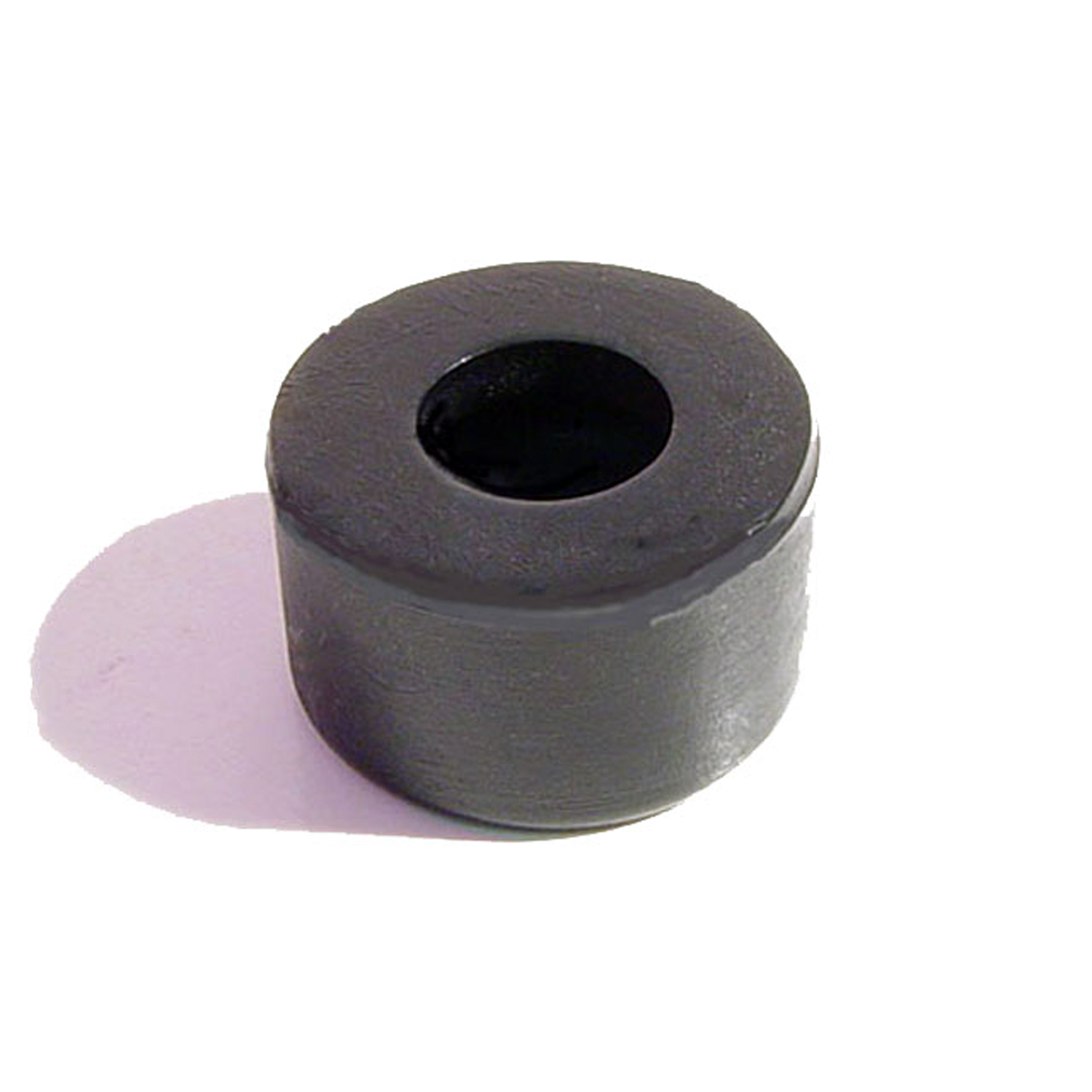 1938 Cadillac Series 60 Door, Hood and Trunk Bumper Cap for adjustment bolt-HA 5Door, Hood and Trunk Bumper Cap for adjustment bolt. 7/8" diameter X 7/16" thick. Each
 1938 Cadillac Series 60 Hood Rest Pad Bumper. Metal core, tab held-HC 31-AHood Rest Pad Bumper. Metal core, tab held. Four to twelve used per car. 1-1/4" between tabs. Each
 1938 Cadillac Series 60 Door and Hood Bumper. 1" diameter X 7/8" thick. Each-HF 16Door and Hood Bumper. 1" diameter X 7/8" thick. Each
 1938 Cadillac Series 60 Windshield and Rear Window Channel. Used with 1/4" glass-LP 105Windshield and Rear Window Channel. Used with 1/4" glass. Fits some models. Sold by the foot
 1938 Cadillac Series 60 Trunk Seal. Sponge rubber. Sold by the foot.-LP 96-/FTTrunk Seal. Sponge rubber. Sold by the foot.
 1938 Cadillac Series 60 Windshield Wiper Transmission Pad-MP 280-AWindshield Wiper Transmission Pad. 1-3/4" wide X 2-1/4" long. Each
 1938 Cadillac Series 60 Trunk Hinge Pads. 1-5/8" wide X 9-1/4" long. 4-Piece Set-MP 421-ATrunk Hinge Pads. 1-5/8" wide X 9-1/4" long. 4-Piece Set
 1938 Cadillac Series 60 Tail-Light Pads. 4-1/8" wide X 8-1/8" long. Pair R&L-MP 442Tail-Light Pads. 4-1/8" wide X 8-1/8" long. Pair R&L
 1938 Cadillac Series 60 Rumble Seat Step Plate Bracket Pad-MP 442-ARumble Seat Step Plate Bracket Pad. 3-1/4" wide X 4-3/4" long. Each
 1938 Cadillac Series 60 Windshield Wiper Transmission Pad. 2" wide X 2-3/8" long-MP 460-AWindshield Wiper Transmission Pad. 2" wide X 2-3/8" long. Each
 1938 Cadillac Series 60 Top Hold-Down Pads-MP 461-CDTop Hold-Down Pads. 1-7/8" wide X 4-1/8" long & 1-1/4" wide X 3-1/4" long. Set
 1938 Cadillac Series 60 Door Ferrule Grommet. Made of black rubber-MP 546-HDoor Ferrule Grommet. Made of black rubber. Fits over your old steel door ferrule (also see WF 2006) 1-3/16" O.D. Each
 1938 Cadillac Series 60 Cowl Vent Seal. 3" wide at side X 15-3/4" long. Each-RP 100-BCowl Vent Seal. 3" wide at side X 15-3/4" long. Each
 1938 Cadillac Series 60 Rear Leaf Spring Insulator. Fabric reinforced, tough rubber-RP 23-ZRear Leaf Spring Insulator. Fabric reinforced, tough rubber. For all 2" wide leaf springs. 2" wide X 5" long. Each
 1938 Cadillac Series 60 Door Lock Knob. Brown. 1/2" diameter X 1" long X 1/8" hole-RP 303Door Lock Knob. Brown. 1/2" diameter X 1" long X 1/8" hole. Each
 1938 Cadillac Series 60 Sun Visor End Tube Plug. Black. Each-RP 303-DSun Visor End Tube Plug. Black. Each
 1938 Cadillac Series 60 Door Bumper. 1" diameter X 1/4" thick Each-SB 60Door Bumper. 1" diameter X 1/4" thick Each
 1938 Cadillac Series 60 Spare Wheel Cover Rest Pad-SB 80-ASpare Wheel Cover Rest Pad. Made with steel core and bend-over tabs. 1" between tabs. 1-3/4" overall length. 16 required per car. Each
 1938 Cadillac Series 60 Wire Harness Grommet. Each-SM 3Wire Harness Grommet. Each
 1938 Cadillac Series 60 Firewall grommet for headlight and tail-light wires-SM 34Firewall grommet for headlight and tail-light wires. Fits 11/16" hole. 5/16" I.D., 15/16" O.D. Each
 1938 Cadillac Series 60 Wire Harness Grommet-SM 38Wire Harness Grommet. For speedometer cable through toe board. Replaces OEM #594341. Each
 1938 Cadillac Series 60 Special Purpose Grommet-SM 68Special Purpose Grommet. For headlight wire loom through body. Each
 1938 Cadillac Series 60 Trunk seal. '36-'40 GM coupes and convertibles only-TK 58-A/18Trunk seal. '36-'40 GM coupes and convertibles only. Does not fit Buick models (order LP 58-L per foot). 3/4 in. W x 1/2 in. Thk x 18 ft. L. Each.
 1938 Cadillac Series 60 Trunk Seal for Coupes and Convertibles Only-TK 58-B/18Trunk Seal for Coupes and Convertibles Only. 1" wide X 1/2" thick. Each
 1938 Cadillac Series 60 Trunk Seal, for Sedans. Each-TK 96-15Trunk Seal, for Sedans. Each
 1938 Cadillac Series 60 Vertical Seal for Vent Window. Each is 17" long. Pair-VS 2Vertical Seal for Vent Window. Each is 17" long. Pair
 1938 Cadillac Series 60 Vulcanized Windshield Seal, for Convertibles-VWS 7302Vulcanized Windshield Seal, for Convertibles. For cars without chrome garnish. Each
 1938 Cadillac Series 60 Vulcanized Windshield Seal-VWS 7303Vulcanized Windshield Seal. For all models without chrome garnish, except convertibles. Each
 1938 Cadillac Series 60 Flexible glass-run channel-WC 11-72Flexible glass-run channel. Mohair lined, cloth covered with stainless steel bead. Used on side windows. 72 in. long. Each. NOTE: $20 special shipping charge applies for domestic orders. Call or email for overseas shipping costs. Part can be sectioned in two equal lengths to reduce overseas shipping costs.
 1938 Cadillac Series 60 Rigid division-bar channel. Made with stainless steel bead-WC 2-72Rigid division-bar channel. Made with stainless steel bead. 72 in. long. Each. NOTE: $20 special shipping charge applies for domestic orders. Call or email for overseas shipping costs. Part can be sectioned into two equal lengths to reduce overseas shipping costs.
 1938 Cadillac Series 60 Flexible Rubber Window Channel-WC 32-14Flexible Rubber Window Channel. For Fisher Closed Bodies, except those using a stainless bead type. Used on side windows. 13/16" outer width X 6/16" outer depth, with a 5/16" inner channel width X 14" long. Each
 1938 Cadillac Series 60 Flexible sweeper. Made with stainless steel bead-WC 8-72Flexible sweeper. Made with stainless steel bead. Used on inner and outer beltlines. Also forms easily for use with sliding quarter windows. 72 in. long. Each. NOTE: $20 special shipping charge applies for domestic orders. Call or email for overseas shipping costs. Part can be sectioned into two equal lengths to reduce overseas shipping costs.
 1938 Cadillac Series 60 Chrome Door Ferrule. To be used with MP 546-H. 1-1/16" O.D-WF 2006Chrome Door Ferrule. To be used with MP 546-H. 1-1/16" O.D., 5/8" high. Fits most models. Each
 1938 Cadillac Series 60 Fender Bolts. For use with Fender Bolt Washers; WF 3001-WF 3000Fender Bolts. For use with Fender Bolt Washers; WF 3001. Zinc Chromate plated, high strength. 1" X 5/16". Set of 25
 1938 Cadillac Series 60 Fender Bolt Washers. For use with Fender Bolts; WF 3000-WF 3001Fender Bolt Washers. For use with Fender Bolts; WF 3000. High quality, cadmium plated. 1-1/4" O.D., 3/8" I.D. Set of 25
 1938 Cadillac Series 60 Front vent window seals. Exact fit. Does not fit convertible-WR 7302Front vent window seals. Exact fit. Does not fit convertible. Pair. R&L.
 1938 Cadillac Series 60 Rear vent window seals. For 4-door touring sedans. Pair-WR 7302-RRear vent window seals. For 4-door touring sedans. Pair. R&L.
 1938 Cadillac Series 60 Front Vent Window Seals, for Convertibles. Pair R&L-WR 7311Front Vent Window Seals, for Convertibles. Pair R&L
 1938 Cadillac Series 60 Front Vent Window Seals. Pair R&L-WR 7322Front Vent Window Seals. Pair R&L
 1938 Cadillac Series 60 Front Suspension Bumper. 2" high. Each-XB 18Front Suspension Bumper. 2" high. Each
Why Choose Metro?
For over 100 years, Metro Moulded Parts has been the pinnacle of quality in classic car restoration parts. Our commitment to precision and authenticity in every component ensures a perfect fit and an OEM-level appearance.
- Expert Craftsmanship & Quality: Each part is a testament to our dedication to reliability and perfection, crafted from original designs and thoroughly tested.
- Advanced Technology: We use cutting-edge techniques to create flawless, long-lasting parts that surpass others in performance.
- SuperSoft Sponge – The Ultimate Door Seal: Not only are our door seals 30% softer than competitors', but they're also guaranteed to never leak. They effectively reduce wind and road noise, enhancing your classic car's comfort and driving experience.
- Proudly American: Our parts are a product of American craftsmanship, made in the USA with a spirit of excellence and heritage.
- Unrivaled Warranty: We back our products with a 30-year industry-leading warranty, a testament to our confidence in their quality.
Join us in preserving the legacy of classic cars with parts that are crafted for perfection, not just made.