

Image of 1938 Cadillac Series 75, Note: These illustrations use artistic license and may differ from actual historical models.
Performance Metrics
Fundamental Metrics
Emotional Appeal
MMP Rating
| Engine Specifications | |
|---|---|
| Engine: | V8 |
| Displacement: | 346 cubic inches |
| Horsepower: | Estimated 135-150 HP |
| Torque: | 283 lb-ft |
| Compression Ratio: | Estimated 6.25:1 |
| Ignition System: | Battery and coil |
| Cooling System: | Liquid-cooled |
| Performance Specifications | |
| 0-60 Time: | Information not available |
| 1/4 Mile Time: | Information not available |
| Top Speed: | Estimated 85-90 mph |
| Transmission and Drive | |
| Drive Type: | Rear-wheel drive |
| Transmission Type: | 3-speed manual |
| Fuel and Efficiency | |
| Fuel System Type: | Carburetor |
| MPG: | Information not available |
| Dimensions and Brakes | |
| Brakes: | Drum brakes |
| Wheelbase: | 138 inches |
| Weight: | Estimated 4,600 lbs |
Note: Specifications for classic cars are given to the best of our ability, considering the limited and variant data available.
1938 Cadillac Series 75: A Long-Wheelbase American Classic
The 1938 Cadillac Series 75 was built for people who expected a Cadillac to arrive with presence before its engine was even switched off. A flagship of the General Motors luxury division, it paired Fleetwood-finished coachwork with a powerful flathead V8 and the generous proportions of a formal chauffeur-driven car. It was not the quickest or most nimble Cadillac of its day, but it made a compelling statement about American luxury in the years before World War II.
Cadillac had earned a reputation for engineering precision and high-quality construction, while Fleetwood was known for elegant bodies and careful detailing. By the late 1930s, Fleetwood was part of Cadillac rather than an independent coachbuilder, but the name still signaled an especially distinguished level of finish. The Series 75 carried that identity in a large, long-wheelbase package designed primarily for passengers who valued space, comfort, and status.
One intriguing detail is that the Series 75’s imposing body concealed a V8 rather than the twelve- or sixteen-cylinder engines sometimes associated with top-tier luxury cars. Cadillac’s 346-cubic-inch V8 delivered the smooth, usable power needed to move a heavy limousine without the complexity and expense of a multi-cylinder engine.
Fleetwood Styling and Cabin Craft
The Series 75 had the unmistakable proportions of a prewar luxury car: a long hood, upright glass, flowing fenders, and a tall passenger compartment. Its front end was dominated by a bold vertical-bar grille, with headlamps integrated into the front fenders for a cleaner appearance than on earlier cars with separately mounted lamps. Chrome accents and polished brightwork gave the car visual distinction without overwhelming its formal shape.
From the side, the extended wheelbase was the defining feature. The doors and passenger area looked substantial, and the rear body carried the dignified lines expected of a chauffeur’s car. Depending on the body style, rear fenders, running boards, spare-wheel arrangements, and luggage provisions could change the car’s profile. The effect was stately rather than sporty: a Cadillac that looked entirely at home outside a grand hotel, theater, or country estate.
Inside, Fleetwood emphasized comfort and finish. Upholstery materials varied with configuration and specification, but buyers could expect quality cloth or leather, polished wood trim, substantial door panels, and carefully finished hardware. The front compartment was arranged for the driver, while rear-seat versions prioritized passenger room. Limousine and imperial-sedan layouts could include a glass division between driver and passengers, along with folding auxiliary seats for additional occupants.
Cadillac offered a selection of factory paint colors, and custom or special-order finishes could add further choice. Black was a natural favorite for formal limousines, while dark blue, maroon, gray, and green were also fitting period colors. Two-tone treatments appeared on some cars, though a restrained single color best suited the Series 75’s formal character. Exact combinations depended on body style and original order details.
Body Styles and Equipment
The Series 75 was a family of large Fleetwood-bodied cars rather than one single body design. Offerings centered on passenger sedans and chauffeur-oriented configurations, including seven-passenger sedans, imperial sedans, and limousines. Exact catalog choices could vary by market and production specification. The classic seven-passenger limousine, often fitted with a division separating the driver from the rear compartment, is the most immediately recognizable Series 75 configuration today.
Equipment reflected the expectations of an expensive Cadillac. Buyers could specify features such as a radio, heater, auxiliary seating, and tailored interior appointments, depending on the car’s configuration. These options were not trivial extras: a well-equipped Series 75 was intended to serve as a comfortable, personalized conveyance for its owner and guests.
Engineering and Historical Significance
Under the hood sat Cadillac’s 346-cubic-inch L-head, or flathead, V8. In 1938 it produced about 135 horsepower. Power went to the rear wheels through a three-speed manual transmission. Cadillac had not yet introduced its Hydra-Matic automatic transmission, which arrived in 1940, so the driver operated a conventional clutch and gear lever.
The Series 75 also benefited from engineering features that made a large car more manageable. Hydraulic brakes provided more consistent stopping power than older mechanical systems, while independent front suspension helped improve ride comfort and steering response over uneven roads. Together, those features made the Cadillac feel more modern than its imposing, traditional shape might suggest.
Its significance lies in how it combined established luxury-car values with increasingly sophisticated mass-production engineering. Cadillac brought a high level of finish, a powerful V8, and modern chassis technology together in a car that could be built and serviced within a major manufacturer’s network. The Series 75 helped define the American luxury limousine: expansive, smooth, richly appointed, and designed to carry people in comfort rather than chase sporting-car performance.
Compared with smaller Cadillacs and competitors such as Packard’s formal models, the Series 75 stood out for its imposing size and Fleetwood identity. Its design was also part of the late-1930s move toward more integrated styling, with lamps and body details flowing into the fenders instead of appearing as separate attachments. The broader influence of this approach can be seen in the increasingly streamlined luxury cars that followed.
Performance and Road Manners
With roughly 135 horsepower moving a substantial car, the Series 75 favored steady progress over rapid acceleration. Period performance figures vary by body style, weight, condition, and gearing, but a reasonable modern estimate is a 0-to-60-mph time of about 20 to 25 seconds. A sound example may reach approximately 80 to 90 mph, though top speed should be treated as an estimate rather than a guaranteed figure for every car.
On a smooth road, the Cadillac’s long wheelbase and soft suspension deliver the relaxed ride that made large prewar cars appealing. It can absorb ordinary bumps with composure, although broken pavement and sharp road edges will still make themselves felt through its period chassis and tall tires. On winding roads, the Series 75 is best driven with patience. Its size, weight, and comparatively slow steering response reward smooth inputs, not quick direction changes.
The driving experience is part of the car’s appeal. The flathead V8 produces a subdued, deep mechanical note rather than a sharp exhaust bark. The clutch and three-speed gearbox require more involvement than a modern automatic, and the driver must plan ahead when slowing or passing. From the rear seat, the experience is quieter and more relaxed, especially in a limousine with a driver’s partition. It feels less like a car asking to be hurried and more like one built to make distance feel effortless.
Owning a 1938 Cadillac Series 75
Today, most Series 75s are used as show cars, collection pieces, parade vehicles, or occasional touring cars. A well-maintained example can take part in club events and leisurely drives, but its age, dimensions, and value make daily use impractical for many owners. It is large even by classic-car standards, and parking, storage, and narrow roads can all require extra care.
Maintenance is manageable for a knowledgeable classic-car enthusiast, but the Series 75 is not a simple, inexpensive project. The basic V8 is mechanically straightforward compared with later engines, and many routine service tasks are familiar to vintage-car specialists. However, parts availability varies, and body, trim, glass, upholstery, and Fleetwood-specific details can be costly to repair or reproduce. A pre-purchase inspection should include the engine, cooling system, brakes, steering, electrical system, and any evidence of structural rust or old collision repairs.
Reliability depends heavily on restoration quality and use. A carefully rebuilt car that is driven and serviced regularly can be dependable for touring, while a neglected example may need substantial work before it is safe on the road. Buyers should budget for specialist labor and avoid assuming that a low purchase price means low ownership costs.
Notable Facts and Common Criticisms
The Series 75’s connection to Fleetwood is a major part of its identity. Fleetwood had built bodies for luxury marques before Cadillac acquired the company in 1925, and its name continued to carry prestige on Cadillac models. By 1938, the Series 75 represented a factory-produced interpretation of formal coachbuilt luxury, blending carefully finished interiors with Cadillac’s established mechanical engineering.
Its most notable role was not a single record-setting run but its service as a formal passenger car. Cars of this type were suited to executives, institutions, hotels, and public occasions, where appearance and passenger comfort mattered more than speed. There is no widely recognized Series 75 speed or endurance record that defines the model.
Common criticisms are easy to understand from a modern perspective. The car is heavy, slow to accelerate, and demanding to maneuver in tight spaces. Fuel economy is poor by modern standards, and the manual transmission can feel like an inconvenience to drivers accustomed to automatic gearboxes. Its size also means that some owners find it less usable than smaller prewar classics. Those drawbacks are part of the trade-off for the spacious cabin, smooth V8, and commanding presence.
Collector Values and Rarity
The 1938 Series 75 is scarce compared with more common Cadillac models, but its market is specialized. As a working estimate, roughly 2,000 examples across the Series 75 body styles may have been produced for the model year. That figure should be treated as an estimate, since production totals can be reported differently by body style and source. Surviving cars are fewer still, and condition, originality, and completeness have a major effect on value.
In the current U.S. collector market, a project or incomplete car might sell for roughly $25,000 to $50,000. A usable driver or older restoration could fall around $50,000 to $100,000, while a high-quality restoration may reach approximately $100,000 to $175,000. Exceptional examples, particularly rare or especially desirable body configurations, can exceed that range. These are broad guide figures, not appraisals: a limousine’s condition and provenance matter more than a simple model-year price.
Values have generally been supported by the Series 75’s rarity and striking presence, but demand is narrower than for more compact or sporty classics. The best cars can attract strong interest, while average examples may take time to sell. In nominal dollars, top-quality examples may appreciate over the long term, but restoration costs can exceed market gains, and inflation-adjusted values are less predictable. Original documentation, correct Fleetwood details, and evidence of a high-quality restoration are especially valuable.
Why the Series 75 Still Matters
The 1938 Cadillac Series 75 brought together Fleetwood craftsmanship, a smooth 346-cubic-inch V8, modern-for-its-time chassis features, and the unmistakable proportions of a formal American limousine. It was not designed to win races or squeeze into a tight city parking space. It was designed to make every arrival feel important.
For collectors, its appeal is more than size and chrome. The Series 75 captures a moment when Cadillac was shaping the modern American luxury car, balancing traditional elegance with increasingly advanced engineering. More than eight decades later, it remains a rolling reminder that true prestige was once measured not only in speed, but in how gracefully a car carried its passengers.
1938 Cadillac Series 75 Catalog of Parts
 1938 Cadillac Series 75 Rear Bumper Arm Grommets-BG 69Rear Bumper Arm Grommets. 2-1/8" wide X 3-7/8" long, with 1-3/4" long inner slot. Pair
 1938 Cadillac Series 75 Spring and Shackle Bushing-BN 22Spring and Shackle Bushing. For front or rear eyes on rear leaf spring. 1-3/4" bottom O.D X 1-3/8" high, with 3/4" I.D. Each
 1938 Cadillac Series 75 Upper Door Hinge Post Bumper. Held by screw-DB 60-AUpper Door Hinge Post Bumper. Held by screw. 7/8" diameter X 1/8" thick. Each
 1938 Cadillac Series 75 Windshield Center Post Gasket Outer Garnish Molding Retainer-DP 18Windshield Center Post Gasket Outer Garnish Molding Retainer. Made with threaded steel core like original, 13-1/2" long. Includes 13" flat rubber strip. Set
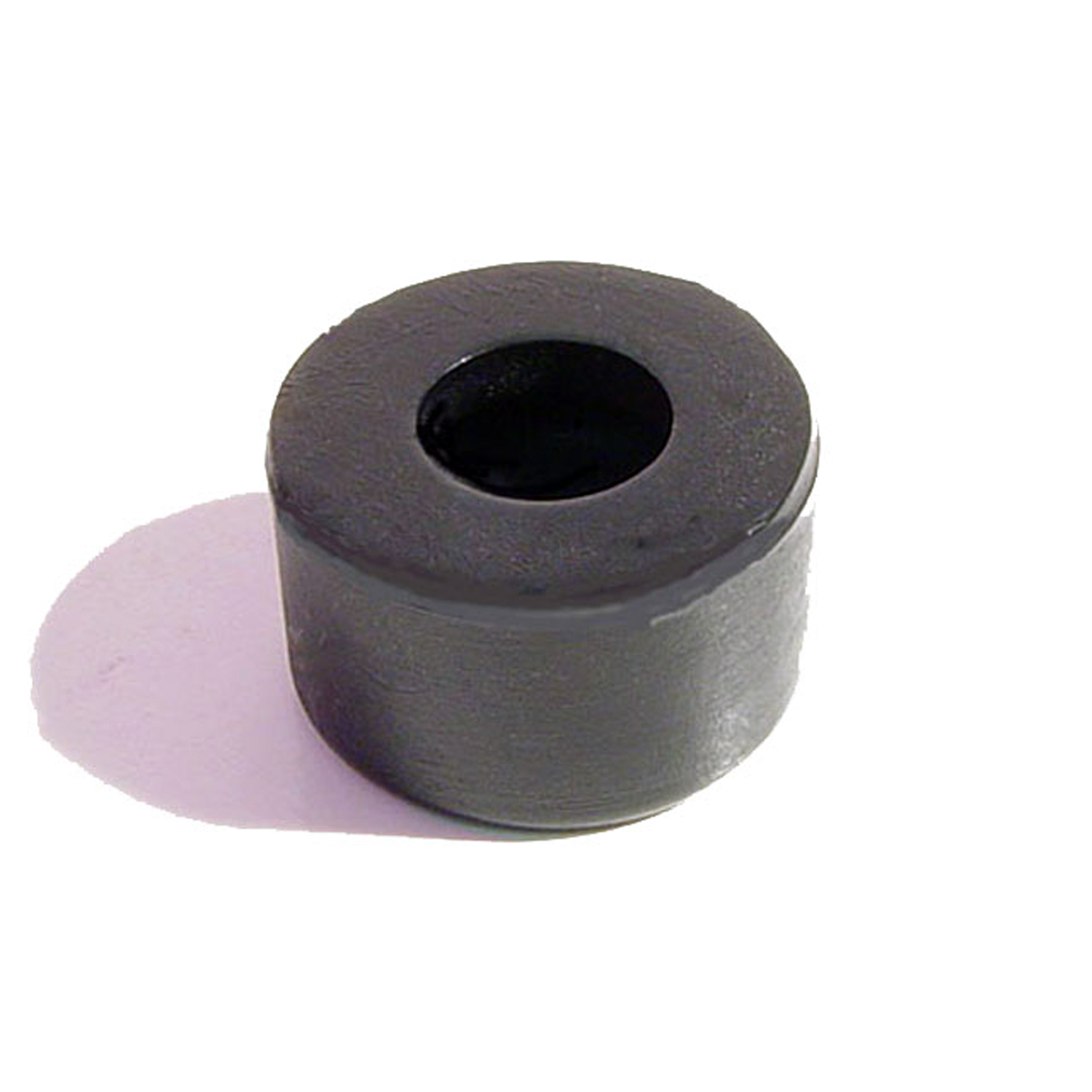 1938 Cadillac Series 75 Door, Hood and Trunk Bumper Cap for adjustment bolt-HA 5Door, Hood and Trunk Bumper Cap for adjustment bolt. 7/8" diameter X 7/16" thick. Each
 1938 Cadillac Series 75 Hood Rest Pad Bumper. Metal core, tab held-HC 31-AHood Rest Pad Bumper. Metal core, tab held. Four to twelve used per car. 1-1/4" between tabs. Each
 1938 Cadillac Series 75 Door and Hood Bumper. 1" diameter X 7/8" thick. Each-HF 16Door and Hood Bumper. 1" diameter X 7/8" thick. Each
 1938 Cadillac Series 75 Windshield and Rear Window Channel. Used with 1/4" glass-LP 105Windshield and Rear Window Channel. Used with 1/4" glass. Fits some models. Sold by the foot
 1938 Cadillac Series 75 Trunk Seal. Sponge rubber. Sold by the foot.-LP 96-/FTTrunk Seal. Sponge rubber. Sold by the foot.
 1938 Cadillac Series 75 Windshield Wiper Transmission Pad-MP 280-AWindshield Wiper Transmission Pad. 1-3/4" wide X 2-1/4" long. Each
 1938 Cadillac Series 75 Trunk Hinge Pads. 1-5/8" wide X 9-1/4" long. 4-Piece Set-MP 421-ATrunk Hinge Pads. 1-5/8" wide X 9-1/4" long. 4-Piece Set
 1938 Cadillac Series 75 Tail-Light Pads. 4-1/8" wide X 8-1/8" long. Pair R&L-MP 442Tail-Light Pads. 4-1/8" wide X 8-1/8" long. Pair R&L
 1938 Cadillac Series 75 Rumble Seat Step Plate Bracket Pad-MP 442-ARumble Seat Step Plate Bracket Pad. 3-1/4" wide X 4-3/4" long. Each
 1938 Cadillac Series 75 Windshield Wiper Transmission Pad. 2" wide X 2-3/8" long-MP 460-AWindshield Wiper Transmission Pad. 2" wide X 2-3/8" long. Each
 1938 Cadillac Series 75 Door Ferrule Grommet. Made of black rubber-MP 546-HDoor Ferrule Grommet. Made of black rubber. Fits over your old steel door ferrule (also see WF 2006) 1-3/16" O.D. Each
 1938 Cadillac Series 75 Door Lock Knob. Brown. 1/2" diameter X 1" long X 1/8" hole-RP 303Door Lock Knob. Brown. 1/2" diameter X 1" long X 1/8" hole. Each
 1938 Cadillac Series 75 Sun Visor End Tube Plug. Black. Each-RP 303-DSun Visor End Tube Plug. Black. Each
 1938 Cadillac Series 75 Door Bumper. 1" diameter X 1/4" thick Each-SB 60Door Bumper. 1" diameter X 1/4" thick Each
 1938 Cadillac Series 75 Spare Wheel Cover Rest Pad-SB 80-ASpare Wheel Cover Rest Pad. Made with steel core and bend-over tabs. 1" between tabs. 1-3/4" overall length. 16 required per car. Each
 1938 Cadillac Series 75 Wire Harness Grommet. Each-SM 3Wire Harness Grommet. Each
 1938 Cadillac Series 75 Firewall grommet for headlight and tail-light wires-SM 34Firewall grommet for headlight and tail-light wires. Fits 11/16" hole. 5/16" I.D., 15/16" O.D. Each
 1938 Cadillac Series 75 Wire Harness Grommet-SM 38Wire Harness Grommet. For speedometer cable through toe board. Replaces OEM #594341. Each
 1938 Cadillac Series 75 Special Purpose Grommet-SM 68Special Purpose Grommet. For headlight wire loom through body. Each
 1938 Cadillac Series 75 Trunk seal. '36-'40 GM coupes and convertibles only-TK 58-A/18Trunk seal. '36-'40 GM coupes and convertibles only. Does not fit Buick models (order LP 58-L per foot). 3/4 in. W x 1/2 in. Thk x 18 ft. L. Each.
 1938 Cadillac Series 75 Trunk Seal for Coupes and Convertibles Only-TK 58-B/18Trunk Seal for Coupes and Convertibles Only. 1" wide X 1/2" thick. Each
 1938 Cadillac Series 75 Trunk Seal, for Sedans. Each-TK 96-15Trunk Seal, for Sedans. Each
 1938 Cadillac Series 75 Vertical Seal for Vent Window. Each is 17" long. Pair-VS 2Vertical Seal for Vent Window. Each is 17" long. Pair
 1938 Cadillac Series 75 Vulcanized Windshield Seal, for Convertibles-VWS 7302Vulcanized Windshield Seal, for Convertibles. For cars without chrome garnish. Each
 1938 Cadillac Series 75 Vulcanized Windshield Seal-VWS 7303Vulcanized Windshield Seal. For all models without chrome garnish, except convertibles. Each
 1938 Cadillac Series 75 Flexible glass-run channel-WC 11-72Flexible glass-run channel. Mohair lined, cloth covered with stainless steel bead. Used on side windows. 72 in. long. Each. NOTE: $20 special shipping charge applies for domestic orders. Call or email for overseas shipping costs. Part can be sectioned in two equal lengths to reduce overseas shipping costs.
 1938 Cadillac Series 75 Rigid division-bar channel. Made with stainless steel bead-WC 2-72Rigid division-bar channel. Made with stainless steel bead. 72 in. long. Each. NOTE: $20 special shipping charge applies for domestic orders. Call or email for overseas shipping costs. Part can be sectioned into two equal lengths to reduce overseas shipping costs.
 1938 Cadillac Series 75 Flexible Rubber Window Channel-WC 32-14Flexible Rubber Window Channel. For Fisher Closed Bodies, except those using a stainless bead type. Used on side windows. 13/16" outer width X 6/16" outer depth, with a 5/16" inner channel width X 14" long. Each
 1938 Cadillac Series 75 Flexible sweeper. Made with stainless steel bead-WC 8-72Flexible sweeper. Made with stainless steel bead. Used on inner and outer beltlines. Also forms easily for use with sliding quarter windows. 72 in. long. Each. NOTE: $20 special shipping charge applies for domestic orders. Call or email for overseas shipping costs. Part can be sectioned into two equal lengths to reduce overseas shipping costs.
 1938 Cadillac Series 75 Chrome Door Ferrule. To be used with MP 546-H. 1-1/16" O.D-WF 2006Chrome Door Ferrule. To be used with MP 546-H. 1-1/16" O.D., 5/8" high. Fits most models. Each
 1938 Cadillac Series 75 Fender Bolts. For use with Fender Bolt Washers; WF 3001-WF 3000Fender Bolts. For use with Fender Bolt Washers; WF 3001. Zinc Chromate plated, high strength. 1" X 5/16". Set of 25
 1938 Cadillac Series 75 Fender Bolt Washers. For use with Fender Bolts; WF 3000-WF 3001Fender Bolt Washers. For use with Fender Bolts; WF 3000. High quality, cadmium plated. 1-1/4" O.D., 3/8" I.D. Set of 25
 1938 Cadillac Series 75 Rear vent window seals. For 4-door touring sedans. Pair-WR 7302-RRear vent window seals. For 4-door touring sedans. Pair. R&L.
 1938 Cadillac Series 75 Front Suspension Bumper. 2" high. Each-XB 18Front Suspension Bumper. 2" high. Each
Why Choose Metro?
For over 100 years, Metro Moulded Parts has been the pinnacle of quality in classic car restoration parts. Our commitment to precision and authenticity in every component ensures a perfect fit and an OEM-level appearance.
- Expert Craftsmanship & Quality: Each part is a testament to our dedication to reliability and perfection, crafted from original designs and thoroughly tested.
- Advanced Technology: We use cutting-edge techniques to create flawless, long-lasting parts that surpass others in performance.
- SuperSoft Sponge – The Ultimate Door Seal: Not only are our door seals 30% softer than competitors', but they're also guaranteed to never leak. They effectively reduce wind and road noise, enhancing your classic car's comfort and driving experience.
- Proudly American: Our parts are a product of American craftsmanship, made in the USA with a spirit of excellence and heritage.
- Unrivaled Warranty: We back our products with a 30-year industry-leading warranty, a testament to our confidence in their quality.
Join us in preserving the legacy of classic cars with parts that are crafted for perfection, not just made.