

Image of 1946 Cadillac Series 61, Note: These illustrations use artistic license and may differ from actual historical models.
Performance Metrics
Fundamental Metrics
Emotional Appeal
MMP Rating
| Engine Specifications | |
|---|---|
| Engine: | 346 cu in (5.7 L) Monobloc V8 |
| Displacement: | 346 cu in (5.7 L) |
| Horsepower: | 150 HP |
| Torque: | 283 lb-ft |
| Compression Ratio: | 7.25:1 |
| Ignition System: | Battery and coil |
| Cooling System: | Liquid-cooled |
| Performance Specifications | |
| 0-60 Time: | Estimated 15 seconds |
| 1/4 Mile Time: | Not available |
| Top Speed: | 100 mph |
| Transmission and Drive | |
| Drive Type: | Rear-wheel drive |
| Transmission Type: | 3-speed manual |
| Fuel and Efficiency | |
| Fuel System Type: | Carburetor |
| MPG: | Estimated 10-12 mpg |
| Dimensions and Brakes | |
| Brakes: | Drum brakes |
| Wheelbase: | 129 inches |
| Weight: | 4,300 lbs |
Note: Specifications for classic cars are given to the best of our ability, considering the limited and variant data available.
1946 Cadillac Series 61: The Postwar Cadillac Returns
The 1946 Cadillac Series 61 brought the marque’s confident prewar style back to American roads after years of wartime production. Built by the Cadillac Motor Car Division of General Motors, the Series 61 was the more accessible member of Cadillac’s postwar range: substantial, handsome and powered by the same celebrated 346-cubic-inch V8 found in larger Cadillacs.
Its story is inseparable from the Second World War. Cadillac stopped building civilian cars during the conflict and turned its manufacturing capacity toward military work, including engines and components for military vehicles. When civilian production resumed, the 1946 models were closely related to the last prewar Cadillacs, with updates rather than a complete redesign. One appealing detail is that the Series 61 offered much of Cadillac’s prestige and V8 character in a slightly more compact package than the higher-positioned Series 62.
Postwar Cadillac Styling and Interior
The Series 61 has the upright, substantial proportions that make a late-1940s Cadillac instantly recognizable. Its long hood leads to a broad, chrome-accented grille, while rounded fenders flow into a tall cabin and generously curved rear bodywork. The bumpers and bright trim add visual weight without making the car look overly ornate. Compared with the dramatic tailfins Cadillac would introduce later, the 1946 car is restrained, but its presence is unmistakably grand.
Inside, the emphasis is on comfort and traditional craftsmanship. Broad seating, quality upholstery and bright dashboard trim give the cabin a formal, lounge-like feel. Sedans were generally trimmed in durable cloth, while materials and details could vary by body style and equipment. The dashboard combines clear, period-style gauges with polished trim, and the large steering wheel and straightforward controls suit the car’s unhurried character. This is a cabin designed for long journeys, not a driver-focused cockpit.
Factory paint availability depended on the body style and production details, but period Cadillacs appeared in colors such as black, dark blue, maroon, gray, green and lighter cream tones. Dark colors give the Series 61 a particularly dignified look, while lighter shades make the chrome and rounded body contours stand out. Original paint codes and trim records are useful for owners planning a historically accurate restoration.
The 1946 Series 61 was offered as a four-door sedan and a two-door club coupe. The sedan is the practical, formal choice, while the club coupe’s shorter roofline and two-door profile give it a sportier look. The Series 61 did not include the convertible and sedanette body styles available elsewhere in Cadillac’s range. Its 126-inch wheelbase also helped distinguish it from the longer Series 62.
Engineering and Historical Significance
The Series 61’s importance lies less in a single new invention than in the way it carried Cadillac’s established engineering into the postwar era. Its 346-cubic-inch side-valve V8 was a proven design, valued for smooth, quiet power. Cadillac quoted approximately 150 horsepower for the 1946 engine, a strong figure for a large luxury car of its time.
Buyers could choose a conventional three-speed manual transmission or Cadillac’s Hydra-Matic automatic. Hydra-Matic was not new in 1946, but its availability made the Series 61 part of the growing shift toward effortless automatic motoring. The car also benefited from features that were becoming expected in a premium American automobile, including hydraulic brakes and independent front suspension. Together, these systems made the Cadillac more comfortable and easier to drive than many older luxury cars.
What set the Series 61 apart from many contemporaries was its combination of V8 smoothness, substantial construction and Cadillac finish at a lower price point than the marque’s more expensive models. Its influence is best understood as part of Cadillac’s postwar recovery: it helped re-establish the brand’s civilian lineup and renewed the appeal of the American luxury car just as demand for new cars surged.
1946 Cadillac Series 61 Performance
The Series 61 was built for quiet progress rather than quick acceleration. Its 346-cubic-inch flathead V8 produced about 150 horsepower, and period gearing favored smooth cruising. Depending on transmission, condition, axle ratio and body style, a healthy example can reach roughly 90 to 95 mph. A 0-to-60-mph time in the neighborhood of 16 to 19 seconds is a reasonable estimate, though modern tests of surviving cars vary widely.
On a smooth highway, the Cadillac settles into a relaxed stride, with the V8 delivering a deep, muted burble rather than a sharp exhaust note. The car’s weight and soft suspension absorb ordinary road imperfections well, giving it the cushioned ride expected of a large postwar luxury sedan. On winding roads, that same soft setup and substantial mass call for smooth, deliberate inputs. It is capable and composed, but it does not invite fast cornering.
Steering feel is light by the standards of a heavy car without modern power assistance, but parking still takes effort and space. The driver sits behind a broad hood and a large steering wheel, with the view and controls reinforcing the sense of piloting a substantial machine. In good mechanical condition, the Series 61 feels calm and reassuring. It is most enjoyable when driven at a steady pace, with room to let the suspension and V8 do their work.
Living With a 1946 Cadillac
Today, most Series 61s are used as weekend cruisers, show cars and occasional tour vehicles rather than daily transportation. Their size, period brakes, fuel consumption and lack of modern safety equipment make them less convenient for routine city driving. A well-maintained example can still cover distance comfortably, but it is best suited to owners who enjoy a slower, more deliberate style of motoring.
Mechanical servicing is approachable for an experienced classic-car owner. The pushrod V8 is a traditional design, and many routine repairs can be handled by a capable shop familiar with postwar American cars. Parts support is available through specialist suppliers, though some trim, body and interior pieces can be harder to source than common service items. Before buying, inspect the engine for overheating or oil-pressure problems, check the transmission carefully, and look closely for rust in the frame, floors, lower body panels and trunk.
Reliability depends heavily on condition and upkeep. A car that has sat for years may need attention to its fuel system, cooling system, brakes, wiring and tires before it is safe to drive. The Hydra-Matic can provide smooth operation, but it should be inspected by someone familiar with the unit. The Series 61 is not unusually difficult to maintain for a 1940s car, but it rewards regular servicing and careful storage.
1946 Series 61 Facts and Common Criticisms
The Series 61’s most notable historical detail is its place in Cadillac’s return to civilian production after wartime manufacturing. The first postwar cars were closely based on prewar designs because the industry needed to restart production quickly. That continuity gives the 1946 Cadillac a distinctive character: it feels like a bridge between the elegant prewar era and the more flamboyant styling that followed.
There is no single famous speed or endurance record attached to the 1946 Series 61, nor is it known primarily for a celebrity owner or one defining public appearance. Its significance is broader. It represents the revival of the American luxury-car market and the return of Cadillac’s V8-powered road cars after the war. The car’s principal criticisms are familiar ones: it is large, thirsty by modern standards, slow to accelerate compared with contemporary traffic, and less nimble than a smaller car. Its braking and safety equipment also reflect the standards of its era.
Collector Values and Rarity
Production figures for individual postwar model series can vary among reference sources. A reasonable working estimate is that roughly 8,000 to 10,000 Series 61 cars were built for 1946, including sedans and club coupes. That makes the model less common today than more frequently encountered postwar American cars, although surviving examples do appear on the market. A sound, complete car is generally more desirable than a heavily modified or incomplete project.
As a broad 2026 market estimate, a major project might sell for about $8,000 to $18,000. A usable driver in fair to good condition may fall around $20,000 to $35,000, while a well-restored example can bring approximately $40,000 to $65,000. Exceptional restorations, especially cars with strong documentation and high-quality finishes, may exceed that range. Values vary considerably with condition, originality, body style, location and the quality of the restoration.
Like many classic cars outside the rarest or most celebrated categories, the 1946 Series 61 has not followed a simple, uninterrupted climb in value. Prices tend to be condition-led, and the cost of a full restoration can exceed the finished car’s market value. Originality, sound metal and a correctly operating drivetrain are often better investments than an ambitious restoration. Its appeal is strongest among enthusiasts who value Cadillac history, prewar-influenced styling and comfortable V8 cruising.
Why the 1946 Cadillac Series 61 Still Matters
The 1946 Cadillac Series 61 combines a smooth 346-cubic-inch V8, substantial postwar styling and a choice of manual or Hydra-Matic transmission in a slightly more compact package than Cadillac’s larger models. It was not a radical redesign, but it played an important role in bringing the marque back to American buyers after wartime production.
For collectors, the Series 61 offers a rewarding look at Cadillac in transition: elegant and traditional, yet ready for a new era of automatic, long-distance motoring. Its greatest distinction is not outright speed or rarity, but the confident way it carries a pivotal chapter of American automotive history onto the road.
1946 Cadillac Series 61 Catalog of Parts
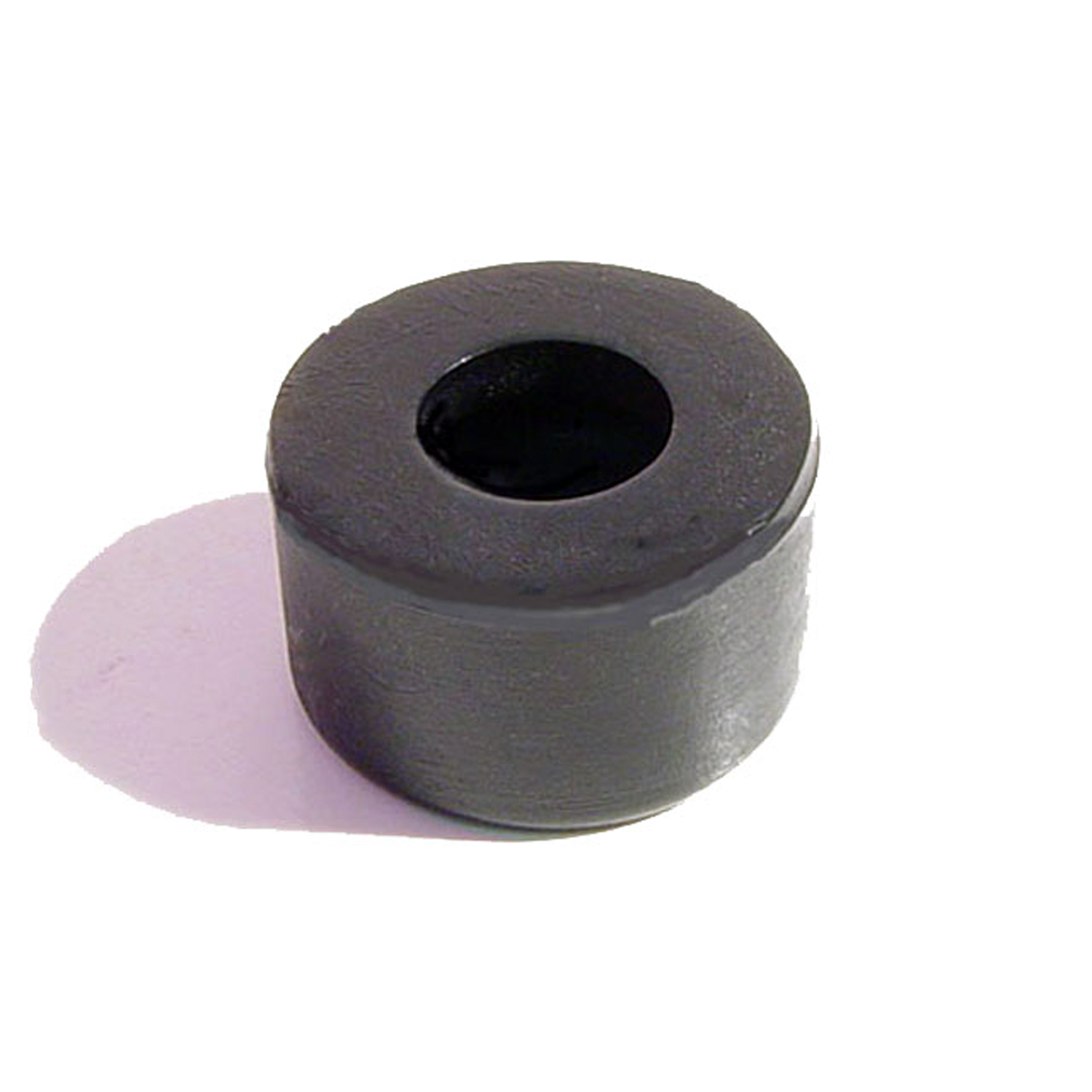 1946 Cadillac Series 61 Door, Hood and Trunk Bumper Cap for adjustment bolt-HA 5Door, Hood and Trunk Bumper Cap for adjustment bolt. 7/8" diameter X 7/16" thick. Each
 1946 Cadillac Series 61 Flexible glass-run channel-WC 11-72Flexible glass-run channel. Mohair lined, cloth covered with stainless steel bead. Used on side windows. 72 in. long. Each. NOTE: $20 special shipping charge applies for domestic orders. Call or email for overseas shipping costs. Part can be sectioned in two equal lengths to reduce overseas shipping costs.
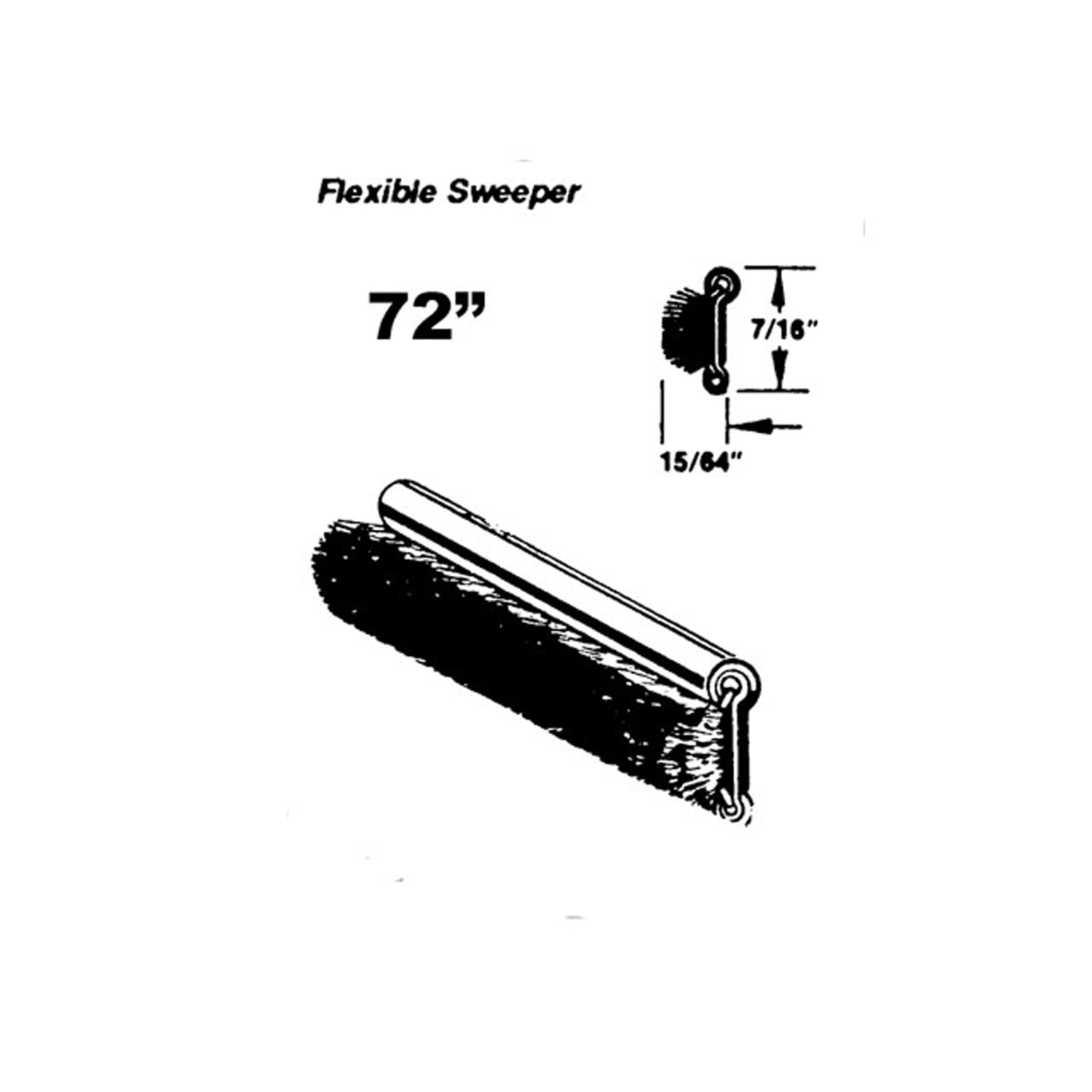 1946 Cadillac Series 61 Flexible sweeper. Made with stainless steel bead-WC 8-72Flexible sweeper. Made with stainless steel bead. Used on inner and outer beltlines. Also forms easily for use with sliding quarter windows. 72 in. long. Each. NOTE: $20 special shipping charge applies for domestic orders. Call or email for overseas shipping costs. Part can be sectioned into two equal lengths to reduce overseas shipping costs.
Why Choose Metro?
For over 100 years, Metro Moulded Parts has been the pinnacle of quality in classic car restoration parts. Our commitment to precision and authenticity in every component ensures a perfect fit and an OEM-level appearance.
- Expert Craftsmanship & Quality: Each part is a testament to our dedication to reliability and perfection, crafted from original designs and thoroughly tested.
- Advanced Technology: We use cutting-edge techniques to create flawless, long-lasting parts that surpass others in performance.
- SuperSoft Sponge – The Ultimate Door Seal: Not only are our door seals 30% softer than competitors', but they're also guaranteed to never leak. They effectively reduce wind and road noise, enhancing your classic car's comfort and driving experience.
- Proudly American: Our parts are a product of American craftsmanship, made in the USA with a spirit of excellence and heritage.
- Unrivaled Warranty: We back our products with a 30-year industry-leading warranty, a testament to our confidence in their quality.
Join us in preserving the legacy of classic cars with parts that are crafted for perfection, not just made.