
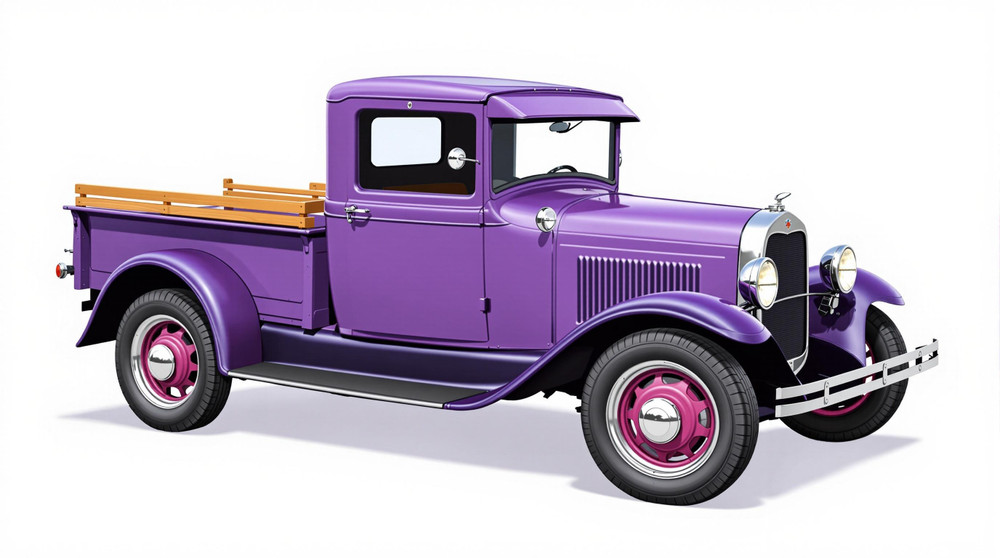
Image of 1929 Chevrolet International Ac Series Truck, Note: These illustrations use artistic license and may differ from actual historical models.
Performance Metrics
Fundamental Metrics
Emotional Appeal
MMP Rating
| Engine Specifications | |
|---|---|
| Engine: | 194 cu in (3.2 L) OHV I6 |
| Displacement: | 3.2L |
| Horsepower: | 46 hp |
| Torque: | Estimated 125 lb-ft |
| Compression Ratio: | 4.5:1 |
| Ignition System: | Battery and coil |
| Cooling System: | Water-cooled |
| Performance Specifications | |
| 0-60 Time: | Not available due to the age and type of vehicle |
| 1/4 Mile Time: | Not available due to the age and type of vehicle |
| Top Speed: | 45 mph |
| Transmission and Drive | |
| Drive Type: | Rear-wheel drive |
| Transmission Type: | 3-speed manual |
| Fuel and Efficiency | |
| Fuel System Type: | Carburetor |
| MPG: | Estimated 10-15 mpg |
| Dimensions and Brakes | |
| Brakes: | Mechanical drum brakes |
| Wheelbase: | 131 inches |
| Weight: | 2,690 lbs |
Note: Specifications for classic cars are given to the best of our ability, considering the limited and variant data available.
1929 Chevrolet International AC: The Six-Cylinder Workhorse
The 1929 Chevrolet International AC brought a new kind of confidence to the working truck: a six-cylinder engine, straightforward mechanicals and a sturdy chassis built for everyday hauling. Made by the Chevrolet Motor Company, it arrived as American roads, farms and small businesses were demanding more capable motorized transport. The AC’s most memorable change was under the hood. Chevrolet replaced the four-cylinder power used in earlier trucks with its new “Stovebolt” six, making the 1929 model an important turning point in the company’s commercial-vehicle history.
“International” is the model designation commonly associated with Chevrolet’s 1929 AC trucks. It was not a separate truck manufacturer. The name can be confusing today, since International Harvester was a different company that also built trucks. For a buyer in 1929, however, the Chevrolet offered a clear proposition: familiar, affordable utility with the added smoothness and pulling power of six cylinders.
From Farm Roads to Main Street
By the late 1920s, trucks were becoming essential tools for farms, tradespeople, retailers and local delivery firms. Chevrolet competed in a rapidly expanding market, and the AC helped the brand strengthen its position against rivals such as Ford. Its arrival also reflected a broader shift in the industry: trucks were no longer merely adapted cars or rough work implements. Buyers increasingly expected useful payload capacity, dependable engines and body styles suited to particular jobs.
The AC’s six-cylinder engine made it a notable step in Chevrolet’s truck development. It was part of the same broad engineering direction that helped Chevrolet become a major force in the light-truck market. The truck was not a high-speed or luxury machine. Its achievement was bringing more usable power and everyday practicality to the people who depended on their vehicle for work.
AC Truck Styling and Body Choices
The 1929 International AC has the unmistakable look of an early motor truck: a tall, upright radiator, exposed front fenders, large headlamps and a long hood leading to a simple cab. Its proportions are narrow and purposeful, with a near-vertical windshield and a high stance that makes the truck look ready to clear rutted roads and farm tracks. Compared with modern pickups, the AC is compact, but its separate fenders, running boards and open, squared-off forms give it a distinctly substantial presence.
Chevrolet offered the AC chassis in configurations for different commercial needs. The familiar pickup-style truck is the best-known version today, but period buyers could also choose commercial bodies or chassis intended for local delivery, trades and specialized work. Depending on the body and supplier, versions included open or enclosed delivery bodies, panel-style bodies and other utility arrangements. The pickup is the most iconic survivor because it combines the AC’s recognizable cab with a practical cargo bed.
Cab materials were functional rather than plush. The interior was designed to be wiped down and put back to work, with painted metal, simple upholstery and durable trim taking priority over decorative finishes. The cabin offered basic seating and straightforward controls, without the sound insulation, climate control or ergonomic adjustments expected in a modern truck. Exact details could vary with body configuration and equipment.
Paint choices also varied by body, buyer and commercial order, so it is risky to claim that every AC left the factory in a single standard palette. Dark, practical colors were common choices for working vehicles, while restored examples are often seen in period-inspired greens, blues, reds or black. For an authenticity-focused restoration, the best guide is surviving factory documentation or traces of original paint on the individual truck.
Six-Cylinder Innovation for a Working Truck
The defining mechanical feature was Chevrolet’s 194-cubic-inch inline-six, commonly rated at about 46 horsepower. Often nicknamed the “Stovebolt” because of the look of its fasteners, the engine represented a substantial change from the four-cylinder powerplants associated with earlier Chevrolet trucks. Its six-cylinder layout delivered smoother operation and useful low-speed pulling power, qualities that mattered more to a working driver than outright speed.
The engine worked with a conventional three-speed manual transmission and rear-wheel drive. Mechanical brakes, simple electrical equipment and accessible components kept the truck understandable to owners and local mechanics. By modern standards, the technology was basic. In its own day, the combination of a six-cylinder engine and practical truck chassis made the AC a capable, sensible commercial vehicle.
What It Was Like to Drive
Published performance figures for individual AC truck configurations are not as consistent as modern test data. A reasonable period-minded estimate puts top speed in the neighborhood of 40 to 50 mph, depending on gearing, body, load and mechanical condition. A meaningful 0-to-60-mph time is not available, and a loaded AC would generally be slow to reach highway speeds. Many examples should be treated as trucks for modest road speeds, not as vehicles suited to modern freeway traffic.
The six produces the steady mechanical rumble associated with early Chevrolet engines. Acceleration is deliberate, the manual gearbox asks for purposeful shifts, and the driver does much more of the work than in a modern pickup. Steering is unassisted, braking requires anticipation, and the driving position is upright and close to the machinery.
On a smooth road, the AC can feel charmingly direct. On bumps, its older suspension and tall stance make the ride busy, especially when the truck is empty. Winding roads call for measured speeds and steady steering inputs. A sound, correctly maintained example can be enjoyable on back roads and at local events, but its narrow tires, period brakes and limited performance demand extra space and attention around modern traffic.
Living With a 1929 Chevrolet Truck
In its working life, the International AC might have carried farm supplies, delivered goods, hauled tools or served a small business. Today, most surviving examples are used as show vehicles, parade trucks, weekend drivers or carefully maintained pieces of agricultural and automotive history. Some owners keep them close to their original working specification, while others restore them with period-correct paint and trim.
Mechanical simplicity is one of the AC’s ownership advantages. The engine and chassis do not rely on electronic controls, and many routine jobs are understandable to an owner with basic mechanical skills, the correct manuals and suitable tools. That does not mean every repair is easy: decades of wear, previous repairs and scarce body parts can complicate a restoration. Brakes, steering, tires, fuel lines and electrical wiring deserve particular attention before regular road use.
Reliability depends heavily on the quality of the restoration and the truck’s maintenance history. A well-sorted AC can be dependable for local touring, but an unrestored example may need extensive work before it is safe to drive. Owners should also plan for slower travel, more frequent checks and the occasional need to source reproduction or specialist parts.
Little-Known AC Truck Details
The most significant “first” associated with the 1929 AC is the arrival of Chevrolet’s six-cylinder power in its truck story, not a record-breaking speed or a famous racing victory. The AC was designed to work, and its historical importance lies in making more capable power available in a practical commercial vehicle.
There is no widely accepted, model-specific production total for every 1929 International AC body and chassis variation. Chevrolet built trucks in substantial numbers, but records may group vehicles by broader series or configuration. A reasonable estimate is that production across the AC truck range reached several tens of thousands. Any tighter figure should be treated cautiously unless it is tied to a specific factory record or body style.
The truck’s limitations are part of its story, too. Its speed, braking and comfort fall far short of modern expectations, and restoring a rare body configuration can be challenging. It is also easy to confuse “Chevrolet International” with International Harvester, so careful identification matters when researching parts or comparing sale listings.
1929 Chevrolet International AC Value
Collector values vary widely with originality, condition, completeness, body style and the quality of the restoration. As a broad U.S. estimate for 2026, a project truck might sell for roughly $5,000 to $12,000. A presentable driver or partially restored example could fall around $12,000 to $25,000, while a well-restored, attractive pickup may bring approximately $25,000 to $45,000 or more. Unusual commercial bodies and exceptional restorations can command different prices, but they may also take longer to find the right buyer.
These are general estimates, not a guarantee of sale value. A truck with a missing or incorrect engine, incomplete bodywork or major structural rust may be worth substantially less. A documented, authentic restoration with a rare body can be worth more than an ordinary pickup, particularly when it is offered at a specialist auction.
The AC is uncommon in today’s market, but it is not necessarily rare in the strict production sense. Values for usable, well-presented examples have generally benefited from interest in early Chevrolet trucks and prewar utility vehicles. The market is selective: condition and authenticity matter more than simply being old. Over the long term, the best examples are more likely to hold or gain value than unfinished projects, though collector-vehicle prices can shift with demand and restoration costs.
Why the AC Still Matters
The 1929 Chevrolet International AC was a practical truck with a lasting place in Chevrolet history. Its upright styling, simple working cabin and new six-cylinder power capture a period when trucks were becoming essential business tools rather than occasional novelties. It is not fast, quiet or comfortable by modern standards, but that is not the point. The AC’s appeal lies in its honest engineering and the vivid connection it offers to the people and businesses that built their lives around early motor transport.
For collectors, restorers and classic-truck fans, the International AC is more than a handsome prewar pickup. It is a rolling reminder of the moment Chevrolet brought six-cylinder confidence to the working road.
1929 Chevrolet International Ac Series Truck Catalog of Parts
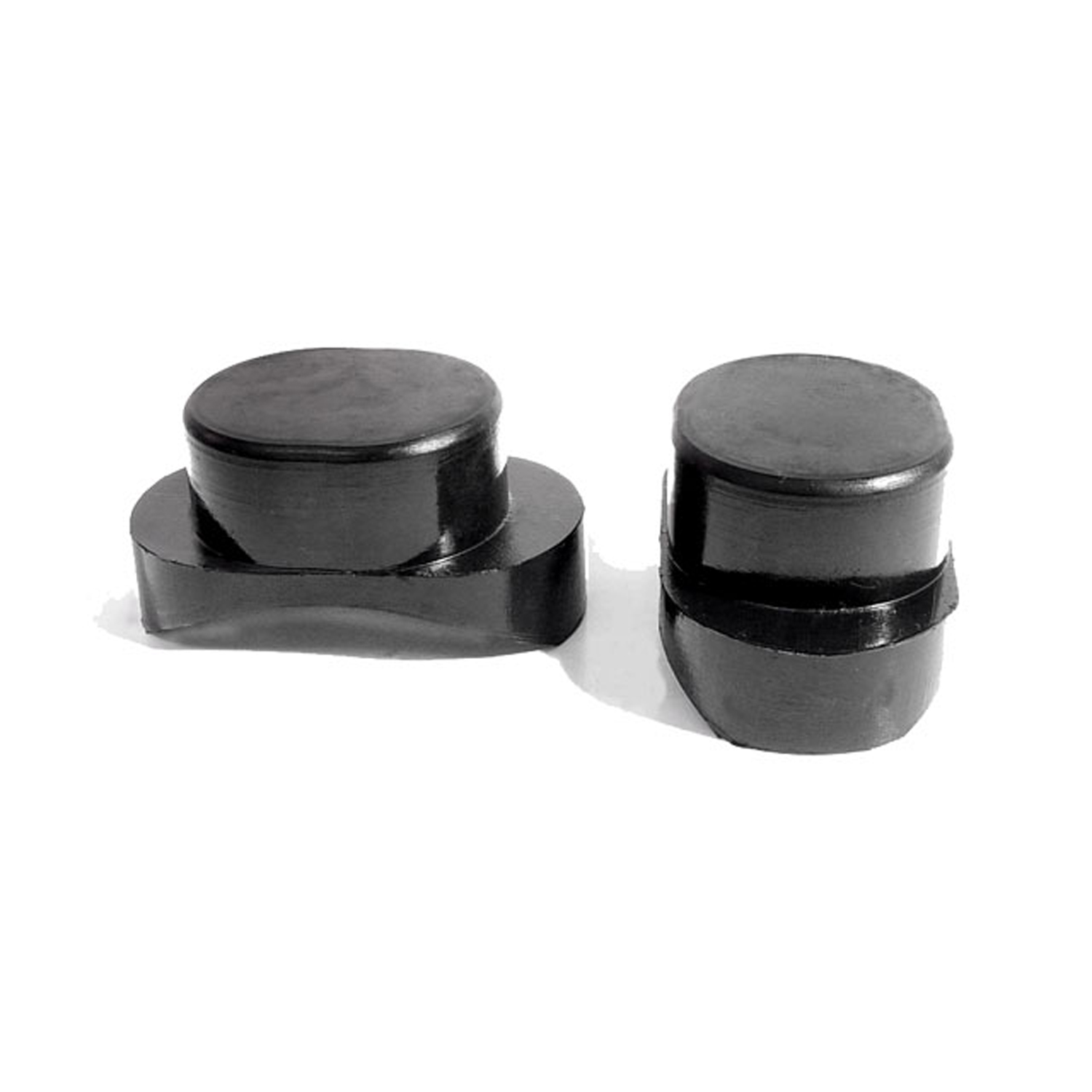 1929 Chevrolet International AC Series Truck Rear Axle and Spring Bumpers. Pair-XB 26Rear Axle and Spring Bumpers. Pair
Why Choose Metro?
For over 100 years, Metro Moulded Parts has been the pinnacle of quality in classic car restoration parts. Our commitment to precision and authenticity in every component ensures a perfect fit and an OEM-level appearance.
- Expert Craftsmanship & Quality: Each part is a testament to our dedication to reliability and perfection, crafted from original designs and thoroughly tested.
- Advanced Technology: We use cutting-edge techniques to create flawless, long-lasting parts that surpass others in performance.
- SuperSoft Sponge – The Ultimate Door Seal: Not only are our door seals 30% softer than competitors', but they're also guaranteed to never leak. They effectively reduce wind and road noise, enhancing your classic car's comfort and driving experience.
- Proudly American: Our parts are a product of American craftsmanship, made in the USA with a spirit of excellence and heritage.
- Unrivaled Warranty: We back our products with a 30-year industry-leading warranty, a testament to our confidence in their quality.
Join us in preserving the legacy of classic cars with parts that are crafted for perfection, not just made.