

Image of 1934 Chevrolet Master, Note: These illustrations use artistic license and may differ from actual historical models.
Performance Metrics
Fundamental Metrics
Emotional Appeal
MMP Rating
| Engine Specifications | |
|---|---|
| Engine: | Inline 6 |
| Displacement: | 206.8 cubic inches |
| Horsepower: | Estimated 80 horsepower |
| Torque: | Not available |
| Compression Ratio: | 6.2:1 |
| Ignition System: | Battery and coil |
| Cooling System: | Water-cooled |
| Performance Specifications | |
| 0-60 Time: | Not available |
| 1/4 Mile Time: | Not available |
| Top Speed: | 70 mph |
| Transmission and Drive | |
| Drive Type: | Rear-wheel drive |
| Transmission Type: | 3-speed manual |
| Fuel and Efficiency | |
| Fuel System Type: | Carburetor |
| MPG: | Not available |
| Dimensions and Brakes | |
| Brakes: | Mechanical drum brakes |
| Wheelbase: | 112 inches |
| Weight: | 2,785 lbs |
Note: Specifications for classic cars are given to the best of our ability, considering the limited and variant data available.
1934 Chevrolet Master: The Six-Cylinder Chevy That Changed the Ride
The 1934 Chevrolet Master looked like a confident evolution of the American family car, but beneath its sweeping fenders it carried an important engineering first: independent front suspension on a mainstream Chevrolet. Built by the Chevrolet Motor Company, then part of General Motors, the Master paired that new suspension with a smooth six-cylinder engine and a broad range of practical body styles.
It arrived during the Great Depression, when buyers wanted dependable transportation and automakers were competing fiercely for value. Chevrolet’s answer was a well-equipped car with modern touches, while Ford’s V-8 remained a powerful rival. One detail that still intrigues collectors is Chevrolet’s name for the Master’s front suspension: “Knee-Action.” The system gave the car a notably different ride from the solid-front-axle cars many drivers knew, though it also became one of the model’s most discussed and demanding features.
Streamlined Fenders and a Welcoming Cabin
The Master’s styling captures the transition between upright early-1930s cars and the more streamlined shapes that followed. Its tall, rounded radiator grille is filled with vertical bars, flanked by prominent headlamps mounted on the front fenders. The hood stretches back toward a divided windshield, while long, flowing fenders frame the wheels and lead into running boards. A rear-mounted spare tire was a familiar and practical feature on many body styles.
Inside, the Master offered a roomy cabin with a straightforward dashboard and generously sized seats. Upholstery materials varied by body style and trim, with cloth and broadcloth commonly used in closed cars and more upscale materials available on some models. The finish was traditional rather than flashy: painted metal, wood-grain-style trim in some interiors, and clear, legible gauges. Compared with a modern car, the cockpit is simple, but its large steering wheel and upright seating make the driving controls easy to understand.
Chevrolet offered the Master in several body styles, including two-door coaches and coupes, four-door sedans, and more open or sporting variants such as the cabriolet. Availability and names could vary across the catalog and market. The two-door coach and four-door sedan were practical favorites, while the sportier coupe and cabriolet have particular appeal to collectors today. A buyer could also choose equipment and trim that changed the car’s appearance and comfort, so surviving examples are not all configured alike.
Factory colors depended on body style and production details. Period palettes commonly included dark blue, green, maroon, gray, black, and lighter contrasting tones. Paint combinations and trim could make the same basic body look either restrained or quite dressy. For a restoration, the best guide is the car’s original paint traces, build documentation, or period Chevrolet color information rather than a modern guess based on what looks “old-timey.”
Knee-Action: Chevrolet’s Big 1934 Innovation
The Master’s signature engineering feature was its independent front suspension, marketed as Knee-Action. Rather than connecting both front wheels through a conventional solid axle, the design allowed each front wheel to respond more independently to bumps. Chevrolet promoted the arrangement for improved comfort and road holding, making it a significant change in a relatively affordable car.
The system helped distinguish the Master from Chevrolet’s less expensive 1934 Standard series, which retained a more conventional front suspension. It also showed how quickly independent suspension was moving from an advanced engineering idea toward production use. The Master was not the first car ever to use independent front suspension, but bringing the concept to a high-volume American model was an important step in making more sophisticated chassis design familiar to everyday buyers.
Knee-Action had a complicated reputation. When properly maintained, it could deliver a comfortable ride, but its sealed, oil-filled units were more specialized than a simple solid axle. Age, leakage, and neglected repairs can make the suspension a major restoration expense. That tradeoff is part of the Master’s story: the car offered forward-looking technology, but it asked owners to keep that technology in good condition.
Six-Cylinder Performance and Road Manners
Power came from Chevrolet’s 206.8-cubic-inch overhead-valve inline-six, rated at about 80 horsepower in the Master. It drove the rear wheels through a three-speed manual transmission. The engine’s smooth, even character suited the car’s role as comfortable family transportation. It was not a high-revving sports-car powerplant, but its six-cylinder layout delivered more refinement than many contemporary four-cylinder engines.
Exact performance varied with body style, gearing, condition, and testing method. A sound, correctly tuned Master could reach roughly 75 to 80 mph, while a 0-to-60-mph run would take around 25 to 30 seconds by modern estimates. Those figures are best treated as period-car approximations, not guarantees for an individual survivor. Today, safe cruising is generally more enjoyable at moderate speeds, especially in a car with original brakes, tires, and steering components.
On broken pavement, the independent front suspension was intended to soften the impact of bumps and help the front wheels follow the road. On winding roads, the Master feels substantial and upright rather than nimble. Its steering is slower and heavier than a modern car’s, and the tall body leans through corners. The driver works a large steering wheel, shifts a manual gearbox, and listens for the steady mechanical rhythm of the six. At highway pace, wind noise, road noise, and the age of the chassis become part of the experience.
Owning and Maintaining a 1934 Master
Most surviving Masters are now used as show cars, touring cars, or occasional weekend drivers. They can handle local events and relaxed scenic trips when properly inspected, but they are not ideal modern daily drivers. Traffic moves faster than it did in 1934, and the car lacks contemporary safety equipment such as seat belts, airbags, and modern crash protection.
The engine is mechanically straightforward, and many routine jobs are accessible to an experienced home mechanic. Parts support for Chevrolet’s six-cylinder cars is generally better than for many low-volume marques, although availability varies by component. The Knee-Action suspension deserves special attention: have its condition assessed by someone familiar with the design before buying or attempting a repair. Brakes, steering, cooling, fuel lines, wiring, tires, and wheel bearings should also be checked before regular road use.
Reliability depends heavily on restoration quality and maintenance history. A well-sorted Master can be enjoyable and dependable on short trips, while a car that has sat for years may need much more than a battery and fresh fuel. Prioritize safe operation over cosmetic upgrades, and remember that old rubber hoses, wiring insulation, and brake components can fail even when the car looks polished.
1934 Chevrolet Master Facts Collectors Enjoy
The Master’s most memorable trivia is built into its name: Knee-Action made the car’s suspension technology a selling point rather than an invisible engineering detail. It also gives collectors a useful way to distinguish a Master from the 1934 Standard. In period, the Master represented Chevrolet’s more advanced and better-appointed line.
The car is associated with the everyday America of the Depression-era road, rather than a single famous race or record-setting event. Its inline-six was designed for usable, reliable power, not headline-grabbing speed records. There is no widely recognized production total for the Master alone, and surviving records are often reported by series or body style rather than as one neat figure.
As a broad estimate, Chevrolet may have built somewhere in the range of 500,000 to 700,000 Master-series cars for 1934, across its body styles. This is an informed estimate, not a verified model-by-model factory count. Chevrolet’s total output that year was much larger than the number of Masters that remain today, and attrition, changing body styles, and incomplete records make a precise surviving population difficult to establish.
Common criticisms are familiar to anyone considering a prewar car: modest acceleration, limited modern safety, relatively slow steering, and the possibility of expensive Knee-Action repairs. The upright cabin and running boards also make entry and exit less convenient than in a contemporary vehicle. For enthusiasts, these are part of the period character, but they should be understood before purchase.
1934 Chevrolet Master Values and Availability
Values vary widely with body style, originality, mechanical condition, and restoration quality. As a rough 2026 U.S. market guide, a project car may fall around $8,000 to $18,000. A usable driver could bring roughly $20,000 to $40,000, while a high-quality restored sedan or coupe may sell in the $35,000 to $60,000 range. Particularly desirable open cars, such as cabriolets, can command more, with exceptional examples potentially reaching $60,000 to $90,000 or beyond.
These are broad estimates, not appraisals. A rare body style, documented history, correct restoration, or excellent original condition can shift a price substantially. Conversely, rust, incomplete trim, or an unrepaired suspension can reduce value quickly. Masters appear at classic-car auctions and through specialist dealers, but finding the exact body style and condition you want may take patience.
Over the long term, well-restored examples have generally held collector interest because of their prewar styling, Chevrolet heritage, and distinctive suspension. Prices do not rise evenly, however. Market demand tends to favor appealing open cars and high-quality, ready-to-drive examples, while projects and less distinctive sedans can be more price-sensitive. Condition and documentation matter more than optimistic asking prices.
Why the 1934 Master Still Matters
The 1934 Chevrolet Master brought a smooth overhead-valve six, handsome period styling, practical body choices, and an unusually modern suspension idea to a mainstream American car. Its Knee-Action system set it apart from many contemporaries, even as its maintenance needs became part of the ownership story.
Today, the Master is best appreciated at an unhurried pace: the low burble of the six, the view over its long hood, and the feel of a chassis from an era when comfort and engineering were changing quickly. It is more than a Depression-era Chevrolet. It is a rolling reminder that even an everyday family car can help move automotive design forward.
1934 Chevrolet Master Catalog of Parts
 1934 Chevrolet Master Accelerator Pad, for standard transmission only-AP 36Accelerator Pad, for standard transmission only. High-quality reproduction. 2-1/4" X 7-1/8". Each
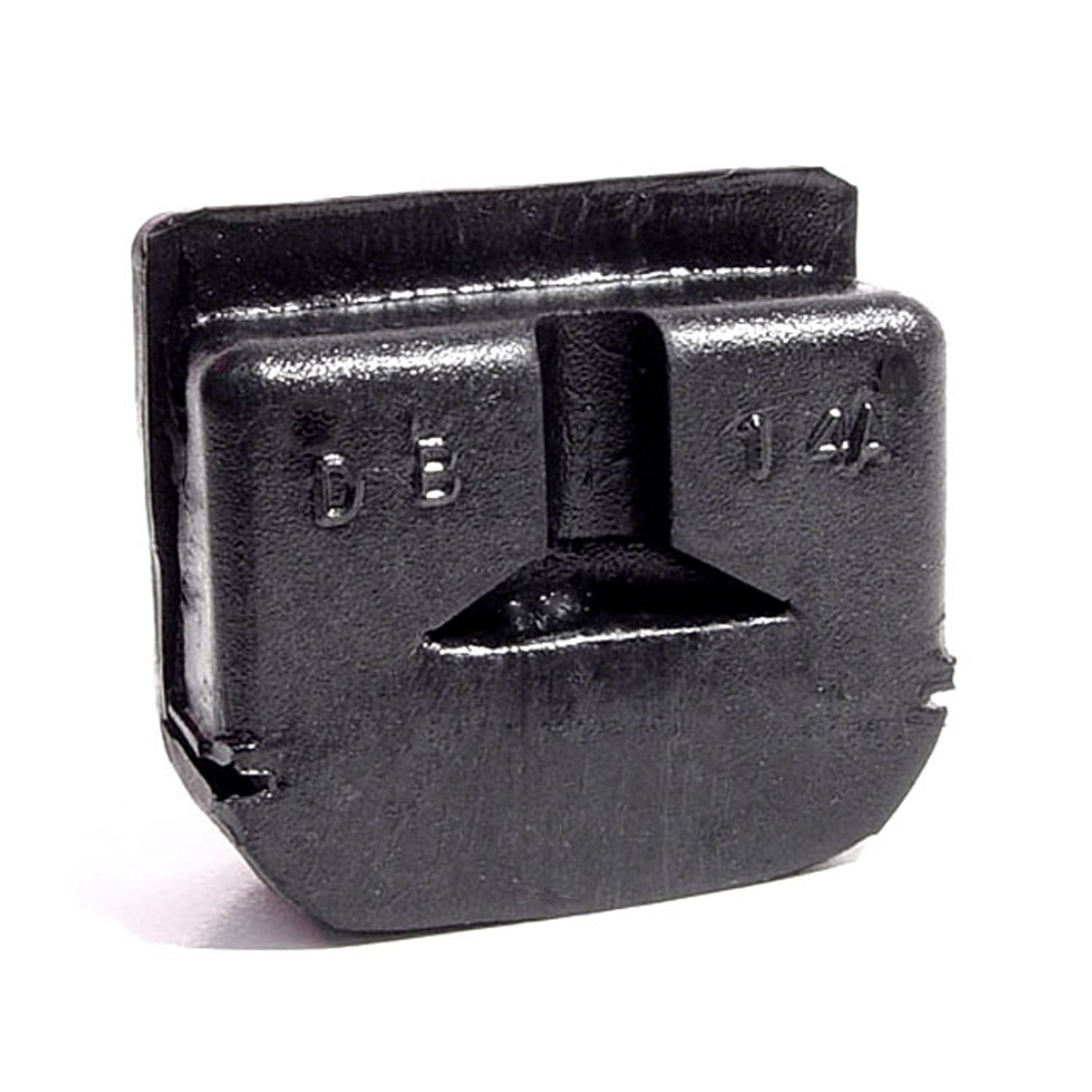 1934 Chevrolet Master Door Bumper. Exact reproduction-DB 14-ADoor Bumper. Exact reproduction. 1-3/16" high X 1-9/16" wide X 9/16" thick. Each
 1934 Chevrolet Master Upper Door Hinge Post Bumper. Held by screw-DB 60-AUpper Door Hinge Post Bumper. Held by screw. 7/8" diameter X 1/8" thick. Each
 1934 Chevrolet Master Door Bumper. 1-7/16" high X 1-9/16" wide X 9/16" thick-DB 7Door Bumper. 1-7/16" high X 1-9/16" wide X 9/16" thick. Each
 1934 Chevrolet Master Gas Filler Grommet. Made with flange. 2-1/4" I.D-GF 35Gas Filler Grommet. Made with flange. 2-1/4" I.D., 3-1/2" O.D. Each
 1934 Chevrolet Master Headlight Pads. 1-7/8" wide X 2-3/4" long. Pair-MP 482Headlight Pads. 1-7/8" wide X 2-3/4" long. Pair
 1934 Chevrolet Master Tail-light Pads. 2-5/8" wide X 4-1/4" long. Pair-MP 491Tail-light Pads. 2-5/8" wide X 4-1/4" long. Pair
 1934 Chevrolet Master Headlight Pads. 2-1/8" wide X 3-3/4" long. Pair-MP 493Headlight Pads. 2-1/8" wide X 3-3/4" long. Pair
 1934 Chevrolet Master Inner Headlight Pads. 1-5/8" O.D. Pair-MP 494Inner Headlight Pads. 1-5/8" O.D. Pair
 1934 Chevrolet Master Headlight Bar Pads. 1-1/2" O.D. Pair-MP 494-BHeadlight Bar Pads. 1-1/2" O.D. Pair
 1934 Chevrolet Master Spare Mount Pad. 9-1/4" wide X 6-5/8" long. Each-MP 496Spare Mount Pad. 9-1/4" wide X 6-5/8" long. Each
 1934 Chevrolet Master Windshield Post Pads. For Roadster-MP 500Windshield Post Pads. For Roadster. 2-1/2" wide X 3-1/4" long. Pair
 1934 Chevrolet Master Tail-light Pads. 2-1/2" wide X 4" long. Pair-MP 510Tail-light Pads. 2-1/2" wide X 4" long. Pair
 1934 Chevrolet Master Door Handle Ferrule Grommet. I.D. 11/16", O.D. 1-3/16"-MP 546-IDoor Handle Ferrule Grommet. I.D. 11/16", O.D. 1-3/16". Each
 1934 Chevrolet Master Cowl Vent Seal-RP 100-CCowl Vent Seal. 47" long piece of black, skin-covered sponge. End is 3/8" wide X 5/16" high. Each
 1934 Chevrolet Master Horn Button. 2-3/16" O.D., 1-1/8" I.D. Each-RP 600-AHorn Button. 2-3/16" O.D., 1-1/8" I.D. Each
 1934 Chevrolet Master Deck Lid Bumper, for Roadsters. Made with steel core-SB 102Deck Lid Bumper, for Roadsters. Made with steel core. 13/16" O.D., 3/16" I.D. Two used per car. Each
 1934 Chevrolet Master Door Bumper. 1" diameter X 1/4" thick Each-SB 60Door Bumper. 1" diameter X 1/4" thick Each
 1934 Chevrolet Master Spare Tire Mount Bumper. 5/8" square. Each-SB 80Spare Tire Mount Bumper. 5/8" square. Each
 1934 Chevrolet Master Steering Column Clamp Cushion. Each-SC 18Steering Column Clamp Cushion. Each
 1934 Chevrolet Master Floorboard Grommet. For accelerator rod through toe board-SM 43-AFloorboard Grommet. For accelerator rod through toe board. Steel sleeve. 1/2" I.D., 2" O.D., 3/8" thick at center. Each
 1934 Chevrolet Master Pressure Ring Washer. 1-7/8" O.D., 3/4" I.D., 3/8" thick.-SM 69Pressure Ring Washer for Interior Door Handles & Window Regulators. Fits between escutcheon plates & door panel. Made of sponge rubber. 1-7/8" O.D., 3/4" I.D., 3/8" thick. Each (Corvette: Use for heater hose washer @ firewall)
 1934 Chevrolet Master Wire Grommet for Throttle, Choke, Oil and Temperature Lines-SM 88Wire Grommet for Throttle, Choke, Oil and Temperature Lines. Held by steel retainers. 3-13/16" X 1-1/8" X 5/16" thick. Each
 1934 Chevrolet Master Vulcanized Fixed Quarter Window Seals-VQT 1903Vulcanized Fixed Quarter Window Seals. For Models 1209, 1209-A, 1219. Pair
 1934 Chevrolet Master Vertical Seal for Vent Window. Each is 17" long. Pair-VS 2Vertical Seal for Vent Window. Each is 17" long. Pair 1934 Chevrolet Master Vulcanized Windshield Seal-VWS 7310Vulcanized Windshield Seal. For all closed models (does not fit convertible). Each
 1934 Chevrolet Master Flexible glass-run channel-WC 11-72Flexible glass-run channel. Mohair lined, cloth covered with stainless steel bead. Used on side windows. 72 in. long. Each. NOTE: $20 special shipping charge applies for domestic orders. Call or email for overseas shipping costs. Part can be sectioned in two equal lengths to reduce overseas shipping costs.
 1934 Chevrolet Master Rigid division-bar channel. Made with stainless steel bead-WC 2-72Rigid division-bar channel. Made with stainless steel bead. 72 in. long. Each. NOTE: $20 special shipping charge applies for domestic orders. Call or email for overseas shipping costs. Part can be sectioned into two equal lengths to reduce overseas shipping costs.
 1934 Chevrolet Master Flexible Rubber Window Channel-WC 32-14Flexible Rubber Window Channel. For Fisher Closed Bodies, except those using a stainless bead type. Used on side windows. 13/16" outer width X 6/16" outer depth, with a 5/16" inner channel width X 14" long. Each
 1934 Chevrolet Master Flexible sweeper. Made with stainless steel bead-WC 8-72Flexible sweeper. Made with stainless steel bead. Used on inner and outer beltlines. Also forms easily for use with sliding quarter windows. 72 in. long. Each. NOTE: $20 special shipping charge applies for domestic orders. Call or email for overseas shipping costs. Part can be sectioned into two equal lengths to reduce overseas shipping costs.
 1934 Chevrolet Master Fender Bolts. For use with Fender Bolt Washers; WF 3001-WF 3000Fender Bolts. For use with Fender Bolt Washers; WF 3001. Zinc Chromate plated, high strength. 1" X 5/16". Set of 25
 1934 Chevrolet Master Fender Bolt Washers. For use with Fender Bolts; WF 3000-WF 3001Fender Bolt Washers. For use with Fender Bolts; WF 3000. High quality, cadmium plated. 1-1/4" O.D., 3/8" I.D. Set of 25
 1934 Chevrolet Master Front Vent Window Seals. Does not fit Convertible-WR 7317Front Vent Window Seals. Does not fit Convertible. Pair R&L
 1934 Chevrolet Master Rebound Bumper. For cars with beam axle. 2-1/4" O.D-XB 24Rebound Bumper. For cars with beam axle. 2-1/4" O.D., 2-1/2" high. Each
 1934 Chevrolet Master Rear Axle and Spring Bumpers. Pair-XB 26Rear Axle and Spring Bumpers. Pair
Why Choose Metro?
For over 100 years, Metro Moulded Parts has been the pinnacle of quality in classic car restoration parts. Our commitment to precision and authenticity in every component ensures a perfect fit and an OEM-level appearance.
- Expert Craftsmanship & Quality: Each part is a testament to our dedication to reliability and perfection, crafted from original designs and thoroughly tested.
- Advanced Technology: We use cutting-edge techniques to create flawless, long-lasting parts that surpass others in performance.
- SuperSoft Sponge – The Ultimate Door Seal: Not only are our door seals 30% softer than competitors', but they're also guaranteed to never leak. They effectively reduce wind and road noise, enhancing your classic car's comfort and driving experience.
- Proudly American: Our parts are a product of American craftsmanship, made in the USA with a spirit of excellence and heritage.
- Unrivaled Warranty: We back our products with a 30-year industry-leading warranty, a testament to our confidence in their quality.
Join us in preserving the legacy of classic cars with parts that are crafted for perfection, not just made.