
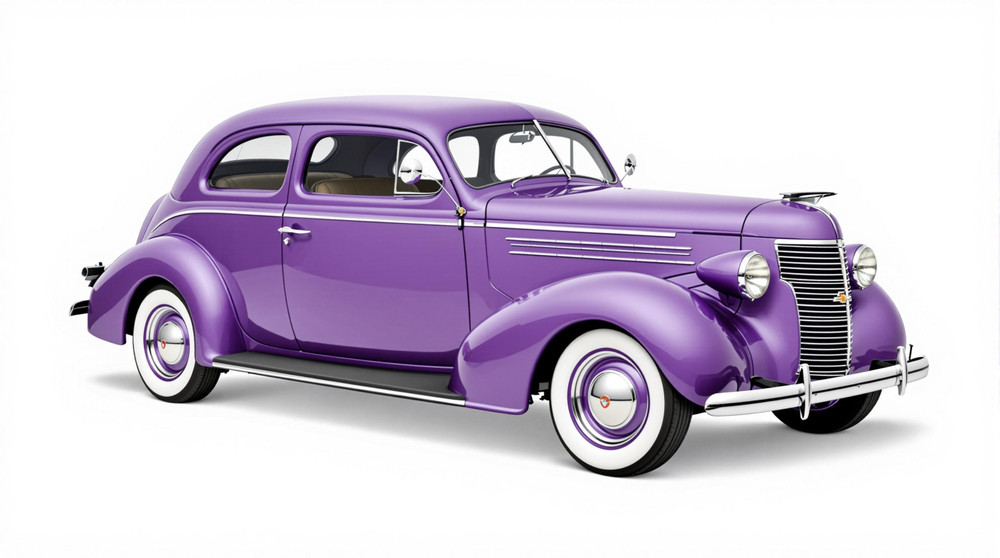
Image of 1938 Chevrolet Master Deluxe, Note: These illustrations use artistic license and may differ from actual historical models.
Performance Metrics
Fundamental Metrics
Emotional Appeal
MMP Rating
| Engine Specifications | |
|---|---|
| Engine Options: | Inline 6 |
| Displacement Range: | 216.5 cu in (3.5 L) |
| Horsepower Range: | 85 hp |
| Torque: | Estimated 170 lb-ft |
| Compression Ratio: | 6.5:1 |
| Ignition System: | Battery and coil |
| Cooling System: | Water |
| Performance Specifications | |
| 0-60 Time: | Estimated 20 seconds |
| 1/4 Mile Time: | Not available |
| Top Speed: | 75 mph |
| Transmission and Drive | |
| Drive Type: | Rear wheel drive |
| Transmission Type: | 3-speed manual |
| Fuel and Efficiency | |
| Fuel System Type: | Carburetor |
| MPG: | Estimated 15-20 mpg |
| Dimensions and Brakes | |
| Brakes: | Drum brakes |
| Wheelbase: | 113 inches |
| Weight: | 3100 lbs |
Note: Specifications for classic cars are given to the best of our ability, considering the limited and variant data available.
1938 Chevrolet Master Deluxe: An American Classic in Context
The 1938 Chevrolet Master Deluxe brought a little modern polish to an America still finding its footing after the Great Depression. Built by Chevrolet, then part of General Motors, it was a mid-priced family car designed to offer comfort, useful engineering, and handsome styling without the cost of a luxury automobile.
The Master Deluxe sat above Chevrolet’s standard Master in the model range. Its independent front suspension, roomy cabin, and smooth inline-six helped make it a popular choice for families and business owners. One detail that catches modern enthusiasts’ attention is its “Knee-Action” front suspension, an early attempt to improve ride comfort by letting each front wheel move more independently over rough roads.
The timing matters. The 1938 model year followed a sharp economic downturn, and buyers were cautious about big purchases. Chevrolet’s strategy was to make an attractive, practical car that felt more advanced than basic transportation. The Master Deluxe reflects that balance: conventional enough to be familiar, but equipped with features that stood out in its price class.
Streamlined Styling and a Comfortable Cabin
The 1938 Master Deluxe wore the rounded, increasingly streamlined look of the late 1930s. Its upright grille was made up of narrow vertical bars, framed by sweeping front fenders. The headlamps were integrated into the fenders rather than standing apart as separate units, giving the front end a cleaner, more unified appearance. A long hood, curved body sides, and flowing roofline completed the look.
Inside, the car was designed for everyday use rather than display. The cabin featured broad bench seats, a simple painted-metal dashboard, clear instruments, and a large steering wheel. Upholstery was generally cloth, with the exact trim depending on body style and equipment. Compared with a modern car, the interior was spare, but its straightforward layout made the controls easy to understand and the cabin relatively spacious for its era.
Paint selections varied by model and catalog offering. Buyers could choose from period-appropriate shades that included dark and medium blues, greens, maroons, grays, and black, though availability depended on the body style and production details. Dark colors suit the car’s formal lines, while richer blues and greens give restored examples a more distinctive period look.
Chevrolet offered the Master Deluxe in several body styles, including sedans, coupes, and a convertible. Four-door sedans were among the most practical and common choices, while coupes offered a sportier profile. The convertible was the glamorous outlier and is much less often seen today. Exact offerings and trim details can differ across factory literature and regional sales materials.
Engineering That Mattered in 1938
Under the hood was Chevrolet’s 216-cubic-inch, overhead-valve inline-six, rated at about 85 horsepower. It sent power to the rear wheels through a three-speed manual transmission. Hydraulic brakes were another important practical feature, providing more consistent stopping than the mechanical systems used on many older cars.
The Master Deluxe’s most talked-about chassis feature was Chevrolet’s Knee-Action independent front suspension. Instead of allowing both front wheels to react as a single unit, the system let each side respond more independently to bumps. It aimed to deliver a more comfortable ride and better wheel control on uneven roads. The rear suspension used a conventional live axle with leaf springs.
These features did not make the Master Deluxe a radical departure from the cars around it. Rather, Chevrolet combined familiar rear-wheel-drive construction and a durable six-cylinder engine with comfort-oriented suspension and increasingly modern styling. That practical combination helped normalize the idea that a family car could offer more than basic transportation.
How the Master Deluxe Changed the Conversation
The 1938 Master Deluxe was part of Chevrolet’s larger effort to compete on value while keeping pace with changing expectations for comfort and appearance. Its integrated headlights, rounded bodywork, and clean grille reflected the shift away from the boxier forms of earlier decades. The car did not invent streamlined styling, but it brought the look to a broad audience.
Its engineering also illustrates an important period in automotive development. Independent front suspension was still a selling point, not a feature buyers took for granted. Chevrolet’s system showed that manufacturers were looking for ways to make ordinary roads feel less punishing, even if the design was mechanically more complex than a simple solid front axle.
The Master Deluxe’s lasting influence is less about a single revolutionary feature than about its role in the mainstream market. It helped establish a formula that would define many American cars: a reliable inline engine, a usable interior, recognizable styling, and comfort improvements packaged at a reachable price.
Performance, Ride, and Road Manners
With roughly 85 horsepower, the Master Deluxe was built for steady progress rather than quick acceleration. Period performance varied with body style, gearing, condition, and test method. As a broad estimate, a sound example may reach around 75 to 80 mph, while 0 to 60 mph can take roughly 20 to 25 seconds. Those figures are estimates, not guarantees for a particular car, especially one that is nearly 90 years old.
The six-cylinder engine delivers its power in a relaxed, low-revving manner. The driver shifts through the three-speed manual and works with the engine’s modest output rather than expecting modern traffic-light performance. At cruising speed, the engine’s smooth mechanical hum and the wind around the upright body are part of the car’s character.
On rough pavement, the Knee-Action front end was intended to soften sharp impacts, while the leaf-sprung rear axle retained the familiar feel of a traditional American car. The ride is comfortable by prewar standards, but the car’s age, tires, suspension condition, and steering components make a major difference. On winding roads, its tall stance, slower steering, and period tires call for measured inputs. It is happiest on open roads and at a relaxed pace, not being hustled through tight corners.
Living With a 1938 Chevrolet
Today, Master Deluxe owners most often use their cars for shows, club events, parades, scenic drives, and occasional weekend outings. Some are carefully maintained drivers, but using one as a daily commuter is a commitment. It lacks modern safety equipment, climate control, and the power and braking performance expected in contemporary traffic.
The straightforward six-cylinder layout makes many routine jobs approachable for an owner with mechanical experience. Tune-ups, fluids, brake work, and basic engine service are familiar tasks, though age can complicate even simple repairs. Parts availability is generally good for common mechanical items through specialist suppliers and the vintage Chevrolet community. Correct trim, body pieces, and model-specific details can take more searching.
Reliability depends heavily on restoration quality and maintenance. Before buying, inspect the frame and body for rust, check the cooling system and oil pressure, and make sure the brakes, steering, and suspension have been properly serviced. A car that starts and moves under its own power is not necessarily road-ready. The Knee-Action suspension deserves particular attention because worn or poorly repaired components can affect ride and handling.
Trivia, Rarity, and Common Complaints
The Master Deluxe belongs to a period when Chevrolet was competing intensely with Ford for American buyers. Chevrolet’s broad appeal came from offering practical cars in multiple body styles and price levels. The 1938 Master Deluxe was not a dedicated racing model or a record-breaking speed car; its achievement was serving ordinary drivers at a pivotal point in the development of the American mass-market automobile.
There is no widely recognized special celebrity edition of the 1938 Master Deluxe, and claims of famous ownership should be checked against reliable documentation. Its most unusual feature for many modern drivers is still the Knee-Action suspension, which reflects how manufacturers experimented with ride comfort before independent front suspension became commonplace.
Common criticisms include modest acceleration, drum brakes that require more distance and attention than modern systems, and steering that feels slow by current standards. The cabin can also be warm in summer and noisy at highway speeds. For enthusiasts, those limitations are part of the prewar driving experience, but they are important considerations for anyone planning regular use.
Collector Values and Market Outlook
Master Deluxe values vary widely with body style, originality, restoration quality, and documentation. As a broad U.S. market estimate, a project or rough driver might sell for about $5,000 to $15,000. A sound, presentable sedan may bring roughly $15,000 to $30,000, while a high-quality restoration can reach approximately $30,000 to $45,000 or more. Desirable or uncommon body styles, especially a well-restored convertible, can command substantially higher prices, sometimes around $50,000 to $90,000 or beyond.
These are general ranges, not appraisals. A correct, well-documented car can be worth much more than a similar-looking example with hidden rust, incomplete trim, or a poor-quality restoration. Local demand and the cost of finishing a project also have a major effect on what buyers will pay.
Chevrolet built the Master Deluxe in meaningful numbers, but a precise total for every 1938 body style is not consistently available in commonly cited production summaries. A reasonable estimate is several hundred thousand Master Deluxe cars across the model line, perhaps in the broad range of 300,000 to 500,000. That is an informed estimate rather than a verified factory total. Many have disappeared, and surviving convertibles and unusually original cars are far less common than sedans.
Values have generally been supported by the model’s recognizable prewar styling and approachable mechanicals. Like many classics, prices can rise and fall with condition, broader collector-car trends, and restoration costs. The best examples are likely to hold their appeal, but this is usually a passion purchase rather than a guaranteed investment.
Why the 1938 Master Deluxe Still Matters
The 1938 Chevrolet Master Deluxe combined a smooth 216-cubic-inch six, useful hydraulic brakes, comfort-minded Knee-Action suspension, and elegant late-1930s styling in a car built for everyday Americans. It was not the fastest or most technologically radical automobile of its day, but it showed how a mass-market car could become more comfortable and refined without losing its practical character.
Nearly nine decades later, the Master Deluxe remains an inviting introduction to prewar motoring. Its rounded fenders and upright grille turn heads at a show, while its simple controls and mechanical honesty reward owners willing to take the time to understand it. The car’s real distinction is not one headline feature, but the way it captures an era when American motoring was moving confidently toward a more modern shape.
1938 Chevrolet Master Deluxe Catalog of Parts
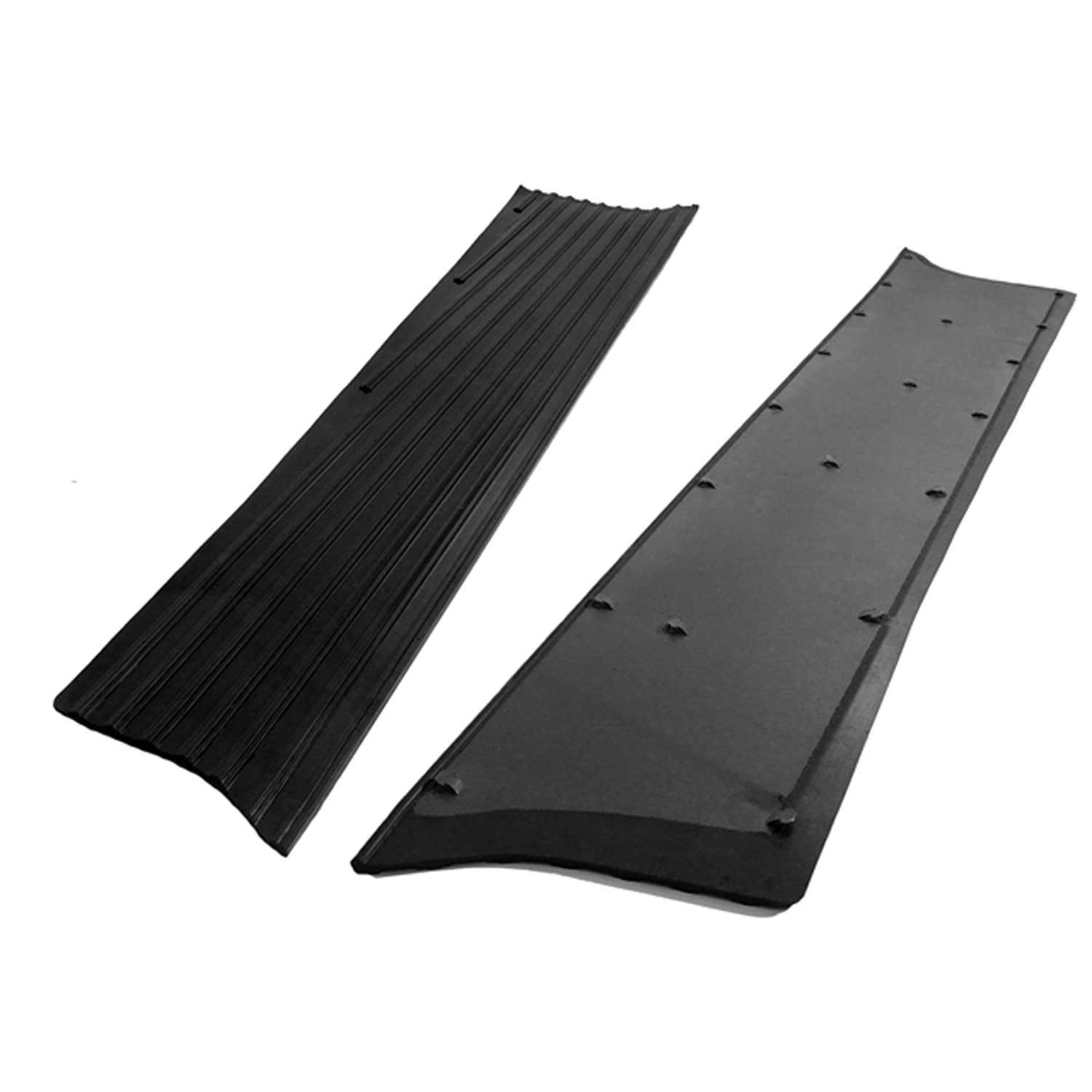 1938 Chevrolet Master Deluxe Running board covers, '37-'38 Chevy. With steel backer and bend-over tabs. Pair.-RB 1900Running board covers for '37-'38 Chevy Master and Master Deluxe. Measure 61-1/4" Long,11-1/2" Wide, 3/8" Thick, with steel backer and bend-over tabs. These dense black rubber covers are molded in single cavity, solid-steel dies from the finest grade rubber to ensure a superb reproduction. Not a cheap imitation. Pair. R&L. NOTE: $13 special shipping charge applies for domestic orders. Call or email for overseas shipping costs.
Why Choose Metro?
For over 100 years, Metro Moulded Parts has been the pinnacle of quality in classic car restoration parts. Our commitment to precision and authenticity in every component ensures a perfect fit and an OEM-level appearance.
- Expert Craftsmanship & Quality: Each part is a testament to our dedication to reliability and perfection, crafted from original designs and thoroughly tested.
- Advanced Technology: We use cutting-edge techniques to create flawless, long-lasting parts that surpass others in performance.
- SuperSoft Sponge – The Ultimate Door Seal: Not only are our door seals 30% softer than competitors', but they're also guaranteed to never leak. They effectively reduce wind and road noise, enhancing your classic car's comfort and driving experience.
- Proudly American: Our parts are a product of American craftsmanship, made in the USA with a spirit of excellence and heritage.
- Unrivaled Warranty: We back our products with a 30-year industry-leading warranty, a testament to our confidence in their quality.
Join us in preserving the legacy of classic cars with parts that are crafted for perfection, not just made.