
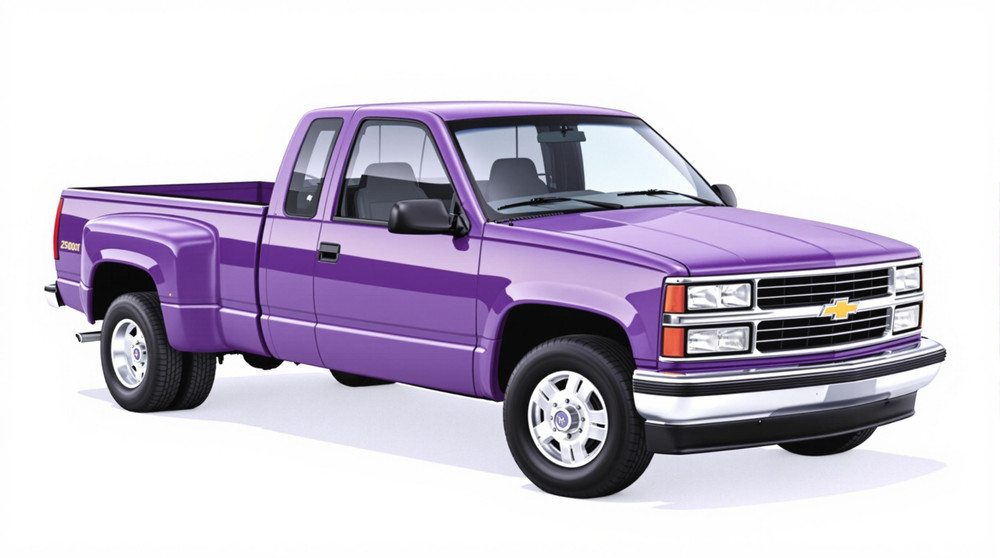
Image of 1991 Chevrolet K2500, Note: These illustrations use artistic license and may differ from actual historical models.
Performance Metrics
Fundamental Metrics
Emotional Appeal
MMP Rating
| Engine Specifications | |
|---|---|
| Engine Options: | 5.0L V8, 5.7L V8, 6.2L V8 Diesel, 7.4L V8 |
| Displacement Range: | 305-454 cu in |
| Horsepower Range: | 160-230 hp (approximately) |
| Torque: | 235-385 lb-ft (approximately) |
| Compression Ratio: | 8.6:1 - 9.4:1 (approximately) |
| Ignition System: | Electronic |
| Cooling System: | Liquid-cooled |
| Performance Specifications | |
| 0-60 Time: | 9.5-11 seconds (approximately) |
| 1/4 Mile Time: | 17-19 seconds (approximately) |
| Top Speed: | 95-105 mph (approximately) |
| Transmission and Drive | |
| Drive Type: | Rear-wheel drive (RWD) or Four-wheel drive (4WD) |
| Transmission Type: | 4-speed automatic or 5-speed manual |
| Fuel and Efficiency | |
| Fuel System Type: | Fuel injection |
| MPG: | 10-15 mpg (approximately) |
| Dimensions and Brakes | |
| Brakes: | Front disc / Rear drum |
| Wheelbase: | 131.5 inches |
| Weight: | 4,500-5,500 lbs (approximately) |
Note: Specifications for classic cars are given to the best of our ability, considering the limited and variant data available.
1991 Chevrolet K2500: A GMT400 Workhorse With Four-Wheel-Drive Grit
The 1991 Chevrolet K2500 combines the clean, squared-off styling of Chevrolet’s GMT400 truck generation with the hardware of a serious three-quarter-ton 4x4. Built by Chevrolet, a division of General Motors, it was designed to haul, tow, and tackle rough roads while bringing more comfort and refinement to truck buyers than many earlier pickups. Its appeal today lies in that useful balance: it is a working truck first, but it feels like a modern classic from behind the wheel.
The K2500 arrived as part of the redesigned C/K lineup introduced for 1988. In Chevrolet’s naming system, “K” identified four-wheel drive, while “2500” placed the truck in the three-quarter-ton class. The 1991 model was still relatively early in the GMT400 era, a generation that helped move full-size pickups toward smoother aerodynamics, more spacious cabins, and improved everyday manners without abandoning body-on-frame construction.
One detail that makes the K2500 interesting is how much engineering is hidden beneath its straightforward appearance. Unlike older 4x4 pickups with a solid front axle, the GMT400 K-series used independent front suspension, giving it a more composed feel on pavement. It was still built for hard work, but it did not have to drive like a farm implement on the way there.
GMT400 Styling and Cabin Comfort
The K2500 has the unmistakable GMT400 shape: a broad, nearly flat hood; a wide grille; rectangular headlamps; and crisp body lines that make the truck look substantial without seeming ornate. Its upright cab and large glass area give the driver a clear view of the road and the truck’s corners. Depending on trim and equipment, brightwork, grille details, and wheel designs could make the same basic shape look either like a plain fleet truck or a well-dressed personal pickup.
Inside, the design is practical and easy to understand. The dashboard places the main controls within reach, and the large gauges are legible at a glance. Materials were chosen for durability rather than luxury: hard-wearing plastics, vinyl, cloth upholstery, and straightforward trim were common. Higher trim levels could add more comfortable seating, carpeting, upgraded interior accents, and convenience features. Compared with a modern pickup, the cabin is simple, but that simplicity is part of its appeal. There are fewer screens and layers between the driver and the machine.
Available equipment varied with trim, cab, and order, but buyers could find features such as air conditioning, power steering, power brakes, cruise control, power windows and locks, and an upgraded stereo. For the early 1990s, these options helped make the K2500 suitable for both job-site duties and family use. It was not a luxury truck by today’s standards, but a well-optioned Silverado could be a comfortable place to spend a long day.
Factory paint choices changed with trim and production details. Buyers could choose from familiar pickup colors such as white, black, red, blue, and various metallic shades, with two-tone combinations available on some configurations. White was a common fleet and work-truck choice, while red, black, and two-tone finishes tend to attract more attention among enthusiasts today.
The K2500 was offered in multiple cab and bed combinations, including regular-cab and extended-cab configurations, with bed availability depending on the exact setup. The regular-cab long-bed truck is the classic work configuration, valued for its straightforward utility. Extended-cab models offer extra interior storage or occasional passenger space and are often especially appealing as all-around collector trucks. Trim levels included work-oriented and more comfort-focused versions, with Silverado serving as a popular upscale choice.
Why the K2500 Mattered
The 1991 K2500 was not a radical one-year breakthrough. Its importance comes from being part of a broader redesign that helped define what a modern American full-size pickup could be. The GMT400 platform blended a robust ladder frame and heavy-duty running gear with a more aerodynamic exterior and a more accommodating cabin. It helped make pickups credible daily transportation without diluting their working ability.
Its independent front suspension was a significant part of that change. On a four-wheel-drive truck, it helped deliver more composed steering and ride quality on ordinary roads than many traditional solid-axle rivals. The system still had to handle the demands of a heavy truck, so the K2500 was not a sports pickup, but it felt more settled on pavement and less punishing over everyday bumps.
The K2500 also represented a useful middle ground in the Chevrolet lineup. A half-ton could be the better choice for light-duty use, while a one-ton was aimed at heavier demands. The 2500 offered greater capability than a typical 1500 without requiring every buyer to step up to the largest truck. That combination of payload, towing potential, and manageable size helped make three-quarter-ton pickups enduring favorites among contractors, ranchers, and recreational users.
Engines, Road Manners, and Performance
Engine availability depended on configuration and market, but the 1991 K2500 could be ordered with a gasoline V8, including Chevrolet’s 5.7-liter small-block, as well as a larger 7.4-liter big-block V8 in applicable versions. A 6.2-liter diesel V8 was also available in the period. Transmission choices varied, with automatic and manual options offered across the lineup. As with any old truck, the engine and transmission actually fitted to a specific vehicle should be confirmed by its identification tags and service records rather than assumed from the badge.
Chevrolet did not publish a single representative acceleration or top-speed figure for every K2500 configuration, and performance changes substantially with engine, gearing, cab, bed, tires, and load. As a general estimate, a gasoline-powered truck in sound condition might reach 60 mph in roughly 10 to 13 seconds. A diesel or a heavily geared work configuration may take longer. Top speed is not the K2500’s strong suit; depending on gearing, tires, and condition, a broad estimate is around 90 to 100 mph. These are practical estimates, not guaranteed factory test figures, and a loaded truck should never be driven at such speeds.
On the road, the K2500 feels sturdy and substantial. The steering is not as quick as that of a modern crossover, and the truck’s weight is noticeable when changing direction or braking. On broken pavement, the heavy-duty suspension can feel firm when the bed is empty, while a moderate load often helps it settle down. On gravel, snow, or muddy access roads, four-wheel drive and suitable tires give it the traction expected of a proper 4x4. It is not a rock crawler in stock form, but it is well suited to farm tracks, job sites, and winter roads.
Windy roads reward a measured driving style. The truck is tall and heavy, so it leans more than a passenger car, and its brakes and tires have to manage considerable mass. In exchange, the driver gets a commanding view, a solid sense of mechanical connection, and an engine note that is distinctly old-school. The gasoline V8s deliver a familiar, deep rumble under load; the diesel has a more pronounced clatter and steady working character. There is no artificial quietness or digital filter between the driver and the truck’s effort.
Living With a 1991 K2500
Owners use these trucks as work vehicles, tow rigs, farm trucks, winter transportation, weekend haulers, and increasingly as vintage 4x4s. A clean, original example can also make an appealing show truck, especially when its paint, interior, and factory equipment have been preserved. It is not a natural choice for racing, though enthusiasts sometimes modify GMT400 trucks for off-road use or performance builds.
Routine maintenance is generally approachable for a mechanically inclined owner. The engine bay is roomy by modern standards, many components are conventional, and replacement parts for common service items remain widely available. The TBI gasoline systems are simpler than modern direct-injection setups, while the diesel and larger big-block options have their own maintenance needs. Age, rather than exotic technology, is often the main challenge. Rubber hoses, electrical connectors, weather seals, brake lines, suspension bushings, and fuel-system components may need attention on a truck that has spent decades in service.
Before buying, inspect the frame and body for rust, particularly around the cab corners, rocker panels, wheel openings, bed, and areas where dirt or moisture can collect. Check the four-wheel-drive system in both high and low range, listen for driveline noise, and look for leaks around the engine, transmission, transfer case, and axles. A truck that has towed heavily may show wear in the transmission, cooling system, rear suspension, and brakes. Service records and evidence of careful repairs are often more valuable than a long list of cosmetic upgrades.
Useful Trivia and Common Complaints
The “K” designation belongs to a long-running Chevrolet naming tradition for four-wheel-drive trucks, while “C” identified two-wheel-drive versions in the same C/K family. The 1991 model therefore sits at the meeting point of old-school truck nomenclature and the newer, more refined GMT400 design.
There is no widely recognized speed, endurance, or production record unique to the 1991 K2500, and Chevrolet did not publish a simple production total for every combination of engine, cab, bed, and trim. Its historical importance is less about a single headline-grabbing event and more about its role in a very popular generation of American pickups. The GMT400 trucks have appeared in countless films, television programs, work fleets, and rural settings, making them familiar even to people who do not know the platform name.
Common criticisms are familiar to anyone who has driven an older heavy-duty pickup: an empty truck can ride firmly, fuel economy is modest, and the cabin lacks modern safety and convenience technology. The wide turning circle and substantial weight can also make tight parking less pleasant. Rust and neglected maintenance are bigger concerns than any one factory flaw, so condition matters more than a truck’s reputation on paper.
Collector Values and Availability
The 1991 K2500 is not exceptionally rare as a model, but finding a clean, unmodified example with a desirable engine, four-wheel drive in good working order, and a solid body is becoming more difficult. Chevrolet did not provide a commonly cited public production figure for the K2500 alone. A reasonable, unverified estimate is that production across all 1991 K2500 body, engine, and trim combinations was in the tens of thousands, perhaps roughly 40,000 to 70,000 trucks. That estimate should be treated as a broad educated guess, not an official count.
As a general 2026 U.S. market guide, a project truck or one needing substantial repairs may sell for about $3,000 to $7,000. A usable driver in fair-to-good condition often falls around $8,000 to $18,000. A clean, well-kept example may bring roughly $20,000 to $35,000, while an exceptional, highly original truck or a particularly desirable configuration could reach $30,000 to $45,000 or more. These are broad ranges, not appraisals. Rust, mechanical condition, originality, location, engine choice, and documentation can move a sale price considerably.
Values for clean GMT400 pickups have generally strengthened as buyers seek usable classic trucks from the 1980s and 1990s. The trend is most noticeable for rust-free, original, well-documented examples. Rough work trucks remain much more affordable, and modified trucks can be harder to value because buyers differ on the quality and usefulness of the changes. The K2500 is best viewed as a steadily gaining enthusiast vehicle rather than a guaranteed investment.
A Classic Built to Keep Working
The 1991 Chevrolet K2500 brings together the practical strengths of a three-quarter-ton truck and the more refined character of the GMT400 generation. Its squared-off styling, capable four-wheel-drive hardware, choice of hardworking engines, and relatively straightforward mechanical design give it lasting appeal. It is not quick, economical, or especially delicate, but it was never meant to be.
For anyone who wants a vintage pickup that can still haul, tow, and venture beyond the pavement, the K2500 remains a compelling choice. It is a piece of Chevrolet truck history with enough strength for real work and enough character to make every drive feel like more than a trip from A to B.
1991 Chevrolet K2500 Catalog of Parts
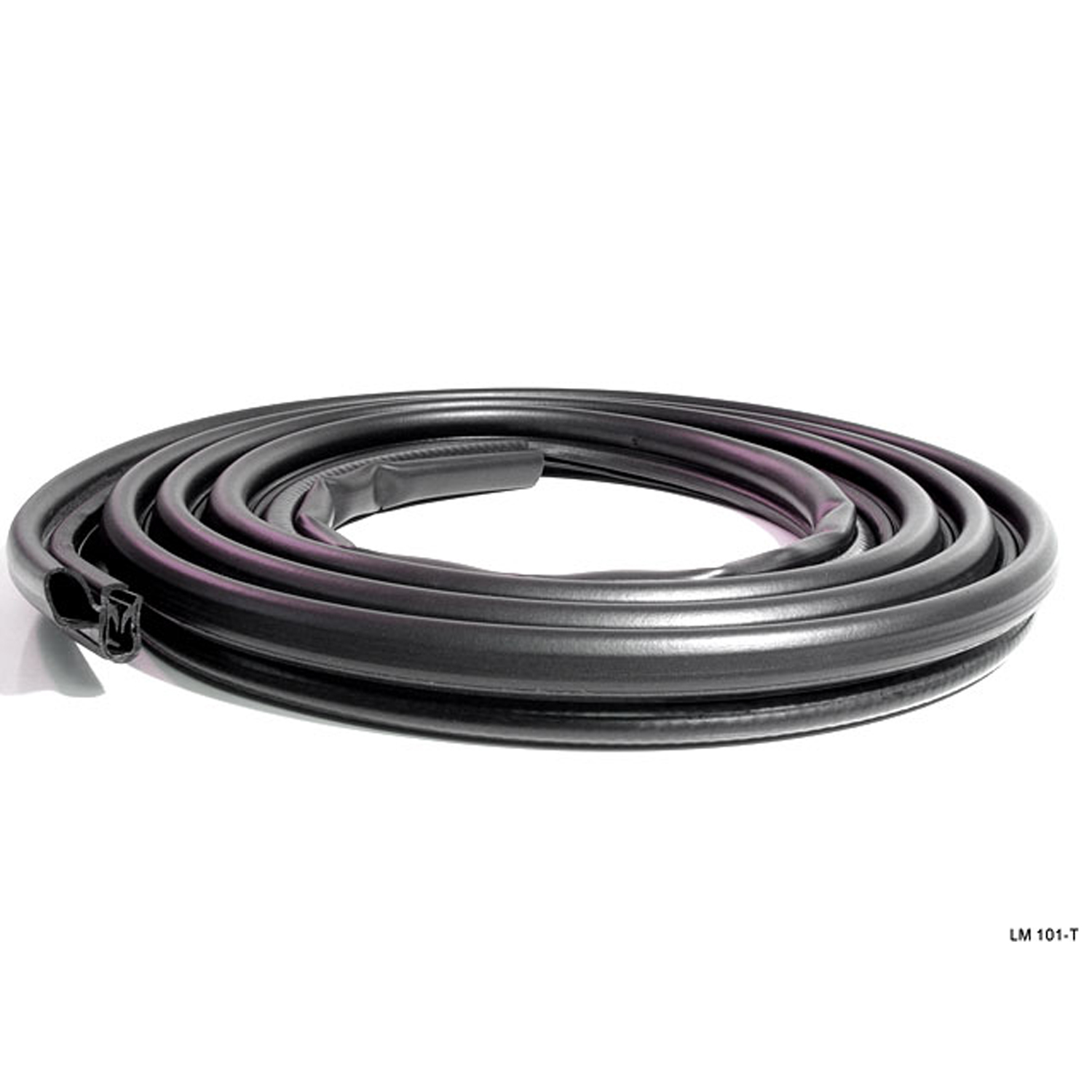 1991 Chevrolet K2500 Door seal. (Imported)-IS-LM 101-TDoor seal. (Imported). Replaces the front left- and right-side door seal (located on the body) for the old style '88-'02 Chevrolet and GMC C/K 1500/2500/3500 series standard, extended cab and quad (crew) cab pickup trucks except front right side on extended cab models with access door. Replaces front left- and right-side door seals (on body) for '92-'00 Chevrolet Blazer/Tahoe, GMC Yukon, Cadillac Escalade and '92-'99 Chevrolet Suburban ' except front right side on extended cab models with access door. Replaces OEM# 15758703. Each.
Why Choose Metro?
For over 100 years, Metro Moulded Parts has been the pinnacle of quality in classic car restoration parts. Our commitment to precision and authenticity in every component ensures a perfect fit and an OEM-level appearance.
- Expert Craftsmanship & Quality: Each part is a testament to our dedication to reliability and perfection, crafted from original designs and thoroughly tested.
- Advanced Technology: We use cutting-edge techniques to create flawless, long-lasting parts that surpass others in performance.
- SuperSoft Sponge – The Ultimate Door Seal: Not only are our door seals 30% softer than competitors', but they're also guaranteed to never leak. They effectively reduce wind and road noise, enhancing your classic car's comfort and driving experience.
- Proudly American: Our parts are a product of American craftsmanship, made in the USA with a spirit of excellence and heritage.
- Unrivaled Warranty: We back our products with a 30-year industry-leading warranty, a testament to our confidence in their quality.
Join us in preserving the legacy of classic cars with parts that are crafted for perfection, not just made.