

Image of 1930 Chrysler Series 70, Note: These illustrations use artistic license and may differ from actual historical models.
Performance Metrics
Fundamental Metrics
Emotional Appeal
MMP Rating
| Engine Specifications | |
|---|---|
| Engine: | Inline 6 |
| Displacement: | 3.3L |
| Horsepower: | Estimated 75-85 HP |
| Torque: | Not available |
| Compression Ratio: | Not available |
| Ignition System: | Battery and coil |
| Cooling System: | Water-cooled |
| Performance Specifications | |
| 0-60 Time: | Not available |
| 1/4 Mile Time: | Not available |
| Top Speed: | 70 mph |
| Transmission and Drive | |
| Drive Type: | Rear wheel drive |
| Transmission Type: | 3-speed manual |
| Fuel and Efficiency | |
| Fuel System Type: | Carburetor |
| MPG: | Not available |
| Dimensions and Brakes | |
| Brakes: | Mechanical drum brakes |
| Wheelbase: | 112 inches |
| Weight: | 3,000 lbs |
Note: Specifications for classic cars are given to the best of our ability, considering the limited and variant data available.
1930 Chrysler Series 70: A Six-Cylinder with Serious Ambition
The 1930 Chrysler Series 70 was built to make brisk, capable motoring feel attainable, pairing a strong six-cylinder engine with the engineering features that helped establish Chrysler as a serious force in the American car market. Made by Chrysler Corporation in Detroit, it arrived during a dramatic turning point: the stock-market crash had shaken the economy, but automakers were still competing to offer more power, comfort, and advanced technology.
The Series 70 belonged to a line that helped define Chrysler’s early reputation for performance and value. Its name had roots in the model’s speed-oriented image: the original Chrysler 70 was promoted around its ability to reach 70 mph, a notable claim for a production car of the 1920s. By 1930, the car offered more than a headline number. It combined a substantial inline six, four-wheel hydraulic brakes, and the confident road manners expected of a well-engineered automobile.
Exterior Styling and Body Choices
The Series 70 has the upright, purposeful profile of a classic prewar American car. A tall, bright-finished radiator grille leads the eye into a long hood, while separate rounded fenders frame the wheels. Headlamps sit prominently beside the grille, and running boards connect the front and rear fenders into one continuous visual line. Depending on the body, a rear-mounted spare tire, a folding top, or a rumble seat added its own distinctive silhouette.
Chrysler offered the Series 70 in a range of body styles, with availability varying by catalog and production configuration. Buyers could choose from enclosed cars such as sedans and coupes, as well as more open styles such as roadsters, phaetons, or convertible coupes. The closed sedan was a practical choice for family and year-round use. Open cars, particularly roadsters and phaetons, have become especially evocative collector favorites because they show off the car’s long hood and sweeping fenders so clearly.
Paint choices depended on body style and the specific factory offering. Dark greens, maroons, blues, and black were characteristic period choices, sometimes complemented by contrasting trim or pinstriping. A restored car’s colors should be checked against period documentation where possible, since modern restorations may use attractive combinations that were not necessarily offered on every Series 70 body.
Cabin Comfort and 1930s Technology
Inside, the Series 70 balanced durability with a degree of formality. Broadcloth or mohair upholstery was common in closed cars, while leather was often associated with open models. Trim and instrument panels gave the cabin a carefully finished appearance, and the large steering wheel, upright seating position, and clear gauges reflected the straightforward ergonomics of the era. Materials and details varied with body style and specification, so no single interior describes every car.
Its most important technical feature was its four-wheel hydraulic braking system. Hydraulic brakes were still a major selling point in the 1920s and early 1930s, offering more even braking action than the mechanical systems used on many competing cars. The Series 70 also had a conventional three-speed manual transmission and a robust side-valve, or L-head, six-cylinder engine. These were not futuristic gadgets, but they made the car easier to drive confidently and helped establish Chrysler’s reputation for practical engineering.
Why the Chrysler 70 Mattered
The Series 70 helped demonstrate that a car did not have to be an expensive luxury model to offer substantial power and useful engineering. Its six-cylinder performance, hydraulic brakes, and solid construction gave buyers a compelling alternative to less powerful cars, while its range of body styles allowed the same basic model to serve both practical and social roles.
It also represents Chrysler’s early effort to build a distinct identity. Walter P. Chrysler had founded the corporation in 1925 after years in the automotive industry, and the company quickly developed a reputation for engineering-led products. The Series 70 was part of that foundation. It arrived before the dramatic aerodynamic Chrysler Airflow of 1934, but it belongs to the period when Chrysler was already distinguishing itself through mechanical specification rather than relying on styling alone.
Engine, Speed, and Road Manners
The 1930 Series 70 is generally associated with a 218.6-cubic-inch L-head inline six producing about 75 horsepower. Exact specifications can vary with the particular car and reference source, so collectors should verify an individual vehicle by its engine number, serial information, and factory literature. Power went through a three-speed manual transmission to the rear wheels.
A healthy, correctly equipped car could reach roughly 70 mph, with some period claims and modern estimates putting the maximum somewhat higher depending on body style, gearing, and condition. A 0-to-60-mph time was not commonly presented as a factory specification. Based on the car’s power and weight, a rough estimate is around 20 to 25 seconds, though a heavy sedan, worn engine, or tall gearing could make it slower. These figures are best treated as period-car estimates, not modern test results.
On the road, the Series 70 feels substantial rather than nimble. Its long wheelbase and full-size chassis help it ride smoothly over ordinary road imperfections, although deep potholes and rough surfaces still make themselves felt through the solid axles and period suspension. On winding roads, the driver needs to plan ahead: steering is less precise than in a modern car, and the brakes require more anticipation than contemporary disc brakes. The hydraulic system was advanced for its day, but age and maintenance matter enormously to how well it performs now.
The engine delivers a measured six-cylinder rumble, with more mechanical presence than a modern car and a steady pull once underway. Shifting requires deliberate input, and the driver participates in the process rather than simply directing the car. That hands-on character is part of the appeal: a Series 70 rewards smooth throttle use, well-timed shifts, and a relaxed pace.
Living with a 1930 Chrysler Series 70
Today, most Series 70s are used as show cars, touring cars, or occasional weekend drivers rather than everyday transportation. A well-sorted example can take part in local antique-car events and carefully planned drives, but regular use calls for realistic expectations about speed, braking distance, weather protection, and modern traffic.
The mechanical layout is comparatively straightforward by modern standards, and many repairs can be understood by an experienced home mechanic. The challenge is often not complexity but parts availability, correct adjustment, and the time required to source components. Brake hydraulics, fuel delivery, ignition, cooling, tires, and old wiring deserve close attention before road use. Specialist knowledge can be valuable, especially when restoring original components or tracking down model-specific parts. A pre-purchase inspection by someone familiar with prewar Chryslers is a wise investment.
Fast Facts and Common Misconceptions
The Series 70’s speed-oriented name is one of its most memorable talking points, but it should not be mistaken for a promise that every surviving car will comfortably cruise at 70 mph today. Age, restoration quality, gearing, tire choice, and mechanical condition all affect safe speed. Nor should the car’s hydraulic brakes be assumed to work well simply because they were a standout feature when new. A decades-old brake system needs a thorough inspection and, often, a rebuild.
The 1930 Series 70 is not widely associated with a single famous celebrity owner or a major endurance record. Its significance is more about the role it played in Chrysler’s early rise and the technology it brought to ordinary road use. It also appeared as part of a broader American shift toward more powerful, better-equipped cars, even as the Depression soon forced buyers and manufacturers to reconsider what they could afford.
Collector Value and Availability
There is no single, dependable production figure for every 1930 Series 70 body style, and surviving cars are not evenly distributed across the range. As a broad estimate rather than a confirmed factory total, production may have been in the tens of thousands across the model line, perhaps roughly 15,000 to 25,000 cars. Individual body styles and surviving examples are much scarcer than that estimate suggests.
As a general current-market guide, a project car may fall around $5,000 to $15,000, while a usable older restoration or solid driver could bring roughly $15,000 to $35,000. High-quality restorations, particularly attractive open-body cars, may reach approximately $40,000 to $70,000 or more. These are broad estimates, not appraisals: originality, completeness, documented history, body style, restoration quality, and local demand can shift the price substantially.
Values for prewar cars tend to be selective rather than uniformly rising. A strong, correctly restored example can hold interest, especially if it has a desirable body style and clear documentation. However, restoration costs can exceed resale value, and the market for large prewar cars is narrower than it is for better-known postwar classics. Buyers should prioritize condition and provenance over the idea that every old car is automatically an appreciating investment.
A Chrysler Built for More Than Its Era
The 1930 Chrysler Series 70 combines a handsome prewar shape with a strong six-cylinder engine and engineering that was genuinely forward-looking for its time. Its hydraulic brakes and performance-minded identity helped Chrysler stand out in a crowded market, while its range of body styles made it both a practical automobile and a striking collector car.
It is not a car for hurried commutes or effortless modern driving. It is a car for learning its rhythms, listening to the engine, and appreciating how quickly Chrysler was building its reputation. Nearly a century later, the Series 70 remains a vivid reminder that smart engineering and confident design were already reshaping the American road.
1930 Chrysler Series 70 Catalog of Parts
 1930 Chrysler Series 70 Clutch and Brake Pedal Pads. 2-5/8" wide X 3-3/4" long-CB 26Clutch and Brake Pedal Pads. 2-5/8" wide X 3-3/4" long. Pair
 1930 Chrysler Series 70 Clutch and Brake Pedal Pads, Black-CB 28-AClutch and Brake Pedal Pads, Black. 2-3/8" wide X 3-7/8" long. Pair
 1930 Chrysler Series 70 Clutch and Brake Pedal Pads, Brown-CB 28-BClutch and Brake Pedal Pads, Brown. 2-3/8" wide X 3-7/8" long. Pair
 1930 Chrysler Series 70 Door Bumper. 1-7/16" high X 1-9/16" wide X 9/16" thick-DB 7Door Bumper. 1-7/16" high X 1-9/16" wide X 9/16" thick. Each
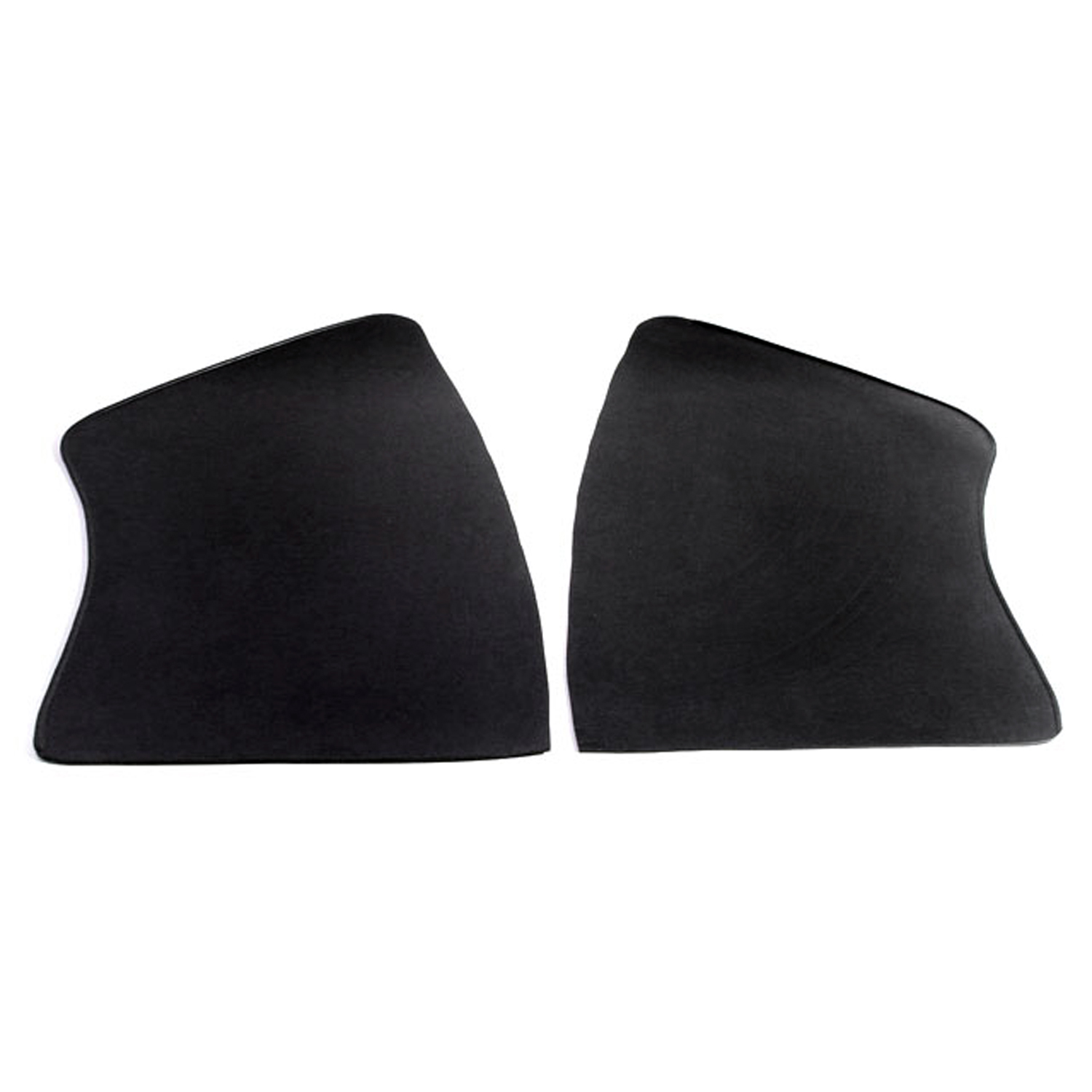 1930 Chrysler Series 70 Gravel Shields. Molded flat without metal backing plates-FS 31Gravel Shields. Molded flat without metal backing plates. Apply with contact cement. 18" long X 9-3/4" wide at bottom. Pair
 1930 Chrysler Series 70 Hood Corners. Fits flat corners-HC 19Hood Corners. Fits flat corners. 80° angle, 1/4" to 3/8" corner radius. 1-3/8" wide. Pair
 1930 Chrysler Series 70 Windshield Post Bases. Pair R&L-MB 14Windshield Post Bases. Pair R&L
 1930 Chrysler Series 70 Headlight Bar Pads. 1-1/8" X 1-5/8" long. Pair-MP 551Headlight Bar Pads. 1-1/8" X 1-5/8" long. Pair
 1930 Chrysler Series 70 Door Handle Pads. 1-1/4" wide X 2-1/4" long. Pair-MP 559-ADoor Handle Pads. 1-1/4" wide X 2-1/4" long. Pair
 1930 Chrysler Series 70 Rumble Seat Step Plate Pad. Rubber face only, no logo-SP 11Rumble Seat Step Plate Pad. Rubber face only, no logo. 4-1/4" O.D. Each
 1930 Chrysler Series 70 Step Plate Pad. Face only. 4-1/4" Diameter Each-SP 16Step Plate Pad. Face only. 4-1/4" Diameter Each
Why Choose Metro?
For over 100 years, Metro Moulded Parts has been the pinnacle of quality in classic car restoration parts. Our commitment to precision and authenticity in every component ensures a perfect fit and an OEM-level appearance.
- Expert Craftsmanship & Quality: Each part is a testament to our dedication to reliability and perfection, crafted from original designs and thoroughly tested.
- Advanced Technology: We use cutting-edge techniques to create flawless, long-lasting parts that surpass others in performance.
- SuperSoft Sponge – The Ultimate Door Seal: Not only are our door seals 30% softer than competitors', but they're also guaranteed to never leak. They effectively reduce wind and road noise, enhancing your classic car's comfort and driving experience.
- Proudly American: Our parts are a product of American craftsmanship, made in the USA with a spirit of excellence and heritage.
- Unrivaled Warranty: We back our products with a 30-year industry-leading warranty, a testament to our confidence in their quality.
Join us in preserving the legacy of classic cars with parts that are crafted for perfection, not just made.