

Image of 1930 Chrysler Series 77, Note: These illustrations use artistic license and may differ from actual historical models.
Performance Metrics
Fundamental Metrics
Emotional Appeal
MMP Rating
| Engine Specifications | |
|---|---|
| Engine: | Inline 6 |
| Displacement: | 224 cubic inches |
| Horsepower: | Estimated 78-85 HP |
| Torque: | Not available |
| Compression Ratio: | Not available |
| Ignition System: | Battery and coil |
| Cooling System: | Water-cooled |
| Performance Specifications | |
| 0-60 Time: | Not available |
| 1/4 Mile Time: | Not available |
| Top Speed: | 75 mph |
| Transmission and Drive | |
| Drive Type: | Rear-wheel drive |
| Transmission Type: | 3-speed manual |
| Fuel and Efficiency | |
| Fuel System Type: | Carburetor |
| MPG: | Not available |
| Dimensions and Brakes | |
| Brakes: | 4-wheel hydraulic brakes |
| Wheelbase: | 112 inches |
| Weight: | 3,200 lbs |
Note: Specifications for classic cars are given to the best of our ability, considering the limited and variant data available.
The 1930 Chrysler Series 77 was built for drivers who wanted more than basic transportation: it paired a substantial six-cylinder engine and confident road manners with the style of a full-size American car. Introduced by the Chrysler Corporation during a period of rapid growth, the Series 77 reflected Walter P. Chrysler’s ambition to make engineering sophistication part of the brand’s identity, not just a feature reserved for its most expensive models.
Chrysler 77: A Six-Cylinder for a Changing America
Chrysler’s story began in 1925, when Walter P. Chrysler organized the company from the Maxwell Motor Corporation. By 1930, Chrysler was expanding quickly, having added Dodge Brothers and launched Plymouth in the preceding years. The Series 77 sat within a broad lineup aimed at buyers seeking a capable, well-equipped car without stepping up to a luxury marque.
The Series 77’s name pointed to its advertised 77 horsepower, a useful bit of period marketing that also hinted at the car’s character. It was a substantial six-cylinder automobile intended for comfortable touring and brisk highway travel. Its arrival coincided with a dramatic shift in the American economy: the stock market crash of 1929 and the onset of the Great Depression made the 1930 model year a turning point for the entire industry.
One detail that helps explain the car’s appeal is its combination of a relatively large engine and four-wheel hydraulic brakes. Hydraulic braking was still a noteworthy engineering advantage in the period. Chrysler had helped bring the technology into wider use earlier in the decade, and it gave the Series 77 a more modern braking system than cars relying on mechanical linkages.
1930 Chrysler Series 77 Design and Body Styles
The Series 77 had the upright, carefully proportioned look that defines many early-1930s cars. A tall radiator grille and long hood gave the front end a formal presence, while separate headlamps, sweeping front fenders and running boards emphasized its width and length. The rear fenders followed the rounded shape of the body, giving the car a flowing silhouette without abandoning the sturdy, upright lines of the era.
Chrysler offered the Series 77 in multiple body styles, with availability varying by catalog and production configuration. Buyers could find open touring-style bodies as well as closed coupes and sedans. Coupe versions, including examples with a rear rumble seat, are among the most visually distinctive today. Sedans offered the most practical enclosed accommodation, while open models gave the car a more sporting, social character.
Inside, the Series 77 was furnished for long-distance comfort by the standards of 1930. Upholstery materials depended on body style and trim, with cloth commonly used in closed cars and leather associated with some open or higher-trim interiors. Painted or finished metal surfaces, wood trim and a broad instrument panel gave the cabin a practical, carefully appointed feel. It was not modern luxury in today’s sense, but it offered a welcome step up from a bare-bones runabout.
Paint combinations changed with factory offerings, body style and dealer stock. Dark, formal shades such as black, maroon, blue and green suit the car’s period appearance, and some examples were finished with contrasting details or two-tone treatment. Original paint records and surviving factory documentation are worth checking before assuming a particular color combination was standard for a specific body.
Engineering That Made the Series 77 Stand Out
At the heart of the 1930 Chrysler Series 77 was a 218.6-cubic-inch side-valve inline-six, rated at 77 horsepower. It drove the rear wheels through a conventional manual transmission, typically a three-speed unit. The engine’s displacement gave it useful low-speed pulling power, while the car’s overall specification made it a credible choice for touring rather than merely short trips around town.
Four-wheel hydraulic drum brakes were a major part of the car’s technical story. Compared with older mechanical systems, hydraulic brakes could apply force more evenly and with less dependence on a complicated network of rods and levers. The Series 77 also benefited from the broader Chrysler emphasis on practical engineering, including dependable lubrication and a chassis designed for regular road use.
Its significance is less about one revolutionary invention than about how it brought modern features together in a mainstream car. The Series 77 offered a substantial six, hydraulic braking and a range of body choices at a time when many manufacturers were adapting to tougher competition and a fast-changing market. Chrysler’s focus on engineering and value helped shape the company’s reputation for cars that felt more advanced than their price class suggested.
Performance, Speed and Road Manners
Period performance figures are not as consistent as modern instrumented tests, and results varied with body style, gearing, condition and load. A healthy Series 77 is generally credited with a top speed in the neighborhood of 70 to 75 mph. A 0-to-60-mph time was likely in the range of roughly 20 to 25 seconds, a reasonable estimate for a heavy 1930 car with 77 horsepower. These are approximate figures, not guarantees for every surviving example.
On the road, the six-cylinder engine would have delivered a steady, relaxed pull rather than the sharp response of a modern car. The manual gearbox required deliberate shifts, and the driver had to work with the engine’s torque rather than expect instant acceleration. At cruising speed, the engine’s measured mechanical hum and the sounds of tires and wind were part of the experience.
The Series 77 used the conventional chassis layout of its time, with a solid rear axle, narrow tires and suspension tuned for comfort on the roads of the day. It could smooth out ordinary rough pavement, but sharp bumps and ruts would still make themselves known through the frame and steering. On a winding road, its size, period tires and relatively tall body called for a patient pace. The steering was more physical than a modern power-assisted system, and braking distances require a sensible buffer, even with the advantage of hydraulic brakes.
Living With a 1930 Chrysler 77
Today, the Series 77 is best suited to touring, club events, historic displays and occasional pleasure drives. It can be driven regularly by an owner who understands prewar-car upkeep, but it is not an easy substitute for a modern daily driver. Traffic speed, limited visibility by current standards, manual controls and the absence of modern safety equipment all reward a calm route and careful planning.
Routine work is familiar to many vintage-car mechanics: ignition and carburetor tuning, lubrication, cooling-system care, brake adjustment and attention to the electrical system. Mechanical components are generally serviceable, but parts availability can vary, and some items may require specialist suppliers, careful restoration or fabrication. The average owner can handle basic maintenance with appropriate manuals and tools, but a full restoration is a substantial project. Before buying, inspect the frame, body structure, engine, transmission, hydraulic brakes and cooling system. A car that has been stored for years may need more than a battery and fresh fuel before it is safe to drive.
Reliability depends heavily on condition and maintenance history. A properly sorted car can be enjoyable on moderate tours, while neglected brakes, old tires, deteriorated wiring or a compromised cooling system can turn even a short outing into a roadside repair. A pre-purchase inspection by someone familiar with prewar Chryslers is money well spent.
Series 77 Facts and Common Criticisms
The “77” badge is a straightforward reference to the car’s rated horsepower, rather than a reference to its model year or a production total. That naming approach made the engine’s output part of the car’s identity and neatly advertised its performance credentials to buyers.
No single celebrity owner or universally recognized speed record defines the Series 77’s story. Its interest lies in the broader historical picture: it was a well-equipped Chrysler introduced just as the Depression began reshaping what Americans could afford. The period’s economic shock affected the whole industry, and Chrysler had to compete in a market where even technically appealing cars faced new financial realities.
Common criticisms are typical of cars from the era. The Series 77 is slow by modern standards, requires frequent attention compared with a contemporary vehicle and offers limited occupant protection. Its brakes, although advanced for their time, should not be judged by modern stopping distances. Parts can also take time to locate. For enthusiasts, those limitations are part of the ownership bargain, not surprises to discover after purchase.
1930 Chrysler 77 Values and Rarity
Surviving Series 77s appear far less often than modern classics, but exact production and survival totals are difficult to pin down by model and body style. As a rough estimate, production may have been in the tens of thousands, perhaps around 25,000 to 35,000 cars. That is a broad best guess, not a confirmed factory total. The number of complete, usable examples today is much smaller, and unusual body styles can be harder to find than sedans.
As a general U.S. market estimate in 2026, a project car might sell for roughly $5,000 to $12,000. A running driver or older restoration could fall around $15,000 to $30,000, while a very good, correctly restored example may bring approximately $30,000 to $50,000. Exceptional cars, rare body styles or particularly well-documented examples can exceed that range. Actual prices depend on condition, originality, completeness, provenance and the quality of the restoration.
Values for prewar cars tend to be selective rather than uniformly rising. The Series 77 has historical appeal and strong period character, but its market is narrower than that for better-known postwar classics. Prices are likely to reward excellent condition and desirable body styles, while ordinary examples may remain comparatively steady. Buyers should focus on the quality of the car, not the assumption that age alone guarantees appreciation.
Why the Chrysler Series 77 Still Matters
The 1930 Chrysler Series 77 combined a 77-horsepower six-cylinder engine, hydraulic four-wheel brakes, a range of body styles and the confident proportions of an early-1930s American automobile. It was built at a moment when Chrysler was expanding and the country was entering an economic crisis, making it a revealing snapshot of both the company’s ambitions and its era.
Today, the Series 77 rewards owners who value mechanical character over modern convenience. Its steady six, upright styling and hands-on driving experience make it more than a vintage display piece. It is a reminder that even as the road ahead grew uncertain in 1930, Chrysler was building cars meant to travel it with confidence.
1930 Chrysler Series 77 Catalog of Parts
 1930 Chrysler Series 77 Clutch and Brake Pedal Pads. 2-5/8" wide X 3-3/4" long-CB 26Clutch and Brake Pedal Pads. 2-5/8" wide X 3-3/4" long. Pair
 1930 Chrysler Series 77 Clutch and Brake Pedal Pads, Black-CB 28-AClutch and Brake Pedal Pads, Black. 2-3/8" wide X 3-7/8" long. Pair
 1930 Chrysler Series 77 Clutch and Brake Pedal Pads, Brown-CB 28-BClutch and Brake Pedal Pads, Brown. 2-3/8" wide X 3-7/8" long. Pair
 1930 Chrysler Series 77 Door Bumper. 1-7/16" high X 1-9/16" wide X 9/16" thick-DB 7Door Bumper. 1-7/16" high X 1-9/16" wide X 9/16" thick. Each
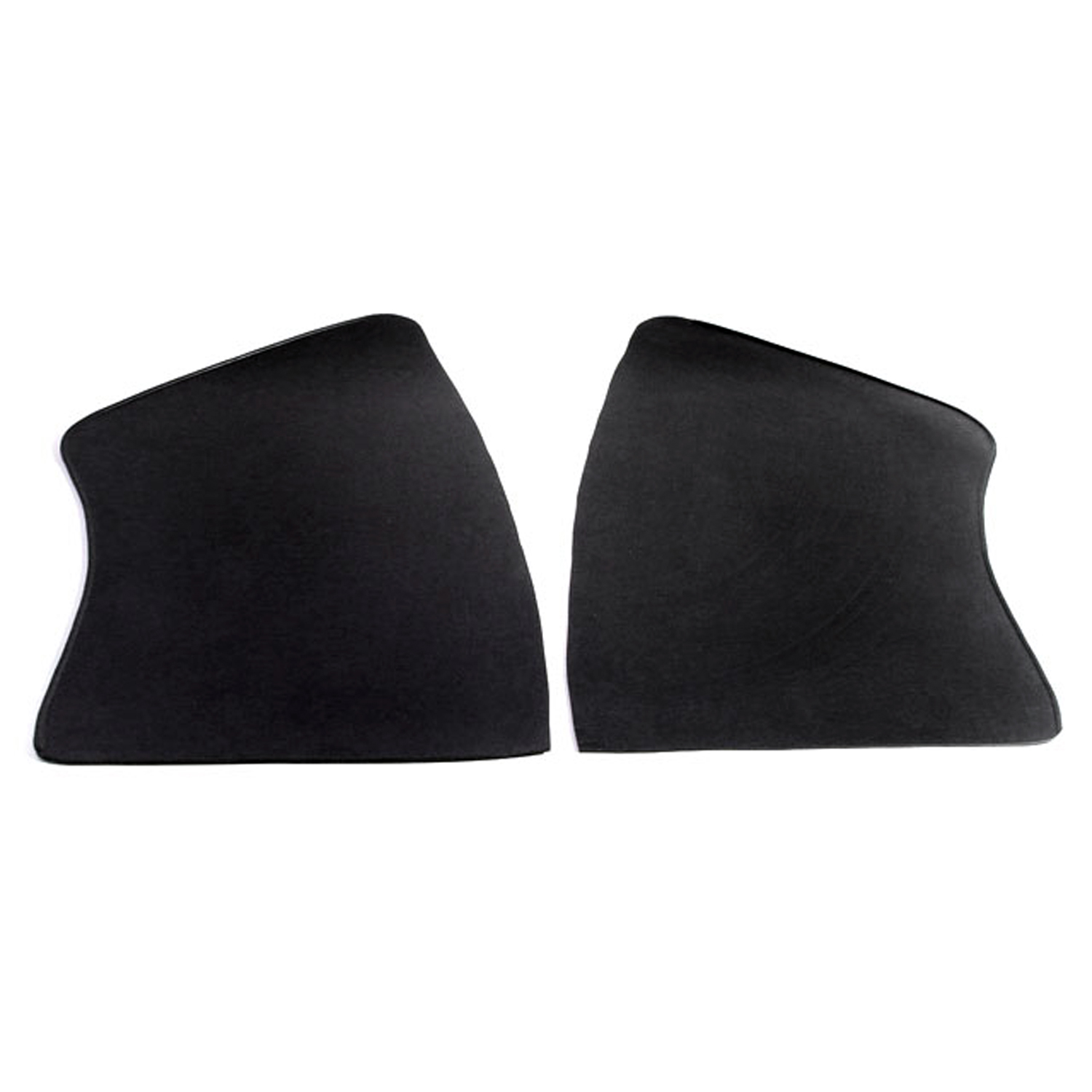 1930 Chrysler Series 77 Gravel Shields. Molded flat without metal backing plates-FS 31Gravel Shields. Molded flat without metal backing plates. Apply with contact cement. 18" long X 9-3/4" wide at bottom. Pair
 1930 Chrysler Series 77 Hood Corners. Fits flat corners-HC 19Hood Corners. Fits flat corners. 80° angle, 1/4" to 3/8" corner radius. 1-3/8" wide. Pair
 1930 Chrysler Series 77 Windshield Post Bases. Pair R&L-MB 14Windshield Post Bases. Pair R&L
 1930 Chrysler Series 77 Headlight Bar Pads. 1-1/8" X 1-5/8" long. Pair-MP 551Headlight Bar Pads. 1-1/8" X 1-5/8" long. Pair
 1930 Chrysler Series 77 Door Handle Pads. 1-1/4" wide X 2-1/4" long. Pair-MP 559-ADoor Handle Pads. 1-1/4" wide X 2-1/4" long. Pair
 1930 Chrysler Series 77 Rumble Seat Step Plate Pad. Rubber face only, no logo-SP 11Rumble Seat Step Plate Pad. Rubber face only, no logo. 4-1/4" O.D. Each
 1930 Chrysler Series 77 Step Plate Pad. Face only. 4-1/4" Diameter Each-SP 16Step Plate Pad. Face only. 4-1/4" Diameter Each
Why Choose Metro?
For over 100 years, Metro Moulded Parts has been the pinnacle of quality in classic car restoration parts. Our commitment to precision and authenticity in every component ensures a perfect fit and an OEM-level appearance.
- Expert Craftsmanship & Quality: Each part is a testament to our dedication to reliability and perfection, crafted from original designs and thoroughly tested.
- Advanced Technology: We use cutting-edge techniques to create flawless, long-lasting parts that surpass others in performance.
- SuperSoft Sponge – The Ultimate Door Seal: Not only are our door seals 30% softer than competitors', but they're also guaranteed to never leak. They effectively reduce wind and road noise, enhancing your classic car's comfort and driving experience.
- Proudly American: Our parts are a product of American craftsmanship, made in the USA with a spirit of excellence and heritage.
- Unrivaled Warranty: We back our products with a 30-year industry-leading warranty, a testament to our confidence in their quality.
Join us in preserving the legacy of classic cars with parts that are crafted for perfection, not just made.