

Image of 1934 Chrysler Airflow Series Cu, Note: These illustrations use artistic license and may differ from actual historical models.
Performance Metrics
Fundamental Metrics
Emotional Appeal
MMP Rating
| Engine Specifications | |
|---|---|
| Engine: | Inline 8 |
| Displacement: | 323.5 cu in (5.3 L) |
| Horsepower: | 122 hp |
| Torque: | Not available |
| Compression Ratio: | 6.5:1 |
| Ignition System: | Battery and coil |
| Cooling System: | Water |
| Performance Specifications | |
| 0-60 Time: | Not available |
| 1/4 Mile Time: | Not available |
| Top Speed: | 96 mph |
| Transmission and Drive | |
| Drive Type: | Rear wheel drive |
| Transmission Type: | 3-speed manual |
| Fuel and Efficiency | |
| Fuel System Type: | Carburetor |
| MPG: | Not available |
| Dimensions and Brakes | |
| Brakes: | 4-wheel hydraulic drum brakes |
| Wheelbase: | 128 in (3,251 mm) |
| Weight: | 3,700 lbs |
Note: Specifications for classic cars are given to the best of our ability, considering the limited and variant data available.
1934 Chrysler Airflow Series CU: The Streamliner That Changed the Rules
The 1934 Chrysler Airflow Series CU looked less like a conventional automobile and more like a glimpse of motoring’s future. Built by the Chrysler Corporation, it brought wind-tunnel thinking, an unusually integrated body structure, and dramatic streamlined styling to American showrooms at a time when most cars still wore upright grilles and separate-looking body sections.
The Airflow was the product of a Chrysler engineering team that included Carl Breer, Fred Zeder, and Owen Skelton. Their goal was to make a car that moved through the air more efficiently and used its weight more intelligently. A famous part of the development story involves studying how air flowed around cars in a wind tunnel, including experiments that helped challenge conventional ideas about vehicle shape. The result was daring, but its most intriguing distinction is that it was not merely styled to look futuristic: its structure and passenger layout were rethought too.
Streamlined Styling and a New Kind of Cabin
The Airflow’s rounded nose, flowing fenders, sloping rear body, and broad, curved surfaces gave it a unified, almost aircraft-like profile. Its grille was a tall, waterfall-like arrangement rather than the flat, upright radiator face familiar on many rivals. The fenders blended more naturally into the body, while the enclosed cabin made the whole car appear shaped as one continuous form.
Inside, the Airflow offered a spacious cabin with a more forward-set passenger compartment than was typical of the period. The seating position and generous glass helped create a light, open feeling. Materials and trim varied by body style and equipment, but buyers could expect period upholstery, polished metal details, and carefully finished interior surfaces. Today, original upholstery and trim are important to collectors because replacements can be difficult to match convincingly.
Chrysler offered the CU in more than one body configuration, including sedan and coupe forms, with details varying by catalog and market. The four-door sedan is the best-known and most frequently seen version today. It shows off the Airflow’s long roofline and continuous body shape particularly well, while the coupe has a tighter, more sporting profile.
Factory paint choices depended on configuration and market, but period colors included subdued and richer shades such as black, blue, green, gray, and maroon. Dark finishes suit the Airflow’s formal character, while blue and green can make its sculpted bodywork easier to appreciate. Buyers researching a specific car should check its original paint code and build documentation rather than assume that a period-correct color was offered on every CU body style.
Engineering Ahead of Its Time
The Series CU’s greatest innovation was the way its body and chassis were conceived as a more integrated structure. Chrysler’s approach helped produce a strong, rigid body and moved the passenger compartment forward compared with many traditional layouts. The Airflow also aimed for a more balanced distribution of weight between the front and rear wheels. These choices were intended to improve stability, comfort, and use of interior space, not just reduce wind resistance.
Under the hood, the CU used a 323.5-cubic-inch side-valve inline-eight. Period specifications commonly list output at about 122 horsepower, sent to the rear wheels through a three-speed manual transmission. That was substantial power for a large family car of its day, and the smooth-running eight-cylinder engine suited the Airflow’s quiet, long-distance character.
The Airflow’s influence extended beyond its sales figures. Its aerodynamic body and emphasis on passenger comfort anticipated ideas that later became mainstream, including smoother body shapes, more integrated construction, and a cabin designed around occupants rather than simply fitted behind a long hood. Many manufacturers took notice, even if they adopted the ideas gradually and with less dramatic styling.
Road Manners and Performance
With its large straight-eight and three-speed gearbox, the Airflow was built for steady, confident travel rather than quick launches. A top speed in the neighborhood of 85 to 90 mph is a reasonable period-style estimate for a well-tuned car, though actual results depend on condition, gearing, tires, and load. A 0-to-60-mph time is best treated as an estimate rather than a fixed specification; expect roughly 20 seconds or longer, which was respectable for a substantial 1930s sedan.
On the road, the Airflow’s long wheelbase and substantial body help it settle over ordinary bumps. Its steering and suspension feel distinctly vintage by modern standards, but the car was designed to be comfortable over distance. On winding roads, drivers need to plan ahead: this is a large, heavy automobile with period tires, brakes, and steering, not a modern sports sedan. In crosswinds, its rounded shape can feel different from that of a boxier contemporary, but the Airflow’s stable, planted character was part of its appeal.
The driving experience is about smoothness and presence. The inline-eight produces a deep, even mechanical note, while the manual transmission asks for deliberate shifts and a bit of practice. There is no power steering or modern braking assistance, so the driver remains closely involved. In return, the Airflow delivers the sensation of piloting a substantial piece of automotive history.
Why the Airflow Mattered, and Why Buyers Hesitated
The Airflow was a bold departure from the styling customers knew. That was both its achievement and its commercial challenge. Some buyers admired the futuristic form, while others found it too unusual. Early production and quality concerns also damaged confidence, and competitors were quick to benefit from customers who preferred familiar styling.
Chrysler responded with styling changes in later model years, including a more conventional-looking front end. The Airflow’s initial reception helped teach the industry a lasting lesson: engineering progress does not automatically guarantee market success. A car can be technically advanced and still need styling and messaging that make buyers comfortable.
Its reputation also became tangled in claims about safety and structural strength. Chrysler promoted the Airflow’s robust construction and used demonstrations to answer public doubts. The lasting point is that the car’s integrated body structure was an ambitious engineering step, although it should not be confused with modern crash protection or modern safety standards.
Living with a 1934 Airflow
Today, a Series CU is most often enjoyed as a show car, touring car, or special-interest weekend vehicle. It can be driven on suitable roads, but regular use requires an owner who understands prewar machinery. Parts availability is more limited than for mass-produced postwar classics, and body, trim, and Airflow-specific components can take time to find.
Routine servicing is familiar to a mechanic experienced with vintage cars: the engine needs regular attention, the ignition and fuel systems require periodic adjustment, and the brakes, tires, cooling system, and electrical components deserve careful inspection. Repairs are not necessarily mysterious, but originality and the car’s unusual construction can make restoration more involved than working on a common 1930s sedan. A pre-purchase inspection by a marque-savvy specialist is especially valuable.
Airflow Facts and Collector Notes
The Airflow was not designed as a race car, and its significance rests more on engineering and design than on competition records. Its most memorable “record” is the way it anticipated a more aerodynamic era. It also became a touchstone for later designers who wanted cars to look as though they were moving even when parked.
Celebrity ownership stories are not as central to the CU’s history as they are for some luxury classics, so buyers should be cautious about grand claims that lack documentation. The model’s genuine talking point is its rarity and its role in one of the most ambitious American automotive experiments of the 1930s. Common criticisms remain its unconventional appearance, the challenges of sourcing specialized parts, and the fact that its advanced ideas arrived before many buyers were ready for them.
Exact production totals for individual CU body styles are not consistently reported. As a broad working estimate, roughly 8,000 to 10,000 Chrysler Airflows across the 1934 range is a reasonable figure to keep in mind, with the Series CU representing a substantial share. Surviving cars are much scarcer than that original total suggests, especially in complete, well-restored condition.
Values vary widely with originality, restoration quality, body style, and documentation. As a general collector-market estimate, a project car might bring about $20,000 to $40,000, a usable driver roughly $40,000 to $75,000, and a high-quality restoration around $80,000 to $140,000 or more. Exceptional examples may exceed that range, while cars needing major structural, mechanical, or trim work can fall below it. Airflows remain niche collectibles, so prices tend to be condition-sensitive rather than following a simple, steady upward curve. The best examples have held interest as design milestones, but buyers should compare recent sales and account for restoration costs.
A Bold Idea That Outlived Its Sales Figures
The 1934 Chrysler Airflow Series CU combined a smooth inline-eight, a spacious cabin, a more integrated body, and styling that dared to break with convention. It was not an easy commercial win, and it is not the simplest classic to maintain, but its influence is far larger than its place in the sales charts. The Airflow remains a remarkable reminder that the cars willing to challenge their own era often become the ones future generations remember.
1934 Chrysler Airflow Series Cu Catalog of Parts
 1934 Chrysler Airflow Series CU Fender Skirt Lower Latch Bumper. Steel core. Pair-BC 49Fender Skirt Lower Latch Bumper. Steel core. Pair
 1934 Chrysler Airflow Series CU Fender Skirt Upper Latch Bumper. Steel core. Pair-BC 50Fender Skirt Upper Latch Bumper. Steel core. Pair
 1934 Chrysler Airflow Series CU Clutch and Brake Pedal Pads. 2-5/8" wide X 3-3/4" long-CB 26Clutch and Brake Pedal Pads. 2-5/8" wide X 3-3/4" long. Pair
 1934 Chrysler Airflow Series CU Clutch and Brake Pedal Pads, Black-CB 28-AClutch and Brake Pedal Pads, Black. 2-3/8" wide X 3-7/8" long. Pair
 1934 Chrysler Airflow Series CU Clutch and Brake Pedal Pads, Brown-CB 28-BClutch and Brake Pedal Pads, Brown. 2-3/8" wide X 3-7/8" long. Pair
 1934 Chrysler Airflow Series CU Door Jamb Bumper. Perfect reproduction-DB 36Door Jamb Bumper. Perfect reproduction. 1-1/16" high X 1-1/4" wide X 7/16" thick. Each
 1934 Chrysler Airflow Series CU Door Jamb Bumper. Exact reproduction-DB 37Door Jamb Bumper. Exact reproduction. 1" high X 1-1/4" wide X 1/2" thick. Each
 1934 Chrysler Airflow Series CU Door Jamb Bumper. Fully detailed reproduction-DB 38Door Jamb Bumper. Fully detailed reproduction. 15/16" high X 1-9/16" wide X 7/16" thick. Each
 1934 Chrysler Airflow Series CU Gravel Shields. Molded flat without metal backing plates-FS 31Gravel Shields. Molded flat without metal backing plates. Apply with contact cement. 18" long X 9-3/4" wide at bottom. Pair
 1934 Chrysler Airflow Series CU Hood Corners. Fits flat corners-HC 19Hood Corners. Fits flat corners. 80° angle, 1/4" to 3/8" corner radius. 1-3/8" wide. Pair
 1934 Chrysler Airflow Series CU Roof Related Seal. Top insert filler & seal for closed cars-LP 110-RRoof Related Seal. Top insert filler & seal for closed cars. Fits in groove between cloth top-center panel & surrounding steel. Sold by the foot
 1934 Chrysler Airflow Series CU Swing-Out Windshield Seal. 3/4" High. Sold by the foot-LP 97-ASwing-Out Windshield Seal. 3/4" High. Sold by the foot
 1934 Chrysler Airflow Series CU Headlight Pads. 2-1/4" wide X 4-1/4" long. Pair-MP 554Headlight Pads. 2-1/4" wide X 4-1/4" long. Pair
 1934 Chrysler Airflow Series CU Door Handle Pads. 1-1/2" wide X 2-1/4" long-MP 556Door Handle Pads. 1-1/2" wide X 2-1/4" long. Pair (Buick: no locking type)
 1934 Chrysler Airflow Series CU Door Handle Pads. 1-5/8" wide X 3-1/2" long. Pair-MP 556-BDoor Handle Pads. 1-5/8" wide X 3-1/2" long. Pair
 1934 Chrysler Airflow Series CU Headlight Pads. 1-3/4" wide X 4-3/8" long. Pair-MP 556-CHeadlight Pads. 1-3/4" wide X 4-3/8" long. Pair
 1934 Chrysler Airflow Series CU Trunk Rack Pad. 1-3/4" X 5-1/2". Each-MP 557Trunk Rack Pad. 1-3/4" X 5-1/2". Each
 1934 Chrysler Airflow Series CU Tail-light Pads. 1-3/8" wide X 3-1/2" long. Pair-MP 557-ATail-light Pads. 1-3/8" wide X 3-1/2" long. Pair
 1934 Chrysler Airflow Series CU Trunk Hinge Pads. 1-7/8" wide X 8" long. 4-Piece Set-MP 568Trunk Hinge Pads. 1-7/8" wide X 8" long. 4-Piece Set
 1934 Chrysler Airflow Series CU Molded Heel Pad. For drivers side. Correct rib pattern-RM 23Molded Heel Pad. For drivers side. Correct rib pattern. Black. 11-1/2" X 15". Each
 1934 Chrysler Airflow Series CU Molded Heel Pad. For drivers side. Correct rib pattern-RM 23-QMolded Heel Pad. For drivers side. Correct rib pattern. Brown. 11-1/2" X 15". Each
 1934 Chrysler Airflow Series CU Cowl Vent Seal. Made of molded sponge-RP 100-LCowl Vent Seal. Made of molded sponge. 3-3/4" wide at side X 15-1/3" long X 3/8" thick. Each
 1934 Chrysler Airflow Series CU Cowl Vent Seals. Molded in soft rubber. Two needed per car-RP 101-BCowl Vent Seals. Molded in soft rubber. Two needed per car. 4" wide X 15-1/4" long. Replaces OEM #4688744-5. Pair
 1934 Chrysler Airflow Series CU Spare Tire Mount Grommet. 2-7/8" wide X 3-3/4" long. Each-RP 200-ASpare Tire Mount Grommet. 2-7/8" wide X 3-3/4" long. Each
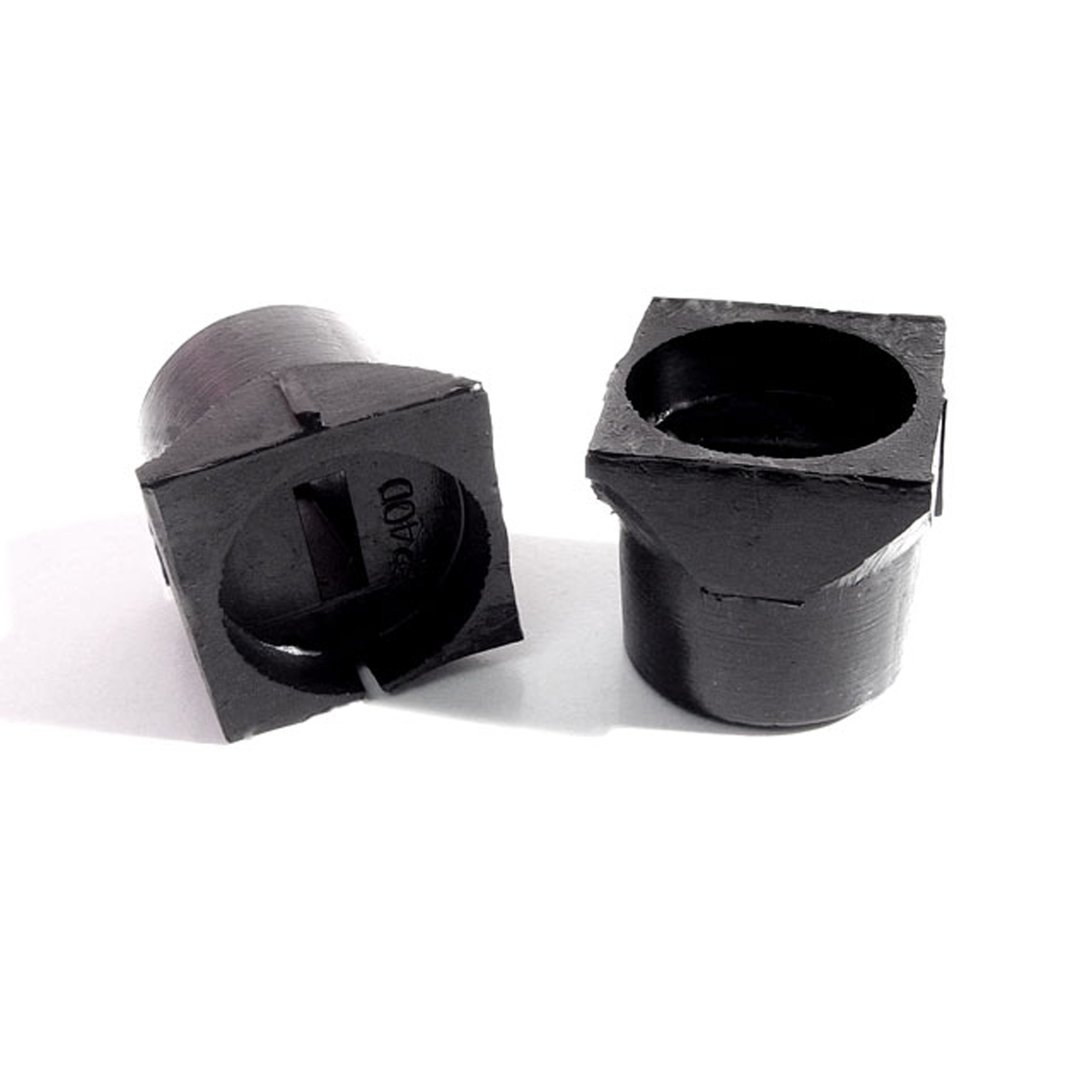 1934 Chrysler Airflow Series CU Door Check Rubber Cushion. Each-RP 40-DDoor Check Rubber Cushion. Each
 1934 Chrysler Airflow Series CU Door Bumper. 1" diameter X 1/4" thick Each-SB 60Door Bumper. 1" diameter X 1/4" thick Each
 1934 Chrysler Airflow Series CU Side Window Anti-Rattle Pad. Six used per car-SB 73Side Window Anti-Rattle Pad. Six used per car. Fits a 3/16" X 3/4" slot in metal. Each 1934 Chrysler Airflow Series CU Rear Vent Window Seals. For 4-door sedan. Pair R&L-WR 2304-RRear Vent Window Seals. For 4-door sedan. Pair R&L
Why Choose Metro?
For over 100 years, Metro Moulded Parts has been the pinnacle of quality in classic car restoration parts. Our commitment to precision and authenticity in every component ensures a perfect fit and an OEM-level appearance.
- Expert Craftsmanship & Quality: Each part is a testament to our dedication to reliability and perfection, crafted from original designs and thoroughly tested.
- Advanced Technology: We use cutting-edge techniques to create flawless, long-lasting parts that surpass others in performance.
- SuperSoft Sponge – The Ultimate Door Seal: Not only are our door seals 30% softer than competitors', but they're also guaranteed to never leak. They effectively reduce wind and road noise, enhancing your classic car's comfort and driving experience.
- Proudly American: Our parts are a product of American craftsmanship, made in the USA with a spirit of excellence and heritage.
- Unrivaled Warranty: We back our products with a 30-year industry-leading warranty, a testament to our confidence in their quality.
Join us in preserving the legacy of classic cars with parts that are crafted for perfection, not just made.