

Image of 1934 Chrysler Imperial Airflow Series Cv, Note: These illustrations use artistic license and may differ from actual historical models.
Performance Metrics
Fundamental Metrics
Emotional Appeal
MMP Rating
| Engine Specifications | |
|---|---|
| Engine Options: | Inline 8 |
| Displacement Range: | 323.5 cu in (5.3 L) |
| Horsepower Range: | 130 hp |
| Torque: | Not available |
| Compression Ratio: | Not available |
| Ignition System: | Battery and coil |
| Cooling System: | Liquid cooled |
| Performance Specifications | |
| 0-60 Time: | Not available |
| 1/4 Mile Time: | Not available |
| Top Speed: | 95 mph |
| Transmission and Drive | |
| Drive Type: | Rear wheel drive |
| Transmission Type: | 3-speed manual |
| Fuel and Efficiency | |
| Fuel System Type: | Carburetor |
| MPG: | Not available |
| Dimensions and Brakes | |
| Brakes: | 4-wheel hydraulic drum brakes |
| Wheelbase: | 128 in (3,251 mm) |
| Weight: | 4,500 lbs |
Note: Specifications for classic cars are given to the best of our ability, considering the limited and variant data available.
1934 Chrysler Imperial Airflow Series CV: The Streamliner Ahead of Its Time
The 1934 Chrysler Imperial Airflow Series CV looked less like a conventional luxury car and more like a machine shaped by the wind. Built by Chrysler at the height of the Great Depression, it was an ambitious attempt to rethink how a car should be designed, assembled, and driven. Its streamlined body made it one of the decade’s most distinctive automobiles, while its engineering ideas helped point toward the modern car.
The Airflow was developed by Chrysler engineers Carl Breer, Fred Zeder, and Owen Skelton, with stylist Oliver Clark shaping its unmistakable appearance. The team studied airflow around cars, including wind-tunnel work with aviation pioneer Orville Wright. One intriguing result was a car that challenged familiar ideas about automotive proportions: the cabin was moved forward, the rear seat sat ahead of the rear axle, and the body flowed in a continuous shape rather than being assembled from separate-looking sections.
The Series CV was the Imperial Airflow, positioned above the smaller Chrysler Airflow models. It should not be confused with the longer, more exclusive Custom Imperial Series CW. The CV combined the Airflow’s radical construction with a smooth-running straight-eight engine and upscale appointments. It was bold, expensive, and far from ordinary, even when new.
Airflow Styling and Cabin Design
From the front, the CV’s rounded nose and waterfall-style grille immediately set it apart from the upright, square-fronted cars around it. The headlamps were integrated into the front fenders, while the hood and fenders blended into a broad, flowing profile. A steeply raked windshield, curved roofline, and tapered rear gave the car a cohesive shape that looked unusually aerodynamic for 1934.
The design was not merely decoration. Chrysler worked to reduce wind resistance and place the passenger compartment more centrally between the axles. That gave occupants a more balanced position within the car and helped create a spacious cabin. The tall body and wide doors also made entry and exit easier than the low, tight proportions of some later streamliners might suggest.
Inside, the Imperial Airflow offered the comfort expected of a luxury Chrysler. Upholstery and trim varied with body style and specification, but buyers could expect quality cloth or leather seating, substantial carpeting, polished hardware, and a carefully finished dashboard. The broad cabin had room for passengers to stretch out, and the rear seat benefited from the forward-set layout. Compared with today’s cars, the controls were simple, but the large instruments and upright steering wheel gave the driver a clear, commanding position.
Factory paint choices varied by body and production details. Period colors included restrained dark and medium tones, with combinations such as black, maroon, blue, green, and gray among the kinds of finishes associated with the range. The streamlined body suited solid, deep colors particularly well, since they emphasized its long curves. Two-tone treatments could also accentuate the fenders and roofline, though the available combinations depended on the specific car and its original order.
The CV was offered in passenger-car body styles including a four-door sedan and a two-door coupe. The sedan is the most recognizable and commonly encountered Airflow configuration today, thanks to its practical layout and stately proportions. Buyers seeking even more length and formal presence could look to the separate Series CW Custom Imperial, which occupied a higher rung in Chrysler’s lineup.
Engineering That Changed the Conversation
The Airflow’s biggest innovation was the way its body and chassis were conceived as a more integrated structure. Rather than treating the body as a box perched on a conventional frame, Chrysler used a strong steel structure designed to contribute to the car’s overall rigidity. The construction is often described as a precursor to modern unit-body thinking, although it was not identical to the fully integrated bodies used in contemporary cars.
Chrysler also moved the engine farther forward than was typical, allowing the passenger cabin to sit more centrally between the axles. The result was better weight distribution and a cabin layout that made fuller use of the wheelbase. The streamlined body was developed with wind resistance in mind, at a time when many manufacturers still treated aerodynamics as a secondary concern.
These ideas made the Airflow a landmark, but they did not guarantee commercial success. Its appearance was so unfamiliar that many buyers found it hard to accept. Early production and quality concerns also hurt its reputation, and the Depression made customers cautious about spending money on a costly, unconventional car. Chrysler revised the styling in later years, but the initial sales setback could not be undone.
Even so, the Airflow’s influence outlasted its short production run. It demonstrated that a car could be designed around passenger placement, structural strength, and airflow rather than simply following established styling conventions. Later streamlined cars did not all copy the Airflow directly, but the ideas it brought into public view became increasingly important to automotive designers.
Series CV Performance and Road Manners
The 1934 Imperial Airflow CV was powered by a 298.7-cubic-inch L-head inline-eight, generally rated at about 122 horsepower. Power went to the rear wheels through a three-speed manual transmission. Four-wheel hydraulic brakes helped bring the substantial car to a stop, while its long wheelbase and generous suspension travel favored a composed ride over sharp, sporty responses.
Published performance figures vary with body style, condition, and testing method. A sound example could reach roughly 85 to 90 mph, with a 0-to-60-mph time in the neighborhood of 18 to 22 seconds. Those numbers were respectable for a large luxury car of the period, but the CV was built for smooth, dignified travel rather than quick acceleration.
On rough pavement, the long wheelbase and soft suspension help the car absorb bumps with the relaxed motion expected of a prewar Imperial. It is not immune to road imperfections, and its age means that worn springs, tired shocks, or loose steering components can transform a comfortable ride into a vague one. On winding roads, the CV feels substantial and deliberate. Its size, tall body, and period tires call for measured steering inputs rather than fast cornering.
The straight-eight is a major part of the experience. It delivers power with a smooth, even cadence, accompanied by a subdued mechanical hum that becomes more noticeable under acceleration. The driver operates a heavy steering wheel and a manual gearshift that requires patience compared with modern equipment. In return, the car offers a distinctive sense of occasion: long hood ahead, broad fenders in view, and a quiet, stately glide when everything is properly tuned.
Living With a 1934 Imperial Airflow
Today, most CVs are collector cars, museum pieces, or carefully maintained show and touring vehicles. A well-sorted example can take part in vintage-car events and local tours, but it is rarely a sensible daily driver. Traffic speeds, limited visibility by modern standards, manual controls, and the need to protect a valuable prewar body all make regular commuting a demanding proposition.
Maintenance is manageable for an experienced owner who enjoys mechanical work, but it is not as straightforward as servicing a common postwar classic. The engine is conventional in principle, yet parts availability, specialist knowledge, and the condition of the car’s structural components deserve close attention. Brakes, steering, cooling, electrical systems, and the integrity of the body structure should all be inspected carefully. Some routine jobs can be handled by a capable home mechanic, while major engine or body repairs may require a marque specialist.
Reliability depends heavily on upkeep. A properly restored and regularly exercised Airflow can be dependable on planned outings, but an unrestored example may need substantial work before it is safe for long-distance use. Because replacement parts can be difficult to source, owners often preserve original components and plan repairs well ahead of time.
Airflow Facts and Common Criticisms
One of the Airflow program’s most memorable publicity stories involved a dramatic safety demonstration in which an Airflow was sent down a steep incline. The car’s strong body structure was presented as evidence of its durability. Accounts of the stunt vary, so the details should be treated as period promotion rather than a modern crash-test result, but the demonstration captured Chrysler’s confidence in the design.
The Airflow was not a major racing car, and the Series CV is not remembered for holding a headline land-speed record. Its claim to fame is more consequential: it brought aerodynamic styling and integrated body engineering into the mainstream conversation. It also remains a striking example of how engineering ambition can run ahead of public taste.
Its most frequent criticism is the very feature that makes it fascinating: the styling. Some buyers considered the rounded body awkward or too radical, especially beside the upright cars they already knew. The Airflow also arrived with production and quality issues that made its unconventional shape an easier target for skeptics. Later models received styling revisions, but the original 1934 design remains the purest expression of the concept.
Collector Value and Rarity
Surviving Series CV production figures are difficult to pin down from commonly available summaries, and totals can be confused with figures for other Airflow models. A reasonable working estimate is that roughly 1,500 to 2,500 Series CV cars were built, with actual production depending on how body styles and model records are counted. That makes the CV scarce today, though the number of surviving, roadworthy examples is smaller still.
As a broad 2026 estimate in the United States, a project car might sell for around $15,000 to $35,000. A running but imperfect driver could fall in the $40,000 to $80,000 range, while a high-quality restoration may bring roughly $85,000 to $150,000. Exceptional, correctly restored examples with strong provenance can exceed that range, while incomplete cars or those needing major structural work may sell for less. These are guide figures, not a substitute for a current appraisal or comparison with recent sales.
The market for the Airflow tends to reward originality, documented history, and professional restoration. Its unusual design and historical importance support long-term collector interest, but the limited buyer pool and expense of specialist repairs can restrain prices. Values have generally held better for excellent examples than for projects, and top-quality cars may appreciate over time, though they are not guaranteed investments.
Why the 1934 Airflow Still Matters
The Chrysler Imperial Airflow Series CV paired luxury-car comfort with engineering that was unusually forward-looking for its time. Its straight-eight power, spacious cabin, integrated body structure, and carefully considered aerodynamics made it a genuine departure from convention. The same boldness that challenged buyers in 1934 is what makes the car so compelling to collectors now.
The Airflow did not remake the market overnight, but it helped change what designers and engineers believed a car could be. Nearly a century later, its smooth silhouette still looks like a message from the future, delivered early and without apology.
1934 Chrysler Imperial Airflow Series Cv Catalog of Parts
 1934 Chrysler Imperial Airflow Series CV Fender Skirt Lower Latch Bumper. Steel core. Pair-BC 49Fender Skirt Lower Latch Bumper. Steel core. Pair
 1934 Chrysler Imperial Airflow Series CV Fender Skirt Upper Latch Bumper. Steel core. Pair-BC 50Fender Skirt Upper Latch Bumper. Steel core. Pair
 1934 Chrysler Imperial Airflow Series CV Clutch and Brake Pedal Pads. 2-5/8" wide X 3-3/4" long-CB 26Clutch and Brake Pedal Pads. 2-5/8" wide X 3-3/4" long. Pair
 1934 Chrysler Imperial Airflow Series CV Clutch and Brake Pedal Pads. 3" wide X 3-7/8" long. Pair-CB 27Clutch and Brake Pedal Pads. 3" wide X 3-7/8" long. Pair
 1934 Chrysler Imperial Airflow Series CV Clutch and Brake Pedal Pads, Black-CB 28-AClutch and Brake Pedal Pads, Black. 2-3/8" wide X 3-7/8" long. Pair
 1934 Chrysler Imperial Airflow Series CV Clutch and Brake Pedal Pads, Brown-CB 28-BClutch and Brake Pedal Pads, Brown. 2-3/8" wide X 3-7/8" long. Pair
 1934 Chrysler Imperial Airflow Series CV Door Jamb Bumper. Perfect reproduction-DB 36Door Jamb Bumper. Perfect reproduction. 1-1/16" high X 1-1/4" wide X 7/16" thick. Each
 1934 Chrysler Imperial Airflow Series CV Door Jamb Bumper. Exact reproduction-DB 37Door Jamb Bumper. Exact reproduction. 1" high X 1-1/4" wide X 1/2" thick. Each
 1934 Chrysler Imperial Airflow Series CV Door Jamb Bumper. Fully detailed reproduction-DB 38Door Jamb Bumper. Fully detailed reproduction. 15/16" high X 1-9/16" wide X 7/16" thick. Each
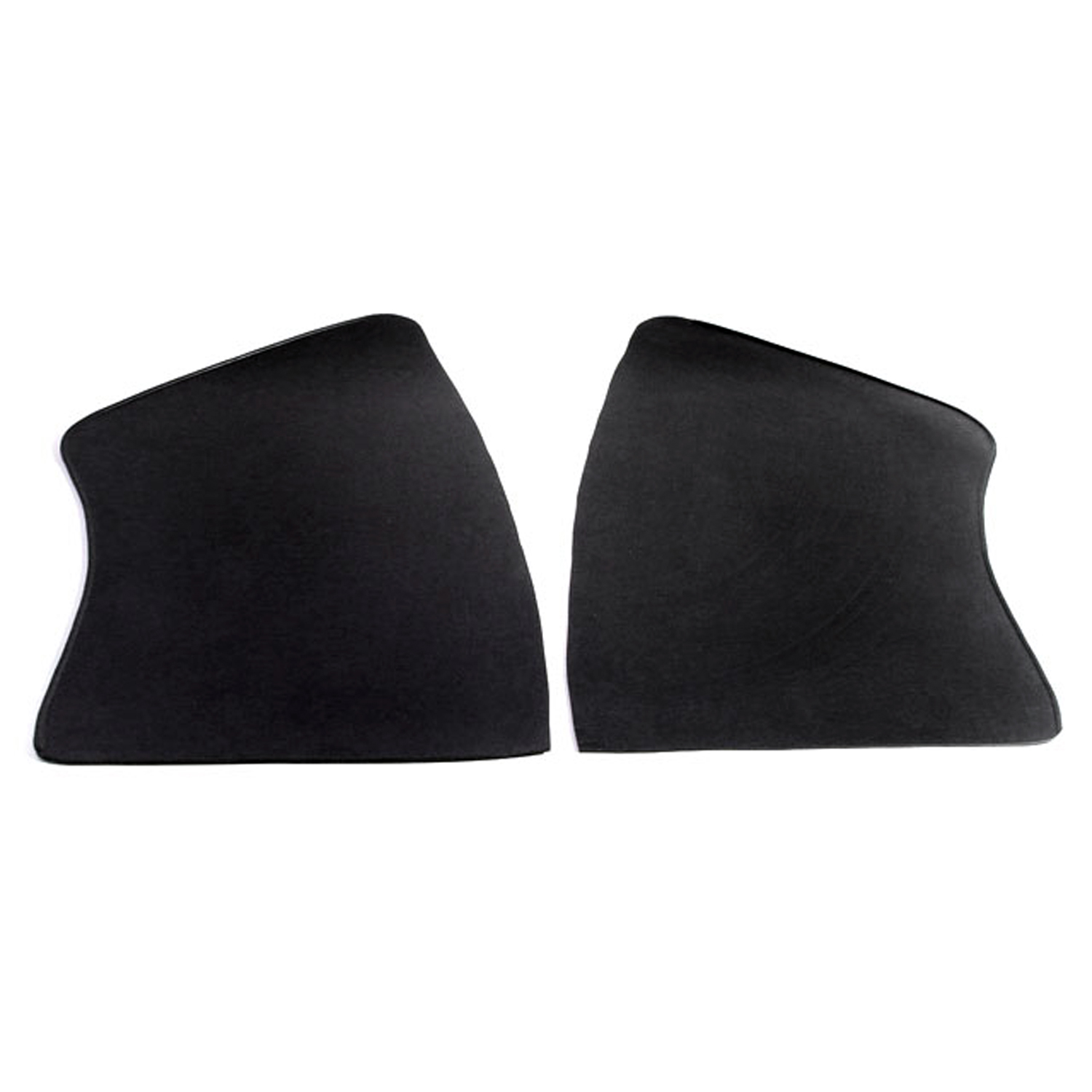 1934 Chrysler Imperial Airflow Series CV Gravel Shields. Molded flat without metal backing plates-FS 31Gravel Shields. Molded flat without metal backing plates. Apply with contact cement. 18" long X 9-3/4" wide at bottom. Pair
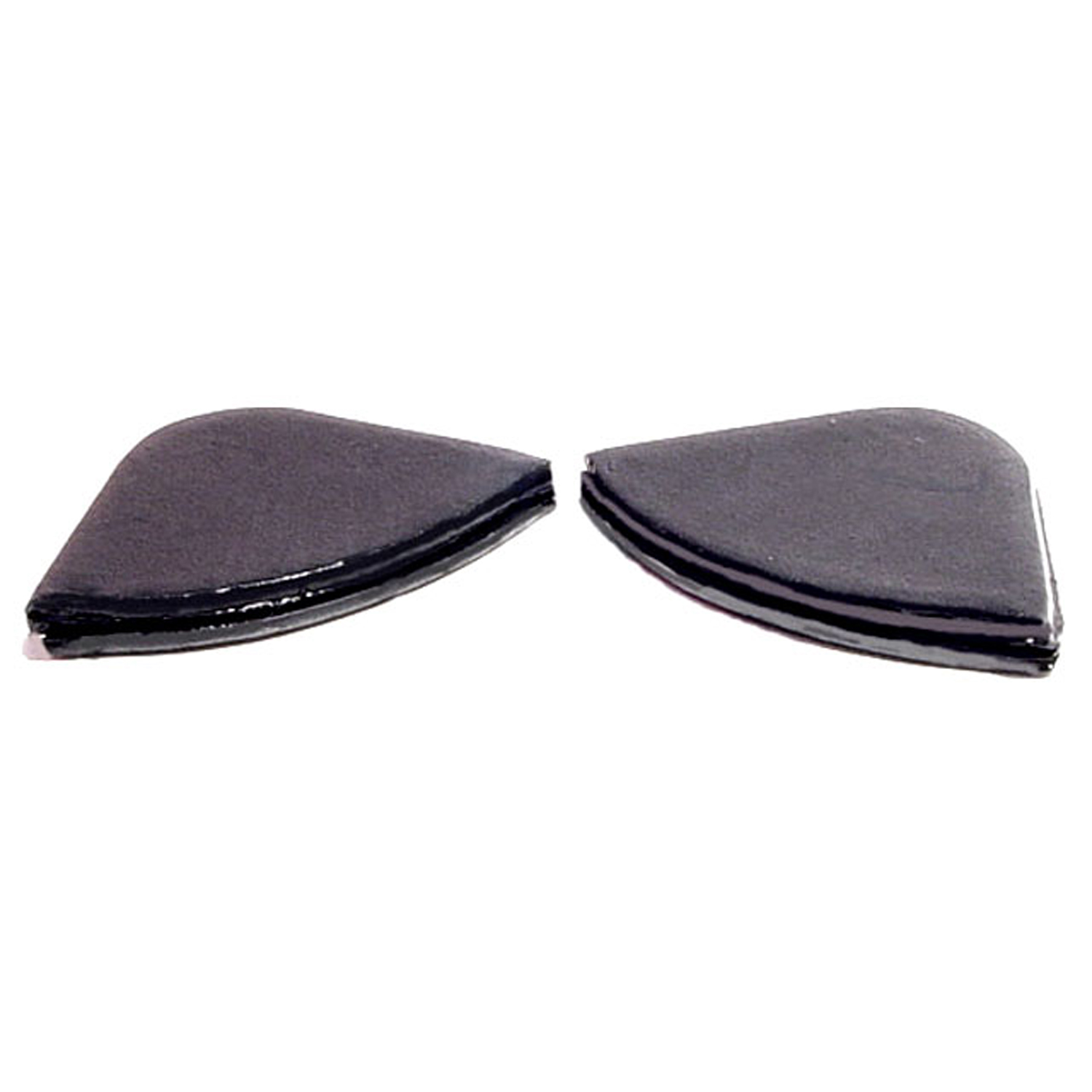 1934 Chrysler Imperial Airflow Series CV Hood Corners. Fits flat corners-HC 19Hood Corners. Fits flat corners. 80° angle, 1/4" to 3/8" corner radius. 1-3/8" wide. Pair
 1934 Chrysler Imperial Airflow Series CV Roof Related Seal. Top insert filler & seal for closed cars-LP 110-RRoof Related Seal. Top insert filler & seal for closed cars. Fits in groove between cloth top-center panel & surrounding steel. Sold by the foot
 1934 Chrysler Imperial Airflow Series CV Swing-Out Windshield Seal. 3/4" High. Sold by the foot-LP 97-ASwing-Out Windshield Seal. 3/4" High. Sold by the foot
 1934 Chrysler Imperial Airflow Series CV Headlight Pads. 2-1/4" wide X 4-1/4" long. Pair-MP 554Headlight Pads. 2-1/4" wide X 4-1/4" long. Pair
 1934 Chrysler Imperial Airflow Series CV Door Handle Pads. 1-1/2" wide X 2-1/4" long-MP 556Door Handle Pads. 1-1/2" wide X 2-1/4" long. Pair (Buick: no locking type)
 1934 Chrysler Imperial Airflow Series CV Door Handle Pads. 1-5/8" wide X 3-1/2" long. Pair-MP 556-BDoor Handle Pads. 1-5/8" wide X 3-1/2" long. Pair
 1934 Chrysler Imperial Airflow Series CV Headlight Pads. 1-3/4" wide X 4-3/8" long. Pair-MP 556-CHeadlight Pads. 1-3/4" wide X 4-3/8" long. Pair
 1934 Chrysler Imperial Airflow Series CV Trunk Rack Pad. 1-3/4" X 5-1/2". Each-MP 557Trunk Rack Pad. 1-3/4" X 5-1/2". Each
 1934 Chrysler Imperial Airflow Series CV Tail-light Pads. 1-3/8" wide X 3-1/2" long. Pair-MP 557-ATail-light Pads. 1-3/8" wide X 3-1/2" long. Pair
 1934 Chrysler Imperial Airflow Series CV Trunk Hinge Pads. 1-7/8" wide X 8" long. 4-Piece Set-MP 568Trunk Hinge Pads. 1-7/8" wide X 8" long. 4-Piece Set
 1934 Chrysler Imperial Airflow Series CV Headlight Pads. 2-1/4" wide X 5-1/4" long. Pair-MP 603Headlight Pads. 2-1/4" wide X 5-1/4" long. Pair
 1934 Chrysler Imperial Airflow Series CV Molded Heel Pad. For drivers side. Correct rib pattern-RM 23Molded Heel Pad. For drivers side. Correct rib pattern. Black. 11-1/2" X 15". Each
 1934 Chrysler Imperial Airflow Series CV Molded Heel Pad. For drivers side. Correct rib pattern-RM 23-QMolded Heel Pad. For drivers side. Correct rib pattern. Brown. 11-1/2" X 15". Each
 1934 Chrysler Imperial Airflow Series CV Cowl Vent Seal. Made of molded sponge-RP 100-LCowl Vent Seal. Made of molded sponge. 3-3/4" wide at side X 15-1/3" long X 3/8" thick. Each
 1934 Chrysler Imperial Airflow Series CV Cowl Vent Seals. Molded in soft rubber. Two needed per car-RP 101-BCowl Vent Seals. Molded in soft rubber. Two needed per car. 4" wide X 15-1/4" long. Replaces OEM #4688744-5. Pair
 1934 Chrysler Imperial Airflow Series CV Spare Tire Mount Grommet. 2-7/8" wide X 3-3/4" long. Each-RP 200-ASpare Tire Mount Grommet. 2-7/8" wide X 3-3/4" long. Each
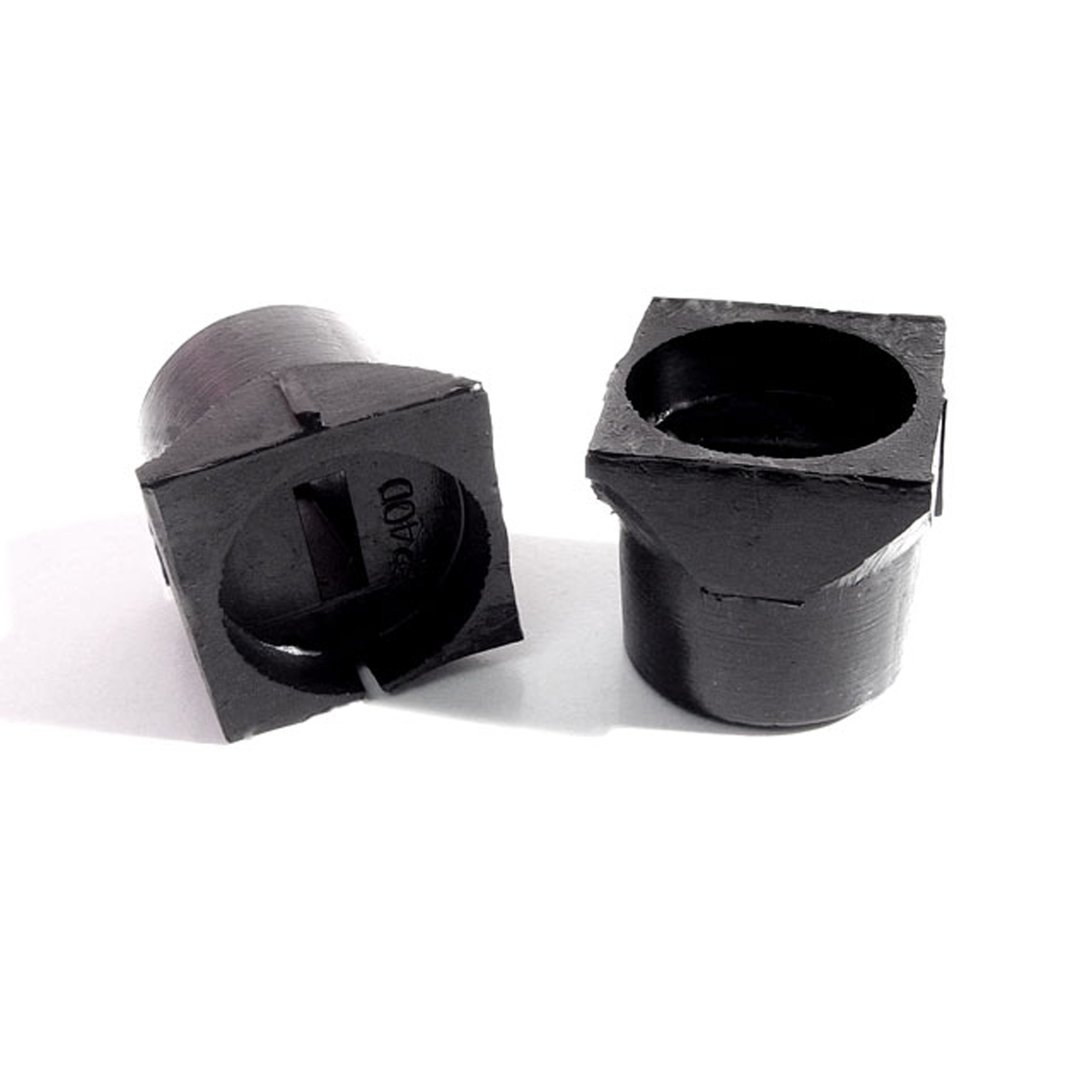 1934 Chrysler Imperial Airflow Series CV Door Check Rubber Cushion. Each-RP 40-DDoor Check Rubber Cushion. Each
 1934 Chrysler Imperial Airflow Series CV Door Bumper. 1" diameter X 1/4" thick Each-SB 60Door Bumper. 1" diameter X 1/4" thick Each
 1934 Chrysler Imperial Airflow Series CV Side Window Anti-Rattle Pad. Six used per car-SB 73Side Window Anti-Rattle Pad. Six used per car. Fits a 3/16" X 3/4" slot in metal. Each 1934 Chrysler Imperial Airflow Series CV Rear Vent Window Seals. For 4-door sedan. Pair R&L-WR 2304-RRear Vent Window Seals. For 4-door sedan. Pair R&L
Why Choose Metro?
For over 100 years, Metro Moulded Parts has been the pinnacle of quality in classic car restoration parts. Our commitment to precision and authenticity in every component ensures a perfect fit and an OEM-level appearance.
- Expert Craftsmanship & Quality: Each part is a testament to our dedication to reliability and perfection, crafted from original designs and thoroughly tested.
- Advanced Technology: We use cutting-edge techniques to create flawless, long-lasting parts that surpass others in performance.
- SuperSoft Sponge – The Ultimate Door Seal: Not only are our door seals 30% softer than competitors', but they're also guaranteed to never leak. They effectively reduce wind and road noise, enhancing your classic car's comfort and driving experience.
- Proudly American: Our parts are a product of American craftsmanship, made in the USA with a spirit of excellence and heritage.
- Unrivaled Warranty: We back our products with a 30-year industry-leading warranty, a testament to our confidence in their quality.
Join us in preserving the legacy of classic cars with parts that are crafted for perfection, not just made.