

Image of 1934 Chrysler Series Cb, Note: These illustrations use artistic license and may differ from actual historical models.
Performance Metrics
Fundamental Metrics
Emotional Appeal
MMP Rating
| Engine Specifications | |
|---|---|
| Engine: | Straight-8 |
| Displacement: | 4.9L |
| Horsepower: | Estimated 100-120 HP |
| Torque: | Not available |
| Compression Ratio: | Not available |
| Ignition System: | Distributor and coil |
| Cooling System: | Liquid-cooled |
| Performance Specifications | |
| 0-60 Time: | Not available |
| 1/4 Mile Time: | Not available |
| Top Speed: | 75-85 mph |
| Transmission and Drive | |
| Drive Type: | Rear-wheel drive |
| Transmission Type: | 3-speed manual |
| Fuel and Efficiency | |
| Fuel System Type: | Carburetor |
| MPG: | Not available |
| Dimensions and Brakes | |
| Brakes: | Drum brakes |
| Wheelbase: | 125 inches |
| Weight: | 3500 lbs |
Note: Specifications for classic cars are given to the best of our ability, considering the limited and variant data available.
1934 Chrysler Series CB: The Classic Six Between Two Eras
The 1934 Chrysler Series CB was a substantial, well-equipped six-cylinder car from a company that was trying two very different ideas at once. Chrysler was unveiling its radically streamlined Airflow models, while the CB offered buyers a more familiar combination of upright styling, a conventional chassis, and a smooth six-cylinder engine. That contrast makes the CB an especially interesting prewar Chrysler: it was traditional in appearance, but built during a year when the company was rethinking what a modern automobile could be.
Chrysler Corporation had grown quickly under Walter P. Chrysler, whose name had become associated with engineering-led cars and features often found higher up the market. The Series CB sat in the company’s conventional passenger-car range, rather than the daring Airflow family. Exact specifications and body details can vary among surviving cars and reference sources, so figures below should be treated as representative rather than universal.
One appealing historical detail is that a 1934 Chrysler buyer could choose between two competing visions of the future: the forward-looking, aerodynamic Airflow or the familiar, upright CB. The CB’s conservatism was not a sign that Chrysler had stopped innovating. It was a way to serve customers who wanted established styling and proven mechanical ideas while the company tested a more dramatic design.
Upright Lines and a Handsome Cabin
The Series CB wears the unmistakable proportions of an early-1930s American car. Its tall radiator grille and separate headlamps lead the eye toward a long hood, while curved front and rear fenders sit above running boards that connect the car’s profile. The cabin is relatively upright, and the overall effect is formal and substantial rather than sleek. A rear-mounted spare tire on some body configurations adds another period detail to the silhouette.
Inside, the CB was made for comfort on the roads of its day. Depending on body style and trim, occupants could find broad upholstered seats, a straightforward instrument panel, generous windows, and practical door and cabin trim. Materials and finishes varied with the model and equipment, but wood-grain accents, durable cloth, and carefully finished metal details were typical of the period’s better cars. The driving position is distinctly prewar: a large steering wheel, relatively simple gauges, and less separation between the driver and the mechanical business of driving.
Factory paint choices depended on body style, trim, and the particular paint chart, and surviving cars have often been repainted. Period-appropriate colors commonly seen on cars of this class include black, dark blue, maroon, green, gray, and lighter two-tone combinations. Dark, dignified shades suited the CB’s formal lines, while contrasting fenders or body panels could make a car look more distinctive.
Series CB body offerings are described somewhat differently across period references and surviving-car records. Commonly associated forms include sedans and coupes, with variations such as business or rumble-seat coupes depending on the catalog and market. The four-door sedan is among the most recognizable and practical configurations; a coupe with a rumble seat has greater visual drama and a more recreational, period-correct feel.
Engineering in a Year of Experiment
The CB’s historical importance lies less in a single revolutionary feature than in its place within Chrysler’s broader story. In 1934 the company made a major public commitment to aerodynamic design with the Airflow, whose smooth body and integrated forms challenged conventional styling. The Series CB, by contrast, gave customers a more familiar alternative. Its existence shows how manufacturers balanced engineering ambition with the realities of customer taste and market risk.
Chrysler had a reputation for engineering-minded features, and the CB’s equipment reflected the progress of the period. Representative specifications include a six-cylinder engine, a conventional three-speed manual transmission, and four-wheel hydraulic brakes. Chrysler’s earlier “Floating Power” engine-mounting concept was also part of the company’s effort to reduce vibration transmitted into the passenger compartment. Equipment could differ by exact configuration, so a specific car should be checked against its original build information where available.
Compared with many contemporaries, the CB offered a solid, substantial feel and the appeal of Chrysler engineering without asking buyers to embrace the Airflow’s unconventional shape. Its long-term influence is therefore subtle: it represents the mainstream path that continued alongside more radical experiments. That dual approach became a familiar pattern in the auto industry, where bold new technology often arrived beside conservative models designed to reassure traditional buyers.
Six-Cylinder Pace and Prewar Road Manners
Series CB references commonly identify a 218.6-cubic-inch inline-six producing about 82 horsepower. Power went through a three-speed manual gearbox. The exact rating and running gear should be confirmed for an individual car, but these figures give a useful picture of the CB’s character: it was a capable touring car, not a high-performance machine by modern standards.
A representative CB may reach roughly 70 to 80 mph in good mechanical condition, though gearing, body style, tire condition, and engine health all affect top speed. A 0-to-60-mph time is best treated as an estimate, likely in the broad range of about 25 to 30 seconds. These are period-car performance approximations, not modern instrumented test results. The CB was designed to travel comfortably at the speeds of its era, rather than sprint away from a stoplight.
On a smooth road, the car’s long, traditional proportions and soft suspension give it a relaxed touring character. On broken pavement, the tall tires and compliant setup help absorb bumps, but the body can move more than drivers accustomed to modern cars expect. On winding roads, the CB rewards a measured pace. Its steering and brakes require more attention and planning than those of a contemporary vehicle, and period tires offer less grip than modern rubber.
Behind the wheel, expect a steady six-cylinder hum, the mechanical feel of a manual gear change, and a cabin that communicates the road rather than isolating the driver from it. The steering wheel is large, visibility is generally generous, and the driver has to anticipate stops and turns. A properly maintained example can be pleasant on scenic drives, but it is best enjoyed as a classic touring car rather than a modern daily commuter.
Living With a 1934 Chrysler
Today, Series CBs are most often used for shows, club tours, local parades, and occasional pleasure drives. A sound, well-sorted car can cover modest distances, but regular highway use calls for careful attention to brakes, tires, cooling, steering, and electrical equipment. The CB’s period construction and systems are straightforward compared with later cars, yet age and decades of repairs can make any individual example more complicated than its basic design suggests.
Many mechanical jobs are approachable for an experienced home mechanic with the right tools and a service manual. Parts availability is mixed: routine service items may be obtainable through vintage-car suppliers, while model-specific trim, body panels, and correct interior materials can take patience to find. Before buying, inspect the frame and body for rust or poor repairs, check for engine and transmission problems, and confirm that the brakes work evenly. A running car is not automatically a roadworthy one.
Reliability depends heavily on restoration quality and maintenance. Old fuel systems, wiring, rubber components, and cooling systems are common trouble spots. Owners who preserve a CB tend to develop relationships with marque clubs, specialist vendors, and other Chrysler enthusiasts. That community knowledge can be as valuable as the parts catalog.
Trivia, Rarity, and the Airflow Connection
The Series CB’s most memorable trivia is its timing. It belonged to the same 1934 Chrysler story as the Airflow, one of the period’s best-known attempts to make aerodynamic form a central part of automobile design. The CB is the counterpoint: a familiar-looking car from a company that was simultaneously asking buyers to consider something radically different.
There is no widely recognized speed or endurance record associated specifically with the Series CB, and claims of a particular celebrity owner should be treated cautiously unless supported by documentation. The model’s significance is more about its place in Chrysler’s product strategy than a headline-grabbing racing achievement.
Common criticisms are typical of prewar cars. The CB is slow by modern standards, requires more physical effort to drive, and may have limited parts support for unique trim or body components. Its upright styling also lacks the dramatic streamlining of the Airflow. For admirers, however, those qualities are part of the appeal: the CB offers a direct, unfiltered experience of mid-1930s motoring.
Collector Values and Market Availability
Series CB production totals are not consistently reported in readily available reference material, and totals can be complicated by differences in how body styles and model groupings are counted. As a best-guess estimate, the CB model family may have accounted for roughly 15,000 to 30,000 cars, but that range should not be mistaken for a verified factory figure. The number of surviving examples is much smaller, and desirable body styles or highly original cars can be difficult to locate.
As a broad U.S. market estimate, a project car might sell for around $5,000 to $15,000, depending on completeness and condition. A usable driver or older restoration could fall roughly between $15,000 and $35,000. A high-quality restoration, especially in a particularly appealing body style, may bring $35,000 to $60,000 or more. These are general guide ranges, not appraisals; provenance, originality, restoration quality, and local demand can move a car well outside them.
Values for prewar classics tend to reward condition and documentation more than simple model rarity. The Series CB has a dedicated-interest appeal, but it does not generally command the same attention as a highly sought-after Airflow or a prestigious Chrysler Imperial. Over the long term, the best examples are likely to hold collector interest, though the market can be selective and restoration costs may exceed a car’s eventual selling price.
Why the Series CB Still Matters
The 1934 Chrysler Series CB combines a substantial six-cylinder powertrain, traditional prewar styling, and the practical character of a well-equipped touring car. Its significance grows when viewed beside the Airflow: one car represented a bold aerodynamic experiment, while the other preserved the familiar formula many buyers still wanted. That makes the CB more than a handsome old sedan or coupe. It is a snapshot of an industry balancing innovation with tradition, and a rewarding classic for enthusiasts who appreciate the road as much as the destination.
1934 Chrysler Series Cb Catalog of Parts
 1934 Chrysler Series CB Clutch and Brake Pedal Pads. 2-5/8" wide X 3-3/4" long-CB 26Clutch and Brake Pedal Pads. 2-5/8" wide X 3-3/4" long. Pair
 1934 Chrysler Series CB Clutch and Brake Pedal Pads, Black-CB 28-AClutch and Brake Pedal Pads, Black. 2-3/8" wide X 3-7/8" long. Pair
 1934 Chrysler Series CB Clutch and Brake Pedal Pads, Brown-CB 28-BClutch and Brake Pedal Pads, Brown. 2-3/8" wide X 3-7/8" long. Pair
 1934 Chrysler Series CB Door Jamb Bumper. Perfect reproduction-DB 36Door Jamb Bumper. Perfect reproduction. 1-1/16" high X 1-1/4" wide X 7/16" thick. Each
 1934 Chrysler Series CB Door Jamb Bumper. Exact reproduction-DB 37Door Jamb Bumper. Exact reproduction. 1" high X 1-1/4" wide X 1/2" thick. Each
 1934 Chrysler Series CB Door Jamb Bumper. Fully detailed reproduction-DB 38Door Jamb Bumper. Fully detailed reproduction. 15/16" high X 1-9/16" wide X 7/16" thick. Each
 1934 Chrysler Series CB Gravel Shields. Molded flat without metal backing plates-FS 31Gravel Shields. Molded flat without metal backing plates. Apply with contact cement. 18" long X 9-3/4" wide at bottom. Pair
 1934 Chrysler Series CB Hood Corners. Fits flat corners-HC 19Hood Corners. Fits flat corners. 80° angle, 1/4" to 3/8" corner radius. 1-3/8" wide. Pair
 1934 Chrysler Series CB Roof Related Seal. Top insert filler & seal for closed cars-LP 110-RRoof Related Seal. Top insert filler & seal for closed cars. Fits in groove between cloth top-center panel & surrounding steel. Sold by the foot
 1934 Chrysler Series CB Swing-Out Windshield Seal. 3/4" High. Sold by the foot-LP 97-ASwing-Out Windshield Seal. 3/4" High. Sold by the foot
 1934 Chrysler Series CB Headlight Pads. 2-1/4" wide X 4-1/4" long. Pair-MP 554Headlight Pads. 2-1/4" wide X 4-1/4" long. Pair
 1934 Chrysler Series CB Door Handle Pads. 1-1/2" wide X 2-1/4" long-MP 556Door Handle Pads. 1-1/2" wide X 2-1/4" long. Pair (Buick: no locking type)
 1934 Chrysler Series CB Door Handle Pads. 1-5/8" wide X 3-1/2" long. Pair-MP 556-BDoor Handle Pads. 1-5/8" wide X 3-1/2" long. Pair
 1934 Chrysler Series CB Headlight Pads. 1-3/4" wide X 4-3/8" long. Pair-MP 556-CHeadlight Pads. 1-3/4" wide X 4-3/8" long. Pair
 1934 Chrysler Series CB Trunk Rack Pad. 1-3/4" X 5-1/2". Each-MP 557Trunk Rack Pad. 1-3/4" X 5-1/2". Each
 1934 Chrysler Series CB Trunk Hinge Pads. 1-7/8" wide X 8" long. 4-Piece Set-MP 568Trunk Hinge Pads. 1-7/8" wide X 8" long. 4-Piece Set
 1934 Chrysler Series CB Cowl Vent Seal. Made of molded sponge-RP 100-LCowl Vent Seal. Made of molded sponge. 3-3/4" wide at side X 15-1/3" long X 3/8" thick. Each
 1934 Chrysler Series CB Spare Tire Mount Grommet. 2-7/8" wide X 3-3/4" long. Each-RP 200-ASpare Tire Mount Grommet. 2-7/8" wide X 3-3/4" long. Each
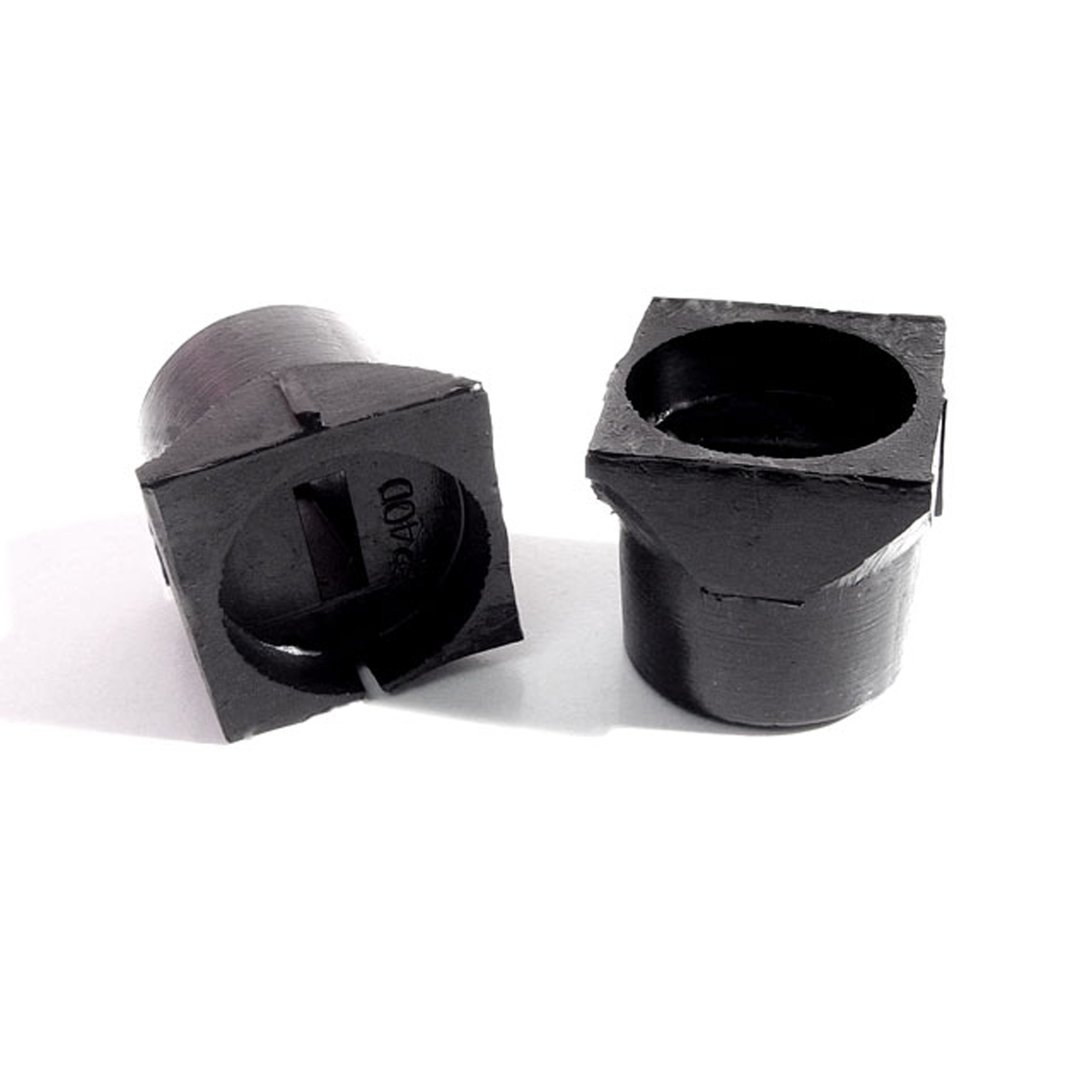 1934 Chrysler Series CB Door Check Rubber Cushion. Each-RP 40-DDoor Check Rubber Cushion. Each
 1934 Chrysler Series CB Door Bumper. 1" diameter X 1/4" thick Each-SB 60Door Bumper. 1" diameter X 1/4" thick Each
 1934 Chrysler Series CB Side Window Anti-Rattle Pad. Six used per car-SB 73Side Window Anti-Rattle Pad. Six used per car. Fits a 3/16" X 3/4" slot in metal. Each 1934 Chrysler Series CB Rear Vent Window Seals. For 4-door sedan. Pair R&L-WR 2304-RRear Vent Window Seals. For 4-door sedan. Pair R&L
Why Choose Metro?
For over 100 years, Metro Moulded Parts has been the pinnacle of quality in classic car restoration parts. Our commitment to precision and authenticity in every component ensures a perfect fit and an OEM-level appearance.
- Expert Craftsmanship & Quality: Each part is a testament to our dedication to reliability and perfection, crafted from original designs and thoroughly tested.
- Advanced Technology: We use cutting-edge techniques to create flawless, long-lasting parts that surpass others in performance.
- SuperSoft Sponge – The Ultimate Door Seal: Not only are our door seals 30% softer than competitors', but they're also guaranteed to never leak. They effectively reduce wind and road noise, enhancing your classic car's comfort and driving experience.
- Proudly American: Our parts are a product of American craftsmanship, made in the USA with a spirit of excellence and heritage.
- Unrivaled Warranty: We back our products with a 30-year industry-leading warranty, a testament to our confidence in their quality.
Join us in preserving the legacy of classic cars with parts that are crafted for perfection, not just made.