

Image of 1936 Chrysler Airflow, Note: These illustrations use artistic license and may differ from actual historical models.
Performance Metrics
Fundamental Metrics
Emotional Appeal
MMP Rating
| Engine Specifications | |
|---|---|
| Engine Options: | Straight-8 |
| Displacement Range: | 323.5 cu in (5.3 L) |
| Horsepower Range: | 130 hp |
| Torque: | Not available |
| Compression Ratio: | 6.5:1 |
| Ignition System: | Battery and coil |
| Cooling System: | Liquid-cooled |
| Performance Specifications | |
| 0-60 Time: | Not available |
| 1/4 Mile Time: | Not available |
| Top Speed: | 95 mph |
| Transmission and Drive | |
| Drive Type: | Rear-wheel drive |
| Transmission Type: | 3-speed manual |
| Fuel and Efficiency | |
| Fuel System Type: | Carburetor |
| MPG: | Not available |
| Dimensions and Brakes | |
| Brakes: | Hydraulic drum brakes |
| Wheelbase: | 128 in (3,251 mm) |
| Weight: | 3,900 lbs |
Note: Specifications for classic cars are given to the best of our ability, considering the limited and variant data available.
1936 Chrysler Airflow: The Future Arrived Early
The 1936 Chrysler Airflow looks less like a product of the 1930s than a visitor from the next decade. Its rounded nose, integrated fenders and carefully shaped body made it one of America’s boldest production cars, built by Chrysler Corporation during a period when most competitors still favored upright grilles and separate, boxy bodywork.
The Airflow grew from Chrysler’s interest in aerodynamics and structural engineering. Engineer Carl Breer led the project, with input from aircraft pioneer Orville Wright and Chrysler colleagues Fred Zeder and Owen Skelton. Their goal was not simply to create a streamlined shape, but to make a car that moved through the air efficiently and used its structure more intelligently.
By 1936, the Airflow had already become a landmark, though not the sales sensation Chrysler had hoped for. A memorable publicity stunt helped cement its reputation: an Airflow was reportedly sent tumbling down an embankment and then driven away. The story captured the car’s central claim, that its unusual construction was as sturdy as its shape was daring.
Streamlined Styling and Cabin Craft
The 1936 Chrysler Airflow has a smoothly sloped front end, a broad curved grille and headlamps that sit neatly within the front fenders. The fenders flow into the body rather than appearing as separate pieces, while the rounded roof and tapered rear give the car a cohesive, wind-cheating profile. For 1936, the grille was revised to look more upright and familiar, softening the design without abandoning its distinctive form.
Inside, the Airflow offered a spacious cabin with a broad bench seat and a dashboard arranged for straightforward use. Upholstery and trim depended on the model and specification. Buyers could find durable cloth, including broadcloth or mohair, while higher-grade versions might feature finer upholstery and more elaborate trim. The cabin’s generous room was part of the engineering concept: Chrysler placed passengers between the axles, where the ride was generally calmer than at the ends of the car.
Paint choices varied by model, year and market, but period offerings included understated shades such as black, dark blue, maroon and green, along with lighter colors and two-tone combinations. Dark, formal colors were popular on large luxury sedans. Original paint charts and trim guides are the best source when checking a particular car, since restorations sometimes use colors that look period-correct but were not offered on that exact model.
Airflows came in several body styles, including two-door coupes and four-door sedans. Depending on the series, buyers could also choose more luxurious Imperial versions and formal body configurations. The four-door sedan is among the most recognizable today, combining the Airflow’s dramatic shape with the practical cabin space that made it a comfortable touring car.
Engineering That Challenged Convention
The Airflow’s most important innovation was its approach to body structure. Chrysler used a strong, integrated construction often described in period accounts as a bridge-truss design. It was not identical to the modern unibody, but it moved away from treating the body as a lightly supported shell perched on a conventional frame. The result was a rigid structure designed to improve strength and passenger protection.
Chrysler also repositioned major components to improve weight distribution. The engine sat farther forward than in many conventional cars of the time, and passengers were placed more centrally between the axles. That layout helped the Airflow feel balanced and made better use of the interior space. Its rounded body was shaped with airflow in mind, at a time when many rivals still treated aerodynamics as a styling novelty rather than an engineering priority.
The Airflow’s ideas did not instantly reshape the industry. Its radical appearance divided buyers, and Chrysler’s marketing struggled to explain why the design mattered. Yet the car anticipated later developments in integrated construction, passenger packaging and aerodynamic styling. It stands as an influential early experiment, even if its commercial impact fell short of its technical ambition.
Engine, Speed and Road Manners
Engine and performance figures depend on the specific 1936 Airflow series. Six-cylinder versions offered a more economical entry point, while higher-series cars used a larger straight-eight. Contemporary specifications varied, but the eight-cylinder models produced roughly 130 horsepower. A sound estimate for a healthy, correctly equipped example is a top speed in the neighborhood of 85 to 90 mph, with a 0-to-60 mph time of around 18 to 22 seconds. Those are estimates, not guaranteed figures, and age, gearing and mechanical condition make a substantial difference.
On the road, an Airflow feels substantial and composed rather than nimble. Its long wheelbase and roomy body help it settle over ordinary bumps, and its central passenger placement contributes to a comfortable ride. On winding roads, the car’s size, period tires and relatively slow steering call for a measured approach. It rewards smooth inputs, not hurried cornering.
The driving experience is unmistakably vintage. The engine produces a steady, low-pitched mechanical sound, accompanied by tire noise and the soft rush of air around the body. The steering is heavier at parking speeds, and the driver must plan braking and gear changes well ahead of modern traffic. In return, the Airflow offers an unusually open, spacious feel and the pleasure of piloting a car whose engineering story is visible in its shape.
Living With a 1936 Airflow
Today, most 1936 Chrysler Airflows are collector cars, show vehicles or occasional touring machines rather than daily drivers. A well-sorted example can take part in club events and relaxed highway drives, but regular use demands careful attention to cooling, brakes, tires and electrical components. Long periods of storage can be just as troublesome as frequent driving, particularly for cars with aging fuel systems and seals.
Routine maintenance is familiar to anyone experienced with prewar American cars, but finding parts can take more effort than it would for a common Ford or Chevrolet. Mechanical components may be shared with other Chrysler products of the period, while Airflow-specific trim, body panels and interior pieces can be difficult or costly to source. Repairs are manageable for a capable owner with period-car experience, but restoration work often benefits from specialist knowledge and club connections.
Before buying, inspect the body structure carefully, along with the frame or structural members, suspension, brake system and cooling system. Check for previous collision repairs and poorly fitted replacement panels. A car that appears complete is not necessarily an easy restoration: missing Airflow-specific details can consume time and money.
Airflow Facts and Common Criticisms
The Airflow’s reputation rests on an unusual combination of ambition and controversy. Its shape was aerodynamically advanced for a mass-produced American car, and its structural approach was a serious engineering statement. The embankment demonstration became one of the era’s most memorable automotive publicity stories, reinforcing the message that the streamlined body was built for strength as well as appearance.
Its most common criticism was its styling. Some buyers considered the rounded front and integrated body awkward, especially beside the familiar upright cars in showrooms. Early production and quality problems also damaged public confidence, and the Airflow’s unconventional look gave competitors an easy target. Chrysler revised the design, including the front grille, but the car never became a mainstream sales success.
The Airflow was not primarily a racing car, and it is not known for holding a major speed or endurance record. Its significance is better measured by the ideas it brought to production-car design than by trophies. Its short production run and distinctive engineering have made it a favorite subject for automotive historians and collectors.
Collector Values and Availability
Exact production figures can vary among sources and by how models are grouped. A reasonable estimate for Chrysler Airflow production in 1936 is roughly 6,000 to 7,000 cars, with the total shared across different series and body styles. Surviving examples are much scarcer than that original figure suggests, and complete, well-restored cars do not appear on the market every day.
As a broad 2026 U.S. market estimate, a project car may sell for approximately $10,000 to $25,000, depending on completeness and structural condition. A usable driver or older restoration might fall in the $25,000 to $50,000 range. High-quality restorations, especially desirable body styles with strong provenance, could bring roughly $50,000 to $90,000 or more. These are general guide figures, not appraisals; condition, originality, documentation and sale venue can move the price considerably.
Airflow values tend to be driven by rarity and specialist interest rather than broad, fast-moving collector demand. Exceptional cars can command strong prices, but ordinary examples may appreciate slowly and unevenly. Restoration costs can easily exceed the market value of a finished car, so buying the best example you can afford is often wiser than assuming a rough project will be a bargain.
Why the Chrysler Airflow Still Matters
The 1936 Chrysler Airflow was daring, spacious and technically ambitious. Its integrated styling and structural ideas put it ahead of many contemporaries, even as its appearance and early reputation limited its sales. It may not have been the commercial triumph Chrysler wanted, but its influence reaches beyond its production numbers.
More than a handsome prewar classic, the Airflow is a reminder that the future of the automobile has often been imagined by cars that arrive before the public is ready. Its smooth silhouette still looks bold today, and its engineering makes every drive a conversation with one of the most forward-thinking American cars of its era.
1936 Chrysler Airflow Catalog of Parts
 1936 Chrysler Airflow Fender Skirt Lower Latch Bumper. Steel core. Pair-BC 49Fender Skirt Lower Latch Bumper. Steel core. Pair
 1936 Chrysler Airflow Fender Skirt Upper Latch Bumper. Steel core. Pair-BC 50Fender Skirt Upper Latch Bumper. Steel core. Pair
 1936 Chrysler Airflow Front Bumper Arm Grommets. Metal ring not included-BG 50Front Bumper Arm Grommets. Metal ring not included. 5-1/4" O.D., 3-3/16" I.D. Pair
 1936 Chrysler Airflow Front and Rear Bumper Arm Grommets-BG 57Front and Rear Bumper Arm Grommets. 5" wide X 3-5/8" long, with 1-3/16" long inner slot. Pair
 1936 Chrysler Airflow Clutch and Brake Pedal Pads. 2-5/8" wide X 3-3/4" long-CB 26Clutch and Brake Pedal Pads. 2-5/8" wide X 3-3/4" long. Pair
 1936 Chrysler Airflow Clutch and Brake Pedal Pads, Black-CB 28-AClutch and Brake Pedal Pads, Black. 2-3/8" wide X 3-7/8" long. Pair
 1936 Chrysler Airflow Clutch and Brake Pedal Pads, Brown-CB 28-BClutch and Brake Pedal Pads, Brown. 2-3/8" wide X 3-7/8" long. Pair
 1936 Chrysler Airflow Door Jamb Bumper. Perfect reproduction-DB 36Door Jamb Bumper. Perfect reproduction. 1-1/16" high X 1-1/4" wide X 7/16" thick. Each
 1936 Chrysler Airflow Door Jamb Bumper. Fully detailed reproduction-DB 38Door Jamb Bumper. Fully detailed reproduction. 15/16" high X 1-9/16" wide X 7/16" thick. Each
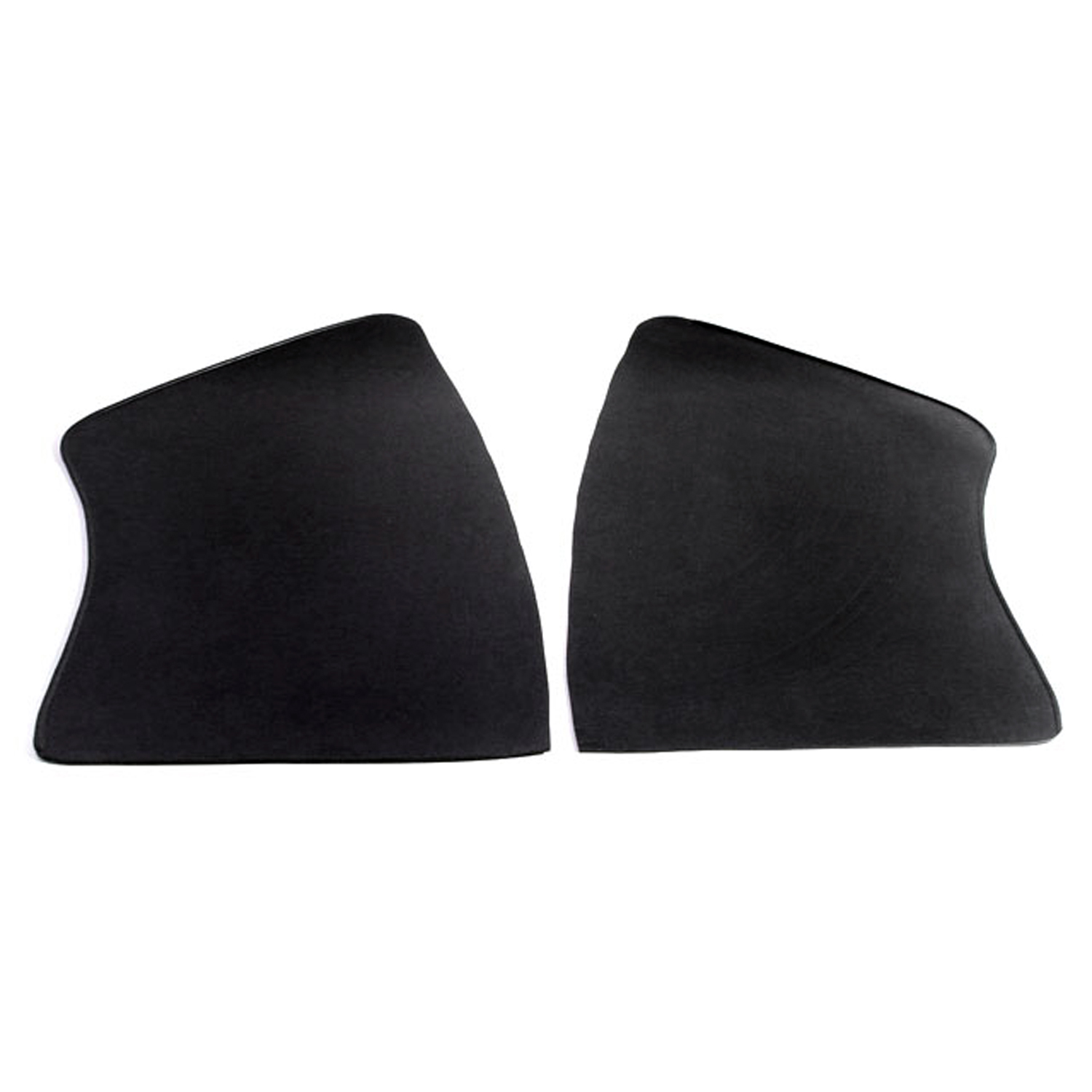 1936 Chrysler Airflow Gravel Shields. Molded flat without metal backing plates-FS 31Gravel Shields. Molded flat without metal backing plates. Apply with contact cement. 18" long X 9-3/4" wide at bottom. Pair
 1936 Chrysler Airflow Hood Corners. Fits flat corners-HC 19Hood Corners. Fits flat corners. 80° angle, 1/4" to 3/8" corner radius. 1-3/8" wide. Pair
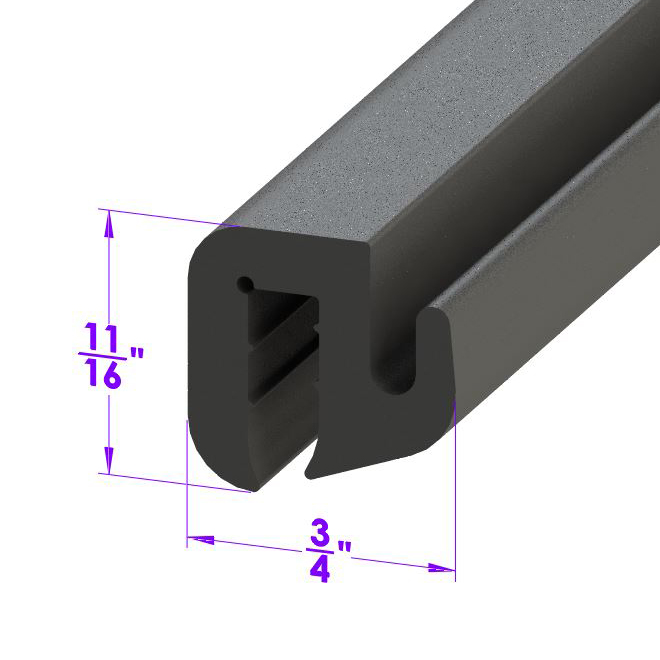 1936 Chrysler Airflow Windshield and Rear Window Seal. Sold by the foot-LP 30-AWindshield and Rear Window Seal. Sold by the foot
 1936 Chrysler Airflow Swing-Out & Crank-Out Windshield Seal. Sold by the foot-LP 97Swing-Out & Crank-Out Windshield Seal. Sold by the foot
 1936 Chrysler Airflow Swing-Out Windshield Seal. 3/4" High. Sold by the foot-LP 97-ASwing-Out Windshield Seal. 3/4" High. Sold by the foot
 1936 Chrysler Airflow Tail-light Pads. 4-1/4" wide X 7-3/8" long. Pair-MP 558Tail-light Pads. 4-1/4" wide X 7-3/8" long. Pair
 1936 Chrysler Airflow License Light Pad. 5-3/4" wide X 6" long. Each-MP 558-ALicense Light Pad. 5-3/4" wide X 6" long. Each
 1936 Chrysler Airflow Trunk Handle Pad. 1-3/4" X 3-1/4". Each-MP 558-CTrunk Handle Pad. 1-3/4" X 3-1/4". Each
 1936 Chrysler Airflow Tail-light Pads. 2-1/4" wide X 5-1/4" long. Pair R&L-MP 562Tail-light Pads. 2-1/4" wide X 5-1/4" long. Pair R&L
 1936 Chrysler Airflow Trunk Light Pad. 4-1/4" wide X 5-3/4" long. Each-MP 563Trunk Light Pad. 4-1/4" wide X 5-3/4" long. Each
 1936 Chrysler Airflow License Holder Pad. 4-7/8" wide X 4-3/4" long. Each-MP 564License Holder Pad. 4-7/8" wide X 4-3/4" long. Each
 1936 Chrysler Airflow Trunk Hinge Pads. 1-3/8" wide X 8-5/8" long. 4-Piece Set-MP 566Trunk Hinge Pads. 1-3/8" wide X 8-5/8" long. 4-Piece Set
 1936 Chrysler Airflow Headlight Pads. 9" wide X 15-1/2" long. Pair-MP 630Headlight Pads. 9" wide X 15-1/2" long. Pair
 1936 Chrysler Airflow Molded Heel Pad. For drivers side. Correct rib pattern-RM 23Molded Heel Pad. For drivers side. Correct rib pattern. Black. 11-1/2" X 15". Each
 1936 Chrysler Airflow Molded Heel Pad. For drivers side. Correct rib pattern-RM 23-QMolded Heel Pad. For drivers side. Correct rib pattern. Brown. 11-1/2" X 15". Each
 1936 Chrysler Airflow Cowl Vent Seal. Made of molded sponge-RP 100-LCowl Vent Seal. Made of molded sponge. 3-3/4" wide at side X 15-1/3" long X 3/8" thick. Each
 1936 Chrysler Airflow Cowl Vent Seals. Molded in soft rubber. Two needed per car-RP 101-BCowl Vent Seals. Molded in soft rubber. Two needed per car. 4" wide X 15-1/4" long. Replaces OEM #4688744-5. Pair
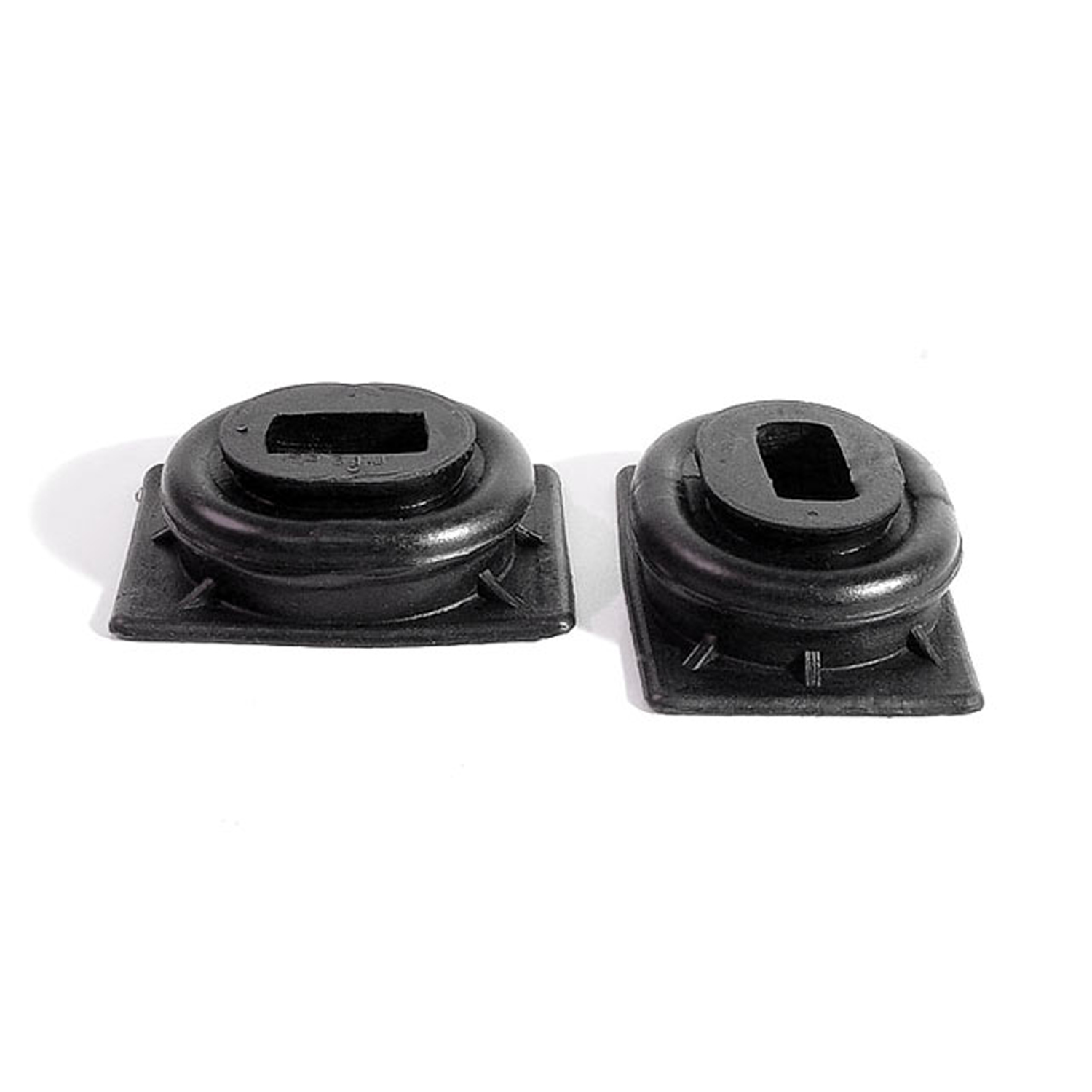 1936 Chrysler Airflow Clutch and Brake Seals. Replaces OEM #889473. Pair-RP 31-JClutch and Brake Seals. Replaces OEM #889473. Pair
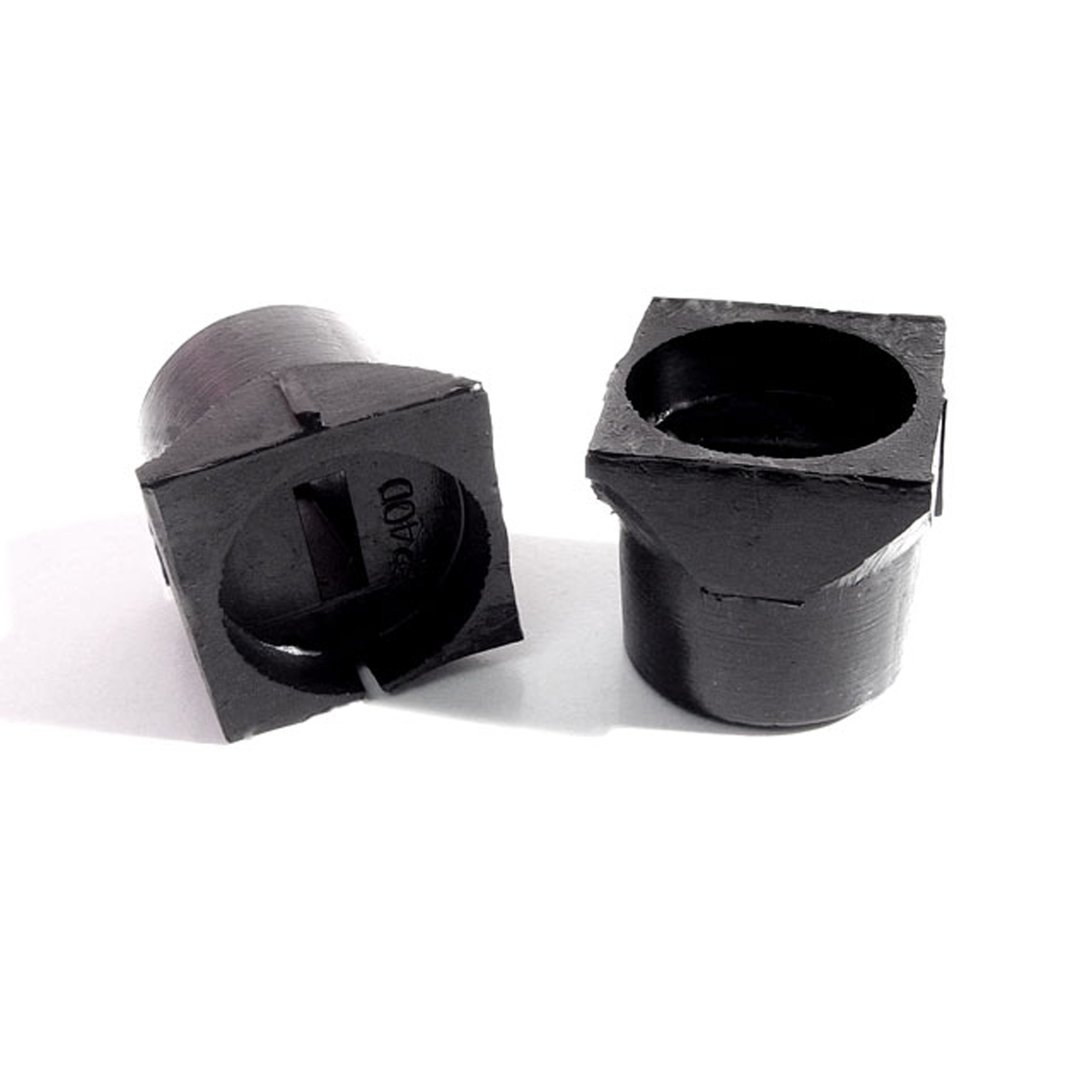 1936 Chrysler Airflow Door Check Rubber Cushion. Each-RP 40-DDoor Check Rubber Cushion. Each
 1936 Chrysler Airflow Side Window Anti-Rattle Pad. Six used per car-SB 73Side Window Anti-Rattle Pad. Six used per car. Fits a 3/16" X 3/4" slot in metal. Each
 1936 Chrysler Airflow Side Window Cushion. Fits slot size 3/16" X 1-3/16"-SB 73-CSide Window Cushion. Fits slot size 3/16" X 1-3/16". Up to 24 used per car. Made of all black rubber. Each
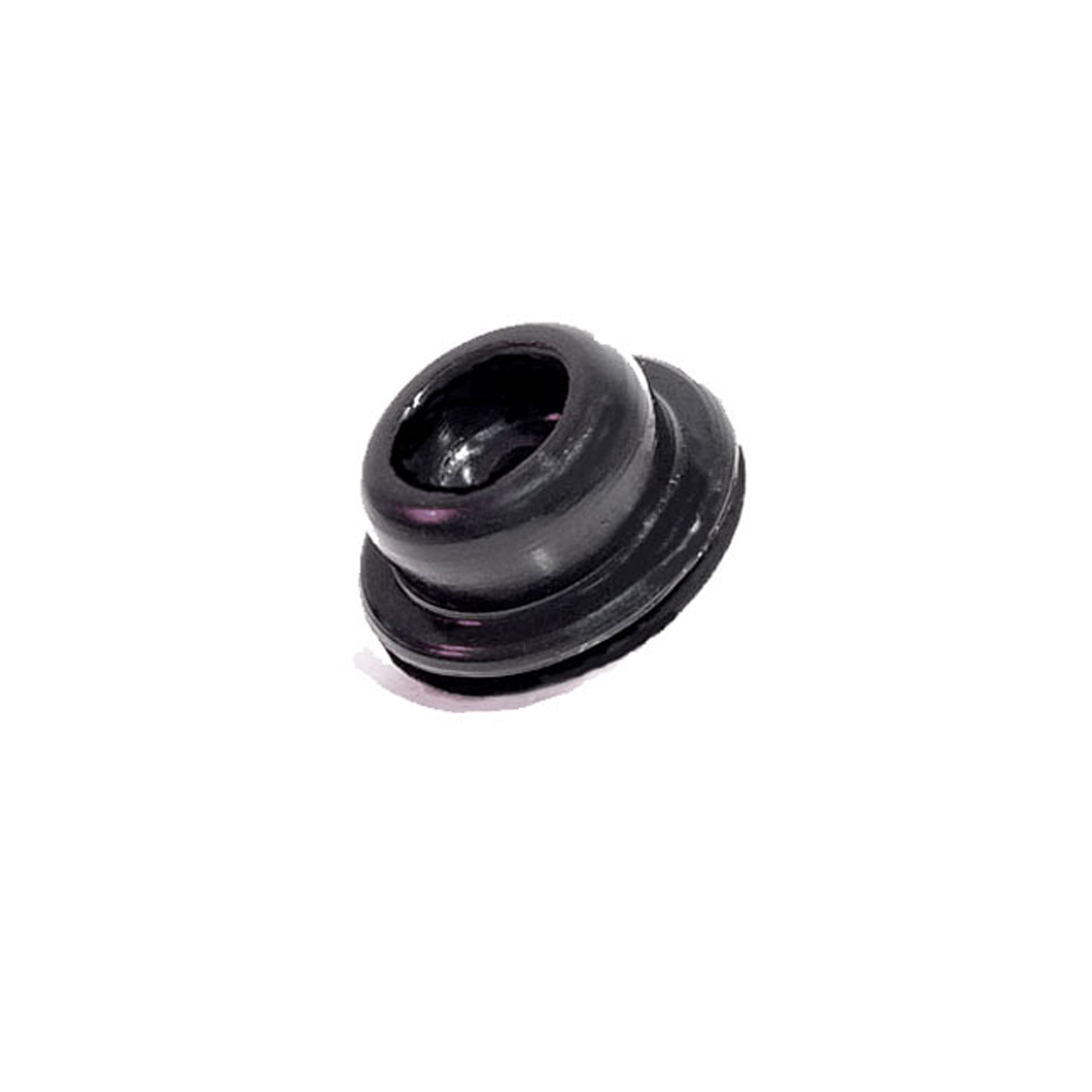 1936 Chrysler Airflow Accelerator Rod Grommet-SM 43-BAccelerator Rod Grommet. For accelerator rod through floorboard. Each
 1936 Chrysler Airflow Rear Vent Window Seals. For 4-door sedan. Pair R&L-WR 2304-RRear Vent Window Seals. For 4-door sedan. Pair R&L 1936 Chrysler Airflow Front Vent Window Seals. Molded to exact configuration-WR 2705Front Vent Window Seals. Molded to exact configuration. Pair R&L
Why Choose Metro?
For over 100 years, Metro Moulded Parts has been the pinnacle of quality in classic car restoration parts. Our commitment to precision and authenticity in every component ensures a perfect fit and an OEM-level appearance.
- Expert Craftsmanship & Quality: Each part is a testament to our dedication to reliability and perfection, crafted from original designs and thoroughly tested.
- Advanced Technology: We use cutting-edge techniques to create flawless, long-lasting parts that surpass others in performance.
- SuperSoft Sponge – The Ultimate Door Seal: Not only are our door seals 30% softer than competitors', but they're also guaranteed to never leak. They effectively reduce wind and road noise, enhancing your classic car's comfort and driving experience.
- Proudly American: Our parts are a product of American craftsmanship, made in the USA with a spirit of excellence and heritage.
- Unrivaled Warranty: We back our products with a 30-year industry-leading warranty, a testament to our confidence in their quality.
Join us in preserving the legacy of classic cars with parts that are crafted for perfection, not just made.