

Image of 1981 Chrysler Newport, Note: These illustrations use artistic license and may differ from actual historical models.
Performance Metrics
Fundamental Metrics
Emotional Appeal
MMP Rating
| Engine Specifications | |
|---|---|
| Engine Options: | 3.7L Slant-6, 5.2L V8, 5.9L V8 |
| Displacement Range: | 225-360 cu in |
| Horsepower Range: | 85-195 hp (estimated) |
| Torque: | 125-285 lb-ft (estimated) |
| Compression Ratio: | 8.4:1 - 8.5:1 (estimated) |
| Ignition System: | Electronic ignition |
| Cooling System: | Liquid-cooled |
| Performance Specifications | |
| 0-60 Time: | 11-15 seconds (estimated) |
| 1/4 Mile Time: | 17-20 seconds (estimated) |
| Top Speed: | 105-115 mph (estimated) |
| Transmission and Drive | |
| Drive Type: | Rear-wheel drive |
| Transmission Type: | 3-speed automatic |
| Fuel and Efficiency | |
| Fuel System Type: | Carburetor |
| MPG: | 15-20 mpg (estimated) |
| Dimensions and Brakes | |
| Brakes: | Front disc, rear drum |
| Wheelbase: | 118.5 in |
| Weight: | 3,600-4,000 lbs (estimated) |
Note: Specifications for classic cars are given to the best of our ability, considering the limited and variant data available.
1981 Chrysler Newport: The Last Big Newport
The 1981 Chrysler Newport brought a long-running American nameplate to a close with a roomy cabin, formal styling, and the relaxed manners of a traditional full-size sedan. Built by the Chrysler Corporation, it belonged to the R-body generation introduced for 1979, a smaller, more fuel-conscious successor to Chrysler’s enormous C-body cars. It was still unmistakably a Newport: a V8-powered, rear-wheel-drive family sedan with enough space for six and an easygoing ride.
Its timing tells much of its story. After the 1970s fuel crises and tougher emissions rules, American manufacturers were shrinking their large cars. The Newport was therefore a transition car, keeping the comfort and presence buyers expected while occupying a shorter, lighter footprint than the full-size Chryslers that came before it. The 1981 model was also the Newport’s final year as a regular Chrysler offering, giving this understated sedan a place in the closing chapter of a nameplate that dated back to the early 1960s.
R-Body Styling and Cabin Comfort
The Newport’s exterior favors crisp, upright lines over aerodynamic curves. A long hood leads to a formal grille and rectangular headlamps, while the straight beltline, broad glass area, and squared-off rear give the car a distinctly late-1970s look. Its proportions are substantial without being as imposing as a 1970s Chrysler C-body. Bright trim, wheel covers, and carefully shaped roof pillars added a little polish to what was fundamentally a practical family sedan.
The 1981 Newport was offered as a four-door sedan. There was no Newport convertible or station wagon in this generation. Buyers who wanted the Chrysler name, a large cabin, and a conventional trunk got a straightforward layout rather than a range of body styles.
Inside, the Newport put comfort ahead of sportiness. A wide bench seat, generous headroom, and a broad dashboard made it feel open and relaxed. Depending on trim and equipment, upholstery could be cloth, vinyl, or a combination, with available power accessories and convenience features adding a more upscale touch. The materials were typical of the period: durable and comfortable when well cared for, though not as richly finished as a top-trim New Yorker.
Factory paint choices varied by production date and equipment. Period Chrysler colors generally included restrained whites, silvers, blues, reds, browns, and greens, with vinyl roofs and contrasting trim available on some configurations. Buyers often chose conservative colors that suited the Newport’s formal character. Exact color combinations should be confirmed against the car’s fender tag or build documentation rather than inferred from a modern paint chart.
Technology for a Changing Era
The Newport’s engineering was conventional by design. It used a front-engine, rear-wheel-drive layout, a three-speed automatic transmission, and Chrysler’s torsion-bar front suspension. That suspension arrangement was a longstanding Chrysler trait, intended to provide a comfortable ride while keeping the front end controlled. At the rear, leaf springs supported the car’s weight and suited its family-and-fleet role.
Convenience equipment could include air conditioning, power steering, power brakes, power windows, cruise control, and upgraded radios, depending on the car’s order sheet. These features were not revolutionary, but they made the Newport a capable long-distance cruiser. In an era when electronic driver aids were limited, its appeal rested on familiar mechanicals, a roomy interior, and straightforward controls.
Why the Newport Mattered
The 1981 Newport reflects Detroit’s effort to adapt the full-size car to a new economic and regulatory reality. The R-body was noticeably more compact than Chrysler’s earlier full-size platform, yet the Newport retained the rear-wheel-drive layout, V8 power, and spacious seating that many buyers still wanted. It offered a middle ground between the traditional land yacht and the smaller cars gaining popularity.
It was not a design landmark in the way a groundbreaking sports car might be. Its significance is quieter: the Newport shows how Chrysler tried to preserve the character of its big sedans while responding to fuel costs and changing expectations. Its short-lived R-body generation also makes it a useful snapshot of the company’s transition before front-wheel-drive platforms and more aerodynamic styling became increasingly important.
318 V8 Performance and Road Manners
Most 1981 Newports are associated with Chrysler’s 318-cubic-inch V8, paired with a three-speed TorqueFlite automatic. Output depends on the precise engine calibration and equipment, but period 318s were modestly powered by modern standards, generally producing power in the neighborhood of 130 horsepower. Some market and equipment variations may differ, so the car’s engine code and factory documentation are the best guide to its original specification.
Expect relaxed rather than rapid acceleration. A 0-to-60 mph run in roughly 13 to 15 seconds is a reasonable estimate for a typical 318-powered Newport in good condition. Top speed is likewise best treated as an estimate: around 100 mph, give or take, depending on gearing, tires, engine condition, and road conditions. These figures are not the point of the car. The Newport was designed to cruise comfortably, not to chase sports sedans.
On the road, the Newport feels substantial and unhurried. The V8 makes a low, smooth burble, and the automatic transmission shifts without asking the driver to work hard. Its suspension is tuned for comfort, so it can soften ordinary bumps and expansion joints effectively. On a winding road, however, the car’s size, soft ride, and period tires encourage a measured pace. Crosswinds and quick direction changes are more noticeable than they would be in a modern sedan. A well-maintained Newport should feel composed, but worn shocks, tired bushings, or loose steering components can make it floaty and imprecise.
Living with a Newport
Today, a Newport is most likely to serve as a weekend cruiser, a local show car, or a nostalgic family favorite. It can be used regularly, but its fuel consumption, age, and comparatively limited modern safety equipment make it less convenient as a daily driver than a newer car. A properly sorted example is at its best on relaxed drives, where its quiet cabin and broad seats can be appreciated.
Routine maintenance is familiar to anyone who has worked on a traditional American V8: ignition components, belts, hoses, fluids, brakes, and cooling-system parts are straightforward to inspect and service. The 318 is generally regarded as a durable engine when maintained, and the TorqueFlite automatic has a long service history. Some replacement parts remain available through specialist suppliers and general parts channels, though trim pieces, model-specific interior parts, and rust-free body panels can take more searching.
When inspecting one, pay close attention to rust around the lower body, wheel openings, floor pans, trunk, and windshield areas. Also check the steering and suspension, transmission behavior, cooling system, and electrical accessories. A car that has sat for years may need more than a tune-up, even if the V8 starts easily. For an average owner with basic mechanical skills, routine repairs are manageable; major bodywork and hard-to-find trim are the bigger challenges.
Newport Facts and Common Criticisms
The Newport name had a much longer life than the R-body car itself, appearing on Chrysler models from 1961 through 1981. That makes the 1981 sedan a final-year Newport, though it was not a limited-edition farewell model. Its appeal today comes partly from that closing-year status and partly from being an increasingly uncommon sight at shows and on the road.
There is no widely recognized Newport speed or endurance record associated with the 1981 model. Its historical distinction is more about timing: it represents the last regular Newport before Chrysler retired the nameplate. The car also shares its R-body family with the Chrysler New Yorker, Dodge St. Regis, and Plymouth Gran Fury, though each division gave its version different styling and positioning.
Common criticisms are easy to understand. The Newport is thirsty compared with modern cars, its acceleration is modest, and its large, soft-riding body does not invite spirited driving. Some owners also find that age-related wear has made surviving examples feel less solid than they did when new. Those drawbacks are balanced by a roomy interior, simple mechanical layout, and a distinctive period-correct presence.
Collector Value and Availability
The 1981 Newport is a niche collectible rather than a high-dollar investment car. As a practical current-market guide, a project or rough driver may sell for about $1,500 to $4,000. A usable, presentable example often falls around $4,000 to $8,000, while a very clean, well-documented car may reach roughly $8,000 to $15,000. Exceptional condition, unusual factory equipment, or a particularly appealing original color could push a sale higher, but such results are the exception.
Exact 1981 Newport production totals are not consistently cited in commonly available model references. A cautious estimate is that production was in the tens of thousands, perhaps around 15,000 to 25,000 cars, but this should be treated as an informed estimate rather than a verified factory figure. Survivors are much less common than that original production suggests, especially cars with intact trim and little rust. They appear occasionally in online listings, estate sales, and regional classic-car markets, but buyers may need patience to find a genuinely sound example.
Values have generally remained modest rather than rising sharply. The Newport has not attracted the same collector demand as muscle cars, convertibles, or premium luxury models. Clean survivors may gradually gain appreciation as 1980s-era cars become more collectible, but condition and originality matter far more than speculation. Buy one because you enjoy the drive and the character, not because it promises a quick return.
The Newport’s Lasting Appeal
The 1981 Chrysler Newport is a comfortable, rear-wheel-drive sedan from a pivotal moment in American automotive history. Its formal styling, 318 V8, torsion-bar front suspension, and roomy cabin preserve much of the traditional full-size-car experience in a downsized package. It is not especially fast or rare, but it is honest about what it does well: carry people in comfort and make an ordinary drive feel like a proper cruise.
As the final Newport, the 1981 model carries a little extra historical weight. It may never dominate auction headlines, but for enthusiasts who appreciate Chrysler’s big sedans and the cars of the fuel-conscious transition years, it is a distinctive survivor from the end of an era.
1981 Chrysler Newport Catalog of Parts
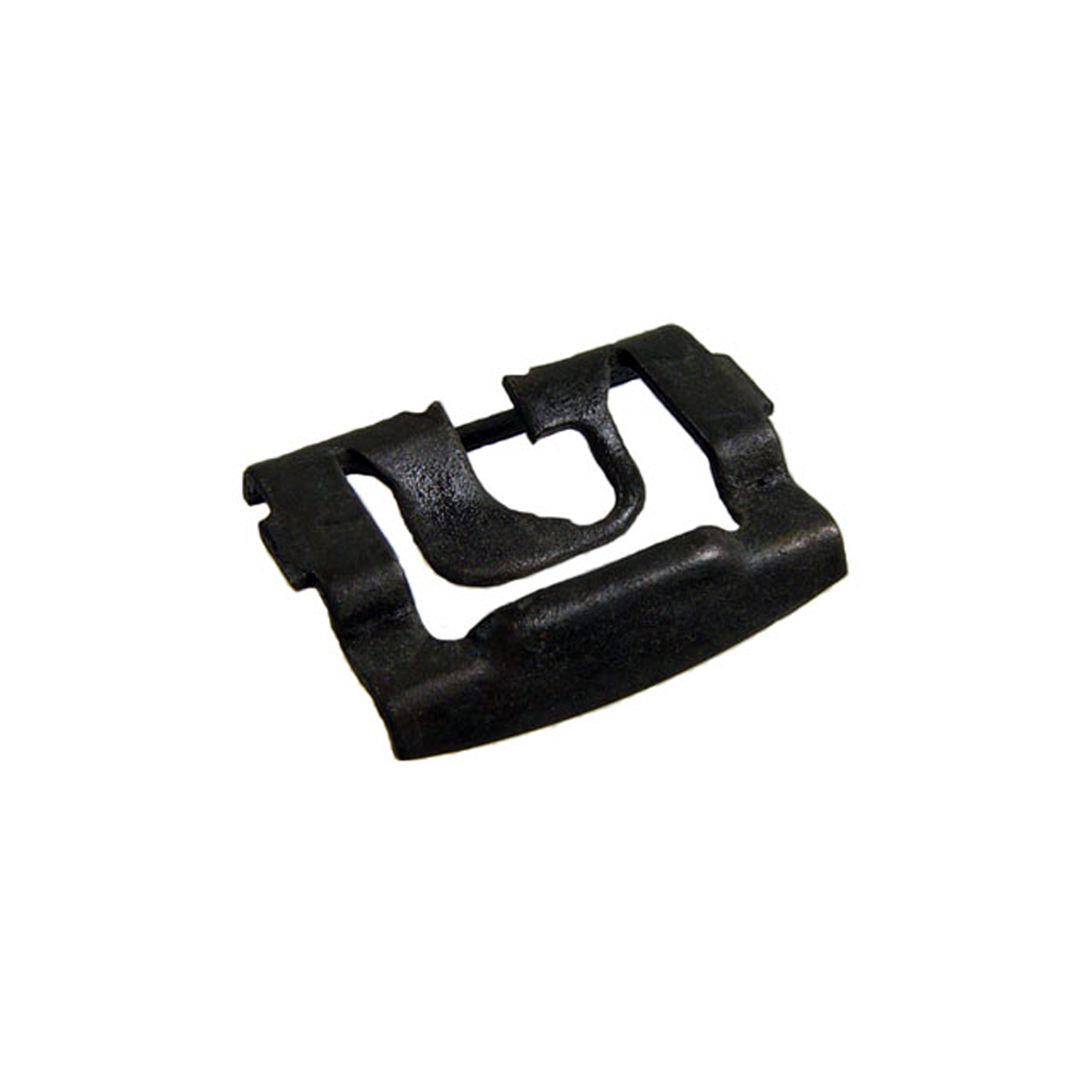 1981 Chrysler Newport Windshield and Rear Windshield Molding Clip. Made of steel-WF 216Windshield and Rear Windshield Molding Clip. Made of steel. 1-1/8" X 5/8". Each
Why Choose Metro?
For over 100 years, Metro Moulded Parts has been the pinnacle of quality in classic car restoration parts. Our commitment to precision and authenticity in every component ensures a perfect fit and an OEM-level appearance.
- Expert Craftsmanship & Quality: Each part is a testament to our dedication to reliability and perfection, crafted from original designs and thoroughly tested.
- Advanced Technology: We use cutting-edge techniques to create flawless, long-lasting parts that surpass others in performance.
- SuperSoft Sponge – The Ultimate Door Seal: Not only are our door seals 30% softer than competitors', but they're also guaranteed to never leak. They effectively reduce wind and road noise, enhancing your classic car's comfort and driving experience.
- Proudly American: Our parts are a product of American craftsmanship, made in the USA with a spirit of excellence and heritage.
- Unrivaled Warranty: We back our products with a 30-year industry-leading warranty, a testament to our confidence in their quality.
Join us in preserving the legacy of classic cars with parts that are crafted for perfection, not just made.