

Image of 1982 Chrysler Cordoba, Note: These illustrations use artistic license and may differ from actual historical models.
Performance Metrics
Fundamental Metrics
Emotional Appeal
MMP Rating
| Engine Specifications | |
|---|---|
| Engine: | 3.7L Slant-6, 5.2L V8, 5.9L V8 |
| Displacement: | 225-360 cu in (3.7-5.9L) |
| Horsepower: | 85-195 hp (approximate) |
| Torque: | 125-285 lb-ft (approximate) |
| Compression Ratio: | 8.4:1 - 9.2:1 (approximate) |
| Ignition System: | Electronic ignition |
| Cooling System: | Liquid-cooled |
| Performance Specifications | |
| 0-60 Time: | 10-15 seconds (approximate) |
| 1/4 Mile Time: | 17-20 seconds (approximate) |
| Top Speed: | 105-115 mph (approximate) |
| Transmission and Drive | |
| Drive Type: | Rear-wheel drive |
| Transmission Type: | 3-speed automatic, 4-speed automatic |
| Fuel and Efficiency | |
| Fuel System Type: | Carburetor |
| MPG: | 15-20 mpg (approximate) |
| Dimensions and Brakes | |
| Brakes: | Front disc, rear drum |
| Wheelbase: | 112.7 inches |
| Weight: | 3,400-3,600 lbs (approximate) |
Note: Specifications for classic cars are given to the best of our ability, considering the limited and variant data available.
1982 Chrysler Cordoba: A Personal-Luxury Coupe in Transition
The 1982 Chrysler Cordoba paired a long hood, a formal coupe roofline, and rear-wheel-drive character at a time when Detroit was rapidly changing course. Built by the Chrysler Corporation, it belonged to the Cordoba’s smaller second generation, a more compact successor to the plush, full-size personal-luxury cars that had made the name familiar in the 1970s.
The timing is part of the story. Chrysler was fighting for survival, fuel economy had become a major concern, and buyers were shifting toward smaller cars. The Cordoba answered with a downsized body but kept the traditional recipe: two doors, available V8 power, an automatic transmission, and a comfortable, upscale cabin. It also carries a lasting connection to one of the most memorable luxury-car catchphrases of the era, “rich Corinthian leather,” popularized in earlier Cordoba advertising. The phrase became famous, though it should not be taken as a guarantee that every 1982 example has that particular upholstery.
Formal Styling, Personal-Luxury Details
The 1982 Cordoba was a two-door coupe with a distinctly formal profile. Its long hood led to a broad, upright grille, rectangular headlamps, and a substantial front bumper. From the side, a gently sloping roof and prominent rear quarters gave it the look of a traditional American luxury coupe, even though the car was smaller than the Cordobas that came before it. Depending on equipment, a vinyl roof and bright exterior trim could add to the period-correct, dressed-up appearance.
Inside, the Cordoba emphasized comfort over sportiness. Buyers could find cloth or velour upholstery, with leather available on certain configurations, along with padded trim and wood-look accents. The front bench seat gave the cabin a relaxed, lounge-like feel, while a console and bucket-seat arrangement could make it look more personal and driver-focused. Power accessories, air conditioning, cruise control, and upgraded audio equipment were among the amenities available, though equipment varied by car.
Paint choices changed with the factory’s annual color palette, but Cordobas appeared in the era’s familiar mix of solid and metallic shades. White, silver, blue, burgundy, and brown tones suit the car particularly well and are often seen on surviving examples. A factory paint chart is the best way to verify an individual car’s original color. There were no wagon or sedan versions of the 1982 Cordoba: the coupe was the body style, and its formal roofline is the model’s defining look.
Engineering in a Changing Era
The second-generation Cordoba rode on Chrysler’s J-body platform, shared with the Dodge Mirada and related to the period’s Chrysler Imperial. It retained rear-wheel drive and conventional American-car engineering, but its reduced size reflected the industry’s response to higher fuel prices and tighter efficiency expectations. That balance made it different from larger, heavier personal-luxury coupes, while still giving buyers a familiar V8 option.
Under the hood, the 1982 Cordoba could be ordered with Chrysler’s 225-cubic-inch Slant Six or a 318-cubic-inch V8. Both were paired with an automatic transmission in typical configurations. The Slant Six had a long reputation for durability and straightforward service; the 318 offered stronger low-speed pull and the unmistakable sound of a small-block V8. Electronic ignition and emissions-control technology were part of the period’s move toward more sophisticated engine management. These systems helped meet modern requirements, though they can take more troubleshooting than the simpler ignition setups found on much older cars.
The Cordoba’s influence was less about introducing a groundbreaking technology than preserving a recognizable American coupe format during a turbulent period. Its platform-mates and downsized proportions show how Chrysler tried to keep a luxury-minded, rear-drive car relevant while the company redirected its resources toward more efficient front-wheel-drive models. The Cordoba did not become a mass-market design template, but it remains a useful snapshot of that transition.
Performance and Road Manners
Neither available engine turns the 1982 Cordoba into a modern performance car. Period test results and present-day condition vary, but a healthy V8 car is generally estimated to reach 60 mph in roughly 11 to 13 seconds, with a top speed around 100 to 110 mph. The Slant Six is more leisurely, often taking well over 14 seconds to reach 60 mph. These are approximate figures rather than guaranteed factory specifications, and age, gearing, tune, and transmission condition make a substantial difference.
On the road, the Cordoba is best understood as a comfortable cruiser. Its suspension is tuned for a composed, forgiving ride, so it takes ordinary pavement joints and bumps in stride. The body can lean through tighter corners, and the steering is typically less precise than that of a modern sports coupe. On a winding road, smooth inputs suit the car better than quick direction changes. In crosswinds, its substantial body and period tires can feel less settled than a contemporary vehicle, so maintaining sensible speeds matters.
A V8 Cordoba gives the driver a muted, low-frequency rumble and relaxed torque when pulling away from a stop. The automatic transmission encourages an easy pace rather than constant gear changes. Inside, the driving experience is defined by a broad seat, a large steering wheel, generous space for a coupe, and a view over that long hood. In a well-maintained example, the result is an unhurried, distinctly early-1980s kind of comfort.
Living with a Cordoba
Today, most 1982 Cordobas are used as weekend cruisers, local show cars, or nostalgic drivers rather than daily transportation. A sound example can handle regular trips, but fuel economy, aging rubber and electrical components, and the availability of specific trim parts make it less practical than a modern commuter car. The Slant Six is usually the economical choice to maintain, while the 318 benefits from broad familiarity among classic Mopar owners and mechanics.
Routine work is generally approachable for a mechanically inclined owner. The engines and automatic drivetrain are conventional, and many service parts remain obtainable through classic-car suppliers. The harder items to source can be model-specific interior trim, brightwork, glass, body panels, and intact components for optional equipment. Before buying, inspect the floor pans, trunk, lower body panels, frame rails, and windshield area for corrosion. Check that the transmission shifts properly, the cooling system is healthy, and the car’s electrical and emissions equipment has not been poorly modified.
Small Details and Common Criticisms
The Cordoba’s most famous trivia may be its advertising legacy: the “rich Corinthian leather” line is closely tied to Ricardo Montalban and the earlier Cordoba campaigns. That association helped the name stand out in American pop culture long after the commercials ended. It is a marketing story, not evidence that the 1982 model introduced the phrase or that every car was fitted with that upholstery.
The 1982 Cordoba was not known for a major speed record or racing achievement. Its appeal was comfort, styling, and accessible American-car character. Common criticisms include modest acceleration, relatively high fuel use with the V8, soft handling, and the sometimes fussy nature of old emissions-control and electrical systems. Buyers also need to remember that a car advertised as “all original” may still have decades of repairs or alterations behind it, so condition and documentation matter more than claims alone.
Collector Values and Availability
The 1982 Cordoba is an uncommon sight today, but it is not generally regarded as a rare, high-dollar collector car. A precise model-year production figure is not consistently quoted across reference sources; a reasonable working estimate is roughly 20,000 to 25,000 cars built for 1982. That figure should be treated as an estimate, not a verified factory total. Survivors are less common than the original production number might suggest, particularly in rust-free condition with complete trim.
As a broad North American market guide, a project or rough-running car may sell for about $1,000 to $3,000. A usable driver in fair-to-good condition might bring roughly $3,000 to $7,000, while a clean, well-kept example can reach around $8,000 to $12,000. Exceptional, highly original cars or unusually desirable configurations may ask more, but they need to find the right buyer. Actual prices depend heavily on rust, mechanical condition, originality, location, and recent comparable sales.
Values have generally remained modest compared with those of celebrated muscle cars and premium 1970s coupes. Interest in period personal-luxury cars may support gradual gains for especially clean examples, but the Cordoba is best bought for its style and driving character, not as a guaranteed investment. Good cars can be hard to find precisely because many were used as ordinary transportation and never preserved as collectibles.
Why the 1982 Cordoba Still Matters
The 1982 Chrysler Cordoba captures a moment when the traditional American luxury coupe was being reshaped by fuel concerns and financial pressure. It brought together formal styling, a comfortable interior, rear-wheel drive, and a choice of six-cylinder or V8 power in a smaller package than its predecessors. Its performance is relaxed, its handling is comfort-oriented, and its best quality is the easygoing character of a classic American cruiser.
For enthusiasts, the Cordoba is a reminder that automotive history is not made only by the fastest or rarest cars. Sometimes it is preserved in a well-kept coupe rolling down the road with a V8 murmur, a broad front seat, and a little bit of unmistakable 1980s Chrysler style.
1982 Chrysler Cordoba Catalog of Parts
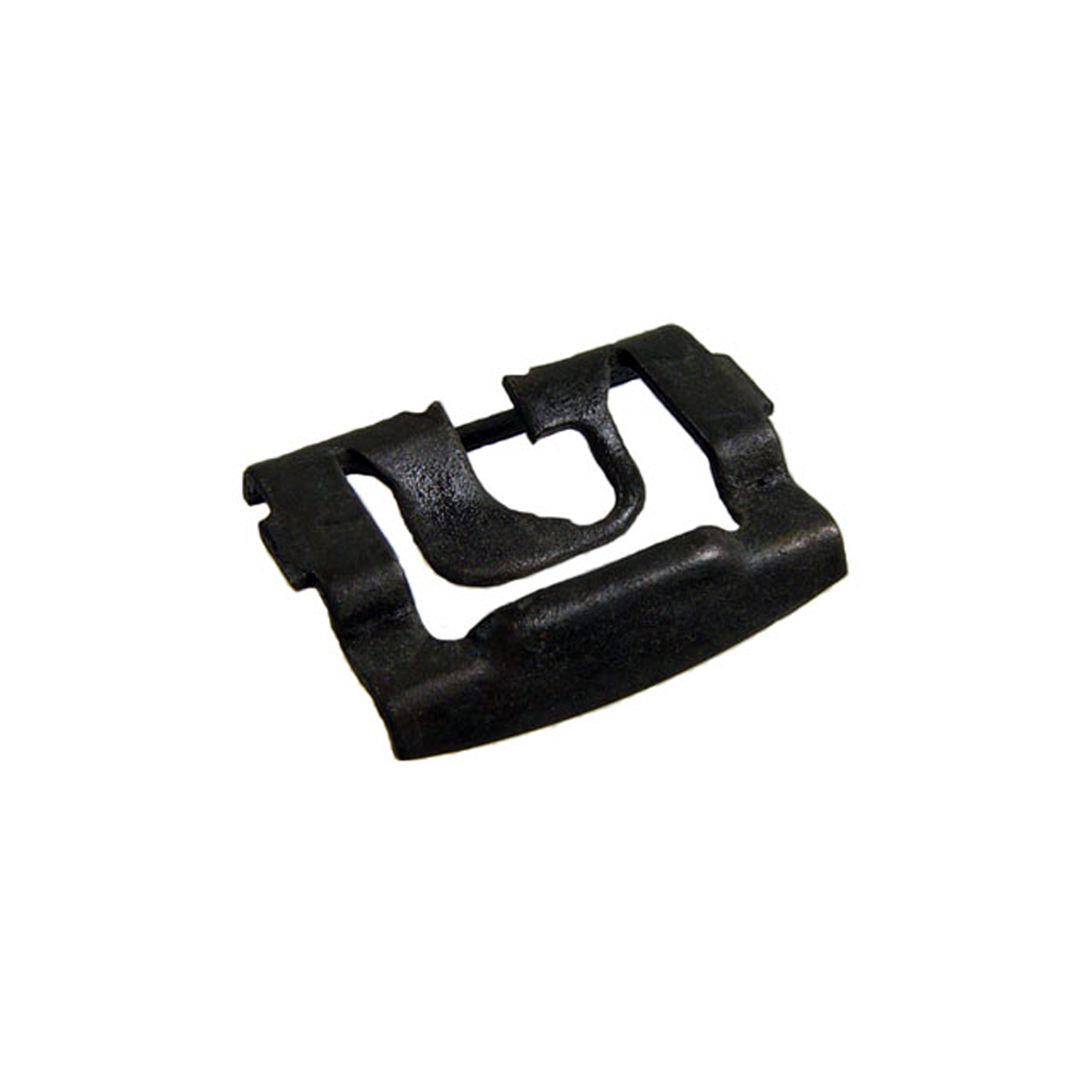 1982 Chrysler Cordoba Windshield and Rear Windshield Molding Clip. Made of steel-WF 216Windshield and Rear Windshield Molding Clip. Made of steel. 1-1/8" X 5/8". Each
Why Choose Metro?
For over 100 years, Metro Moulded Parts has been the pinnacle of quality in classic car restoration parts. Our commitment to precision and authenticity in every component ensures a perfect fit and an OEM-level appearance.
- Expert Craftsmanship & Quality: Each part is a testament to our dedication to reliability and perfection, crafted from original designs and thoroughly tested.
- Advanced Technology: We use cutting-edge techniques to create flawless, long-lasting parts that surpass others in performance.
- SuperSoft Sponge – The Ultimate Door Seal: Not only are our door seals 30% softer than competitors', but they're also guaranteed to never leak. They effectively reduce wind and road noise, enhancing your classic car's comfort and driving experience.
- Proudly American: Our parts are a product of American craftsmanship, made in the USA with a spirit of excellence and heritage.
- Unrivaled Warranty: We back our products with a 30-year industry-leading warranty, a testament to our confidence in their quality.
Join us in preserving the legacy of classic cars with parts that are crafted for perfection, not just made.