
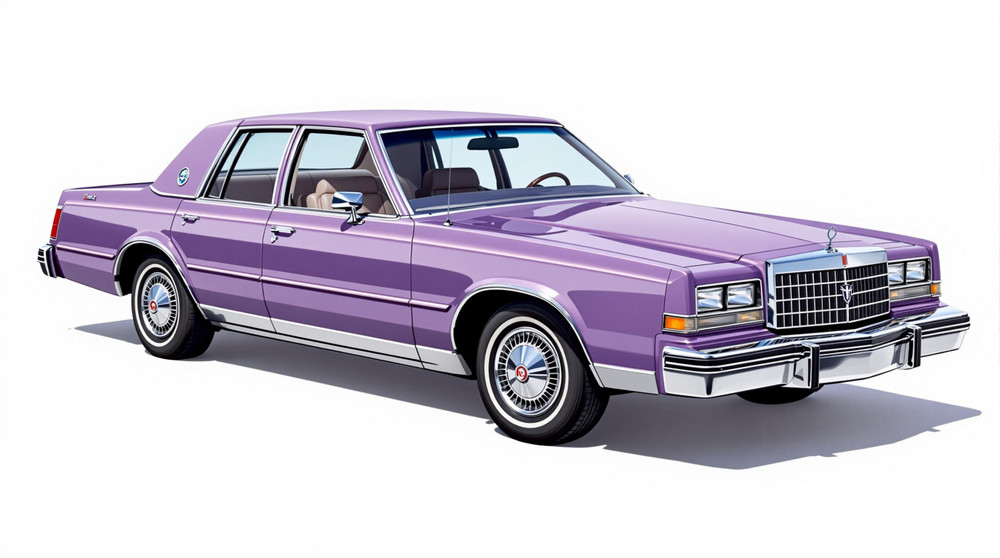
Image of 1982 Chrysler Imperial, Note: These illustrations use artistic license and may differ from actual historical models.
Performance Metrics
Fundamental Metrics
Emotional Appeal
MMP Rating
| Engine Specifications | |
|---|---|
| Engine: | 318 cu in (5.2 L) V8 |
| Displacement: | 318 cu in (5.2 L) |
| Horsepower: | 140-150 hp |
| Torque: | 245 lb-ft |
| Compression Ratio: | 8.5:1 |
| Ignition System: | Electronic Ignition System |
| Cooling System: | Liquid-cooled |
| Performance Specifications | |
| 0-60 Time: | 11 seconds |
| 1/4 Mile Time: | 18 seconds |
| Top Speed: | 108 mph |
| Transmission and Drive | |
| Drive Type: | Rear-wheel drive |
| Transmission Type: | 3-speed automatic |
| Fuel and Efficiency | |
| Fuel System Type: | Carburetor |
| MPG: | 15-20 mpg |
| Dimensions and Brakes | |
| Brakes: | Power-assisted disc brakes |
| Wheelbase: | 112.7 in |
| Weight: | 3,700 lbs |
Note: Specifications for classic cars are given to the best of our ability, considering the limited and variant data available.
1982 Chrysler Imperial: Detroit’s Digital Luxury Coupe
The 1982 Chrysler Imperial arrived with hidden headlights, a hush of V8 power, and a dashboard that looked more like a cockpit than a traditional luxury car. Built as Chrysler’s flagship coupe during one of the company’s most difficult eras, it blended old-school American presence with then-modern electronic technology.
The Imperial name had once belonged to Chrysler’s most prestigious cars, but the brand had been absent from the market since 1975. Chrysler revived it for the 1981 model year, under the leadership of chairman Lee Iacocca, as a high-profile luxury model that could help restore the company’s image. The 1982 car was assembled in Detroit and shared its basic J-body architecture with the Chrysler Cordoba, though its distinctive nose, formal roofline, and upscale equipment gave it a separate identity.
One detail that still makes the car memorable is its early electronic fuel-injection system. The technology was ambitious, but it could be troublesome in service, giving the Imperial a reputation for being as electronically adventurous as it was stylish.
Imperial Styling and Interior
The Imperial was offered only as a two-door coupe. Its long hood and squared-off front end gave it a stately profile, while concealed headlights kept the nose clean when they were switched off. A formal grille, prominent hood ornament, and broad rear end reinforced its luxury-car character. Many examples wore a padded vinyl landau roof, which emphasized the coupe’s upright, almost chauffeur-inspired look.
Inside, Chrysler aimed for comfort and a premium feel. Buyers could find plush upholstery, woodgrain-look trim, deep carpeting, and power conveniences expected in a flagship car. Leather upholstery was available, while the standard cabin also used soft vinyl and fabric finishes. The seats and generous sound insulation suited relaxed cruising more than aggressive driving.
Color and trim combinations varied by order and market. Black, silver, white, red, and blue shades were among the choices seen on these cars, often paired with a contrasting vinyl roof and coordinated interior. Dark exterior colors particularly suited the Imperial’s formal styling, while the Sinatra edition’s distinctive blue theme made it one of the most recognizable special versions.
Digital Features for 1982
The Imperial’s cabin brought electronics into a segment still dominated by conventional gauges and mechanical controls. Its digital instrument display gave the driver a distinctly futuristic view of speed and vehicle information. Electronic convenience features and a computerized voice-alert system added to the high-tech impression, while power accessories and automatic comfort features helped make the car feel properly equipped for its class.
Under the hood, the 5.2-liter, 318-cubic-inch V8 used electronic fuel injection. This was a notable step for a domestic luxury coupe, but the system’s complexity could make diagnosis and repair more involved than on a carbureted car. The Imperial paired its V8 with a three-speed TorqueFlite automatic transmission.
There were no sedan, convertible, or station-wagon versions of the 1982 Imperial. The coupe was the whole story, and its most distinctive special option was the Frank Sinatra edition. This package featured Sinatra-related badging and blue-themed trim, along with a set of cassette tapes associated with the singer. It was a memorable marketing partnership and an unusual factory connection between a luxury car and a major entertainer.
Why the Imperial Mattered
The 1982 Imperial reflected Chrysler’s effort to make a bold statement while rebuilding its finances and reputation. Rather than compete through a wide range of body styles, it served as a prestige model: a visible symbol that the company could still produce a distinctive American luxury car.
Its combination of traditional styling and digital technology set it apart from many contemporaries. The formal roof, padded vinyl, and V8 belonged to a familiar luxury-car formula, but the electronic dashboard and fuel injection looked toward the future. That contrast is a large part of the Imperial’s appeal today.
The car’s lasting influence is more symbolic than technical. It did not establish a long-running design dynasty, and its electronics did not become a trouble-free industry benchmark. Instead, it captures a transitional moment when automakers were experimenting with digital controls and electronic engine management while buyers still valued size, comfort, and V8 smoothness.
Performance and Driving Feel
The 318 V8 produced roughly 140 horsepower in typical published specifications, with output figures varying slightly by source and calibration. That was modest for a large luxury coupe, so performance was relaxed rather than forceful. Period-style estimates generally put 0-to-60 mph acceleration in the low-to-mid 11-second range, while maximum speed is commonly estimated at about 105 to 110 mph. These figures should be treated as approximate, since test results depend on vehicle condition and measurement method.
The Imperial feels most at home on a straight, open road. The V8 delivers a familiar low-frequency rumble, and the TorqueFlite automatic shifts smoothly when properly maintained. Acceleration builds steadily instead of arriving in a sudden surge. The car’s long, comfortable character makes highway cruising its natural role.
On rough pavement, the suspension favors isolation and a soft ride. It can smooth out ordinary bumps, but the body’s size and comfort-oriented setup mean it is not especially nimble on winding roads. Crosswinds and tight corners call for measured steering inputs, and drivers should not expect sports-coupe precision. The experience is about settling into a broad seat, listening to the V8, and covering distance in comfort.
Ownership, Repairs, and Reliability
Today, a 1982 Imperial is most often a collector car, weekend cruiser, or show vehicle rather than a dependable modern daily driver. Its comfortable cabin and distinctive styling make it enjoyable at events, but its age, fuel consumption, and specialized parts can complicate regular use.
The engine and TorqueFlite transmission are familiar Chrysler components, and many routine mechanical jobs are manageable for an experienced home mechanic. The electronic fuel-injection system is the bigger concern. A neglected or malfunctioning system may require specialist knowledge, and replacement parts are not always as easy to find as ordinary tune-up components. Buyers should inspect the injection system, wiring, dashboard electronics, brakes, and body for corrosion or previous repair work. A complete, functioning car is usually a better starting point than a cheap example with missing electronic parts.
Common criticisms include the Imperial’s modest acceleration, the complexity of its early electronics, and its resemblance to less expensive Chrysler models underneath. Those are fair points, but they also explain why a well-kept example stands out: it combines accessible mechanical foundations with unusual flagship-car styling and equipment.
Frank Sinatra Edition and Other Trivia
The Sinatra edition is the best-known special Imperial. Its blue appearance and music-themed presentation made it more than a simple trim package, though surviving cars vary in condition and completeness. A car with convincing original details, documentation, and its associated accessories can attract extra interest from collectors.
The Imperial was not built to set speed or endurance records. Its notable achievement was being an unusually technology-focused American luxury coupe at a time when Chrysler was under intense pressure to recover. The model’s short production run is itself part of its story: the revived Imperial lasted only from 1981 through 1983 before disappearing again.
Collector Values and Production
Approximately 2,329 Imperials were produced for the 1982 model year, making them uncommon but not impossible to find. Exact counts can vary across published sources, and cars with the Sinatra package or particularly original equipment tend to be harder to locate. Condition matters greatly, especially because incomplete electronics and interior trim can be difficult to put right.
As a broad 2026 estimate, a project car may sell for roughly $2,000 to $5,000. A usable driver often falls around $6,000 to $12,000, while clean, well-preserved examples can bring approximately $15,000 to $25,000. Exceptional cars, especially documented Sinatra editions, may ask or achieve more, but results depend heavily on originality, mechanical condition, and buyer interest. These are general ranges, not guaranteed sale prices.
Values have tended to be modest compared with those of more celebrated luxury cars from the period. The Imperial’s limited production and distinctive character support collector interest, but its niche following keeps prices uneven. Over time, the best original examples are likely to hold appeal more reliably than ordinary driver-grade cars, though this is not a model to buy on the assumption of rapid appreciation.
A Distinctive Chapter in Chrysler History
The 1982 Chrysler Imperial brought together a formal American coupe shape, a smooth V8, and electronics that looked ahead of their time. Its acceleration was leisurely, and its early fuel-injection system could test an owner’s patience, yet those very contrasts make it fascinating today. As a rare, short-lived flagship from Chrysler’s comeback years, the Imperial remains a vivid reminder that luxury-car history is not only about the most successful models. Sometimes the most memorable cars are the ones that dared to try something different.
1982 Chrysler Imperial Catalog of Parts
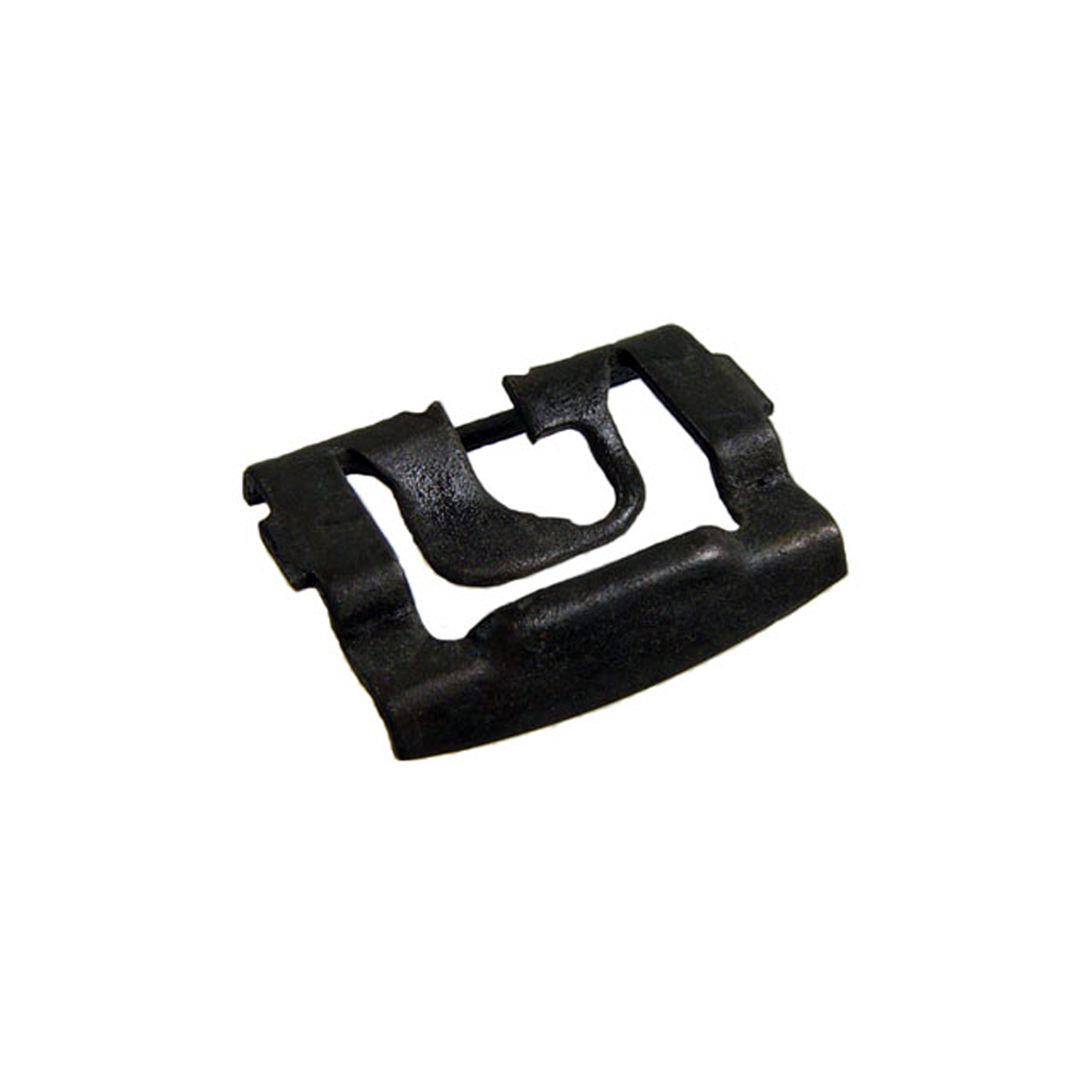 1982 Chrysler Imperial Windshield and Rear Windshield Molding Clip. Made of steel-WF 216Windshield and Rear Windshield Molding Clip. Made of steel. 1-1/8" X 5/8". Each
Why Choose Metro?
For over 100 years, Metro Moulded Parts has been the pinnacle of quality in classic car restoration parts. Our commitment to precision and authenticity in every component ensures a perfect fit and an OEM-level appearance.
- Expert Craftsmanship & Quality: Each part is a testament to our dedication to reliability and perfection, crafted from original designs and thoroughly tested.
- Advanced Technology: We use cutting-edge techniques to create flawless, long-lasting parts that surpass others in performance.
- SuperSoft Sponge – The Ultimate Door Seal: Not only are our door seals 30% softer than competitors', but they're also guaranteed to never leak. They effectively reduce wind and road noise, enhancing your classic car's comfort and driving experience.
- Proudly American: Our parts are a product of American craftsmanship, made in the USA with a spirit of excellence and heritage.
- Unrivaled Warranty: We back our products with a 30-year industry-leading warranty, a testament to our confidence in their quality.
Join us in preserving the legacy of classic cars with parts that are crafted for perfection, not just made.