
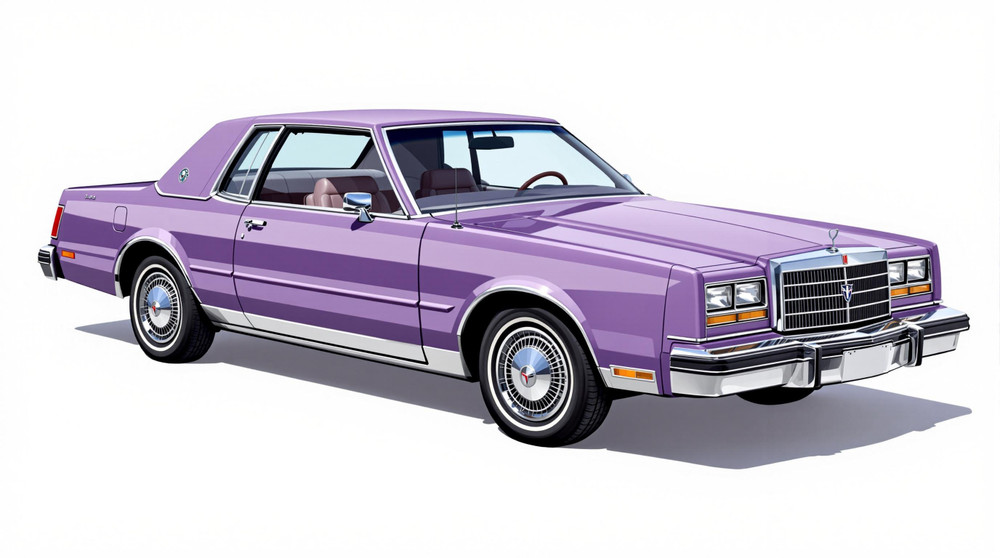
Image of 1982 Chrysler Lebaron, Note: These illustrations use artistic license and may differ from actual historical models.
Performance Metrics
Fundamental Metrics
Emotional Appeal
MMP Rating
| Engine Specifications | |
|---|---|
| Engine Options: | 2.2L I4, 2.6L I4 |
| Displacement Range: | 2.2 - 2.6L |
| Horsepower Range: | 84 - 92 hp |
| Torque: | 111 - 132 lb-ft |
| Compression Ratio: | 8.5:1 - 9.0:1 |
| Ignition System: | Electronic Ignition |
| Cooling System: | Liquid Cooled |
| Performance Specifications | |
| 0-60 Time: | 14 - 16 seconds |
| 1/4 Mile Time: | 18 - 20 seconds |
| Top Speed: | 100 - 105 mph |
| Transmission and Drive | |
| Drive Type: | FWD |
| Transmission Type: | 3-speed automatic, 4-speed manual |
| Fuel and Efficiency | |
| Fuel System Type: | Carburetor |
| MPG: | 20 - 25 mpg |
| Dimensions and Brakes | |
| Brakes: | Front Disc / Rear Drum |
| Wheelbase: | 100.3 inches |
| Weight: | 2,400 - 2,600 lbs |
Note: Specifications for classic cars are given to the best of our ability, considering the limited and variant data available.
In 1982, Chrysler turned its practical K-car know-how into something far more glamorous: the LeBaron, a compact personal-luxury car with a formal roofline and, most memorably, a fresh take on the American convertible.
1982 Chrysler LeBaron: A K-Car in a Tuxedo
The 1982 LeBaron was part of Chrysler Corporation’s effort to rebuild its image and finances after a near-collapse in the late 1970s. The company’s front-wheel-drive K-car platform had become a crucial foundation for its recovery. For 1982, Chrysler used that architecture to create the J-body LeBaron coupe and convertible, pairing familiar mechanical hardware with more upscale styling and equipment.
The LeBaron name had a longer history. It originally came from LeBaron, Inc., a celebrated coachbuilding firm whose bodies appeared on high-end American cars in the 1920s and 1930s. Chrysler revived the name in 1977 for a more substantial, rear-wheel-drive model. The 1982 coupe and convertible represented a major shift: a front-wheel-drive Chrysler with luxury-car ambitions and a compact-car footprint.
One notable part of its story is the convertible’s timing. After American automakers had largely abandoned open-top cars in the late 1970s, Chrysler brought back a domestic convertible for 1982. Its arrival was both a product decision and a statement that the company believed buyers still wanted the sun-and-wind experience.
Formal Styling, Open-Air Appeal
The LeBaron’s design leaned toward traditional luxury rather than sporty minimalism. Its long-looking hood, upright grille, squared-off body, and crisp edges gave it a formal presence. Depending on trim and equipment, details such as bright exterior trim, a vinyl roof, opera-style rear side windows, and fine-line accents enhanced its upmarket character. It looked more like a smaller personal-luxury coupe than an ordinary economy car.
The convertible made an even stronger impression. Its fabric top folded down to reveal a cabin designed for relaxed cruising, while the body received additional structural reinforcement to compensate for the missing fixed roof. With the top raised, the car retained much of the coupe’s formal silhouette. With it lowered, the LeBaron became an uncommon sight in an era when American convertibles were still scarce.
Inside, the LeBaron aimed for comfort and an upscale feel. Buyers could find cloth or vinyl upholstery, with richer trim and leather available depending on specification. The dashboard used a straightforward, driver-oriented layout, while padded surfaces, decorative trim, and available power equipment helped distinguish it from less expensive K-car siblings. The materials were not comparable to a hand-built luxury car, but the overall presentation was a clear step above basic transportation.
Equipment varied by trim and options. Buyers could specify conveniences such as power windows and locks, cruise control, air conditioning, upgraded audio, and automatic transmission. These features were not revolutionary individually, but they helped the LeBaron deliver the comfort expected of a premium American car. Its electronic engine controls were part of the period’s growing move toward computerized vehicle management, even as the engine lineup remained relatively simple.
Exterior colors varied by trim and production combination. Period-appropriate choices included shades of blue, red, silver, white, black, and cream or tan, often paired with contrasting tops or vinyl-roof treatments. Darker colors and formal roof treatments suited the coupe’s dressed-up character, while white and other light colors were popular choices for convertibles.
Coupe or Convertible?
The 1982 J-body LeBaron was offered as a two-door coupe and a two-door convertible. The coupe delivered the more traditional personal-luxury look, especially when fitted with a vinyl roof and formal trim. The convertible is now the most iconic version because it marked Chrysler’s return to open-top motoring and gave the K-car platform an unusually stylish second act.
Chrysler also sold LeBaron models in other body styles during this broader period, but the front-wheel-drive J-body coupe and convertible are the versions most closely associated with the 1982 redesign. Trim names and equipment could vary, so a car’s original window sticker or build documentation is useful when identifying factory specifications.
Why the LeBaron Mattered
The LeBaron did not invent front-wheel drive, electronic engine management, or the American convertible. Its significance came from how Chrysler combined these ideas with an established platform and a luxury-minded presentation. The K-car architecture helped the company control development costs and share components, while the LeBaron demonstrated that the same basic engineering could support a more aspirational product.
That flexibility became one of Chrysler’s most important strategies in the 1980s. The company used K-car-derived platforms across a broad range of vehicles, from practical family cars to more carefully styled coupes and convertibles. The LeBaron helped make that platform-sharing approach feel like a feature rather than a compromise. It offered front-wheel-drive traction and manageable dimensions in a package that looked deliberately upscale.
Compared with many contemporaries, the LeBaron stood out for its combination of an available convertible body, formal styling, and relatively accessible price. It was not a performance car or a luxury flagship, but it gave buyers a way to enjoy a distinctly American style of open-air cruising without stepping into a costly specialty model. Its lasting influence is less about a single engineering breakthrough and more about Chrysler’s successful use of shared architecture to create a wider range of personalities.
Performance and Road Manners
The 1982 LeBaron’s engine choices were modest by modern standards. Depending on configuration, buyers could get a 2.2-liter Chrysler four-cylinder or a 2.6-liter Mitsubishi-built four-cylinder. Output varied with engine, equipment, and emissions specification, but these were engines tuned primarily for everyday use rather than high performance. A four-speed manual was available, while many cars were ordered with a three-speed automatic.
Period performance figures depend on the exact engine and transmission, and surviving cars may not match their original output after decades of wear. As a practical estimate, a typical 2.2-liter LeBaron reaches 60 mph in roughly 13 to 15 seconds. A 2.6-liter version may be somewhat quicker. Top speed is generally in the neighborhood of 95 to 105 mph, though these figures are estimates rather than a guarantee for every car.
On the road, the LeBaron is best understood as a comfortable cruiser. Its front-wheel-drive layout provides predictable traction in ordinary wet-weather driving, and its compact proportions make it easier to place in traffic than a full-size American coupe. The suspension is tuned for comfort, so it absorbs everyday road imperfections reasonably well. Larger bumps can expose the age and limitations of the design, particularly if the shocks, bushings, springs, or convertible structure need attention.
On a winding road, the LeBaron favors a steady pace over aggressive cornering. Expect body lean and a more relaxed response than in a modern sport coupe. The steering is light, the automatic transmission prioritizes smoothness, and the four-cylinder engine produces a restrained, workmanlike sound rather than a dramatic performance-car soundtrack. The reward is an easygoing driving experience: comfortable seats, a relaxed pace, and the option of dropping the top on a pleasant day.
Living With a LeBaron
Today, most 1982 LeBarons are used as weekend cruisers, occasional drivers, or preservation projects. A sound example can still handle local trips and fair-weather outings, but it is best to treat a nearly 45-year-old car as a classic rather than modern daily transportation. The convertible is especially appealing for shows and relaxed summer drives.
Many mechanical parts are related to other Chrysler K-car models, which can make routine service more approachable than it is on a low-volume exotic. Basic maintenance, such as brakes, belts, hoses, and ignition work, is within the ability of an experienced home mechanic. Parts availability is mixed: common service items may be obtainable, while LeBaron-specific trim, interior pieces, convertible-top hardware, and weather seals can take more searching.
Before buying, inspect the body carefully for rust, particularly around the lower panels, wheel arches, floor, and structural areas. On a convertible, check the top for tears, leaks, worn seams, and failing rear-window material. Also examine the underbody and reinforced areas for corrosion or previous repairs. A car that has been stored outdoors may have water damage or deteriorated upholstery even if its exterior looks presentable.
Reliability depends heavily on maintenance and condition. The engines are not especially complex, but age-related electrical faults, cooling-system problems, worn suspension parts, and carburetor or fuel-system issues can frustrate an owner. A well-sorted example is much more enjoyable than the cheapest car on the market, so a thorough inspection is money well spent.
LeBaron Trivia and Criticisms
The convertible’s return is the LeBaron’s most memorable claim to fame. Chrysler gave buyers an American-built open-top option at a time when convertibles were rare, helping revive interest in the body style. The LeBaron was not alone in bringing back domestic convertibles in the early 1980s, but it became one of the era’s most recognizable examples.
There is no widely recognized speed or endurance record associated with the 1982 LeBaron, and it is not known for a major celebrity ownership story tied specifically to that model year. Later LeBarons appeared in popular culture, but those appearances should not be confused with the history of the 1982 car.
Common criticisms include modest acceleration, ordinary handling, and a cabin that can feel less luxurious than the exterior styling suggests. Some buyers also viewed the LeBaron as a dressed-up K-car. That criticism is fair in terms of shared engineering, but it misses the point: Chrysler used those common underpinnings to offer a more distinctive and comfortable car without the cost of developing an entirely separate platform.
Collector Value and Rarity
The 1982 LeBaron is an affordable classic, and condition matters more than rarity alone. As a broad current-market estimate, a driver-quality coupe or convertible may sell for about $2,000 to $6,000. Clean, well-maintained examples can bring roughly $6,000 to $10,000, while an unusually original, restored, or exceptionally preserved convertible could reach approximately $10,000 to $15,000 or more in the right sale. These are general estimates, not a formal appraisal, and local demand can move prices substantially.
Exact production totals are not consistently reported in the sources commonly available to enthusiasts. A reasonable working estimate is that tens of thousands of 1982 J-body LeBarons were built, perhaps in the broad range of 50,000 to 70,000 coupes and convertibles combined. Convertibles were a smaller share and are harder to find today, especially in good, original condition. Treat these production figures as estimates rather than confirmed factory totals.
Values have generally remained modest compared with more celebrated 1980s performance cars. The market is selective: clean convertibles and original cars have the strongest appeal, while worn examples with missing trim or neglected tops can be difficult to sell. Interest may gradually improve as buyers seek distinctive cars from the early 1980s, but the LeBaron is best purchased for enjoyment and nostalgia, not as a guaranteed investment.
A Distinctive Chapter in Chrysler History
The 1982 Chrysler LeBaron combined practical K-car engineering with formal styling, comfortable features, and the rare appeal of an available convertible. It was not fast, nor was it a ground-up luxury design. Its importance lies in showing how Chrysler made a shared platform feel more special at a crucial moment in the company’s history.
For today’s enthusiast, the LeBaron offers an approachable way to experience early-1980s American motoring. Find a sound example, lower the top, and its appeal becomes clear: this was a sensible car with a flair for the dramatic, and a small but memorable part of Chrysler’s comeback story.
1982 Chrysler Lebaron Catalog of Parts
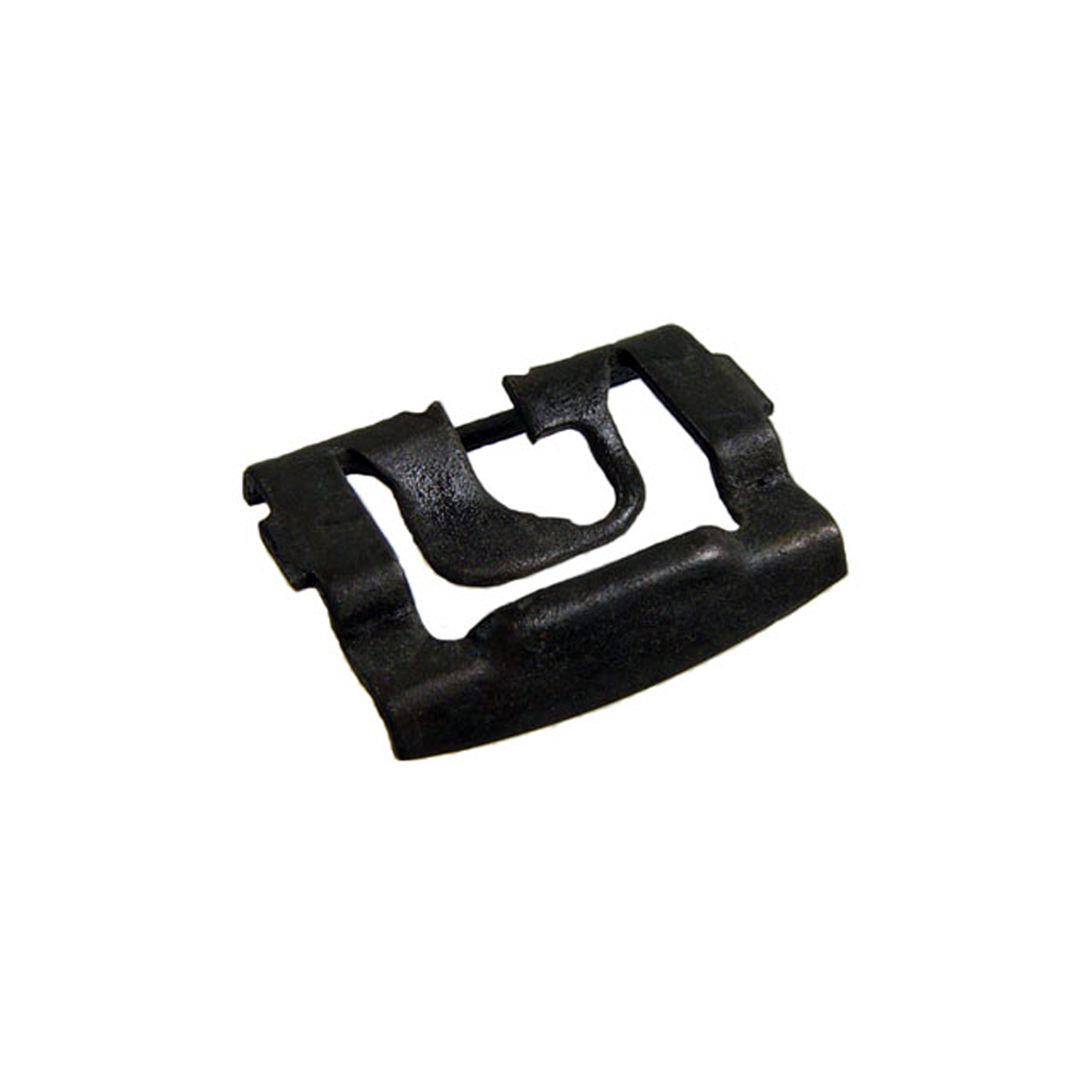 1982 Chrysler LeBaron Windshield and Rear Windshield Molding Clip. Made of steel-WF 216Windshield and Rear Windshield Molding Clip. Made of steel. 1-1/8" X 5/8". Each
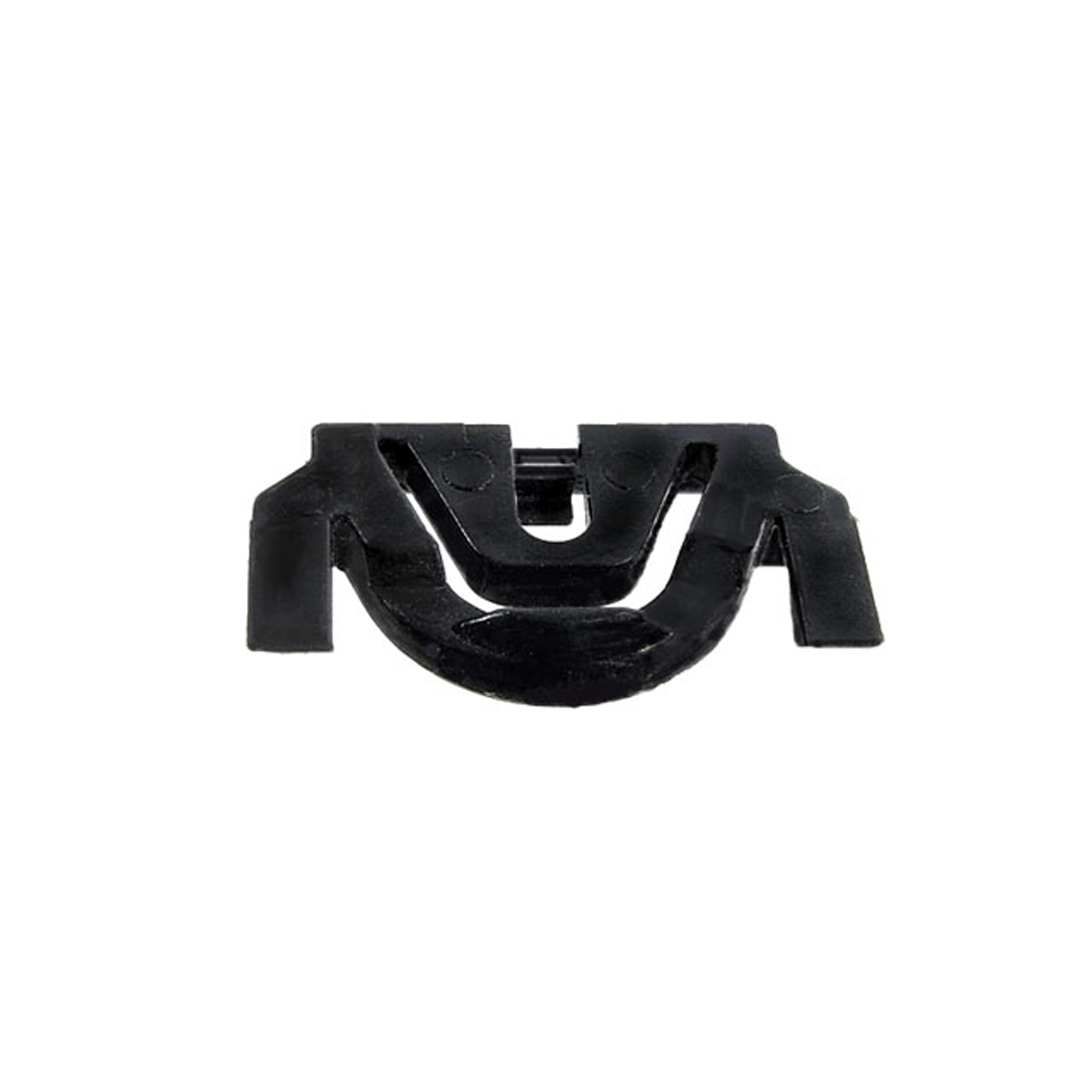 1982 Chrysler LeBaron Windshield and Rear Windshield Reveal Molding Clip-WF 225-AWindshield and Rear Windshield Reveal Molding Clip. Made of nylon. 2" X 11/16". Each
Why Choose Metro?
For over 100 years, Metro Moulded Parts has been the pinnacle of quality in classic car restoration parts. Our commitment to precision and authenticity in every component ensures a perfect fit and an OEM-level appearance.
- Expert Craftsmanship & Quality: Each part is a testament to our dedication to reliability and perfection, crafted from original designs and thoroughly tested.
- Advanced Technology: We use cutting-edge techniques to create flawless, long-lasting parts that surpass others in performance.
- SuperSoft Sponge – The Ultimate Door Seal: Not only are our door seals 30% softer than competitors', but they're also guaranteed to never leak. They effectively reduce wind and road noise, enhancing your classic car's comfort and driving experience.
- Proudly American: Our parts are a product of American craftsmanship, made in the USA with a spirit of excellence and heritage.
- Unrivaled Warranty: We back our products with a 30-year industry-leading warranty, a testament to our confidence in their quality.
Join us in preserving the legacy of classic cars with parts that are crafted for perfection, not just made.