
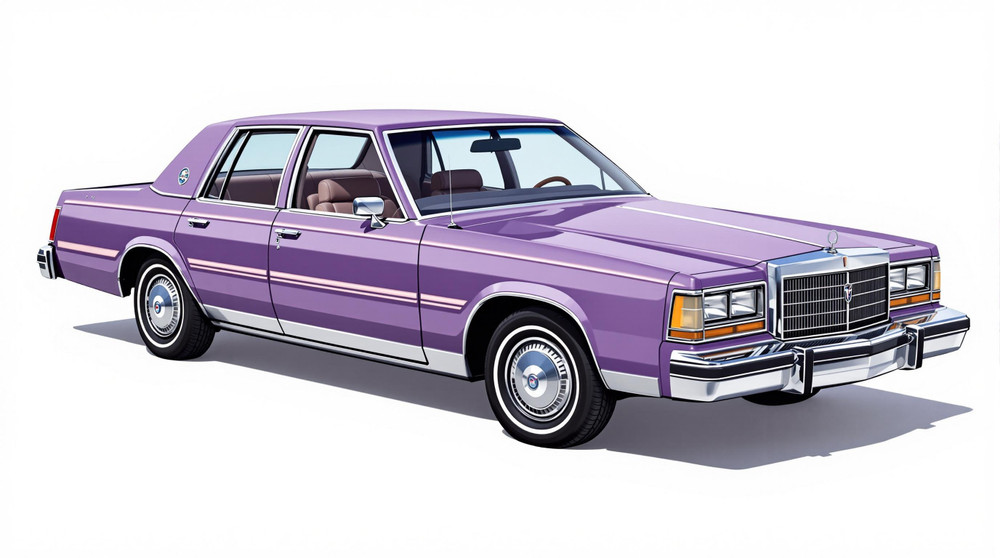
Image of 1982 Chrysler New Yorker, Note: These illustrations use artistic license and may differ from actual historical models.
Performance Metrics
Fundamental Metrics
Emotional Appeal
MMP Rating
| Engine Specifications | |
|---|---|
| Engine: | 3.7L Slant-6, 5.2L V8 |
| Displacement: | 225 cu in (3.7L) to 318 cu in (5.2L) |
| Horsepower: | 85-140 hp |
| Torque: | 125-230 lb-ft |
| Compression Ratio: | 8.4:1 (3.7L), 8.5:1 (5.2L) |
| Ignition System: | Electronic Ignition |
| Cooling System: | Liquid-cooled |
| Performance Specifications | |
| 0-60 Time: | Estimated 12-15 seconds |
| 1/4 Mile Time: | Estimated 18-20 seconds |
| Top Speed: | 100-110 mph |
| Transmission and Drive | |
| Drive Type: | Rear-wheel drive |
| Transmission Type: | 3-speed automatic |
| Fuel and Efficiency | |
| Fuel System Type: | Carburetor |
| MPG: | Estimated 15-20 mpg |
| Dimensions and Brakes | |
| Brakes: | Power-assisted disc brakes (front), drum brakes (rear) |
| Wheelbase: | 112.7 inches |
| Weight: | 3,400-3,600 lbs |
Note: Specifications for classic cars are given to the best of our ability, considering the limited and variant data available.
1982 Chrysler New Yorker: A Luxury Name Takes a New Direction
The 1982 Chrysler New Yorker carried one of Detroit’s grandest nameplates into a very different era: front-wheel drive, a smaller footprint, and luxury equipment shaped by the realities of the early 1980s.
Built by Chrysler, the New Yorker was the company’s flagship passenger car, a name that had represented upscale American motoring since the 1930s. By 1982, however, Chrysler was rebuilding its business around smaller, more efficient cars. The New Yorker reflected that shift, offering a more compact, front-wheel-drive interpretation of the traditional luxury sedan rather than the large, rear-wheel-drive format associated with earlier models.
That change is the intriguing part of the 1982 car’s story. The New Yorker badge had long suggested generous dimensions and a formal, full-size presence. Now it was being adapted to a more economical age. Chrysler also used the New Yorker and Fifth Avenue names across closely related luxury models during this period, so buyers and collectors should check the specific model and equipment when comparing cars.
Formal Style in a Smaller Package
The 1982 New Yorker had the upright, carefully tailored appearance expected of a luxury sedan. Its squared-off body, defined beltline, and prominent grille gave it a more formal look than many compact cars of the period. Chrome accents and bright trim added distinction, while the relatively short overall length made the car easier to park and maneuver than the big New Yorkers of earlier decades.
Inside, the New Yorker aimed to make its smaller dimensions feel welcoming. Buyers could find plush cloth upholstery, available leather trim, carpeting, padded interior surfaces, and power accessories, depending on the equipment package. The cabin emphasized comfort and convenience over sporting intent, with a broad dashboard, an upright driving position, and seating designed for relaxed trips. As with many cars of this age, the condition of the upholstery, headliner, plastic trim, and power equipment varies greatly today.
Period color choices generally included familiar luxury-car shades such as white, silver, gray, blue, red, and tan or beige. Exact names and availability depended on the paint chart and trim combination for the model year. Neutral colors and darker blues or reds suited the New Yorker’s conservative image, while two-tone treatments could give the car an especially formal appearance where offered.
The New Yorker was offered as a four-door sedan. It was not a range of coupes, convertibles, and wagons: the sedan was the model’s central expression, balancing passenger room and a traditional luxury-car profile. Equipment and trim could vary, so an original window sticker or factory documentation is valuable when identifying a particularly well-equipped example.
Technology for an Economy-Minded Era
Front-wheel drive was a defining engineering choice. It allowed Chrysler to package the engine and transmission together at the front of the car, leaving useful cabin space without requiring a long driveshaft and rear differential. The layout also helped the New Yorker provide predictable traction on wet or snowy roads, a practical benefit for drivers in colder climates.
Depending on configuration, the 1982 model used a 2.2-liter Chrysler four-cylinder or an available 2.6-liter Mitsubishi-built four-cylinder. A three-speed automatic transmission was a common pairing. Power accessories and comfort features such as air conditioning, cruise control, power windows, and power locks were available or included according to equipment level. These features were not revolutionary individually, but the combination reflected Chrysler’s effort to make a smaller car feel appropriately upscale.
It is worth distinguishing this New Yorker from the rear-wheel-drive New Yorker Fifth Avenue models sold around the same period. Chrysler’s overlapping names and changing model lineup can make online listings confusing. Check the VIN, engine bay, body details, and original sales literature before assuming that every 1982 New Yorker has the same platform or equipment.
Why the New Yorker Mattered
The 1982 New Yorker is significant less as a radical styling landmark than as evidence of Chrysler’s wider transformation. The company had faced serious financial pressure in the late 1970s, and its survival depended on developing cars that could share components, control costs, and use fuel more efficiently. The New Yorker applied that strategy to a prestigious nameplate.
Its compact, front-drive format showed how American luxury cars were changing. Rather than relying solely on a large V8, a long hood, and a rear-drive chassis, Chrysler offered comfort and status in a package better suited to new economic and regulatory conditions. This approach helped establish a path for later front-wheel-drive American luxury sedans.
The car did not single-handedly transform the industry, and it was not the first luxury car to use front-wheel drive. Its importance lies in the way it brought that layout to a mainstream American flagship name. The New Yorker also helped demonstrate that a familiar badge could be repositioned without abandoning the promise of comfort and convenience customers associated with it.
Performance and Road Manners
The four-cylinder New Yorker was built for steady, economical travel rather than fast acceleration. Depending on engine, equipment, condition, and test method, period performance estimates generally put 0-to-60 mph in roughly the mid-teens. Top speed was around the 95-to-105 mph range, though the car feels most at home cruising well below that. These are approximate figures, not guarantees for an individual surviving car.
On the road, the front-drive layout gives the New Yorker a secure, uncomplicated character. It tracks comfortably on highways and offers useful traction in poor weather. The suspension favors ride comfort, softening ordinary road joints and bumps rather than encouraging fast cornering. On a winding road, expect noticeable body lean and measured steering response. This is a comfortable sedan, not a sports car.
The four-cylinder engine produces a modest, workmanlike sound, especially when asked to accelerate hard. The automatic transmission prioritizes smooth, simple operation over quick shifts. From behind the wheel, the experience is relaxed: an upright seating position, light everyday controls, and a ride tuned for commuting and longer trips. A well-maintained example should feel composed, though worn suspension bushings, tires, or engine mounts can make an old car feel harsher and noisier than it did when new.
Living With a 1982 New Yorker
Today, the New Yorker is best suited to relaxed local driving, vintage-car gatherings, and occasional cruising. It is not a natural choice for racing or demanding modern highway use, particularly if the car has tired brakes, old tires, or an unknown maintenance history. A carefully maintained example can still provide an enjoyable taste of early-1980s American motoring.
Routine work is within the reach of a capable home mechanic. Basic service items such as belts, hoses, filters, brakes, and ignition parts are generally manageable, though availability can vary by engine and trim. The four-cylinder layout is more compact than a traditional V8 installation, and front-drive packaging can make some repairs less convenient. Before buying, inspect for rust, cooling-system problems, oil leaks, transmission behavior, electrical faults, and deteriorated rubber components.
Parts support is mixed. Common mechanical components may be obtainable through specialist suppliers or the broader Chrysler parts market, but New Yorker-specific trim, interior pieces, and undamaged body panels can take patience to locate. A complete car with working accessories is usually a better starting point than a cheap project missing rare trim.
Useful Facts and Common Criticisms
The New Yorker’s most notable fact is the contrast between its historic name and its downsized, front-drive character. It represents a period when Detroit manufacturers were adapting established luxury identities to tighter fuel-economy expectations and changing consumer preferences.
There is no widely recognized speed, endurance, or production record associated specifically with the 1982 New Yorker. It was a comfort-oriented production sedan, not a competition model. Nor is it commonly identified with a defining celebrity ownership story or a major historical event. Its appeal is more grounded: it offers a clear snapshot of Chrysler’s product strategy during a consequential decade.
Common criticisms include modest acceleration, a restrained driving character, and the difficulty of finding certain model-specific cosmetic parts. Some enthusiasts also prefer the traditional rear-wheel-drive New Yorker and Fifth Avenue models. Those points are fair, but they reflect the car’s intended role: practical, comfortable luxury rather than performance or old-school size.
Collector Value and Availability
The 1982 New Yorker is a niche collectible rather than a high-demand investment car. A running driver in fair condition might sell for about $1,500 to $4,000, while a clean, well-kept example could bring roughly $4,000 to $8,000. Exceptional, low-mileage cars with strong documentation and especially attractive condition may exceed that range, but asking prices and completed sales can differ significantly.
Exact production totals are not consistently reported in easily comparable sources, and figures can be complicated by differences between New Yorker versions and related models. As a practical estimate, think in terms of tens of thousands rather than a rare limited edition, with perhaps around 20,000 to 30,000 examples for the relevant model configuration. That is an estimate, not a confirmed factory production figure. Survivor numbers are considerably lower, especially for cars with original interiors and complete equipment.
Values have generally remained modest, with condition and originality making the biggest difference. The car is unlikely to appreciate rapidly in the way a celebrated muscle car or limited-production performance model might. Its best value is as an affordable, distinctive period sedan. A clean example may become more desirable as interest grows in overlooked 1980s cars, but buyers should choose one for enjoyment rather than presumed investment returns.
A Flagship Reimagined
The 1982 Chrysler New Yorker brought a historic luxury name into a more compact and fuel-conscious era. Its formal styling, comfort-focused cabin, front-wheel-drive engineering, and easygoing road manners made it a product of Chrysler’s practical reinvention. It may not deliver big-car V8 drama, but it tells an important story about how American luxury changed. For the right enthusiast, that modest sedan is a memorable piece of automotive history.
1982 Chrysler New Yorker Catalog of Parts
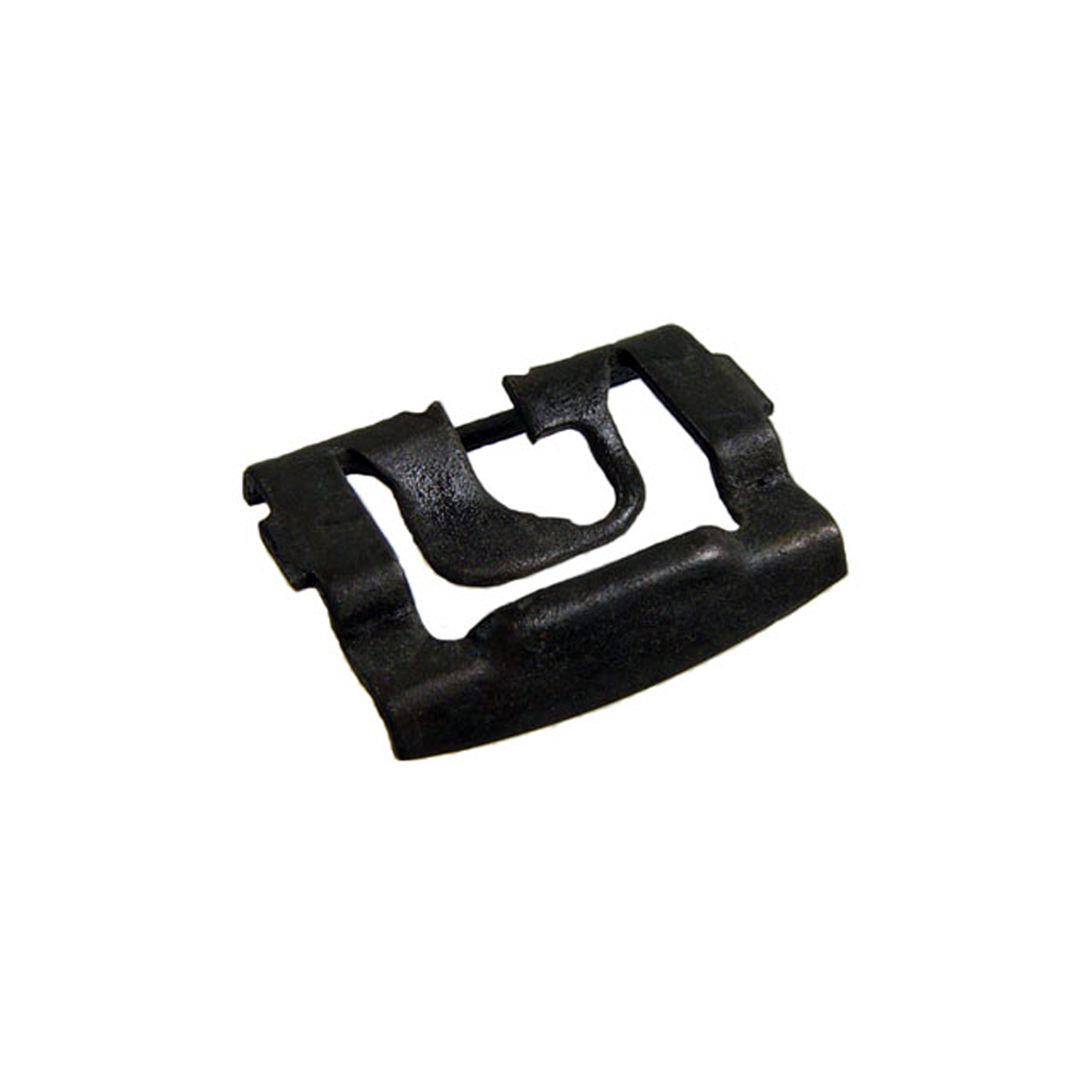 1982 Chrysler New Yorker Windshield and Rear Windshield Molding Clip. Made of steel-WF 216Windshield and Rear Windshield Molding Clip. Made of steel. 1-1/8" X 5/8". Each
Why Choose Metro?
For over 100 years, Metro Moulded Parts has been the pinnacle of quality in classic car restoration parts. Our commitment to precision and authenticity in every component ensures a perfect fit and an OEM-level appearance.
- Expert Craftsmanship & Quality: Each part is a testament to our dedication to reliability and perfection, crafted from original designs and thoroughly tested.
- Advanced Technology: We use cutting-edge techniques to create flawless, long-lasting parts that surpass others in performance.
- SuperSoft Sponge – The Ultimate Door Seal: Not only are our door seals 30% softer than competitors', but they're also guaranteed to never leak. They effectively reduce wind and road noise, enhancing your classic car's comfort and driving experience.
- Proudly American: Our parts are a product of American craftsmanship, made in the USA with a spirit of excellence and heritage.
- Unrivaled Warranty: We back our products with a 30-year industry-leading warranty, a testament to our confidence in their quality.
Join us in preserving the legacy of classic cars with parts that are crafted for perfection, not just made.