
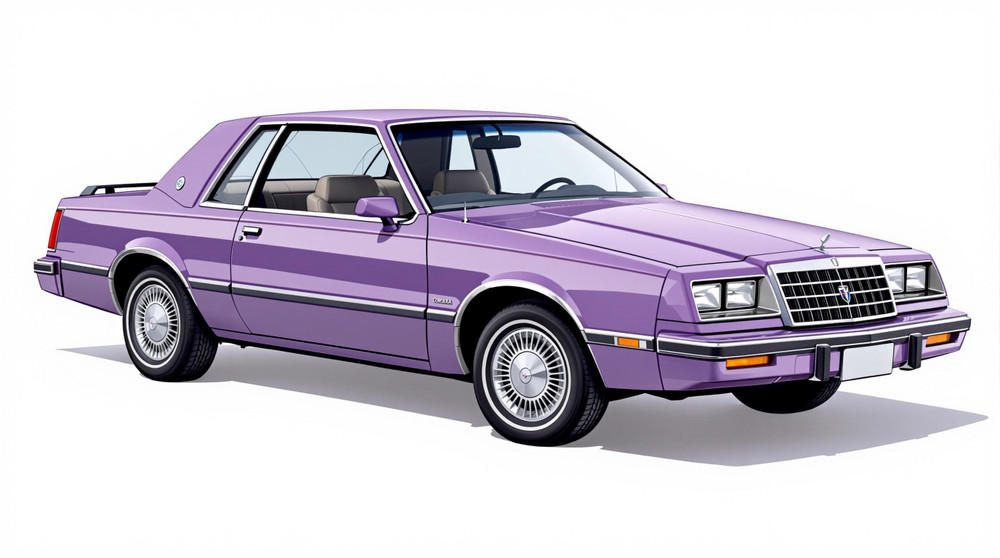
Image of 1983 Chrysler Cordoba, Note: These illustrations use artistic license and may differ from actual historical models.
Performance Metrics
Fundamental Metrics
Emotional Appeal
MMP Rating
| Engine Specifications | |
|---|---|
| Engine: | 318 cu in (5.2 L) V8, 360 cu in (5.9 L) V8 |
| Displacement: | 318-360 cu in |
| Horsepower: | 120-170 hp |
| Torque: | 245-280 lb-ft |
| Compression Ratio: | 8.5:1 |
| Ignition System: | Electronic ignition |
| Cooling System: | Liquid-cooled |
| Performance Specifications | |
| 0-60 Time: | 11-13 seconds |
| 1/4 Mile Time: | 17-19 seconds |
| Top Speed: | 105-110 mph |
| Transmission and Drive | |
| Drive Type: | Rear-wheel drive |
| Transmission Type: | 3-speed automatic |
| Fuel and Efficiency | |
| Fuel System Type: | Carburetor |
| MPG: | 15-20 mpg |
| Dimensions and Brakes | |
| Brakes: | Front disc, rear drum |
| Wheelbase: | 114.9 inches |
| Weight: | 3,600-3,800 lbs |
Note: Specifications for classic cars are given to the best of our ability, considering the limited and variant data available.
1983 Chrysler Cordoba: The Last Year of Chrysler’s Personal-Luxury Coupe
With its long hood, bright chrome grille, and comfortably formal roofline, the 1983 Chrysler Cordoba looked ready for a night at the supper club, even when its destination was simply the grocery store. It was the final model year for a nameplate that had once helped Chrysler make a bold move into the personal-luxury market.
Chrysler introduced the Cordoba in 1975, positioning it as a more compact, lower-priced alternative to large luxury cars. The original model became a major sales success, but the 1983 version was a smaller, more restrained coupe built during a very different era for the company. It was rear-wheel drive, offered with six-cylinder or V8 power, and aimed at buyers who valued comfort and style over outright performance.
One memorable piece of Cordoba history came from the advertising campaign for the first-generation car. Actor Ricardo Montalban famously praised its “rich Corinthian leather.” The phrase became part of American car culture, although “Corinthian leather” was a marketing name, not a special leather-making tradition from Corinth. By 1983, the Cordoba had a quieter profile, but it still carried the personal-luxury character that made the name familiar.
Formal Styling and a Plush Cabin
The 1983 Cordoba was a two-door coupe with a long, squared-off hood, a prominent rectangular grille, and carefully arranged chrome trim. Its crisp edges and upright proportions suited the early-1980s taste for formal, almost architectural styling. The body was more compact than the original Cordoba, but it retained a substantial presence on the road.
Roof treatments helped buyers tailor the car’s appearance. A Landau-style vinyl roof and decorative opera-window treatments could give the coupe an even more traditional luxury look. Wire-look wheel covers and bright exterior accents were also in keeping with the Cordoba’s dressy character. Chrysler offered a range of period paint colors, with shades such as white, silver, red, blue, and darker metallic or earth tones appearing across the available palette. Exact colors depended on the order guide and production details for the market and trim.
Inside, the Cordoba emphasized comfort rather than sportiness. Buyers could find cloth or vinyl upholstery, with richer seating materials available depending on configuration. The broad front seats, padded surfaces, and wood-look accents created a lounge-like atmosphere. Options such as air conditioning, power windows and locks, cruise control, and an upgraded stereo could make the car a well-equipped cruiser. The result was not hand-built coachwork, but it offered the relaxed, well-appointed feel buyers expected from a personal-luxury coupe.
There was only one body style for 1983: a two-door coupe. The model’s appeal came from its combination of coupe proportions, trim packages, roof options, and comfort features rather than from a convertible or a separate performance body. The most recognizable look is the formal coupe with its Landau-style roof and bright trim.
What Made the Cordoba Matter
The Cordoba’s importance is best understood as part of Chrysler’s changing fortunes. In 1975, the company took a chance on a smaller personal-luxury car bearing the Chrysler name. The first Cordoba sold strongly and showed that buyers would choose a stylish, relatively attainable coupe instead of a full-size luxury model. Its early success gave Chrysler a valuable product during a difficult period for the American auto industry.
By 1983, the market had shifted. Fuel economy, emissions rules, and changing tastes had pushed automakers toward smaller vehicles, while the personal-luxury coupe segment was losing some of its earlier momentum. The second-generation Cordoba was related to the Dodge Mirada and used Chrysler’s rear-wheel-drive J-body architecture. It was more compact than the original, but it kept traditional cues such as a long hood, rear-wheel drive, and a comfortable automatic-transmission layout.
The Cordoba did not introduce a landmark technology or establish a new performance benchmark. Its significance lies in how it expressed a particular American idea of luxury: accessible, stylish, comfortable, and easy to drive. It also stands as one of the last Chrysler coupes to combine that formula with a conventional rear-wheel-drive platform before the nameplate ended after 1983.
Engines, Acceleration, and Road Manners
For 1983, the Cordoba was offered with a 3.7-liter Slant Six or a 5.2-liter (318-cubic-inch) V8, depending on equipment and market. Both were paired with an automatic transmission, typically Chrysler’s three-speed TorqueFlite. The six-cylinder favored economy and straightforward cruising, while the V8 delivered the stronger, more relaxed response many buyers wanted in a luxury coupe. These engines used carburetion and period electronic ignition or emissions-control systems, not modern fuel injection.
Factory performance figures can vary by engine, gearing, emissions calibration, and test method, so period-style estimates are more useful than a single exact number. A V8 Cordoba would generally be expected to reach 60 mph in roughly 10 to 12 seconds, with a top speed in the neighborhood of 105 to 115 mph. The Slant Six version was slower, commonly estimated at about 13 to 15 seconds to 60 mph, with a top speed around 95 to 105 mph. Those are approximate figures, not guaranteed results for a decades-old car.
On the road, the Cordoba’s priorities are clear. Its torsion-bar front suspension and leaf-spring rear setup provide a traditional American ride, with the suspension tuned more for comfort than sharp cornering. It generally absorbs ordinary road imperfections well, though worn shocks, tired bushings, or sagging springs can make an old example floaty or unsettled. On winding roads, the steering is easygoing rather than precise, and the car’s weight and soft setup encourage a measured pace.
A V8 model adds a low, familiar burble under acceleration, while the three-speed automatic shifts with an unhurried feel compared with newer transmissions. The driver sits in a broad, comfortable cabin and interacts with the car through light steering, a relaxed driving position, and straightforward controls. The Cordoba is most enjoyable when treated as a cruiser, not a sports coupe.
Living With a 1983 Cordoba
Today, a Cordoba is best suited to weekend drives, local car shows, and relaxed touring. It can be used as a regular driver if it has been properly maintained, but its age means that condition matters far more than the model’s original reputation for comfort. These cars were not built as race machines, and finding one modified for serious competition would be unusual.
Many routine repairs are within reach of a mechanically capable owner. The carbureted engines, conventional automatic transmission, rear-wheel-drive layout, and familiar suspension components are generally easier to understand than modern computer-controlled systems. Parts availability is mixed: common mechanical and service items may be obtainable through specialist suppliers, while Cordoba-specific trim, interior pieces, and body details can take more searching.
Before buying, inspect the car for rust, especially around the lower body, wheel openings, floor areas, and trunk. Check the condition of the vinyl roof, window seals, upholstery, and dashboard, since aged trim can be costly or difficult to replace. On a car that has spent years sitting, pay close attention to fuel-system condition, cooling-system performance, brake hydraulics, and the operation of the automatic transmission. A clean, well-maintained car is usually a better buy than a bargain project with missing trim.
Cordoba Facts and Common Complaints
The 1983 model was the last Cordoba, which gives it a natural place in Chrysler history even though it was not a limited-production farewell edition. There is no widely recognized factory high-performance version for this year. The LS trim and cosmetic equipment could add distinction, but buyers should not mistake those features for a separate muscle-car model.
Production is commonly estimated in the low-to-mid 20,000s for 1983, or roughly 23,000 cars. Exact totals can differ among published sources and may depend on how configurations are counted. That makes the car less common than a mass-market sedan, but not exceptionally rare in collector terms. No major speed, endurance, or racing records are associated with the 1983 Cordoba.
Its best-known criticism is that the later Cordoba lacked the impact and sales strength of the original 1975 model. Some enthusiasts also find its performance modest and its handling too soft. Those criticisms are fair if the car is judged by modern standards or against muscle cars, but they miss the point of the Cordoba: it was designed to deliver quiet, comfortable transportation with a touch of style.
Collector Value and Market Outlook
Values depend heavily on condition, originality, engine, and completeness. As a broad 2026 guide, a non-running or heavily worn project might sell for about $1,500 to $4,000. A usable driver in fair-to-good condition could bring roughly $5,000 to $10,000. Very clean, original examples may reach $12,000 to $20,000, with exceptional cars potentially exceeding that range when the right buyer is involved. These are approximate asking and transaction ranges, not a formal appraisal.
Good examples are available, but buyers may need patience to find one with sound bodywork and intact interior trim. The Cordoba remains a niche collectible, and values have generally been more stable than spectacular. It is not currently a blue-chip investment car; condition, originality, and the appeal of its period styling are the main factors supporting value. A properly documented, well-preserved example is likely to attract more interest than a modified or incomplete car.
Why the 1983 Cordoba Still Deserves a Look
The 1983 Chrysler Cordoba brought together classic American coupe proportions, comfortable appointments, a choice of familiar engines, and relaxed rear-wheel-drive manners. It was not a groundbreaking performance car, but it represented a distinctive chapter in Chrysler’s history and the final year of a nameplate that had once been a major success.
For enthusiasts, the Cordoba is a reminder that automotive character is not measured only in horsepower or lap times. Sometimes it is found in a chrome grille, a comfortable front seat, and the easy-going V8 sound of a coupe built for the long way home.
1983 Chrysler Cordoba Catalog of Parts
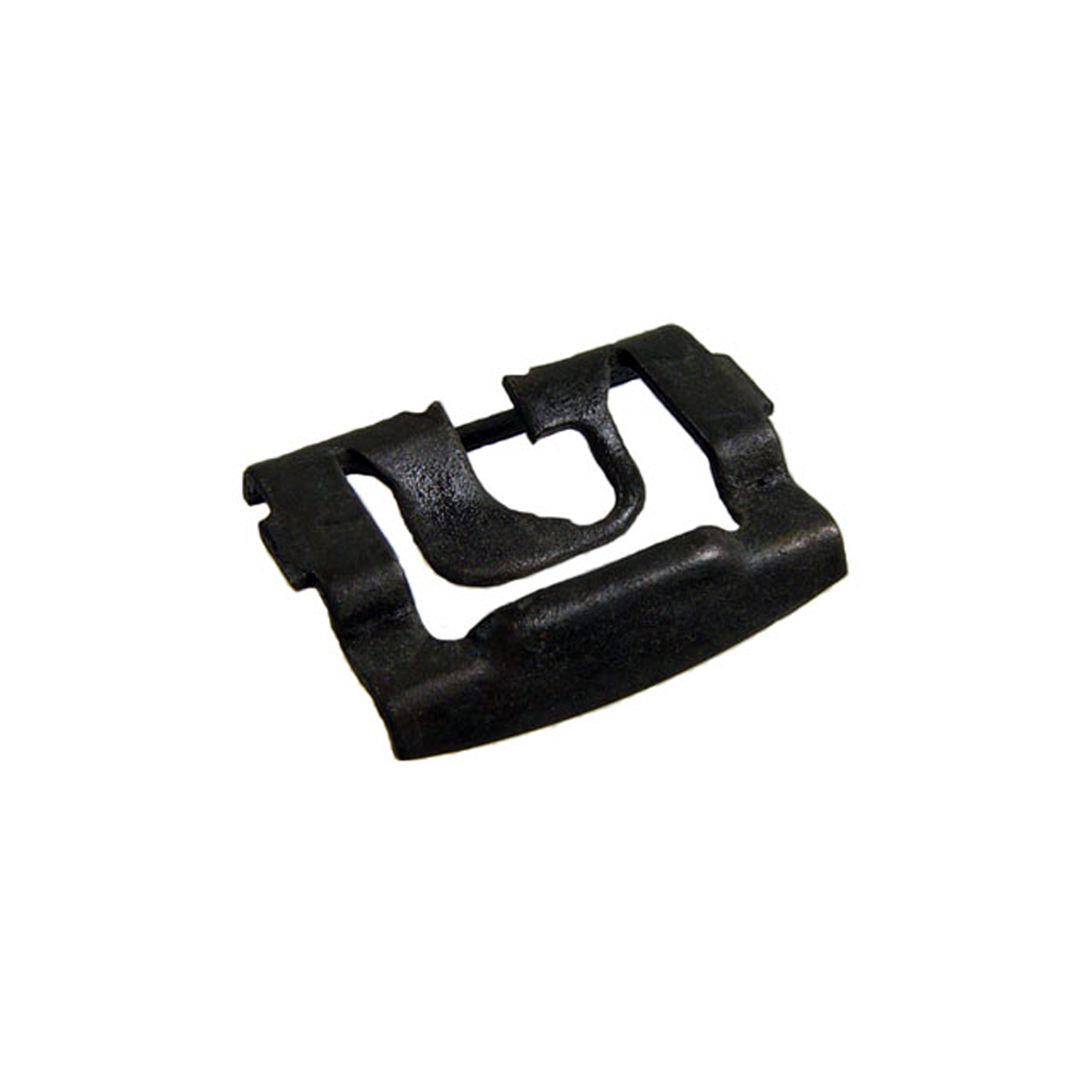 1983 Chrysler Cordoba Windshield and Rear Windshield Molding Clip. Made of steel-WF 216Windshield and Rear Windshield Molding Clip. Made of steel. 1-1/8" X 5/8". Each
Why Choose Metro?
For over 100 years, Metro Moulded Parts has been the pinnacle of quality in classic car restoration parts. Our commitment to precision and authenticity in every component ensures a perfect fit and an OEM-level appearance.
- Expert Craftsmanship & Quality: Each part is a testament to our dedication to reliability and perfection, crafted from original designs and thoroughly tested.
- Advanced Technology: We use cutting-edge techniques to create flawless, long-lasting parts that surpass others in performance.
- SuperSoft Sponge – The Ultimate Door Seal: Not only are our door seals 30% softer than competitors', but they're also guaranteed to never leak. They effectively reduce wind and road noise, enhancing your classic car's comfort and driving experience.
- Proudly American: Our parts are a product of American craftsmanship, made in the USA with a spirit of excellence and heritage.
- Unrivaled Warranty: We back our products with a 30-year industry-leading warranty, a testament to our confidence in their quality.
Join us in preserving the legacy of classic cars with parts that are crafted for perfection, not just made.