
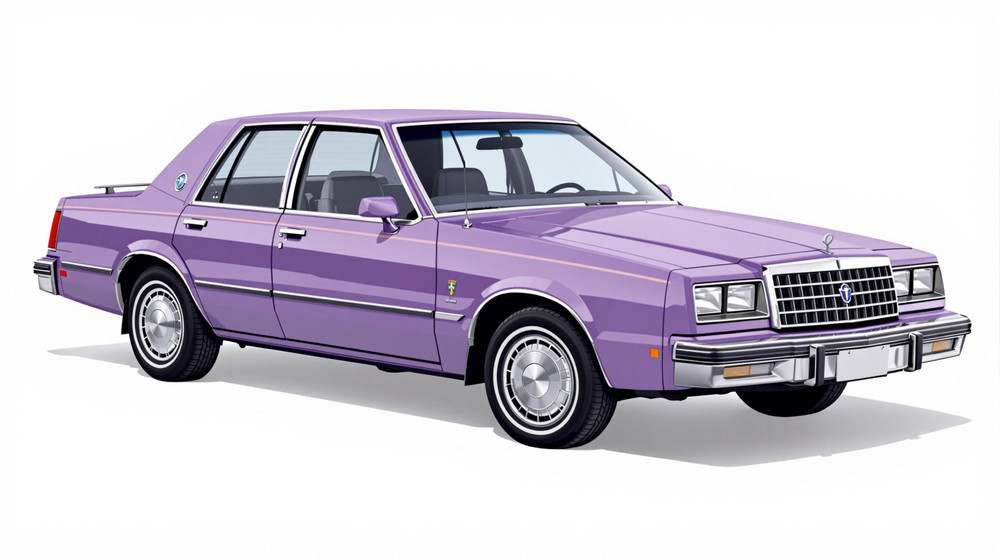
Image of 1983 Chrysler E Class, Note: These illustrations use artistic license and may differ from actual historical models.
Performance Metrics
Fundamental Metrics
Emotional Appeal
MMP Rating
| Engine Specifications | |
|---|---|
| Engine: | 2.2L I4, 2.6L I4 |
| Displacement: | 2.2 - 2.6L |
| Horsepower: | 84 - 96 hp |
| Torque: | 125 - 140 lb-ft |
| Compression Ratio: | 8.5:1 - 9.0:1 |
| Ignition System: | Electronic Ignition System |
| Cooling System: | Liquid Cooled |
| Performance Specifications | |
| 0-60 Time: | 11 - 13 seconds |
| 1/4 Mile Time: | 18 - 20 seconds |
| Top Speed: | 100 - 105 mph |
| Transmission and Drive | |
| Drive Type: | FWD |
| Transmission Type: | 3-speed automatic, 5-speed manual |
| Fuel and Efficiency | |
| Fuel System Type: | Carburetor |
| MPG: | 20 - 25 mpg |
| Dimensions and Brakes | |
| Brakes: | Front Disc / Rear Drum |
| Wheelbase: | 103.3 inches |
| Weight: | 2500 - 2700 lbs |
Note: Specifications for classic cars are given to the best of our ability, considering the limited and variant data available.
In 1983, Chrysler took the practical front-wheel-drive formula that had helped save the company and dressed it for a more formal occasion. The result was the Chrysler E-Class, a short-lived luxury-leaning sedan that brought upscale trim, electronic features, and a distinctly 1980s look to the brand’s expanding K-car family.
1983 Chrysler E-Class: A Luxury K-Car
The E-Class arrived for the 1983 model year as a four-door sedan built by Chrysler Corporation in the United States. It used the front-wheel-drive E-platform, a stretched and revised relative of Chrysler’s influential K-car architecture. That connection gave the E-Class familiar engineering under its more polished exterior, while helping Chrysler offer a roomier, more premium car without developing an entirely new platform.
The timing mattered. Chrysler was still rebuilding its finances and reputation after years of serious trouble. The K-car had helped the company return to profitability, and Chrysler was extending that formula into more market segments. The E-Class aimed above basic transportation: it was intended for buyers who wanted comfort and status but did not necessarily want a large, traditional rear-wheel-drive sedan.
One intriguing detail is the car’s name. The E-Class was a Chrysler model, not a Mercedes-Benz, and it should not be confused with the classic Chrysler E-body muscle cars of the 1970s. Its brief run, lasting only for the 1983 and 1984 model years, makes it an unusual chapter in Chrysler’s early-1980s recovery story.
Formal Styling and a Quietly Upmarket Cabin
The E-Class wore the sharp, upright design language popular in the early 1980s. Its squared-off roofline, formal rear quarters, and carefully defined body surfaces gave it a more conventional luxury-sedan appearance than the compact hatchbacks and rounded designs emerging elsewhere. A prominent grille, rectangular headlamps, bright exterior trim, and available vinyl roof treatment added to its dressed-up character.
Inside, the E-Class leaned into comfort and presentation. Buyers could find velour upholstery, plush carpeting, wood-tone accents, and a broad instrument panel designed to look more expensive than the cabin of a basic economy car. Materials and fit were appropriate to the price class, though they were not in the same league as the finest European luxury sedans. The overall impression was of a well-equipped American family car with a more formal finish.
Available equipment could include power windows and locks, cruise control, air conditioning, upgraded audio, and electronic instrumentation. Some examples featured a digital instrument display, a striking period feature that made the car feel futuristic even though its basic mechanical layout was conventional. Equipment varied by configuration, so buyers looking at a surviving car should check what was factory-installed rather than assume every E-Class had the same technology.
The E-Class was offered as a four-door sedan only. There was no coupe or wagon body style, and the sedan was the defining version. Paint choices followed the restrained palette typical of upscale cars of the period, with formal shades such as dark blue, silver, gray, white, and burgundy among the colors buyers could encounter. Availability varied by year and trim, but darker, conservative colors suited the car’s luxury-minded image especially well.
Why the E-Class Mattered to Chrysler
The E-Class was not a groundbreaking new platform, but it showed how far Chrysler could stretch its front-wheel-drive engineering. By adapting K-car-related components for a more spacious and better-appointed sedan, the company could share development and production costs while offering a wider range of products. That strategy was central to Chrysler’s recovery during the early 1980s.
What set the E-Class apart from many contemporaries was its mix of compact-car underpinnings and traditional luxury cues. Its front-wheel drive offered useful traction in wet or snowy conditions, while its upright styling, padded roof options, and comfort features appealed to buyers who still expected a sedan to look formal. It was an early example of the practical, front-drive American luxury car that would become increasingly common.
The E-Class did not become a major design icon, and its influence is best understood as part of a broader Chrysler strategy rather than as a single revolutionary model. Its lasting significance lies in showing how the company used shared architecture to move quickly into new price brackets. The formula continued across Chrysler’s lineup, even as individual models and names changed.
Engines, Acceleration, and Road Manners
Engine availability depended on model year and equipment. The lineup included Chrysler’s 2.2-liter four-cylinder and, in some configurations, a 2.6-liter Mitsubishi-built four-cylinder. A turbocharged 2.2-liter was also available in the period’s Chrysler range, though equipment and availability could vary. Most E-Class examples were paired with an automatic transmission, in keeping with the model’s comfort-oriented mission.
Performance figures differ across period tests and engine combinations, so there is no single number that describes every 1983 E-Class. As a general guide, a naturally aspirated car typically needed roughly 12 to 15 seconds to reach 60 mph, with top speed around 100 to 110 mph. A turbocharged example could be noticeably quicker, with 0-to-60 times in the neighborhood of 9 to 11 seconds and a higher top speed. These are approximate period-style estimates, not guaranteed results for an individual car today.
On the road, the E-Class was tuned for comfort rather than sharp cornering. Its front-wheel-drive layout made it predictable in ordinary driving, and the suspension was intended to soften broken pavement and city streets. Over bumps, a sound example should feel composed, though worn struts, old bushings, tired tires, and loose interior trim can turn a once-comfortable ride into a rattly one.
On a winding road, the car behaves like a practical front-drive sedan of its era. It is not a sports sedan, and brisk cornering tends to bring on body lean and front-tire understeer. The engine has a modest four-cylinder sound rather than the rumble of a V8, while the cabin prioritizes an easy, relaxed drive. The driver’s experience is more about visibility, comfort, and straightforward controls than speed or feedback.
Living With a Chrysler E-Class Today
In its day, the E-Class was suited to commuting, family use, and comfortable highway travel. Today, most surviving examples are hobby cars, occasional drivers, or project vehicles. A particularly clean, original car can also make an appealing addition to a collection focused on Chrysler’s 1980s recovery years.
Routine service is generally familiar to mechanics who know Chrysler’s front-wheel-drive cars of the period. The four-cylinder layout is not especially exotic, and many basic jobs can be handled by an experienced home mechanic with ordinary tools. The bigger challenge is often finding correct parts, especially trim, interior pieces, electronics, and model-specific exterior components. Mechanical parts shared with related Chrysler vehicles may be easier to source than E-Class-specific details.
As with any car more than four decades old, condition matters more than reputation. Buyers should inspect for rust, neglected cooling-system maintenance, worn suspension components, electrical faults, and transmission problems. On turbocharged examples, careful checks of the turbo system and engine condition are especially important. A pre-purchase inspection by a mechanic familiar with 1980s Chrysler products is worthwhile.
Rare Details, Trivia, and Common Complaints
The E-Class’s short two-year production run is its most notable rarity story. It is uncommon today, but that does not automatically make it highly valuable. Many were used as ordinary transportation, and far fewer survive in excellent, original condition than the car’s initial production numbers might suggest.
There is no widely recognized E-Class speed, endurance, or sales record, and the model is not particularly associated with a major historical event or a verified celebrity collection. Its claim to interest is more grounded: it is a distinctive example of Chrysler’s platform-sharing strategy during a pivotal period for the company.
Common criticisms include modest acceleration from the non-turbo engines, a less refined cabin than more expensive luxury cars, and the difficulty of finding some model-specific parts. Its early-1980s electronics can also be troublesome after decades of age. On the positive side, the front-wheel-drive layout, comfortable ride, and relatively straightforward mechanical design make a well-maintained car pleasant for relaxed driving.
Collector Value and Market Outlook
Exact production totals for the E-Class are not consistently reported in commonly available references. A reasonable estimate is that roughly 30,000 to 40,000 were built across the 1983 and 1984 model years, but this should be treated as an informed approximation rather than a confirmed factory total. The car is now uncommon on the used-car market, particularly in original condition, but it is not rare in the high-demand collector-car sense.
Values remain modest. As a broad current-market estimate, a project or rough driver might sell for about $500 to $2,000. A running, usable example in fair to good condition could fall around $2,000 to $5,000, while a clean, well-preserved car may bring roughly $5,000 to $8,000. Exceptional low-mileage or unusually original examples could ask more, though finding a buyer at a premium may take time. These estimates vary with location, condition, equipment, and documentation.
The E-Class is better viewed as a slow-burn enthusiast car than a fast-appreciating investment. Interest in overlooked 1980s vehicles has grown, and a pristine example may become more desirable as survivors disappear. Still, buyer demand is limited, and values are likely to remain below those of better-known Chrysler classics for the foreseeable future.
The E-Class’s Place in Chrysler History
The 1983 Chrysler E-Class combined front-wheel-drive practicality with the formal styling and comfort features expected of an upscale American sedan. It was not a performance star or a technological revolution, but it illustrates how Chrysler used its successful K-car engineering to rebuild its range and reach new buyers.
Today, the E-Class is a distinctive survivor from a turning point in American automotive history. For collectors who appreciate the overlooked cars that helped keep Chrysler moving forward, its brief production run and unmistakable 1980s character make it more than just another old sedan.
1983 Chrysler E Class Catalog of Parts
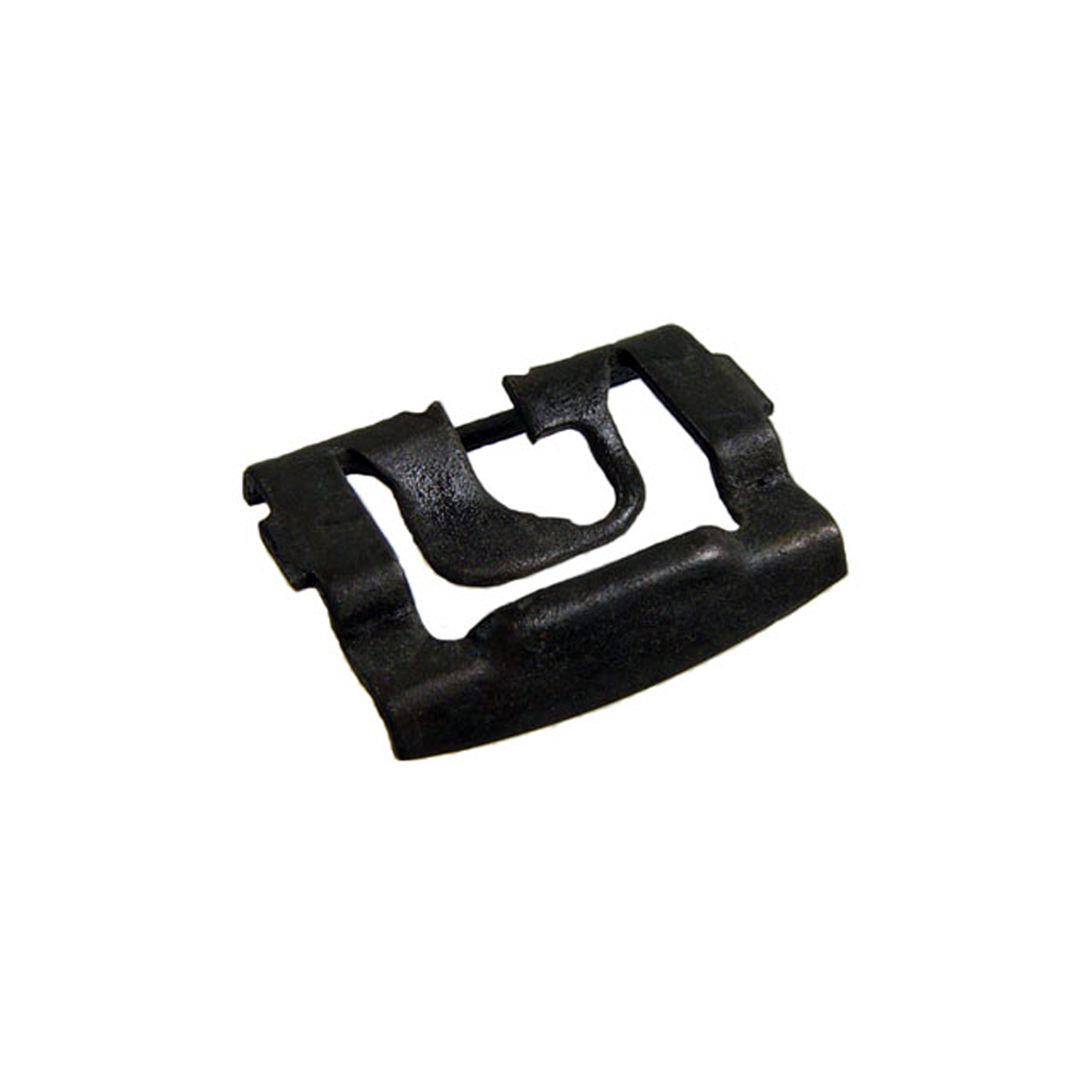 1983 Chrysler E Class Windshield and Rear Windshield Molding Clip. Made of steel-WF 216Windshield and Rear Windshield Molding Clip. Made of steel. 1-1/8" X 5/8". Each
Why Choose Metro?
For over 100 years, Metro Moulded Parts has been the pinnacle of quality in classic car restoration parts. Our commitment to precision and authenticity in every component ensures a perfect fit and an OEM-level appearance.
- Expert Craftsmanship & Quality: Each part is a testament to our dedication to reliability and perfection, crafted from original designs and thoroughly tested.
- Advanced Technology: We use cutting-edge techniques to create flawless, long-lasting parts that surpass others in performance.
- SuperSoft Sponge – The Ultimate Door Seal: Not only are our door seals 30% softer than competitors', but they're also guaranteed to never leak. They effectively reduce wind and road noise, enhancing your classic car's comfort and driving experience.
- Proudly American: Our parts are a product of American craftsmanship, made in the USA with a spirit of excellence and heritage.
- Unrivaled Warranty: We back our products with a 30-year industry-leading warranty, a testament to our confidence in their quality.
Join us in preserving the legacy of classic cars with parts that are crafted for perfection, not just made.