
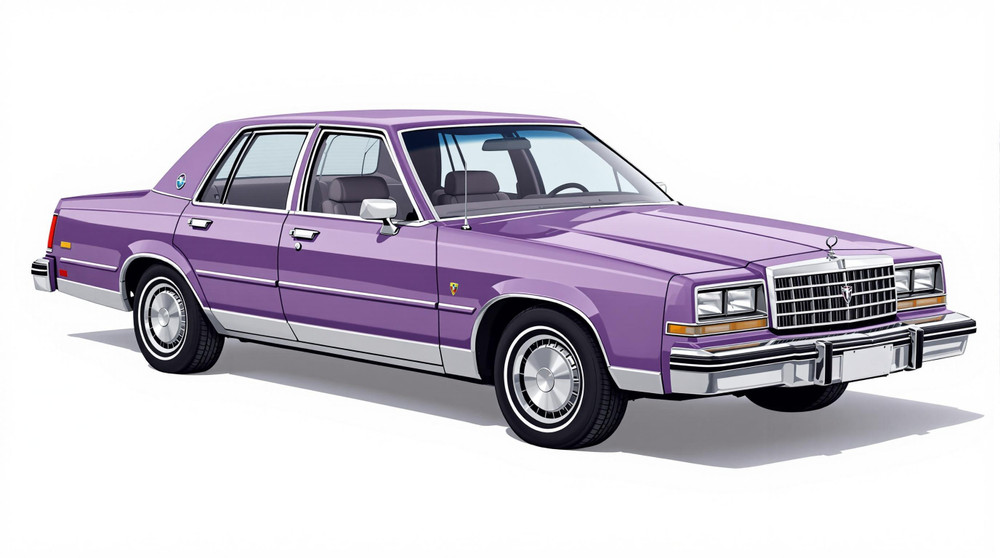
Image of 1983 Chrysler Executive Sedan, Note: These illustrations use artistic license and may differ from actual historical models.
Performance Metrics
Fundamental Metrics
Emotional Appeal
MMP Rating
| Engine Specifications | |
|---|---|
| Engine Options: | 2.2L I4, 2.6L I4 |
| Displacement Range: | 2.2 - 2.6L |
| Horsepower Range: | 84 - 96 hp |
| Torque: | 125 - 140 lb-ft |
| Compression Ratio: | 8.5:1 - 9.0:1 |
| Ignition System: | Electronic |
| Cooling System: | Liquid-cooled |
| Performance Specifications | |
| 0-60 Time: | 15 - 17 seconds |
| 1/4 Mile Time: | 20 seconds |
| Top Speed: | 100 mph |
| Transmission and Drive | |
| Drive Type: | FWD |
| Transmission Type: | 3-speed automatic |
| Fuel and Efficiency | |
| Fuel System Type: | Carburetor |
| MPG: | 20 - 25 mpg |
| Dimensions and Brakes | |
| Brakes: | Front disc, rear drum |
| Wheelbase: | 112.7 inches |
| Weight: | 2,800 lbs |
Note: Specifications for classic cars are given to the best of our ability, considering the limited and variant data available.
1983 Chrysler Executive Sedan: A K-Car in a Boardroom Suit
The 1983 Chrysler Executive Sedan took the practical engineering of Chrysler’s front-wheel-drive K-car family and stretched it into something far more formal: a chauffeur-friendly luxury sedan with limousine ambitions. Built by Chrysler Corporation during the company’s hard-won recovery years, it offered executive-car presence without relying on the traditional formula of a huge V8 and rear-wheel drive.
The Executive arrived at a fascinating point in Chrysler history. The K-car platform had helped the company return to profitability, and Chrysler was demonstrating just how many jobs that architecture could do, from compact family transportation to corporate conveyance. The Executive Sedan was one of the more unusual results. Its central contrast is also its most memorable fact: beneath the long roof and dignified trim sat the basic ideas of a practical, mass-produced Chrysler.
It is worth separating the Executive Sedan from the more elongated Executive limousine. The model name was used for formal, extended Chrysler vehicles, and specifications can vary by body configuration and individual car. This guide focuses on the 1983 sedan, while noting where limousine-style versions differed.
Formal Styling, K-Car Foundations
The Executive Sedan wore a long, upright profile designed to look important from the curb. Its extended body, squared-off roofline, formal grille, and ample brightwork gave it the reserved appearance expected of a corporate car. Opera-style rear-quarter windows and a vinyl roof, where fitted, strengthened the traditional chauffeur-car look. It was not a sleek sports sedan, and it made no attempt to hide its purpose: dignified transport with extra room for rear passengers.
Inside, the emphasis was on comfort and convenience rather than sporting flair. Depending on equipment and trim, buyers could find plush cloth or velour upholstery, leather-trimmed surfaces, wood-tone accents, power accessories, air conditioning, cruise control, and upgraded audio equipment. The materials aimed to make the cabin feel more luxurious than an ordinary K-car, although the underlying switchgear and general layout retained familiar Chrysler family-car character.
Technology was relatively conventional for 1983, but the combination was notable. Front-wheel drive helped provide useful cabin space and predictable traction, while power steering, power brakes, automatic transmission, and comfort equipment made the large car easier to operate in everyday traffic. The Executive was a luxury-minded vehicle, not a rolling electronics showcase.
Paint and trim choices could vary with the car’s order and market. Formal colors such as black, dark blue, silver, white, and burgundy suited its image, while vinyl-roof and contrasting-trim combinations added visual ceremony. As with many low-volume specialty cars, surviving examples may not reflect one tidy, widely documented color chart.
The Executive name covered sedan and more stretched limousine-style configurations. The sedan is the more conventional choice, with a long body and a proper rear passenger compartment. Limousine versions took the idea further, prioritizing rear-seat space and chauffeur use. The sedan’s appeal lies in that unusual middle ground: more imposing than a regular LeBaron, but less extravagant than a full-length limousine.
Why the Executive Mattered
The Executive Sedan was not a high-volume design trendsetter, but it showed how far Chrysler could stretch a platform developed for ordinary family cars. At a time when many prestigious American luxury cars relied on large engines, rear-wheel drive, and traditional full-size chassis, Chrysler offered a front-drive alternative with a more manageable mechanical layout.
That approach reflected broader changes in the industry. Fuel economy, packaging efficiency, and platform sharing had become important priorities, especially after the energy shocks of the 1970s. The Executive made those priorities visible in an unexpected setting: the corporate car park. Its long body suggested old-school luxury, while its mechanical roots pointed toward the more efficient engineering that was shaping the 1980s.
Its influence was more symbolic than direct. The Executive did not create the stretched-luxury-car market, nor did it replace traditional limousines. Instead, it served as a striking example of Chrysler’s platform flexibility and its effort to offer a distinctive premium product while managing costs during a period of corporate recovery.
Performance and Road Manners
The 1983 Executive Sedan used a 2.6-liter Mitsubishi-built four-cylinder engine paired with an automatic transmission. Output was modest by luxury-car standards, generally reported at roughly 90 horsepower, and the car’s extra length and weight put comfort well ahead of quick acceleration. Exact figures vary among sources and individual configurations, but a 0-to-60-mph time in the mid-to-high teens and a top speed around 90 mph are reasonable estimates rather than guaranteed factory test results.
On the road, the Executive was best understood as a relaxed cruiser. The automatic transmission favored smooth progress, and the four-cylinder engine delivered its power without the deep, effortless surge of a large V8. At highway speeds, acceleration required planning, especially with passengers aboard. The engine note was more workmanlike than luxurious, a reminder that the car’s executive image rested on a practical platform.
Its front-wheel-drive layout could be reassuring on wet or slippery roads, while power steering helped make a long car manageable at parking speeds. On broken pavement, the long wheelbase could settle into a comfortable, measured ride, though tired suspension parts, worn bushings, or poorly maintained tires can make an old example feel loose or unsettled. On winding roads, the Executive preferred smooth inputs and steady cornering to spirited driving. It was built to deliver passengers in comfort, not to chase an apex.
Living with a Chrysler Executive
Today, the Executive is more likely to appear at a specialty-car gathering, a classic Chrysler event, or a film and photo shoot than in daily commuting. A sound example can still be driven, but its unusual bodywork and low production volume make it a less straightforward ownership proposition than an ordinary LeBaron.
Some mechanical parts are shared with other Chrysler K-car models, which can help with routine servicing. The engine, transmission, brakes, and many general service items are familiar territory for mechanics who know 1980s Chrysler products. The challenges are more likely to involve model-specific trim, glass, body panels, interior pieces, and the condition of any extended or specially modified structure.
Before buying, inspect the body carefully for rust and previous repairs, and check the alignment of doors and panels. Look closely at the roof, vinyl covering, rear passenger compartment, and any stretch-related structural work. A long car with scarce trim can turn a seemingly small cosmetic issue into a time-consuming parts hunt. Maintenance is manageable for a capable owner, but restoration is best approached with patience and a realistic budget.
Rare Details and Common Criticisms
The Executive’s most interesting trivia may be its unusual combination of ingredients: a formal chauffeur-style body, front-wheel drive, and a four-cylinder engine. It brought a distinctly 1980s kind of resourcefulness to a segment usually associated with much larger and more traditional machinery.
Reliable production totals for the 1983 Executive Sedan are difficult to establish from commonly available records. It was a low-volume specialty model, and sedan and limousine versions are not always clearly separated in surviving references. A cautious estimate would place production in the hundreds rather than the tens of thousands, but that should be treated as an informed approximation, not an official count. There is no widely recognized speed, sales, or endurance record associated with the model.
Its most frequent criticism is also obvious: the styling promises more power and grandeur than the four-cylinder drivetrain delivers. Some enthusiasts also view its K-car roots as a compromise, while others see them as the very thing that makes the car interesting. Either way, the Executive was not intended to be a performance machine. Its purpose was comfortable, distinctive transportation with a corporate image.
Collector Value and Availability
The 1983 Chrysler Executive Sedan is a niche collectible. It is uncommon enough to attract attention at Chrysler and 1980s-car gatherings, but its limited recognition keeps demand below that for famous muscle cars or high-profile luxury models. Finding one for sale may take time, and condition matters considerably because replacement trim and body components can be difficult to source.
As a broad current-market estimate, a project or non-running example might sell for roughly $1,500 to $4,000. A usable driver in presentable condition could fall around $4,000 to $10,000, while an especially clean, complete, and well-documented car might reach approximately $10,000 to $18,000. These are guide ranges, not formal appraisals; location, body configuration, mechanical condition, and the quality of restoration can move the price substantially.
Values appear better described as steady but highly condition-sensitive than as part of a strong, predictable appreciation trend. The Executive’s rarity gives it conversation value, but rarity alone does not guarantee a high price. The best examples are likely to become more desirable as distinctive 1980s cars gain collector interest, though buying one should be about enjoying its character rather than counting on a quick investment return.
A Distinctive Chapter in Chrysler History
The 1983 Chrysler Executive Sedan blended corporate formality with the practical engineering that helped revive Chrysler. It offered a roomy, front-wheel-drive alternative to traditional luxury cars, wore the unmistakable visual language of a chauffeur vehicle, and carried a drivetrain built for calm rather than speed.
Its place in automotive history is not that of a sales champion or a technological revolution. It is a more unusual story: a K-car transformed into an executive conveyance, capturing Chrysler’s ingenuity and the changing priorities of the American auto industry. For collectors who appreciate cars with unexpected roots, the Executive Sedan remains a memorable reminder that even a practical platform can wear a very impressive suit.
1983 Chrysler Executive Sedan Catalog of Parts
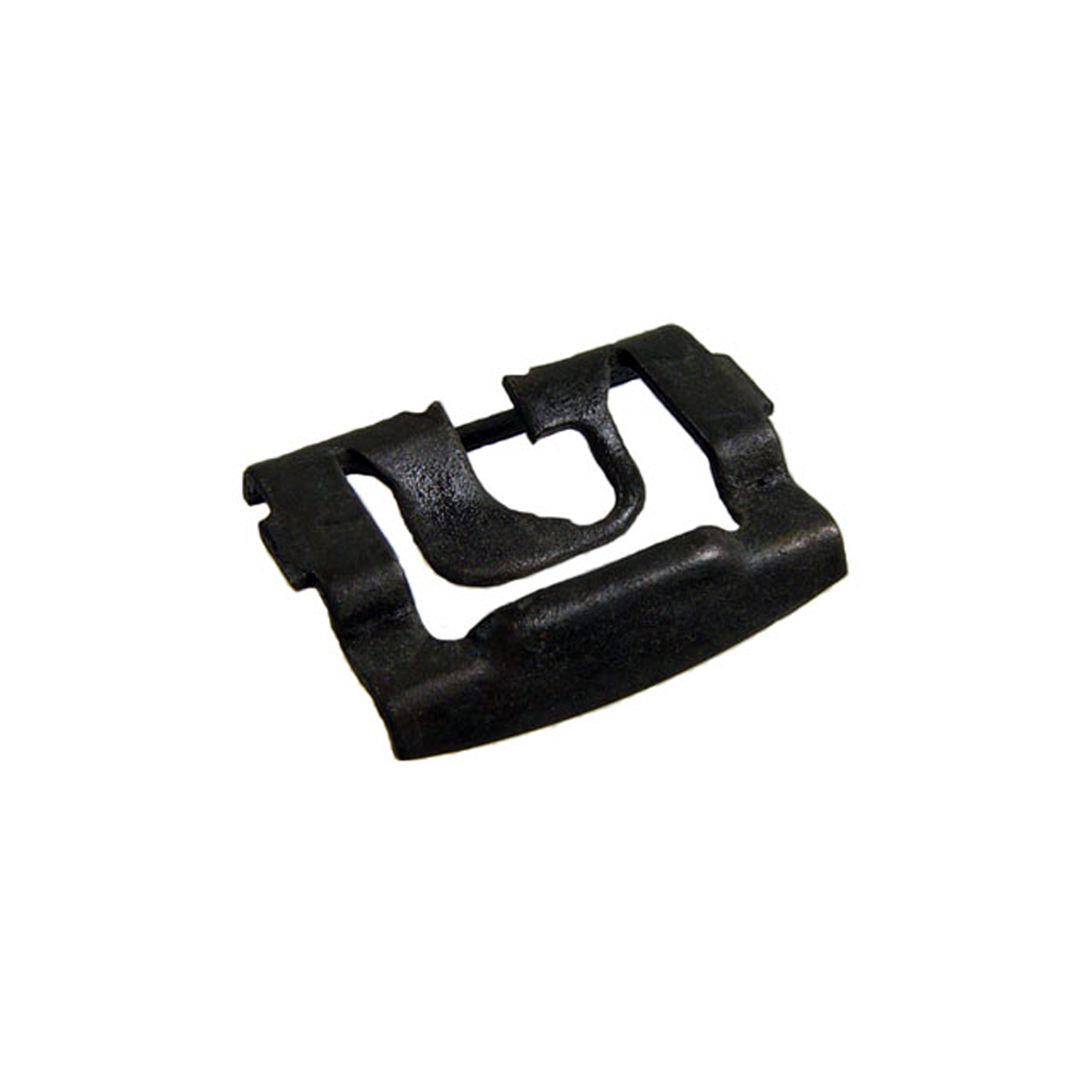 1983 Chrysler Executive Sedan Windshield and Rear Windshield Molding Clip. Made of steel-WF 216Windshield and Rear Windshield Molding Clip. Made of steel. 1-1/8" X 5/8". Each
Why Choose Metro?
For over 100 years, Metro Moulded Parts has been the pinnacle of quality in classic car restoration parts. Our commitment to precision and authenticity in every component ensures a perfect fit and an OEM-level appearance.
- Expert Craftsmanship & Quality: Each part is a testament to our dedication to reliability and perfection, crafted from original designs and thoroughly tested.
- Advanced Technology: We use cutting-edge techniques to create flawless, long-lasting parts that surpass others in performance.
- SuperSoft Sponge – The Ultimate Door Seal: Not only are our door seals 30% softer than competitors', but they're also guaranteed to never leak. They effectively reduce wind and road noise, enhancing your classic car's comfort and driving experience.
- Proudly American: Our parts are a product of American craftsmanship, made in the USA with a spirit of excellence and heritage.
- Unrivaled Warranty: We back our products with a 30-year industry-leading warranty, a testament to our confidence in their quality.
Join us in preserving the legacy of classic cars with parts that are crafted for perfection, not just made.