
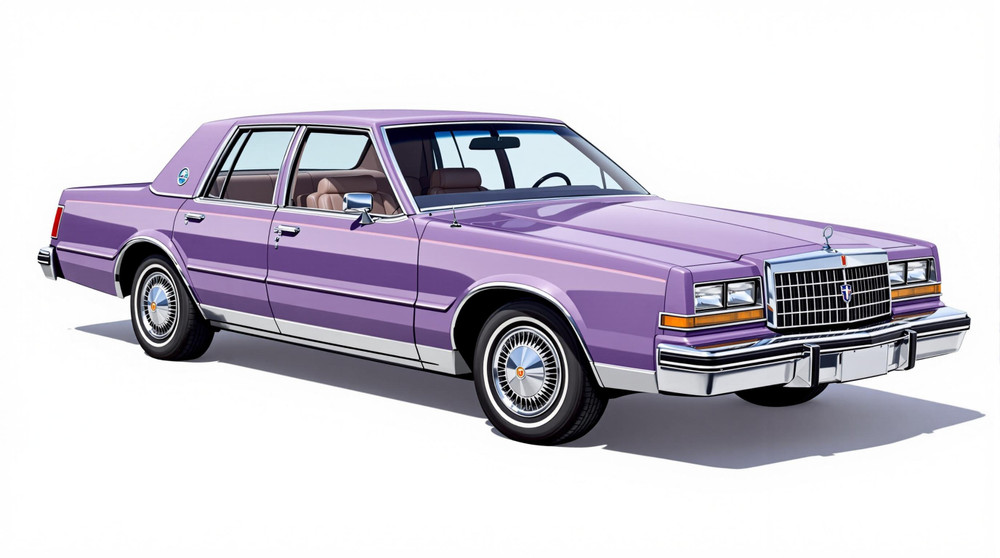
Image of 1983 Chrysler Imperial, Note: These illustrations use artistic license and may differ from actual historical models.
Performance Metrics
Fundamental Metrics
Emotional Appeal
MMP Rating
| Engine Specifications | |
|---|---|
| Engine: | 318 cu in (5.2 L) V8 |
| Displacement: | 318 cu in (5.2 L) |
| Horsepower: | 140 hp |
| Torque: | 245 lb-ft |
| Compression Ratio: | 8.5:1 |
| Ignition System: | Electronic Ignition System |
| Cooling System: | Liquid-cooled |
| Performance Specifications | |
| 0-60 Time: | 11 seconds |
| 1/4 Mile Time: | 18 seconds |
| Top Speed: | 108 mph |
| Transmission and Drive | |
| Drive Type: | Rear-wheel drive |
| Transmission Type: | 3-speed automatic |
| Fuel and Efficiency | |
| Fuel System Type: | Carburetor |
| MPG: | 15-20 mpg |
| Dimensions and Brakes | |
| Brakes: | Power-assisted disc brakes |
| Wheelbase: | 112.7 inches |
| Weight: | 3,700 lbs |
Note: Specifications for classic cars are given to the best of our ability, considering the limited and variant data available.
1983 Chrysler Imperial: A Personal-Luxury Flagship With a Bold Rear End
The 1983 Chrysler Imperial looked like it had rolled out of a different era, then quietly introduced one of the most ambitious pieces of electronics in an American car. With its long hood, concealed headlights, formal roofline, and distinctive raised “bustleback” trunk, it was Chrysler’s flagship personal-luxury coupe: an old-school cruiser with a very modern idea under the hood.
Chrysler revived the Imperial name for the 1981 model year after a six-year absence. The 1983 was the final version of this short-lived generation, built on the company’s J-body platform and closely related underneath to the Chrysler Cordoba. It was positioned above the ordinary Chrysler range, with upscale trim, a plush cabin, and technology intended to make it a credible rival to luxury coupes from Cadillac and Lincoln.
One fact still sets the car apart: its 318-cubic-inch V8 used electronic fuel injection, a notably advanced feature for an American production car at the time. That system gave the Imperial a high-tech talking point, although early reliability challenges also became part of its story.
Bustleback Styling and a Single Body Style
The 1983 Imperial came in one body style: a two-door hardtop coupe. Its design was deliberately formal rather than sporty. A long, squared-off hood led to a broad grille, while concealed headlamps gave the front end a clean, uninterrupted look when the lights were off. Chrome trim, a padded-looking roof treatment on many examples, and opera-style rear quarter windows reinforced its luxury-car character.
The signature feature was at the back. The trunk lid rose into a pronounced contour that suggested the external spare-tire mounts seen on some prewar cars. The shape earned the car its “bustleback” nickname and made it instantly recognizable, even if it divided opinion. It was a styling flourish, not an actual external spare tire.
Imperials were offered in a range of solid and metallic finishes, with vinyl roof coverings and contrasting trim helping create a more formal appearance. Dark colors such as black and deep blue suited the car’s imposing shape particularly well, while silver and lighter metallic shades showed off its long, sharply defined body lines. Exact paint and upholstery combinations varied by model-year literature and equipment selection.
Leather, Comfort, and Early Electronics
Inside, the Imperial aimed for the comfort of a personal luxury coupe rather than the focused layout of a performance car. The cabin featured wide, cushioned seats, substantial door panels, and woodgrain-style trim. Leather seating was a key part of the upscale appeal, with materials and equipment depending on the individual car’s configuration. Buyers could also find power accessories and convenience features expected in a top-of-the-line American coupe.
Technology was central to the Imperial’s identity. Its electronic fuel injection replaced a conventional carburetor, while electronic instrumentation and warning features were available as part of the car’s high-tech approach. Equipment could vary, so a prospective buyer should check the specific car rather than assume every surviving example has the same display or alerts.
The fuel-injection system was a major engineering distinction, but it was also a source of frustration. Early versions had drivability and reliability problems, and some cars received dealer or owner modifications over time. For today’s collectors, that means originality can be complicated: a car with its factory injection intact may be especially interesting, while a properly documented repair or conversion may be more practical for regular use.
Why the Imperial Mattered
The 1983 Imperial was an attempt to combine traditional American luxury-car presence with emerging electronic technology. Its styling looked back to the formal cars of the 1930s, while its fuel-injection system pointed toward a future in which computers would increasingly manage engine operation. That contrast is a big part of its appeal today.
It also represented Chrysler’s effort to make a distinctive flagship during a difficult period for the company. The Imperial was not a sales-volume giant, and it did not overturn the luxury-car market. Instead, it offered an unusual alternative to more familiar Cadillac and Lincoln coupes: smaller and more personal in character than a full-size limousine, yet dressed with far more ceremony than an ordinary two-door.
The car’s lasting influence is less about a direct design legacy and more about its place in the transition to electronic engine management. Its early injection system showed the ambition, as well as the growing pains, involved in bringing complex electronics to mainstream American production cars.
318 V8 Performance and Road Manners
Power came from a 318-cubic-inch, or 5.2-liter, V8 paired with a three-speed TorqueFlite automatic transmission and rear-wheel drive. Factory specifications commonly put output at about 140 horsepower, with torque in the neighborhood of 245 lb-ft. Those figures delivered relaxed cruising rather than forceful acceleration.
Period performance figures vary, but a reasonable estimate for 0-to-60 mph is around 10 to 12 seconds. Top speed is generally estimated at roughly 105 to 110 mph, though the Imperial was not designed for sustained high-speed driving. Its mission was quiet, comfortable travel, not setting records at the drag strip or on a road course.
On smooth highways, the car’s soft suspension and long, substantial feel suit it well. It absorbs ordinary bumps with the easygoing motion expected of a luxury coupe from the period. On rough pavement, worn suspension components can make the ride feel loose, so condition matters. On winding roads, the Imperial’s weight, comfort-oriented setup, and modest tire widths encourage a steady pace rather than sharp cornering. Crosswinds can also make a large, boxy coupe feel less settled than a modern car.
Behind the wheel, the V8 delivers a low, subdued rumble, and the automatic transmission favors smooth shifts over urgency. Steering is light by the standards of a heavy rear-drive car, and the driving position feels broad and relaxed. The experience is less about speed than about gliding along in a distinctive cabin, with enough V8 sound to remind you what is doing the work.
Living With a 1983 Imperial
Most owners use an Imperial as a weekend cruiser, show car, or occasional-use classic. It can handle local trips and highway drives, but age, parts availability, and the fuel-injection system make it a less straightforward choice for dependable everyday transportation than a newer, simpler vehicle.
The 318 V8 and TorqueFlite transmission are familiar Chrysler components, which helps when it comes to routine mechanical service. Brakes, suspension, cooling, and ignition work are within the scope of a competent home mechanic, provided they have the right manual and tools. The more challenging jobs may involve the original EFI, electronic components, trim, and body-specific parts, which can take patience to source or diagnose.
Before buying, inspect the fuel system and ask whether the injection remains original or has been changed. Check for rust, especially underneath and around repaired body panels, and examine the vinyl roof and window seals for signs of water intrusion. A complete car with working accessories is often a better starting point than a cheap example missing rare trim or electronics.
Production, Trivia, and Criticisms
The 1981–1983 Imperial was a low-volume model. Commonly cited production figures put the 1983 total at about 1,555 cars, with roughly 11,800 built across the three-year run. These numbers make the final-year Imperial uncommon, though it is not so scarce that examples never appear on the market.
The Frank Sinatra Edition is a notable piece of the generation’s history. Offered for 1981, it featured special touches associated with the singer, including a collection of Sinatra cassette recordings. It is not a 1983 edition, but it helped give the revived Imperial an unusual pop-culture connection.
The car’s best-known criticism is the very technology that was meant to distinguish it. Early electronic fuel injection could be troublesome, and the Imperial’s performance was modest for a luxury coupe with a V8. Its distinctive rear styling also remains a matter of taste: some enthusiasts love the prewar-inspired bustleback, while others find it awkward. There is no major speed or endurance record attached to the 1983 model. Its claim to fame is being an uncommon, technologically ambitious final chapter in Chrysler’s Imperial revival.
Collector Values and Availability
Values depend heavily on condition, originality, and whether the fuel-injection system works properly. As a broad current-market guide, a project or rough driver may sell for about $2,500 to $6,000. A usable, presentable car often falls in the $6,000 to $12,000 range, while a very clean, well-maintained example can bring roughly $12,000 to $20,000. Exceptional, highly original cars with strong documentation may ask more, but top-end prices depend on finding a buyer who specifically wants this unusual Imperial.
The model’s low production makes availability limited, especially for complete cars with intact trim and electronics. Values have generally been more affordable than those of better-known American luxury classics. Interest has been steady among Chrysler and 1980s-car enthusiasts, but the Imperial is not a guaranteed high-growth investment. Its value is best understood as condition-sensitive and enthusiast-driven, with originality and sound mechanical work doing more for a sale than a speculative restoration.
The Last Word on the 1983 Imperial
The 1983 Chrysler Imperial brought together a plush two-door body, unmistakable bustleback styling, a familiar V8, and unusually ambitious electronic equipment. It was comfortable rather than quick, distinctive rather than widely popular, and innovative in ways that sometimes created as many headaches as headlines.
That mix is exactly what makes it compelling today. The final-year Imperial is a memorable snapshot of Chrysler trying to bridge classic American luxury and the electronic age, wrapped in a shape that still refuses to blend into traffic.
1983 Chrysler Imperial Catalog of Parts
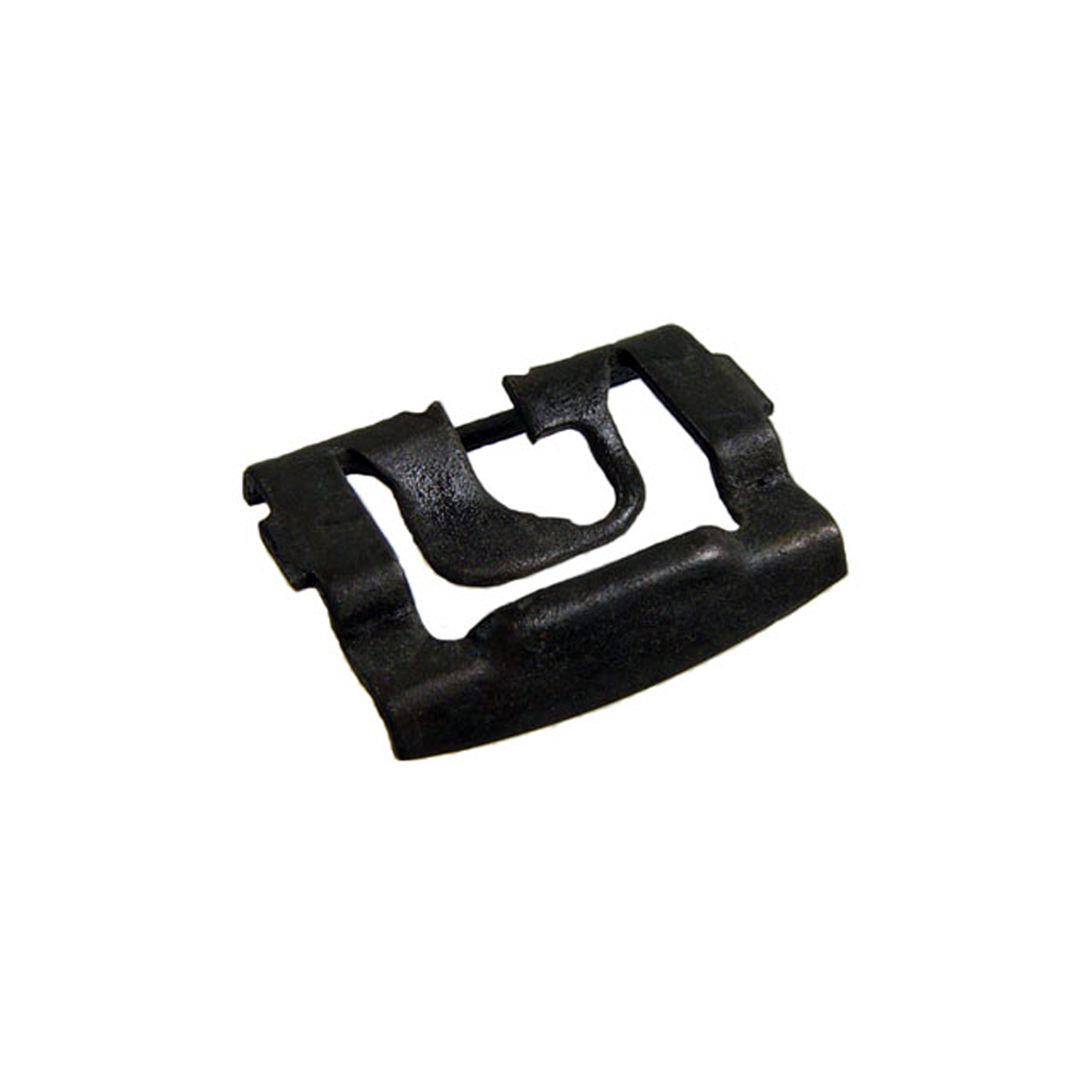 1983 Chrysler Imperial Windshield and Rear Windshield Molding Clip. Made of steel-WF 216Windshield and Rear Windshield Molding Clip. Made of steel. 1-1/8" X 5/8". Each
Why Choose Metro?
For over 100 years, Metro Moulded Parts has been the pinnacle of quality in classic car restoration parts. Our commitment to precision and authenticity in every component ensures a perfect fit and an OEM-level appearance.
- Expert Craftsmanship & Quality: Each part is a testament to our dedication to reliability and perfection, crafted from original designs and thoroughly tested.
- Advanced Technology: We use cutting-edge techniques to create flawless, long-lasting parts that surpass others in performance.
- SuperSoft Sponge – The Ultimate Door Seal: Not only are our door seals 30% softer than competitors', but they're also guaranteed to never leak. They effectively reduce wind and road noise, enhancing your classic car's comfort and driving experience.
- Proudly American: Our parts are a product of American craftsmanship, made in the USA with a spirit of excellence and heritage.
- Unrivaled Warranty: We back our products with a 30-year industry-leading warranty, a testament to our confidence in their quality.
Join us in preserving the legacy of classic cars with parts that are crafted for perfection, not just made.