
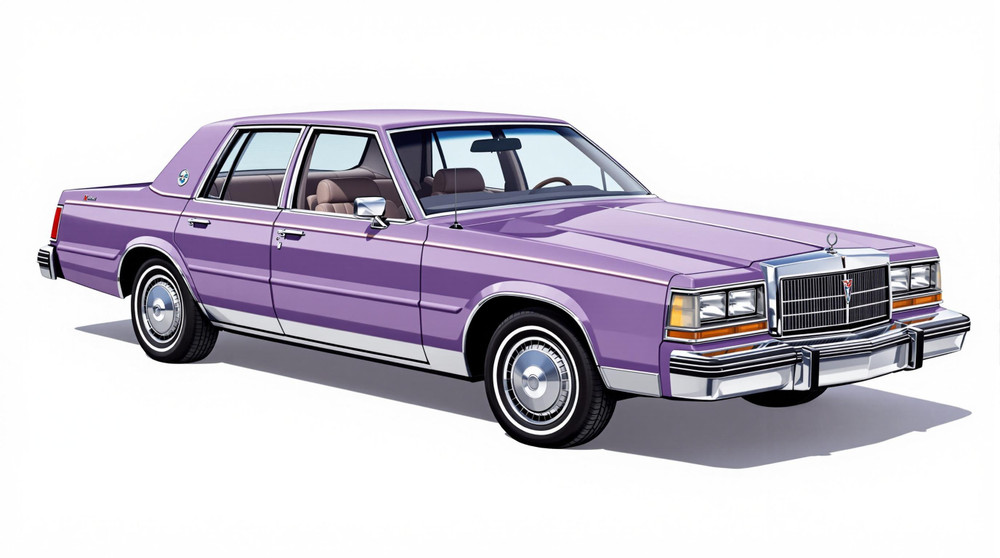
Image of 1983 Chrysler New Yorker, Note: These illustrations use artistic license and may differ from actual historical models.
Performance Metrics
Fundamental Metrics
Emotional Appeal
MMP Rating
| Engine Specifications | |
|---|---|
| Engine Options: | 3.7L Slant-6, 5.2L V8 |
| Displacement Range: | 225-318 cu in |
| Horsepower Range: | 85-140 hp (estimated) |
| Torque: | 170-240 lb-ft (estimated) |
| Compression Ratio: | 8.4:1 (estimated) |
| Ignition System: | Electronic ignition |
| Cooling System: | Liquid-cooled |
| Performance Specifications | |
| 0-60 Time: | 12-15 seconds (estimated) |
| 1/4 Mile Time: | 18-20 seconds (estimated) |
| Top Speed: | 100-110 mph (estimated) |
| Transmission and Drive | |
| Drive Type: | Rear-wheel drive |
| Transmission Type: | 3-speed automatic, 4-speed automatic |
| Fuel and Efficiency | |
| Fuel System Type: | Carburetor |
| MPG: | 15-20 mpg (estimated) |
| Dimensions and Brakes | |
| Brakes: | Power-assisted disc brakes (front), drum brakes (rear) |
| Wheelbase: | 112.7 inches |
| Weight: | 3500-3800 lbs (estimated) |
Note: Specifications for classic cars are given to the best of our ability, considering the limited and variant data available.
1983 Chrysler New Yorker: A New Kind of Flagship
The 1983 Chrysler New Yorker looked like a traditional American luxury sedan, but underneath its formal styling was a thoroughly modern idea: front-wheel drive, a smaller footprint, and four-cylinder power. Built by Chrysler Corporation, it brought the storied New Yorker name into the company’s fuel-conscious, front-drive era.
There is an important naming detail for anyone researching this car. The 1983 front-wheel-drive New Yorker was a different model from the rear-wheel-drive New Yorker Fifth Avenue, which was also sold that year. The standard New Yorker discussed here was an E-body sedan related to Chrysler’s E-Class and Dodge 600. The Fifth Avenue was larger, V8-powered, and built on a different platform.
That distinction captures the crossroads Chrysler faced in the early 1980s. After the fuel shocks of the 1970s and a near financial crisis, the company had made compact, front-wheel-drive cars central to its comeback. The 1983 New Yorker applied that strategy to a name associated with full-size prestige. One memorable piece of period technology helped make the point: an available electronic voice-alert system could speak warnings such as “door ajar” or “lights are on.”
Formal Style, Modern Package
The New Yorker’s shape balanced contemporary downsizing with familiar luxury-car cues. Its squared-off body, upright grille, crisp hood, and rectangular lighting gave it a dignified, almost miniature-limousine presence. A formal roofline and available padded vinyl roof with opera-style rear-quarter windows added a traditional touch, while the relatively compact body and front-wheel-drive layout reflected a very different engineering philosophy from the big rear-drive sedans of earlier decades.
Inside, the cabin aimed for comfort and status rather than sportiness. Buyers could choose cloth upholstery or available leather, with plush seating, wood-look trim, carpeting, and a broad dashboard designed to make the car feel more substantial than its footprint suggested. Power windows, power locks, cruise control, air conditioning, and upgraded audio equipment were among the kinds of amenities associated with the model, depending on equipment and market. The materials and finish were respectable for a mainstream luxury car of the period, though they were not the hand-finished appointments of a high-end European sedan.
Technology was a key part of the New Yorker’s appeal. Available features included electronic instrumentation and Chrysler’s electronic voice-alert system, which used spoken reminders and warnings to keep the driver informed. Automatic climate control and other convenience equipment could also be fitted. These systems made the car feel futuristic in 1983, even if today’s owners may find some electronic components more challenging to diagnose than conventional switches and gauges.
The New Yorker was offered as a four-door sedan. There was no coupe or station-wagon version of this front-drive model. Paint and trim choices varied by production batch and equipment, but period palettes included shades of white, silver and gray, blue, red, and tan or brown. Two-tone combinations and a contrasting vinyl roof suited its formal character, with light-colored bodies paired with a padded roof among the more recognizable looks.
Why the Front-Drive New Yorker Mattered
The 1983 New Yorker was significant because it showed how Chrysler was reshaping its identity. Rather than relying only on large engines and traditional rear-wheel-drive platforms, the company used the adaptable front-drive architecture developed around the K-car family. That approach helped Chrysler control costs, improve packaging, and respond to buyers who wanted better fuel economy without giving up comfort or an upscale image.
Compared with many older American luxury sedans, the New Yorker was shorter, lighter, and more efficient in concept. Its transverse four-cylinder engine and front-wheel drive left useful cabin space without requiring a long hood or a large V8. It was not a radical design in the way a sports car might be, but it represented a meaningful change in what an American luxury-branded sedan could be.
The model also illustrates Chrysler’s clever use of a familiar name. New Yorker buyers could choose a newer, more efficient front-drive car, while customers seeking a more traditional, rear-drive V8 sedan could look to the separately named New Yorker Fifth Avenue. That split gave Chrysler two distinct interpretations of luxury under closely related badges.
Engines, Speed, and Road Manners
The standard New Yorker used a 2.2-liter inline four-cylinder engine. A 2.6-liter Mitsubishi-built four-cylinder was also available, and a turbocharged 2.2-liter could be found in some configurations. Exact output and equipment varied by engine and market; naturally aspirated versions were generally in the neighborhood of 90 to 100 horsepower, while the turbo offered a substantial increase. A three-speed TorqueFlite automatic was common, with availability depending on the particular powertrain.
Performance was adequate for relaxed travel, not rapid acceleration. A naturally aspirated 1983 New Yorker typically needed roughly 13 to 15 seconds to reach 60 mph, with a top speed around 100 to 110 mph under favorable conditions. Those are practical estimates rather than guaranteed factory figures: engine choice, condition, gearing, tires, and testing method all affect the result. A turbocharged example could be notably quicker, with 0-to-60 times potentially around nine seconds and a higher top speed.
On the road, the New Yorker was tuned for comfort. Its front-wheel-drive layout provided useful traction in rain and light snow, while the soft suspension took the edge off broken pavement and expansion joints. The trade-off was body motion over larger bumps and noticeable understeer when pushed through a tight corner. This was a comfortable commuter and highway sedan, not a back-road handler.
The driving experience is more about smooth, unhurried progress than excitement. The four-cylinder engine makes a modest mechanical sound, and the automatic transmission is happiest shifting gently. Turbo models bring a more noticeable surge when boost arrives, but the car still feels like a luxury-oriented sedan rather than a sports car. From behind the wheel, the high seating position, power accessories, and easygoing ride are central to its appeal.
Living With a 1983 New Yorker
Today, most New Yorkers are best suited to occasional driving, local errands, or relaxed weekend use. A well-kept car can still function as a basic daily driver, but age matters more than the original specification. Rubber hoses, belts, seals, suspension bushings, wiring, and cooling-system parts may need attention even when mileage is low.
The engine bay is generally less intimidating than that of a modern car, and many routine jobs are within reach of an experienced home mechanic. The 2.2-liter engine has broad parts support because it appeared across several Chrysler models. The turbo system and electronic equipment require more care, and some trim, dashboard, and voice-alert components can be difficult to find in good condition.
Before buying, check for rust around the lower body, wheel openings, floor pans, and structural seams. Inspect the automatic transmission for delayed engagement or harsh shifts, and confirm that the cooling system, charging system, and dashboard electronics work properly. On turbocharged cars, look closely for oil leaks, damaged hoses, and signs of poorly executed modifications. A complete, unaltered example is usually a better bet than a cheap project with missing interior parts.
Little-Known New Yorker Details
The spoken warning system is one of the model’s most memorable period features. It is a reminder that early-1980s luxury was beginning to include electronic assistance, not just plush seats and extra chrome. A functioning voice-alert system can be a conversation starter at a show, although its novelty is often easier to appreciate than its repairability.
The New Yorker is also easy to confuse with the Fifth Avenue, particularly in old advertisements and classified listings. Check the model designation, body shape, and drivetrain before assuming a car is the rear-drive V8 version. The two cars share a name and a luxury mission, but they offer very different ownership experiences.
There is no widely recognized speed, endurance, or sales record attached specifically to the 1983 front-drive New Yorker. Its historical interest lies instead in Chrysler’s broader shift toward efficient front-drive platforms. Common criticisms include modest power from the naturally aspirated engines, dated three-speed automatic gearing, and the complexity of aging electronics. Some enthusiasts also find the styling more formal than distinctive.
Collector Value and Availability
The 1983 front-wheel-drive New Yorker is uncommon today, but it is not generally considered a high-demand collector car. Exact production totals for this specific model and trim are not consistently reported in readily available sources. A reasonable working estimate is roughly 25,000 to 35,000 cars for the model year, but that should be treated as an estimate rather than a confirmed factory total.
As a broad current-market guide, a running but worn example may sell for about $1,000 to $2,500. A clean, well-maintained car with a presentable interior might bring roughly $3,000 to $6,000, while an unusually original, low-mileage example could reach $7,000 to $10,000 or more if the right buyer is looking for one. Condition, documentation, working electronics, and whether the car is turbocharged can all affect the price.
Values have generally remained modest rather than following the sharp appreciation seen in more famous muscle cars and luxury classics. The model’s rarity does not automatically translate into high prices: demand is limited, and some buyers prefer the more traditional New Yorker Fifth Avenue. A clean New Yorker can still be an appealing, affordable piece of Chrysler history, but it is best purchased for enjoyment and preservation rather than as a short-term investment.
A Different Kind of Chrysler Luxury
The 1983 Chrysler New Yorker paired a familiar luxury name with a compact, front-wheel-drive platform and practical four-cylinder power. Its formal styling, comfortable cabin, electronic voice alerts, and easygoing road manners made it a distinctive product of Chrysler’s early-1980s reinvention.
It may not have the power or collector following of the Fifth Avenue, but it tells an important story about how American automakers adapted to changing fuel costs and buyer expectations. For anyone who appreciates the overlooked chapters of automotive history, this New Yorker is a small sedan with a surprisingly big role in Chrysler’s comeback.
1983 Chrysler New Yorker Catalog of Parts
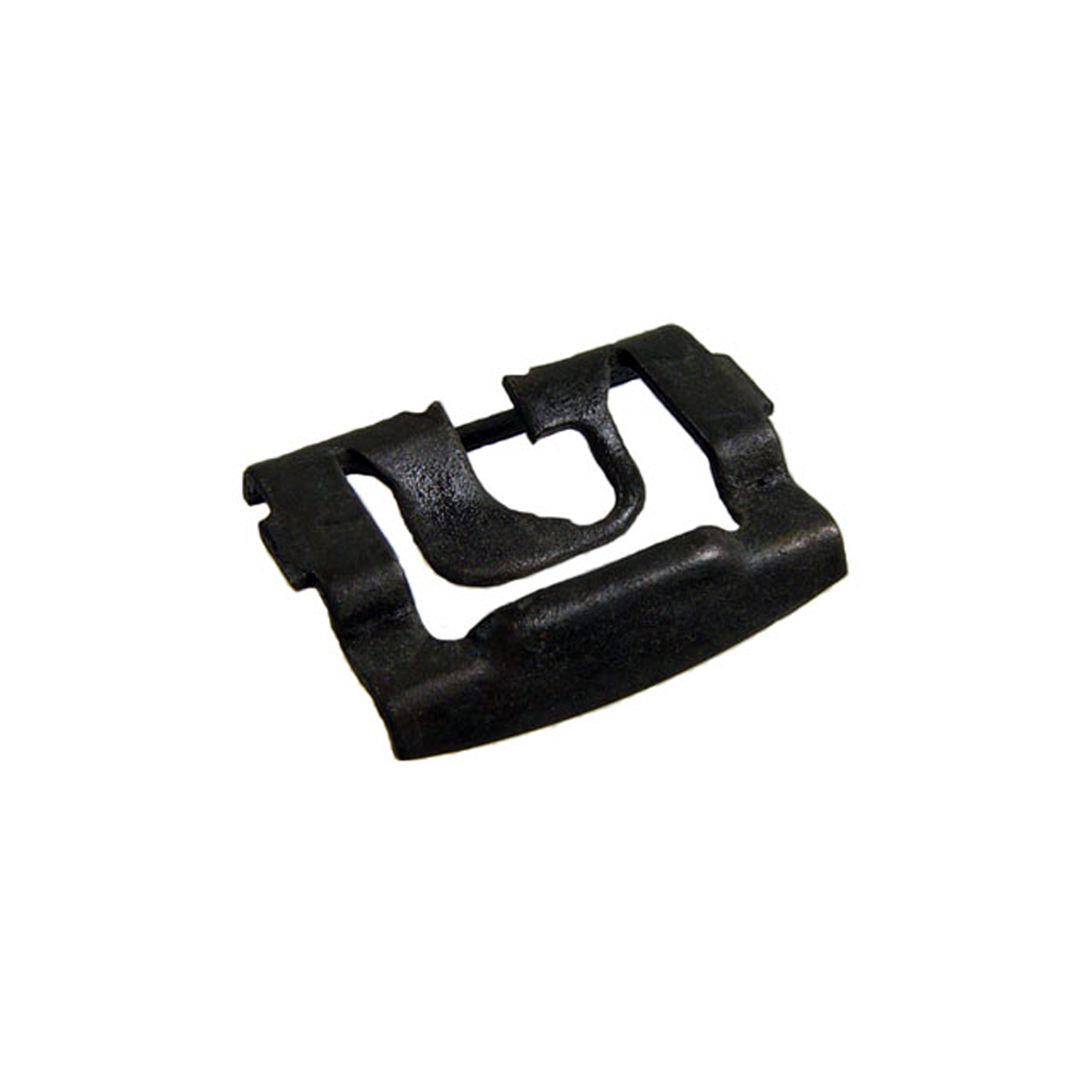 1983 Chrysler New Yorker Windshield and Rear Windshield Molding Clip. Made of steel-WF 216Windshield and Rear Windshield Molding Clip. Made of steel. 1-1/8" X 5/8". Each
Why Choose Metro?
For over 100 years, Metro Moulded Parts has been the pinnacle of quality in classic car restoration parts. Our commitment to precision and authenticity in every component ensures a perfect fit and an OEM-level appearance.
- Expert Craftsmanship & Quality: Each part is a testament to our dedication to reliability and perfection, crafted from original designs and thoroughly tested.
- Advanced Technology: We use cutting-edge techniques to create flawless, long-lasting parts that surpass others in performance.
- SuperSoft Sponge – The Ultimate Door Seal: Not only are our door seals 30% softer than competitors', but they're also guaranteed to never leak. They effectively reduce wind and road noise, enhancing your classic car's comfort and driving experience.
- Proudly American: Our parts are a product of American craftsmanship, made in the USA with a spirit of excellence and heritage.
- Unrivaled Warranty: We back our products with a 30-year industry-leading warranty, a testament to our confidence in their quality.
Join us in preserving the legacy of classic cars with parts that are crafted for perfection, not just made.