
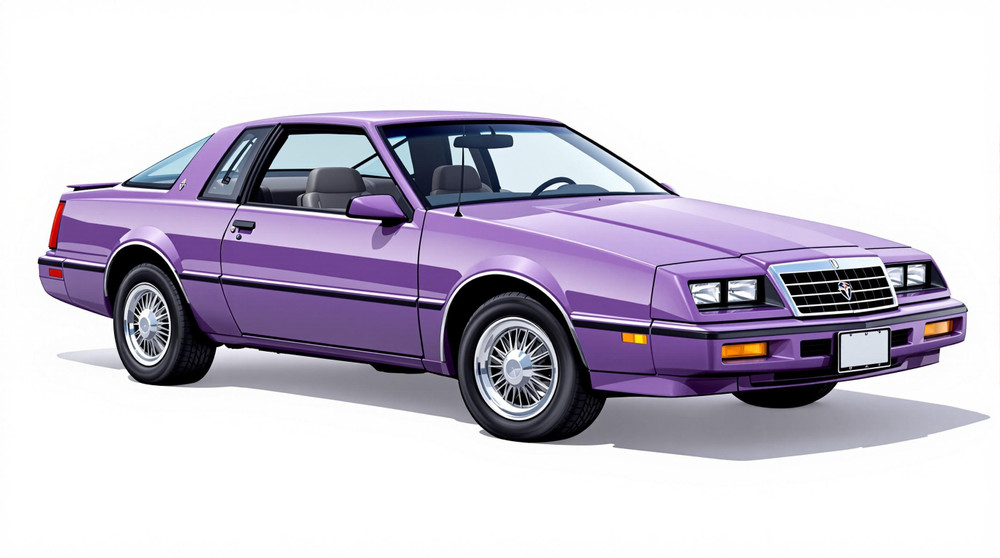
Image of 1984 Chrysler Daytona, Note: These illustrations use artistic license and may differ from actual historical models.
Performance Metrics
Fundamental Metrics
Emotional Appeal
MMP Rating
| Engine Specifications | |
|---|---|
| Engine Options: | 2.2L I4, 2.2L Turbo I4 |
| Displacement Range: | 135 cu in (2.2 L) |
| Horsepower Range: | 93-142 hp |
| Torque: | 122-160 lb-ft |
| Compression Ratio: | 8.1:1 (for non-turbo), 8.5:1 (for turbo) |
| Ignition System: | Electronic |
| Cooling System: | Liquid-cooled |
| Performance Specifications | |
| 0-60 Time: | 9.3 seconds (for non-turbo), 7.5 seconds (for turbo) |
| 1/4 Mile Time: | 17 seconds |
| Top Speed: | 118 mph (for non-turbo), 124 mph (for turbo) |
| Transmission and Drive | |
| Drive Type: | FWD (Front Wheel Drive) |
| Transmission Type: | 5-speed manual, 3-speed automatic |
| Fuel and Efficiency | |
| Fuel System Type: | Carburetor (for non-turbo), Fuel injection (for turbo) |
| MPG: | 20 city / 28 highway |
| Dimensions and Brakes | |
| Brakes: | Front disc, rear drum |
| Wheelbase: | 97.0 in |
| Weight: | 2,600 lbs |
Note: Specifications for classic cars are given to the best of our ability, considering the limited and variant data available.
1984 Dodge Daytona: Chrysler’s Turbocharged Hatchback
The 1984 Dodge Daytona brought a distinctly sporty shape and available turbo power to Chrysler’s front-drive lineup at a time when American automakers were rebuilding their performance credentials. A two-door hatchback made by the Chrysler Corporation, the Daytona blended practical packaging with the sort of long hood, sloping roof and rear spoiler that gave it a genuine performance-car presence.
The Daytona was introduced for the 1984 model year and built on Chrysler’s G-body platform, itself related to the company’s K-car architecture. It shared its basic layout with the upscale Chrysler Laser, but wore Dodge styling and a more overtly sporty character. One intriguing link to the past was its name: “Daytona” recalled the high-winged Dodge Charger Daytona of 1969, a famous NASCAR-bred aerodynamic special. The 1984 hatchback was not a direct racing successor, but the name gave Chrysler’s new coupe a memorable performance connection.
Turbo Z Styling and Interior
The Daytona’s shape was more dramatic than that of a conventional compact coupe. Its long, low nose flowed into a steeply raked windshield and a fastback-style roof, while the large rear hatch made the car useful as well as sporty. A rear spoiler, sculpted body panels and bold trim gave higher-performance versions a purposeful look. The Turbo Z was the most recognizable early model, with sporty detailing that made the car’s turbocharged intentions clear.
Inside, the cabin was driver-focused, with bucket seats, a center console and a wraparound dashboard design. Materials were typical of an affordable 1980s American coupe: durable cloth and vinyl were common, with upgraded trim and equipment available depending on the model and options. It was not a luxury-car interior, but the hatchback layout offered useful cargo space when the rear seats were folded. That practicality helped distinguish the Daytona from smaller two-seat sports cars.
Technology reflected Chrysler’s effort to bring modern features to a mainstream performance car. Turbo models paired a small-displacement engine with electronic fuel injection and a turbocharger, delivering strong power without the fuel consumption of a large V8. Equipment and instrumentation varied by trim and options, so buyers should check individual cars rather than assume every Daytona had the same electronics or convenience features.
The 1984 Daytona was offered as a two-door hatchback coupe, not as a sedan or convertible. Buyers could choose from several trim levels, including the base model, Turbo and performance-oriented Turbo Z. Factory paint choices varied by year and equipment, but period colors included combinations of white, black, red, silver and blue. Bright red and other high-contrast finishes suited the car’s sporty image particularly well.
Why the Daytona Mattered
The Daytona arrived during a significant transition for Chrysler. The company had built its recovery around efficient front-wheel-drive vehicles, but by the early 1980s it also needed cars that could restore some excitement to the showroom. The Daytona showed how that formula could stretch beyond basic transportation: a shared, cost-conscious platform could support a stylish coupe with a genuine turbocharged performance option.
Its most important contribution was not a single record-breaking innovation. Rather, it helped make turbocharging a visible part of Chrysler’s performance identity. The 2.2-liter turbo engine demonstrated how a relatively small four-cylinder could deliver lively acceleration, and it helped establish a path for later Chrysler and Dodge turbo models. The Daytona also reflected a broader 1980s shift toward front-wheel-drive performance coupes, where packaging, technology and aerodynamic styling mattered as much as engine size.
Compared with rear-wheel-drive muscle cars, the Daytona offered a different kind of appeal: a lighter, front-drive coupe with a practical hatch and power available from a compact turbo engine. It was not a replacement for a V8 muscle car, but it helped define an era when American performance was becoming more diverse.
2.2 Turbo Performance
Most 1984 Daytonas used a naturally aspirated 2.2-liter four-cylinder engine, rated at roughly 93 horsepower. The Turbo and Turbo Z models received a turbocharged 2.2-liter engine producing about 142 horsepower and 160 lb-ft of torque. Depending on trim, drivetrain and market, buyers could find a five-speed manual or a three-speed automatic transmission.
Period performance figures vary with transmission, testing method and vehicle condition. A naturally aspirated Daytona typically reached 60 mph in roughly 10 to 11 seconds, with a top speed around 105 to 110 mph. A healthy Turbo Z could manage 0 to 60 mph in approximately 7.5 to 8.5 seconds and reach an estimated 120 to 130 mph. Those are approximate figures, not guarantees for every surviving car. Turbo lag, gearing, tires and decades of wear can all change the result.
On the road, the Daytona feels like a product of its time: relatively light, responsive and more composed on smooth pavement than on broken surfaces. The front-wheel-drive layout provides predictable traction, though hard acceleration can bring torque steer through the steering wheel. The suspension is tuned for everyday use rather than modern sports-car sharpness, so rough pavement can produce a firm, busy ride. On a winding road, a well-maintained Turbo Z feels eager and entertaining, but it rewards smooth inputs more than aggressive cornering.
The naturally aspirated engine has a straightforward four-cylinder note. In the turbo car, the exhaust takes on a deeper, harder-working sound under boost, accompanied by the subtle rush of the turbocharger. The driving experience is part of the appeal: the driver feels the engine build pressure and deliver its stronger pull as the revs rise. It is an engaging, distinctly 1980s style of performance rather than the seamless power delivery of a modern turbo car.
Living With a Daytona
A Daytona can serve as a weekend driver, a period-correct show car or, with careful maintenance, occasional everyday transportation. Its hatchback body makes it more useful than its sporty profile suggests. The front-drive layout also gives it predictable behavior in rain and light snow when fitted with appropriate tires, although age, tire condition and suspension wear matter more than the original design now.
Routine repairs are generally manageable for an experienced home mechanic. The 2.2-liter engine is familiar to many Chrysler specialists, and some mechanical components are shared with other Chrysler vehicles of the period. Body-specific trim, hatch parts and interior pieces can be harder to find, especially for an intact Turbo Z. Before buying, inspect the timing-belt history, cooling system, turbocharger, oil leaks, vacuum hoses, electrical connections and transmission. Rust around the lower body, floor and hatch area deserves close attention.
Turbo cars need particular care. A neglected turbocharger or poorly maintained oiling system can turn an appealing bargain into an expensive project. Check for smoke, unusual shaft noise, boost problems and signs of improvised repairs. Originality also affects value, so modified engines and non-factory wiring should be assessed carefully, even if the modifications appear professionally installed.
Daytona Facts and Misconceptions
The name links the 1984 coupe to Dodge’s high-profile racing heritage, but the car was not a modern equivalent of the 1969 Charger Daytona and did not hold a major production-car speed record. Its significance lies more in making turbocharged performance accessible and helping Chrysler build a recognizable performance identity during the 1980s.
The Daytona was also sold alongside the Chrysler Laser, a related coupe aimed at buyers seeking a more upscale presentation. The two cars shared much of their basic engineering, but differed in styling details, trim and marketing. The Daytona’s Turbo Z became the more enthusiast-oriented choice of the pair.
Common criticisms include a cabin that feels dated and plasticky by modern standards, front-drive torque steer under hard acceleration, and turbo response that is less immediate than in newer cars. Some owners also find that age-related electrical issues and scarce trim pieces take more patience than routine mechanical work. Those shortcomings are part of the ownership equation, but they do not erase the car’s distinctive character.
Collector Value and Availability
Approximately 49,000 Dodge Daytonas were produced for the 1984 model year, making the car uncommon today but not exceptionally rare in the broader classic-car market. The exact number of surviving examples, and the share that were Turbo or Turbo Z models, is difficult to pin down. Clean, original turbocharged cars are much harder to find than ordinary project cars.
As a general U.S. market estimate for 2026, a rough or incomplete Daytona may sell for about $1,500 to $3,500. A usable driver in decent condition might bring $3,500 to $7,000, while a clean, well-preserved Turbo or Turbo Z could fall around $7,000 to $13,000. Exceptional, low-mileage or unusually original examples may exceed that range, while rusty or heavily modified cars can sell for less. These are broad estimates, and location, documentation, condition and specification have a major effect on price.
Values have tended to remain modest compared with more celebrated muscle cars, but interest in overlooked 1980s performance cars has helped the best examples attract more attention. The strongest collector prospects are original Turbo Z models with complete records, factory equipment and sound bodywork. The Daytona is not a guaranteed investment, but its turbocharged engine and period styling give it a distinct place in the affordable-classic market.
A Distinctive 1980s Classic
The 1984 Chrysler Daytona combined hatchback practicality, bold coupe styling and the option of a lively 2.2-liter turbo engine. It was a product of Chrysler’s front-wheel-drive era, but it also helped prove that efficiency and performance did not have to be opposites. Today, the Turbo Z is the version most likely to catch an enthusiast’s eye, while every Daytona offers a snapshot of a period when American automakers were finding new ways to make compact cars exciting.
It may not carry the fame of the winged Charger that shared its name, but the 1984 Daytona earned its own place in Dodge history: a practical, turbocharged reminder that performance can come in more than one shape.
1984 Chrysler Daytona Catalog of Parts
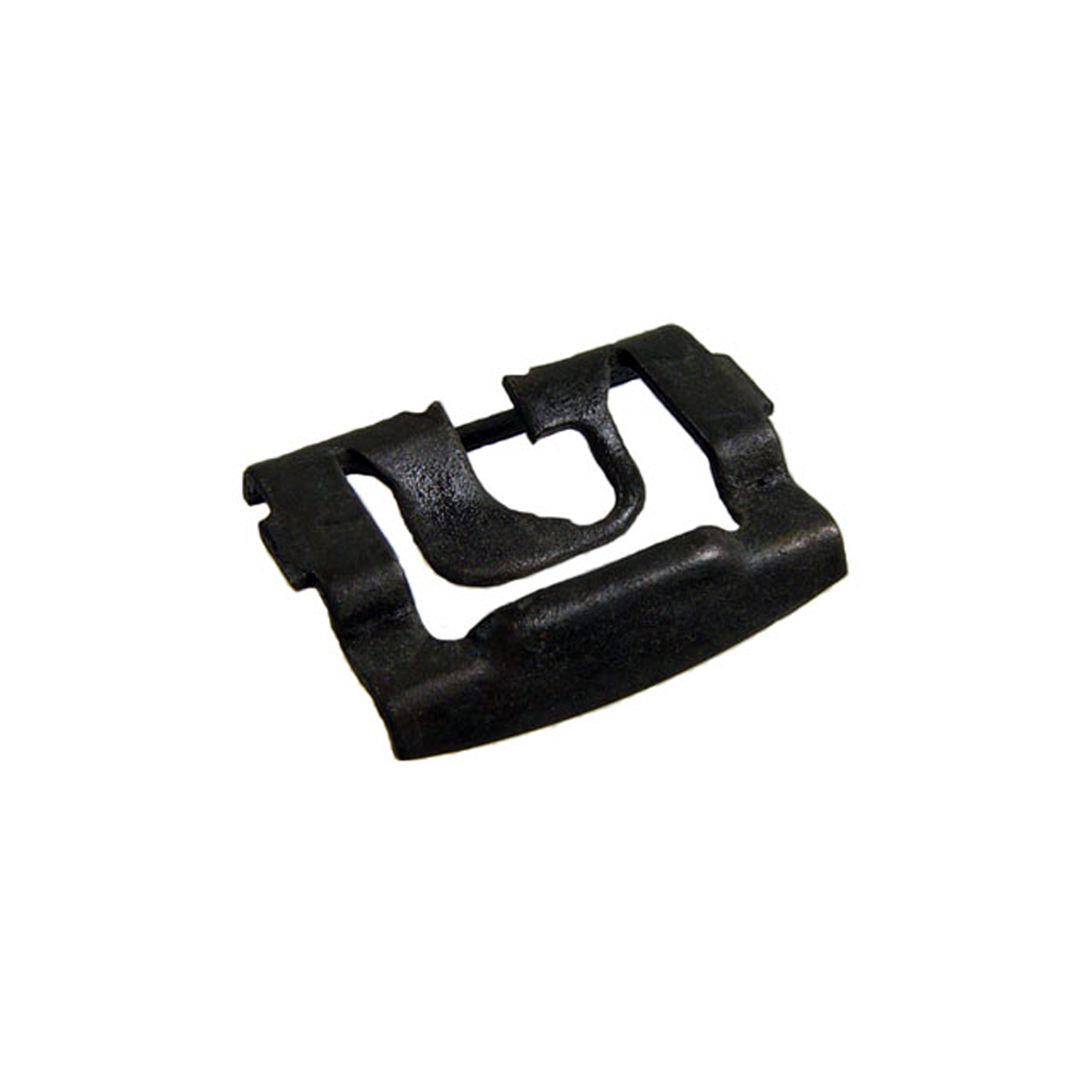 1984 Chrysler Daytona Windshield and Rear Windshield Molding Clip. Made of steel-WF 216Windshield and Rear Windshield Molding Clip. Made of steel. 1-1/8" X 5/8". Each
Why Choose Metro?
For over 100 years, Metro Moulded Parts has been the pinnacle of quality in classic car restoration parts. Our commitment to precision and authenticity in every component ensures a perfect fit and an OEM-level appearance.
- Expert Craftsmanship & Quality: Each part is a testament to our dedication to reliability and perfection, crafted from original designs and thoroughly tested.
- Advanced Technology: We use cutting-edge techniques to create flawless, long-lasting parts that surpass others in performance.
- SuperSoft Sponge – The Ultimate Door Seal: Not only are our door seals 30% softer than competitors', but they're also guaranteed to never leak. They effectively reduce wind and road noise, enhancing your classic car's comfort and driving experience.
- Proudly American: Our parts are a product of American craftsmanship, made in the USA with a spirit of excellence and heritage.
- Unrivaled Warranty: We back our products with a 30-year industry-leading warranty, a testament to our confidence in their quality.
Join us in preserving the legacy of classic cars with parts that are crafted for perfection, not just made.