
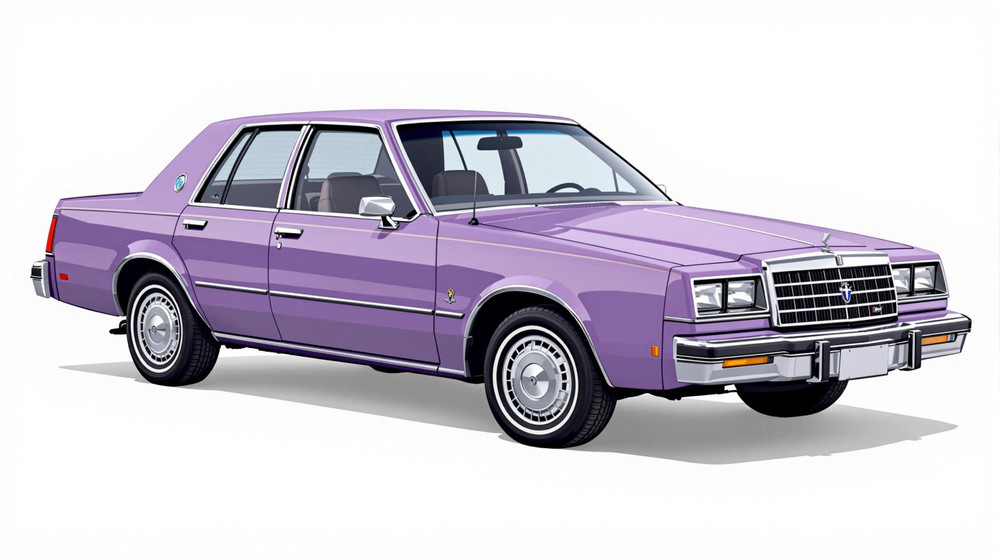
Image of 1984 Chrysler E Class, Note: These illustrations use artistic license and may differ from actual historical models.
Performance Metrics
Fundamental Metrics
Emotional Appeal
MMP Rating
| Engine Specifications | |
|---|---|
| Engine Options: | 2.2L I4, 2.6L I4 |
| Displacement Range: | 2.2 - 2.6L |
| Horsepower Range: | 84 - 96 hp |
| Torque: | 125 - 140 lb-ft |
| Compression Ratio: | 8.5:1 - 9.0:1 |
| Ignition System: | Electronic |
| Cooling System: | Liquid-cooled |
| Performance Specifications | |
| 0-60 Time: | 11 - 13 seconds |
| 1/4 Mile Time: | 18 seconds |
| Top Speed: | 105 mph |
| Transmission and Drive | |
| Drive Type: | FWD |
| Transmission Type: | 3-speed automatic, 5-speed manual |
| Fuel and Efficiency | |
| Fuel System Type: | Carburetor |
| MPG: | 20 - 25 mpg |
| Dimensions and Brakes | |
| Brakes: | Front disc, rear drum |
| Wheelbase: | 103.3 inches |
| Weight: | 2,600 - 2,800 lbs |
Note: Specifications for classic cars are given to the best of our ability, considering the limited and variant data available.
1984 Chrysler E-Class: A K-Car in Executive Clothing
The 1984 Chrysler E-Class dressed practical front-wheel-drive engineering in the formal style of a luxury sedan. Built by Chrysler Corporation during the company’s post-crisis recovery, it aimed to give buyers an upscale American four-door without the size and running costs of a traditional full-size car. It is not related to the modern Mercedes-Benz E-Class: Chrysler used the name for a short-lived model in its own lineup.
The E-Class arrived for 1983 and lasted only through the 1984 model year. Its foundations came from Chrysler’s successful K-car family, but the E-Class had a longer, more substantial body and more premium appointments. That made it a useful example of the strategy that helped Chrysler in the 1980s: adapt a proven platform into cars for different kinds of buyers.
A telling detail is its brief life. The E-Class was meant to occupy a carefully judged space between more mainstream Chrysler models and the company’s higher-priced offerings, but it never became a lasting nameplate. Today, that short run makes it an unusual sight and a distinctive piece of Chrysler’s K-car era.
Formal Styling, Practical Foundations
The E-Class wore a conservative, upright shape that signaled “executive sedan” rather than sporty family car. Its squared-off profile, formal roofline, prominent grille and extensive brightwork gave it a more traditional presence than many rounded or plainly styled economy-minded cars of the period. Rectangular headlamps and neatly framed glass completed the crisp 1980s look. Depending on specification, wheel covers and additional exterior trim added to the dressed-up appearance.
Inside, the emphasis was on comfort and equipment. The cabin offered supportive seating, a broad dashboard and the sort of carpeting, patterned cloth and soft-touch trim buyers expected from a more expensive Chrysler. Upholstery and equipment varied by car; some examples were ordered with richer trim, including leather. Even in its better-appointed form, the E-Class was not a hand-built luxury car. Its appeal was a familiar, comfortable interior with mainstream serviceability.
Period equipment could include power steering, power brakes, automatic transmission, power windows and locks, air conditioning, cruise control and upgraded audio. Availability depended on the individual car and its options. Chrysler’s Electronic Voice Alert system, offered on some models of the era, used spoken warnings for certain conditions such as an open door or lights left on. It was a memorable bit of early automotive electronics, though not every E-Class should be assumed to have it.
Paint choices followed the restrained palette typical of an upscale American sedan: shades of blue, red, silver, white, gray and tan or brown were among the period-appropriate colors. Dark colors emphasized the formal lines, while lighter metallic shades suited the car’s chrome trim. Exact paint names and availability could vary by production date and market, so the fender tag or original sales literature is useful when identifying a car’s factory color.
The 1984 E-Class was a four-door sedan. Chrysler did not offer it as a coupe, wagon or convertible, so there is no alternate body style to hunt for. Its most recognizable form is the conventional sedan, especially one with its original trim and wheel covers intact.
Why the E-Class Mattered to Chrysler
The E-Class reflected Chrysler’s platform strategy at a pivotal time. The K-car had helped the company return to profitability, and its engineering could be adapted for vehicles with different dimensions, styling and equipment. The E-Class took that practical front-drive formula and presented it as a more formal, comfort-oriented car. It showed how a shared platform could serve buyers beyond the basic compact-car market.
It was not a technological revolution, nor did it establish a major new design language. Its significance is more grounded: the car illustrates how Chrysler stretched the K-car idea into a broader family of vehicles during the 1980s. Compared with many larger rear-wheel-drive sedans, it offered a more space-efficient layout and the reassurance of front-wheel drive, while retaining a distinctly American look.
That balance also helps explain the E-Class’s limitations. Buyers could find competing cars with more prestigious badges, stronger engines or a clearer identity. Chrysler’s model range was expanding quickly, and the E-Class had to compete for attention within its own showroom as well as against rivals. Its short production run reflects the difficulty of carving out a lasting niche, not a lack of historical interest.
Engine Options and Road Manners
The E-Class used a front-wheel-drive layout and Chrysler four-cylinder power. The main choices were the familiar 2.2-liter Chrysler inline-four and an optional 2.6-liter Mitsubishi-built inline-four. Output figures varied with specification and emissions equipment, but period versions were generally in the neighborhood of 96 horsepower for the 2.2 and about 101 horsepower for the 2.6. A three-speed automatic was common; transmission availability could vary with engine and equipment.
Neither engine made the E-Class quick by modern standards. Published performance figures are scarce and vary according to engine, transmission and test conditions. A reasonable period-style estimate is roughly 13 to 15 seconds from 0 to 60 mph for a typical automatic-equipped car, with a top speed around 100 to 105 mph. Those figures should be treated as estimates, not guaranteed factory test results. The E-Class was designed for comfortable everyday travel, not stoplight contests.
On the road, its front-drive setup is most noticeable in everyday conditions. It gives predictable traction in rain and light snow compared with many rear-drive sedans of the time, particularly when fitted with suitable tires. The suspension is tuned for comfort, so the car tends to absorb ordinary road imperfections without feeling especially athletic. Large bumps can still unsettle an older example, especially if its struts, bushings or tires are worn.
On winding roads, expect safe, steady responses rather than sharp turn-in. The steering is light, the body leans more than a modern sport sedan, and brisk cornering can bring on understeer. The engine produces a modest four-cylinder hum, while the automatic transmission prioritizes smooth, uncomplicated progress over quick shifts. In good condition, the overall experience is relaxed and easy to place in traffic, with a ride that suits commuting and highway cruising better than spirited driving.
Living With a 1984 Chrysler E-Class
Most E-Classes make the most sense as occasional drivers, nostalgic daily transport or members of a Chrysler collection. They are not natural racing projects, and their modest output and comfort-focused chassis do not invite competition use. A clean, original example can also make an appealing show car, especially at events focused on 1980s American vehicles or the K-car era.
Routine maintenance is generally straightforward for a mechanically confident owner. The four-cylinder layout is familiar to many Chrysler specialists, and basic service work does not require exotic tools. Age is now the larger concern than design complexity. Cooling-system parts, belts, hoses, suspension components and brake hydraulics deserve close inspection, as do the automatic transmission and engine seals.
Electrical accessories can be a bigger challenge. Power equipment, warning systems and aging wiring may develop faults, and some trim pieces or model-specific parts can take patience to locate. Check carefully for rust around the lower body, wheel openings, floor pans and windshield areas. A neglected E-Class can become a parts-hunting project, while a maintained car is usually approachable for a home mechanic.
Notable Details and Common Complaints
The E-Class is an uncommon sight partly because its model life was so short. It does not have a widely recognized racing record, speed achievement or famous celebrity association. Its most interesting claim to attention is its place in Chrysler’s early-1980s recovery and its role as a more upscale interpretation of K-car engineering.
Common criticisms are easy to understand: the engines are underpowered by present-day expectations, the three-speed automatic can feel dated, and the styling is formal rather than exciting. The car also sits in a crowded part of Chrysler history, where better-known names such as LeBaron and New Yorker tend to draw more attention. Those shortcomings are balanced by a comfortable ride, practical front-wheel drive and straightforward mechanical basics.
Collector Value and Availability
The 1984 Chrysler E-Class is a low-volume curiosity rather than a high-demand investment car. Reliable model-year production totals are not readily established, so any total should be treated cautiously. A reasonable working estimate is several thousand to perhaps the low tens of thousands across the E-Class’s short 1983–1984 run, with the exact number dependent on how production and model-year figures are counted. Surviving cars are much less common than more popular Chrysler K-car derivatives.
Values depend heavily on condition, originality and location. As a broad current-market estimate, a running driver might bring about $1,500 to $4,000, while a clean, well-kept example could reach roughly $4,000 to $7,000. An unusually original, low-mileage car with strong documentation may justify more, but finding a buyer at a premium can take time. These are guide ranges, not formal appraisals; local sales and rust-free condition matter greatly.
Prices have generally remained modest rather than showing a strong, sustained climb. The E-Class has the ingredients for growing interest among Chrysler and 1980s-car enthusiasts: short production, an unusual name and a clear connection to the K-car story. For now, however, condition and completeness matter more than speculation. A tidy, original car is likely to be more desirable than a heavily modified one, even if it does not command a major collector premium.
The E-Class in Perspective
The 1984 Chrysler E-Class was a comfortable, formally styled sedan built on practical K-car engineering. Its four-cylinder engines, front-wheel-drive traction and available convenience features made it a sensible everyday car, while its short run and upscale presentation set it apart from more familiar Chrysler models.
It was never a performance icon or a breakthrough luxury car. Its value today is as a well-preserved snapshot of Chrysler’s resourceful 1980s comeback: proof that an ordinary platform could be dressed for a more ambitious role, and a reminder that even brief chapters in automotive history can make compelling classics.
1984 Chrysler E Class Catalog of Parts
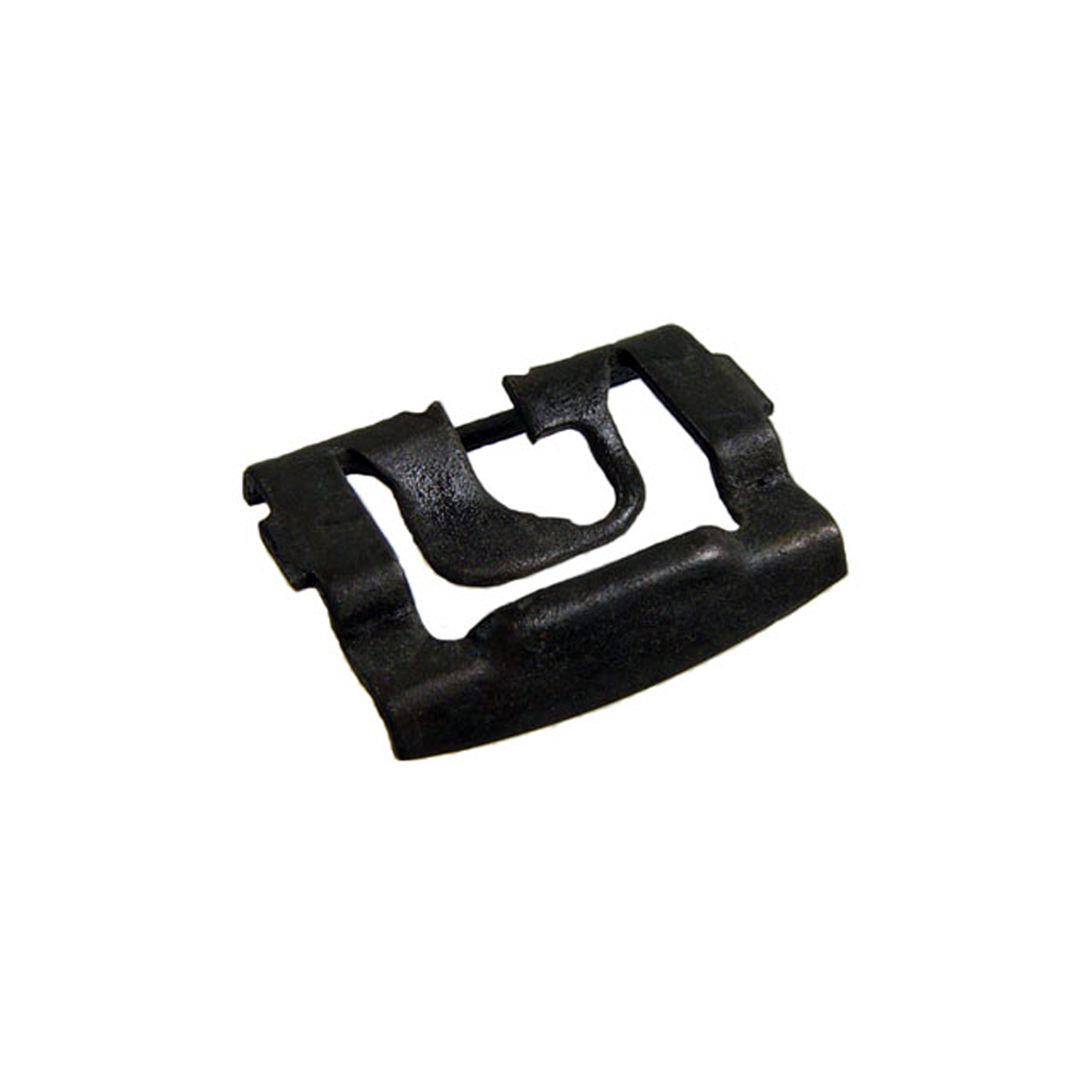 1984 Chrysler E Class Windshield and Rear Windshield Molding Clip. Made of steel-WF 216Windshield and Rear Windshield Molding Clip. Made of steel. 1-1/8" X 5/8". Each
Why Choose Metro?
For over 100 years, Metro Moulded Parts has been the pinnacle of quality in classic car restoration parts. Our commitment to precision and authenticity in every component ensures a perfect fit and an OEM-level appearance.
- Expert Craftsmanship & Quality: Each part is a testament to our dedication to reliability and perfection, crafted from original designs and thoroughly tested.
- Advanced Technology: We use cutting-edge techniques to create flawless, long-lasting parts that surpass others in performance.
- SuperSoft Sponge – The Ultimate Door Seal: Not only are our door seals 30% softer than competitors', but they're also guaranteed to never leak. They effectively reduce wind and road noise, enhancing your classic car's comfort and driving experience.
- Proudly American: Our parts are a product of American craftsmanship, made in the USA with a spirit of excellence and heritage.
- Unrivaled Warranty: We back our products with a 30-year industry-leading warranty, a testament to our confidence in their quality.
Join us in preserving the legacy of classic cars with parts that are crafted for perfection, not just made.