
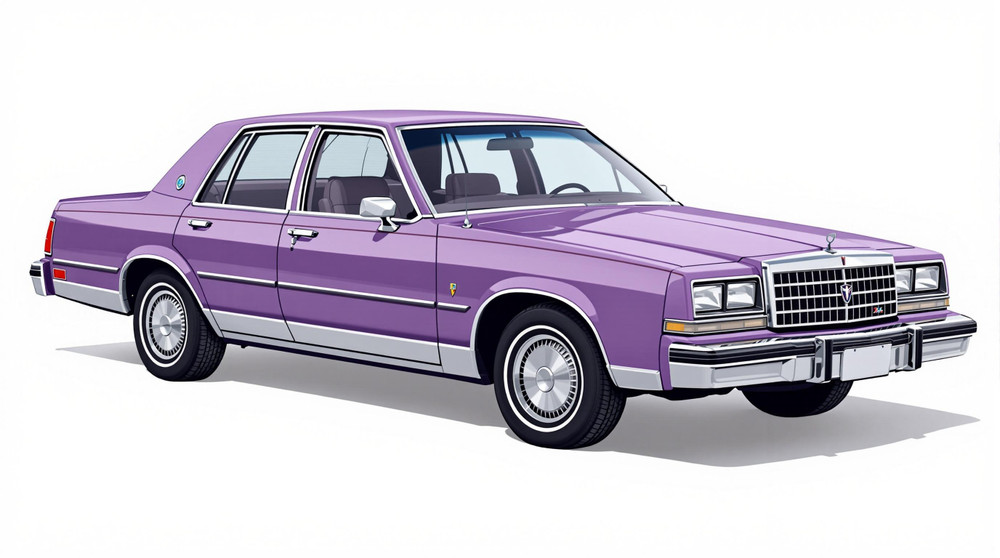
Image of 1984 Chrysler Executive Sedan, Note: These illustrations use artistic license and may differ from actual historical models.
Performance Metrics
Fundamental Metrics
Emotional Appeal
MMP Rating
| Engine Specifications | |
|---|---|
| Engine: | 2.2L I4, 2.6L I4 |
| Displacement: | 2.2 - 2.6L |
| Horsepower: | 94 - 114 hp |
| Torque: | 125 - 145 lb-ft |
| Compression Ratio: | 8.5:1 - 9.5:1 |
| Ignition System: | Electronic |
| Cooling System: | Liquid-cooled |
| Performance Specifications | |
| 0-60 Time: | 15 - 17 seconds |
| 1/4 Mile Time: | 20 seconds |
| Top Speed: | 100 mph |
| Transmission and Drive | |
| Drive Type: | FWD |
| Transmission Type: | 3-speed automatic |
| Fuel and Efficiency | |
| Fuel System Type: | Carburetor |
| MPG: | 20 - 25 mpg |
| Dimensions and Brakes | |
| Brakes: | Front disc, rear drum |
| Wheelbase: | 112.7 inches |
| Weight: | 2,800 - 3,000 lbs |
Note: Specifications for classic cars are given to the best of our ability, considering the limited and variant data available.
1984 Chrysler Executive Sedan: A Limousine Built on the K-Car Idea
The 1984 Chrysler Executive Sedan took an unlikely route to executive-car status: instead of starting with a big rear-wheel-drive luxury car, Chrysler stretched its front-wheel-drive K-car family into a formal, chauffeur-friendly sedan. The result was a rare and distinctly 1980s machine, combining a long passenger compartment and traditional luxury-car trimmings with a compact turbocharged four-cylinder engine.
Chrysler developed the Executive during a difficult period for the company, when the K-car platform was helping it rebuild its finances and broaden its model range. The Executive carried that practical engineering into a low-volume luxury niche. It was not simply a standard family sedan with plush seats. Chrysler offered it as part of a specialist line that included a longer limousine, giving businesses and institutions a factory-backed alternative to a custom conversion.
One of its most intriguing distinctions is that this formal, stretched sedan was front-wheel drive. That made the Executive an unusual answer to the traditional American limousine, which was generally based on a large rear-wheel-drive car. Its combination of limousine proportions and K-car mechanicals is a big part of what makes the 1984 model memorable today.
Formal Lines and a Spacious Cabin
The Executive wore the conservative, squared-off styling associated with American luxury cars of the era. Its upright front end, rectangular lighting, substantial grille and long roofline gave it a dignified, official appearance. The extended body added visual weight and, more importantly, extra space for rear passengers. Rather than looking sporty or youthful, the car aimed to look discreetly important.
Inside, the emphasis was on comfort and presentation. Buyers could expect plush upholstery, carpeting and wood-look or woodgrain trim, along with the convenience features common to an upscale 1980s car. Depending on equipment, amenities included power accessories, air conditioning, cruise control and an upgraded audio system. The materials and finish were intended to distinguish the Executive from an ordinary K-car, although they were not on the same level as the most expensive hand-finished luxury models.
Exterior and interior combinations varied, and fleet buyers often favored restrained colors. Black, dark blue, silver, white and burgundy were fitting choices for a car intended for corporate transport or formal service. A dark exterior with a coordinated, light-colored cabin suited the period’s executive-car image particularly well. Exact combinations depended on the individual car and its original order.
The Executive Sedan was the four-door, more conventional passenger-car version. Chrysler also offered a longer Executive Limousine for customers who needed still more rear-seat room and a more overt chauffeur-car layout. The sedan is the more practical and understated of the pair; the limousine is the more dramatic and recognizable. Both were niche products rather than high-volume showroom staples.
K-Car Engineering in a Luxury Role
The Executive’s defining engineering choice was its stretched front-wheel-drive platform. Chrysler used familiar K-car-derived components rather than developing an entirely new luxury chassis. That approach helped keep the vehicle connected to the company’s existing engineering and parts supply at a time when financial discipline mattered.
Power came from Chrysler’s 2.2-liter turbocharged four-cylinder engine, paired with a three-speed automatic transmission. In period form, the turbo engine was commonly rated at about 142 horsepower, though specifications and published figures can vary by model year and source. The package was a striking contrast: a long, formal sedan powered by an engine more often associated with smaller Chrysler products.
That contrast set the Executive apart from full-size luxury sedans of the time. Many rivals relied on larger engines and rear-wheel drive, while Chrysler offered a limousine-style car with front-wheel-drive packaging and turbocharging. It was a practical experiment in adapting a mass-market platform to a specialized purpose. The Executive did not establish a new mainstream formula, but it showed how far Chrysler was willing to stretch the K-car concept.
Turbo Power and a Relaxed Driving Style
The Executive was designed for smooth, unhurried transport, not quick launches or spirited cornering. Its turbocharged 2.2-liter engine provided useful low- and mid-range pull, while the automatic transmission kept the driving experience simple. Depending on vehicle condition, load and test conditions, a 0-to-60-mph time in roughly the 10-to-12-second range is a reasonable estimate. A top speed around 100 to 110 mph is also plausible, but period test data for this rare model is limited, so these figures should be treated as estimates rather than guaranteed specifications.
On ordinary roads, the long wheelbase and soft suspension tuning favored a comfortable ride. The car was meant to absorb seams and modest bumps without making rear passengers feel every imperfection. On winding roads, its size and limousine-oriented setup made it less agile than a compact sedan. The front-wheel-drive layout could be reassuring in poor weather, but a long, heavy body still called for measured inputs on slick or uneven surfaces.
Behind the wheel, the Executive feels more like a rolling passenger compartment than a driver’s car. The turbo engine has a distinctive four-cylinder note, and acceleration builds with a hint of boost rather than the effortless surge of a large V8. The cabin’s formal trim, high seating comfort and long body encourage a steady pace. A well-maintained example should feel composed, though age, worn suspension parts and tired turbo components can quickly change the experience.
Living With a Rare Chrysler
In period, the Executive made sense as corporate transport, hotel or airport service, and a chauffeur-driven car for customers who wanted more space than a regular sedan. Today, it is more likely to be a curiosity at a Chrysler gathering, a conversation-starting show car or a collection piece for someone interested in the company’s K-car era. It is not a natural choice for racing, and its size and specialized parts make it less convenient as a daily driver than a common contemporary sedan.
Routine maintenance is not automatically difficult. The engine and many underlying components came from Chrysler’s broader product family, which can make some service items easier to source than parts for a truly bespoke limousine. The challenge is the Executive-specific equipment and bodywork. Trim pieces, interior components, glass, extended-body panels and limousine hardware may be difficult to find, and some repairs may require custom fabrication.
Before buying one, inspect the turbocharger and its plumbing, cooling system, transmission operation, electrical accessories and front-wheel-drive components. Check carefully for rust, especially around the lower body, floor and any modified or extended sections. A car that has spent years in fleet use may have high mileage or a hard service history, while a neglected example can require more work than its purchase price suggests.
Rare Facts and Common Complaints
The Executive’s most memorable fact is the basic recipe itself: a factory-associated American executive limousine built around Chrysler’s front-wheel-drive, K-car engineering. That combination made it a practical alternative to a conventional full-size limousine, but it also left the car open to criticism. Some buyers considered the four-cylinder engine too modest for such a large, prestigious-looking vehicle, while others felt its K-car roots were apparent in the driving experience and cabin finish.
Reliable production totals for the Executive Sedan are difficult to pin down, and figures can be muddled by references to the limousine, model-year changes and specialist conversions. It is safest to describe the 1984 sedan as a very low-volume vehicle, likely produced in the hundreds rather than tens of thousands. There is no widely recognized production, speed or endurance record associated with it, and it is not especially tied to a major historical event or celebrity ownership story. Its appeal is its unusual place in Chrysler history, not a famous headline-making appearance.
Common criticisms include modest performance for the car’s size, a less opulent feel than high-end rivals and the difficulty of finding model-specific parts. Its unusual engineering is also its charm: this is not a conventional big American limousine, and it never pretended to be one.
1984 Chrysler Executive Sedan Values
The market for the Executive is small, so condition and completeness matter more than a simple price guide. As a broad estimate, a running but tired example might sell for around $3,000 to $8,000. A presentable, usable sedan could fall in the $8,000 to $15,000 range, while an unusually clean, well-documented car may bring roughly $15,000 to $25,000 or more if the right specialist buyer is looking.
Those figures are best treated as a practical market estimate, not a guaranteed appraisal. A limousine, a car with extensive restoration, or an exceptionally original example may trade differently. The Executive is rare, but rarity alone does not ensure high prices: demand is specialized, and buyers must account for the cost of sourcing unusual parts.
Values are likely to remain uneven rather than follow a steady upward climb. Interest in unusual 1980s cars has grown, which can help the best examples, but the Executive’s narrow audience and repair considerations limit its mainstream collector appeal. Originality, service records and a sound body will usually matter more than ambitious restoration claims.
A Distinctive Chapter in Chrysler History
The 1984 Chrysler Executive Sedan was an inventive, distinctly practical interpretation of American luxury. It offered formal styling, generous passenger space and turbocharged power, all while relying on the front-wheel-drive engineering that helped Chrysler survive and expand during the K-car era. It was not the fastest, most lavish or most conventional limousine of its time, but it was unusual in ways that still make it worth discussing.
For collectors, the Executive is a reminder that automotive history is shaped not only by bestsellers and icons, but also by bold, low-volume experiments. Few cars turned the humble K-car formula into such an unexpected executive ride.
1984 Chrysler Executive Sedan Catalog of Parts
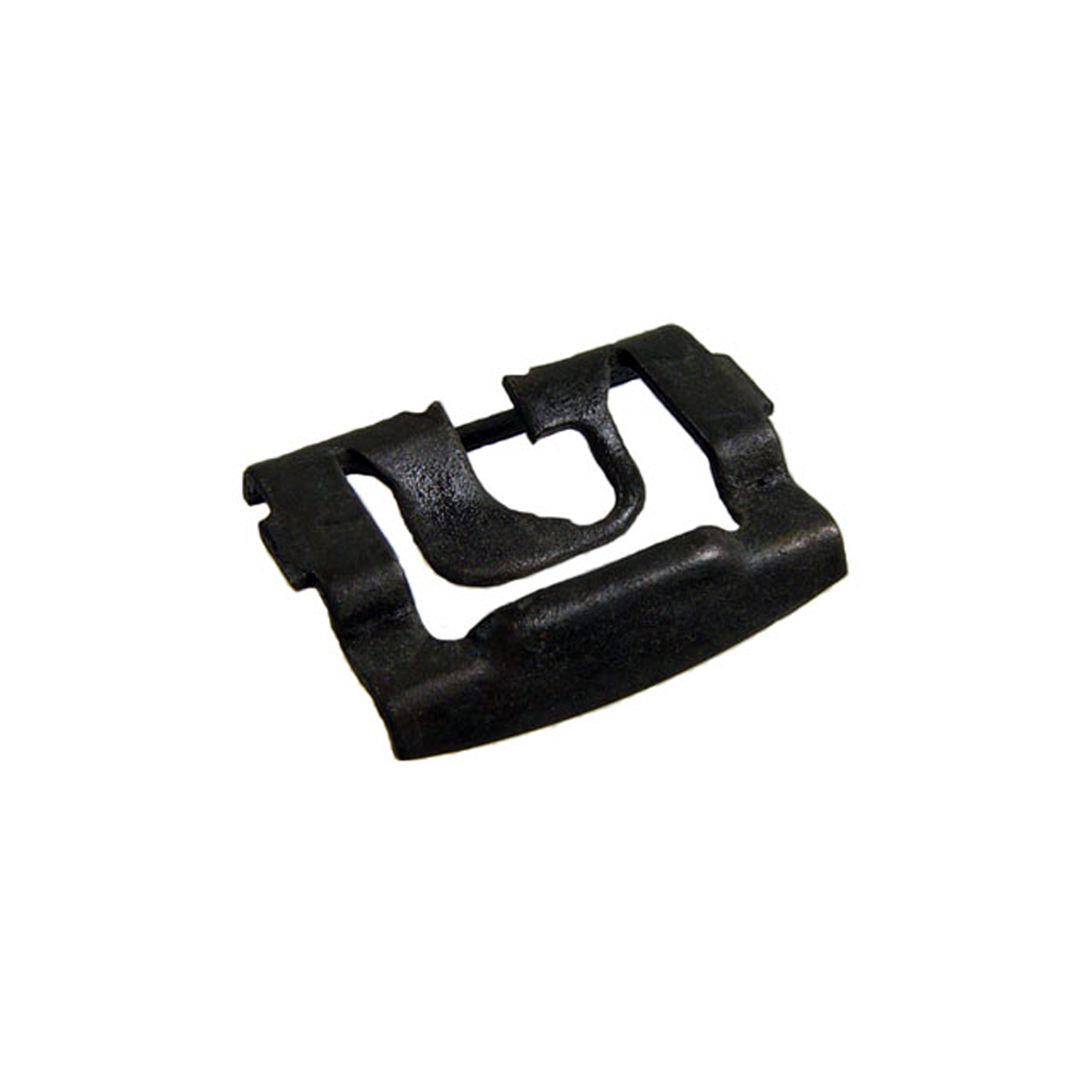 1984 Chrysler Executive Sedan Windshield and Rear Windshield Molding Clip. Made of steel-WF 216Windshield and Rear Windshield Molding Clip. Made of steel. 1-1/8" X 5/8". Each
Why Choose Metro?
For over 100 years, Metro Moulded Parts has been the pinnacle of quality in classic car restoration parts. Our commitment to precision and authenticity in every component ensures a perfect fit and an OEM-level appearance.
- Expert Craftsmanship & Quality: Each part is a testament to our dedication to reliability and perfection, crafted from original designs and thoroughly tested.
- Advanced Technology: We use cutting-edge techniques to create flawless, long-lasting parts that surpass others in performance.
- SuperSoft Sponge – The Ultimate Door Seal: Not only are our door seals 30% softer than competitors', but they're also guaranteed to never leak. They effectively reduce wind and road noise, enhancing your classic car's comfort and driving experience.
- Proudly American: Our parts are a product of American craftsmanship, made in the USA with a spirit of excellence and heritage.
- Unrivaled Warranty: We back our products with a 30-year industry-leading warranty, a testament to our confidence in their quality.
Join us in preserving the legacy of classic cars with parts that are crafted for perfection, not just made.