
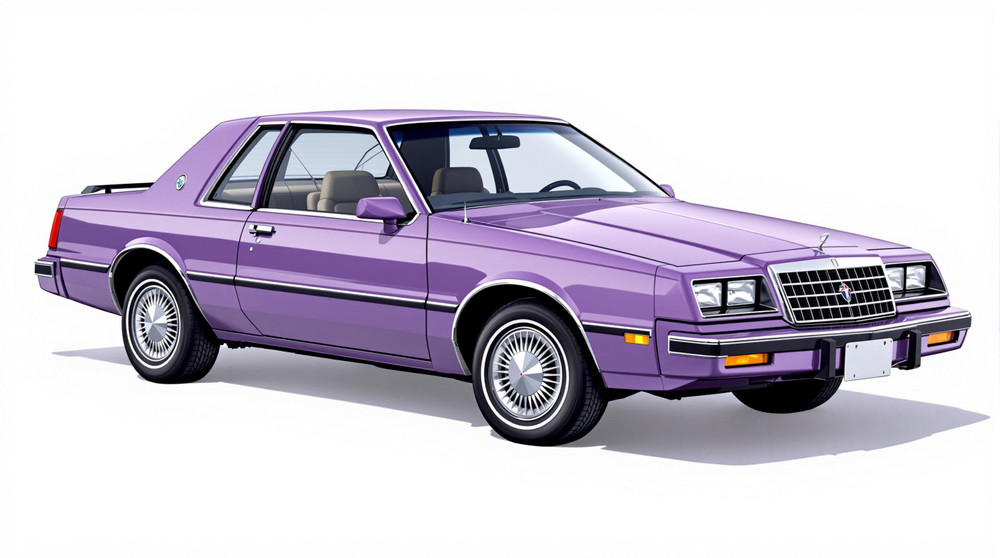
Image of 1984 Chrysler Laser, Note: These illustrations use artistic license and may differ from actual historical models.
Performance Metrics
Fundamental Metrics
Emotional Appeal
MMP Rating
| Engine Specifications | |
|---|---|
| Engine Options: | 2.2L Turbo I4, 2.2L I4 |
| Displacement Range: | 135 cu in (2.2 L) |
| Horsepower Range: | 93-146 hp |
| Torque: | 125-170 lb-ft |
| Compression Ratio: | 8.1:1 (Turbo), 9.0:1 (Non-Turbo) |
| Ignition System: | Electronic |
| Cooling System: | Liquid-cooled |
| Performance Specifications | |
| 0-60 Time: | 9.3 seconds (Turbo), 11.5 seconds (Non-Turbo) |
| 1/4 Mile Time: | 17 seconds (Turbo), 18.5 seconds (Non-Turbo) |
| Top Speed: | 117 mph (Turbo), 102 mph (Non-Turbo) |
| Transmission and Drive | |
| Drive Type: | FWD |
| Transmission Type: | 5-speed manual, 3-speed automatic |
| Fuel and Efficiency | |
| Fuel System Type: | Fuel Injection |
| MPG: | 20 city / 28 highway |
| Dimensions and Brakes | |
| Brakes: | Front disc, rear drum |
| Wheelbase: | 97.0 in |
| Weight: | 2,600 lbs |
Note: Specifications for classic cars are given to the best of our ability, considering the limited and variant data available.
1984 Chrysler Laser: The Turbo Coupe with a Digital Edge
The 1984 Chrysler Laser brought turbocharged performance, a high-tech cockpit, and a sleek hatchback shape to the American sporty-coupe market. Built by Chrysler as a more upscale companion to the Dodge Daytona, the Laser was aimed at drivers who wanted the look and pace of a sports coupe with the comfort and convenience of a personal-luxury car.
The Laser arrived during a pivotal stretch for Chrysler. The company had begun rebuilding its reputation with efficient front-wheel-drive cars, and turbocharging gave those practical platforms a more exciting edge. One memorable detail was the available electronic voice alert system, which could speak warnings to the driver. In the early 1980s, a car that talked back felt like a glimpse of the future.
Wedge Shape, Hatchback Practicality
The Laser’s long hood, low roofline, sharply angled nose, and sloping rear hatch gave it the purposeful profile expected of an ’80s performance coupe. Its broad glass area and sculpted body sides added visual drama without sacrificing the useful cargo access of a hatchback. The design was closely related to the Dodge Daytona, but Chrysler gave the Laser a more refined character through its trim and equipment.
There was just one body style: a three-door, front-wheel-drive hatchback with seating for four. The rear seats were best suited to occasional passengers, but they folded to expand the cargo area. For many buyers, that blend of sporty styling and everyday usefulness was part of the appeal.
Inside, the Laser leaned toward comfort rather than bare-bones performance. Depending on trim and equipment, buyers could get plush cloth upholstery, upgraded trim, and available leather seating. The dashboard wrapped around the driver, with a modern instrument layout that could include a digital display and trip-computer features. Fit and materials were typical of mainstream American cars of the period: attractive and well equipped when new, though not as richly finished as a European grand tourer.
Paint choices varied by model year and trim. Period colors included conservative shades such as white, silver, and dark tones alongside brighter reds and blues. Red and black particularly suited the Laser’s assertive shape, while silver emphasized its sharp, futuristic lines.
Technology Before the Dashboard Became a Screen
The Laser’s most distinctive technology was its optional electronic voice alert system. Rather than relying only on warning lights, the system could announce selected problems, such as a door left ajar or a lighting issue. Digital instrumentation and electronic trip information were also available on some configurations, giving the cabin a distinctly high-tech atmosphere by 1984 standards.
Under the hood, buyers could choose a naturally aspirated 2.2-liter four-cylinder or a turbocharged version. The turbo model was the headline act, pairing Chrysler’s compact four-cylinder with forced induction to deliver performance that stood out among practical front-wheel-drive coupes. A five-speed manual and an automatic transmission were offered, with availability depending on engine and equipment.
Where the Laser Fit in Chrysler History
The Laser was part of Chrysler’s broader effort to make its front-wheel-drive engineering feel desirable, not merely economical. Its shared underpinnings with the Dodge Daytona helped the company spread development costs while offering two distinct personalities: the Daytona leaned more toward sporty value, while the Chrysler-badged Laser pushed toward a better-equipped, more upscale image.
That formula reflected a wider 1980s trend. Buyers were increasingly drawn to compact coupes that promised performance, style, and useful fuel economy in one package. The Laser did not invent the turbocharged front-drive coupe, and it did not transform automotive engineering on its own. Its significance lies in how clearly it showed Chrysler using turbo technology and electronic features to make a conventional family-car platform feel modern and exciting.
The Laser was produced for a short run, ending after the 1986 model year. Its brief life and relative obscurity today make it an interesting snapshot of Chrysler’s turbo era, when the company was finding fresh ways to bring performance to smaller, more affordable cars.
Turbo Performance and Road Manners
The 1984 Laser’s turbocharged 2.2-liter engine produced about 142 horsepower, a strong figure for a compact coupe of its time. Period performance figures vary with transmission, test conditions, and vehicle condition, but a turbo model could reach 60 mph in roughly 8 to 9 seconds. Its top speed was in the neighborhood of 120 mph. The naturally aspirated version was notably slower, with 0-to-60 times generally in the low double digits and a lower maximum speed.
On the road, the turbo Laser delivered a lively surge once the boost came in. The four-cylinder had a purposeful mechanical rasp, and acceleration felt strongest when the driver kept the engine in its power band. Turbo lag was part of the experience: press the throttle, wait a beat, then feel the engine pull harder as boost arrived. That character is now a big part of the car’s period charm.
Its front-wheel-drive layout made the Laser approachable in everyday traffic and predictable in wet weather. The suspension was tuned for ordinary roads rather than track-day precision. It could feel firm over sharp bumps, while quick corners brought the familiar front-drive tendency to push wide if the driver entered too fast. On a winding road, a smooth driving style and well-maintained tires mattered more than brute force. Compared with a modern performance car, the steering and chassis feel less precise, but the Laser remains easy to place and comfortable enough for regular use.
Living with a Laser Today
When new, the Laser could serve as a daily driver, a stylish commuter, or an affordable performance coupe. Today, surviving examples are more likely to be weekend drivers, restoration projects, or display cars at events focused on 1980s and Chrysler turbo vehicles. The hatchback layout still makes the car more practical than its sporty profile suggests.
Routine service is familiar to anyone who has worked on a front-wheel-drive Chrysler from the era. The 2.2-liter engine is comparatively straightforward, and many ordinary repairs do not require exotic tools. The turbo system adds complexity, however. A prospective owner should check the turbocharger, hoses, cooling system, fuel and ignition components, and signs of oil leaks. Aging electronics, interior trim, weatherstripping, and model-specific exterior parts can be harder to replace than common mechanical components.
Reliability depends heavily on maintenance and condition. A neglected turbo car can quickly become an expensive project, while a carefully serviced example can be an enjoyable classic. Before buying, look for rust, evidence of overheating, smoke from the exhaust, inconsistent boost, and electrical faults. Original, complete cars are especially appealing because trim pieces and interior components are not always easy to find.
Laser Trivia and Common Complaints
The Laser’s voice alert system is one of its most memorable features, but it was not the only nod to the future. Digital instrumentation and electronic information displays gave some cars a cockpit that looked more like an arcade game than a traditional coupe. The effect is unmistakably 1980s, and that is part of the car’s appeal today.
The Laser was sold only as a hatchback coupe, so there are no factory convertible or sedan versions to hunt for. It also did not establish a major speed or endurance record. Its claim to fame is more modest and more interesting: it represents Chrysler’s attempt to combine turbo performance, electronic novelty, and upscale coupe styling in a compact package.
Common criticisms include turbo lag, modest rear-seat space, front-drive understeer when pushed hard, and interior plastics that have not aged especially well. The Laser also lived in the shadow of the mechanically related Dodge Daytona, which had a stronger performance identity and broader enthusiast recognition. Still, its Chrysler-specific trim and equipment give it a character of its own.
Collector Value and Availability
There is no widely cited, definitive production total for the 1984 Laser alone. A reasonable estimate is that Chrysler built roughly 25,000 to 35,000 examples for the 1984 model year, with a larger cumulative total across the Laser’s 1984 to 1986 run. That is an estimate rather than a confirmed factory count. Turbocharged, well-optioned, original cars are less common survivors than the broad production figures might suggest.
As a niche 1980s collectible, the Laser remains relatively affordable. A rough current-market guide is about $2,000 to $5,000 for a running driver in average condition, $5,000 to $9,000 for a clean, well-kept car, and potentially more for an exceptional, original turbo example. Project cars can sell for less, while value depends strongly on rust, mechanical condition, documentation, and completeness. These are broad estimates, not guaranteed sale prices.
Values have generally lagged behind more celebrated turbo coupes and muscle-era classics. The Laser is not yet a high-dollar collectible, but interest in 1980s cars and Chrysler’s turbocharged models may support gradual appreciation for the best examples. A rare, stock, well-documented car is a safer collector bet than a heavily modified one.
Why the 1984 Laser Still Matters
The 1984 Chrysler Laser combined a sleek hatchback body, a useful interior, available digital and voice-alert technology, and a turbo engine that made everyday front-wheel-drive motoring feel genuinely spirited. It was not a revolutionary sports car, but it captured an important moment when Chrysler was using technology and bold styling to give practical cars a more exciting identity.
For today’s enthusiast, the Laser offers a distinctive way into the 1980s turbo scene without the price or notoriety of better-known performance icons. It is a reminder that sometimes the most revealing classics are not the loudest ones, but the clever, slightly unconventional cars that show exactly where the industry was headed.
1984 Chrysler Laser Catalog of Parts
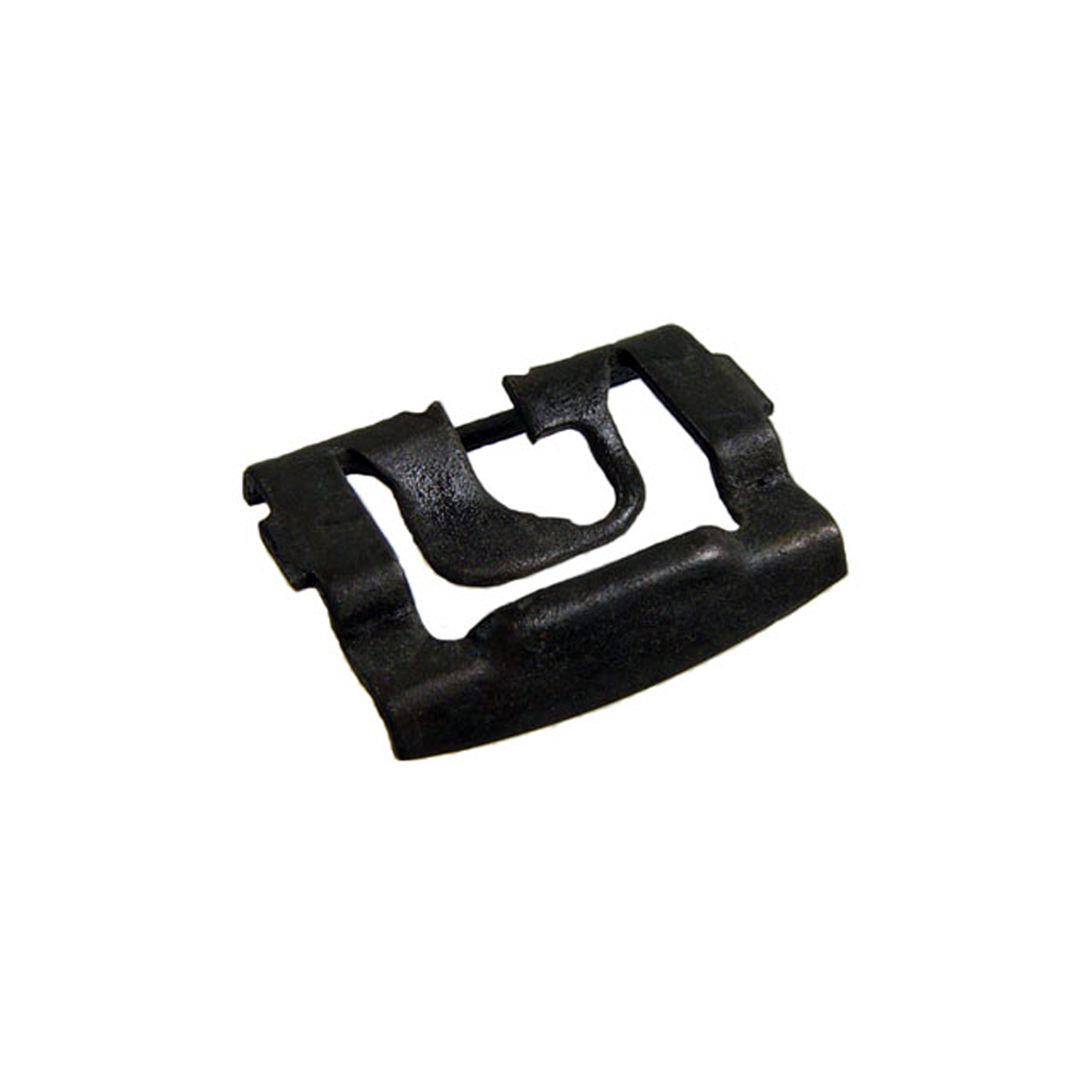 1984 Chrysler Laser Windshield and Rear Windshield Molding Clip. Made of steel-WF 216Windshield and Rear Windshield Molding Clip. Made of steel. 1-1/8" X 5/8". Each
Why Choose Metro?
For over 100 years, Metro Moulded Parts has been the pinnacle of quality in classic car restoration parts. Our commitment to precision and authenticity in every component ensures a perfect fit and an OEM-level appearance.
- Expert Craftsmanship & Quality: Each part is a testament to our dedication to reliability and perfection, crafted from original designs and thoroughly tested.
- Advanced Technology: We use cutting-edge techniques to create flawless, long-lasting parts that surpass others in performance.
- SuperSoft Sponge – The Ultimate Door Seal: Not only are our door seals 30% softer than competitors', but they're also guaranteed to never leak. They effectively reduce wind and road noise, enhancing your classic car's comfort and driving experience.
- Proudly American: Our parts are a product of American craftsmanship, made in the USA with a spirit of excellence and heritage.
- Unrivaled Warranty: We back our products with a 30-year industry-leading warranty, a testament to our confidence in their quality.
Join us in preserving the legacy of classic cars with parts that are crafted for perfection, not just made.