
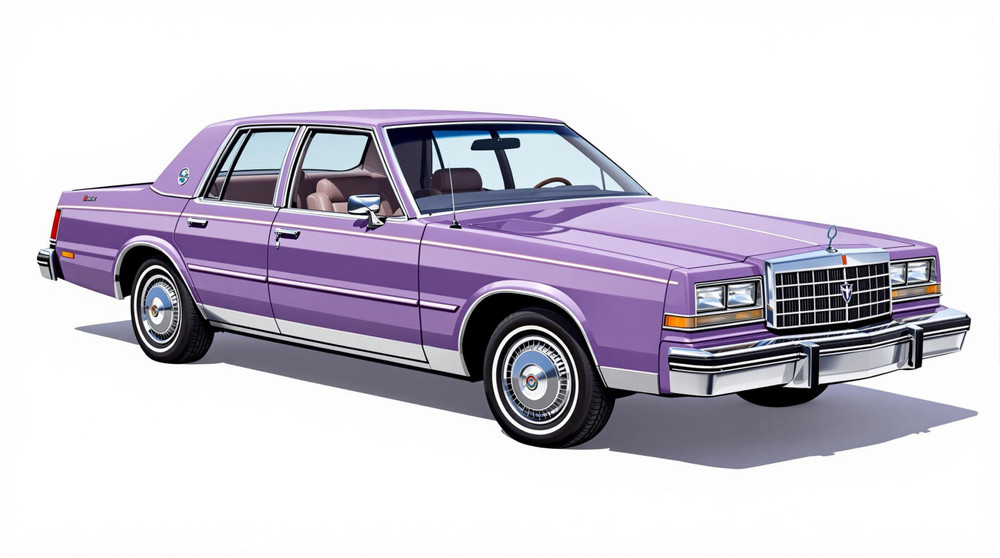
Image of 1984 Chrysler New Yorker, Note: These illustrations use artistic license and may differ from actual historical models.
Performance Metrics
Fundamental Metrics
Emotional Appeal
MMP Rating
| Engine Specifications | |
|---|---|
| Engine Options: | 2.2L 4-cylinder, 2.6L 4-cylinder |
| Displacement Range: | 2.2L - 2.6L |
| Horsepower Range: | 94-146 HP |
| Torque: | 125-170 lb-ft |
| Compression Ratio: | 8.1:1 - 9.5:1 |
| Ignition System: | Electronic |
| Cooling System: | Liquid-cooled |
| Performance Specifications | |
| 0-60 Time: | 11-13 seconds |
| 1/4 Mile Time: | 18 seconds |
| Top Speed: | 105 mph |
| Transmission and Drive | |
| Drive Type: | Front-wheel drive |
| Transmission Type: | 3-speed automatic, 5-speed manual |
| Fuel and Efficiency | |
| Fuel System Type: | Carburetor, Fuel Injection |
| MPG: | 20-25 MPG |
| Dimensions and Brakes | |
| Brakes: | Front disc, rear drum |
| Wheelbase: | 103.3 inches |
| Weight: | 2,600-2,800 lbs |
Note: Specifications for classic cars are given to the best of our ability, considering the limited and variant data available.
1984 Chrysler New Yorker: A Smaller Kind of Luxury
The 1984 Chrysler New Yorker brought a long-established luxury-car name into a very different era: instead of a big, rear-wheel-drive V8 sedan, it offered front-wheel drive, a relatively compact footprint, and an available turbocharged four-cylinder. Built by Chrysler Corporation, it belonged to the New Yorker generation introduced for 1983, a car shaped by the company’s push toward lighter, more fuel-conscious vehicles.
That shift is part of what makes the 1984 model interesting today. Chrysler had used the New Yorker name since 1939, but this generation reinterpreted it for buyers who wanted comfort and prestige without the size and fuel consumption of a traditional American land yacht. Its turbo engine added an unexpected twist: this formal-looking luxury sedan could deliver lively acceleration when its boost came on.
One point worth knowing before shopping is that the front-wheel-drive New Yorker was not the same car as the rear-wheel-drive Chrysler New Yorker Fifth Avenue. The two models shared a name and showroom, but had different platforms, powertrains, proportions, and driving character.
Formal Styling, Modern Foundations
The New Yorker’s exterior balanced contemporary, aerodynamic shaping with traditional luxury cues. Its broad grille, rectangular headlamps, upright nose, and substantial bumpers gave it a dignified face, while the gently rounded body sides and sloping front end reflected the move away from the boxier sedans of the 1970s. Bright trim and formal roof details helped distinguish it from more plainly equipped Chrysler models.
Chrysler offered the New Yorker as a four-door sedan. There was no coupe or station wagon body style in this model line, so buyers chose among trim and equipment combinations rather than different body shapes. Features and packages could vary by market and production date, but the car’s central appeal was its combination of sedan practicality and a well-appointed cabin.
Inside, the New Yorker emphasized comfort over sportiness. Plush cloth or velour upholstery was common, with leather available on some examples or equipment combinations. Buyers could also find power accessories, a power-adjustable driver’s seat, air conditioning, cruise control, and upgraded audio equipment, depending on how the car was ordered. The dashboard and door trim used the woodgrain-look and padded surfaces that were familiar luxury signals in the period.
Paint choices varied with the ordering guide and trim level. Period-appropriate colors included shades of white, silver, blue, red or burgundy, gray, and gold or champagne, with some cars offered in coordinated two-tone combinations. Darker reds, blues, and neutral metallics suit the New Yorker’s formal character particularly well, while a vinyl roof, where fitted, adds an unmistakably early-1980s luxury-car look.
Turbo Power and Electronic Alerts
The New Yorker’s standout powertrain was Chrysler’s 2.2-liter turbocharged inline-four, rated at about 142 horsepower in period specifications. A 2.6-liter Mitsubishi-built four-cylinder was also available in some configurations. Most examples used a three-speed automatic transmission driving the front wheels. Exact equipment and output can differ by engine and market, so a surviving window sticker or service manual is the best guide to an individual car.
For the era, the New Yorker also offered a memorable bit of cabin technology: Chrysler’s Electronic Voice Alert system. Rather than relying only on warning lights, the system could speak selected reminders or warnings, including messages about an open door or an unfastened seat belt. It is a charming example of 1980s electronic innovation, and one of the features that makes the car feel like more than a conventional old sedan.
Depending on equipment, buyers could also order digital instrumentation and upgraded sound systems. These features were not universal, so it is best to confirm them on the car itself rather than assume every New Yorker had the same electronics. The result was a cabin that could feel surprisingly futuristic beside the car’s traditional luxury trim.
A Chrysler Landmark in the Downsizing Era
The 1984 New Yorker reflected a major change in American car design. After fuel shortages and economic pressure reshaped the industry, manufacturers had to make luxury cars smaller and more efficient. Chrysler adapted its front-wheel-drive architecture to a range of models, using shared engineering to reduce development costs while giving the New Yorker more refinement and equipment than a basic economy car.
That approach set the New Yorker apart from large rear-drive luxury sedans. Its transverse engine and front-wheel-drive layout made more efficient use of interior space, and the turbocharged four-cylinder offered a way to combine respectable power with a smaller engine. The car was not a direct substitute for a V8-powered Fifth Avenue in feel, but it showed how a historic American name could be updated for changing buyers and stricter fuel expectations.
Its influence was less about a single breakthrough than a broader industry direction: front-wheel drive, platform sharing, turbocharging, and electronic convenience features became increasingly common across American cars. The New Yorker helped make those changes acceptable in a traditionally conservative luxury category.
Road Manners: Comfortable, Not Sporty
Performance figures depend on engine, condition, and test method. Period road tests and published specifications generally put a turbocharged New Yorker’s 0-to-60-mph time in roughly the 9-to-11-second range, with top speed around 110 to 115 mph. Cars with the naturally aspirated 2.6-liter engine are generally slower. These are estimates rather than guaranteed numbers for every surviving car, especially after decades of wear or modifications.
The turbo gives the car a more energetic personality than its formal styling suggests. Acceleration is strongest once the turbo builds boost, and the automatic transmission keeps the experience relaxed rather than demanding. The four-cylinder’s sound is more mechanical than a traditional V8’s deep rumble, but it gives the car a period-correct turbo whistle and a satisfying change in character under load.
On the road, the New Yorker favors a soft, composed ride. Its suspension is designed to absorb ordinary pavement cracks and bumps, making it comfortable on commutes and highway trips. On a winding road, it leans more than a modern sport sedan and responds less sharply. As a front-wheel-drive car, it tends toward understeer when pushed, and a turbo model can transmit some torque through the steering under hard acceleration. In wet or slippery conditions, smooth throttle inputs help the front tires maintain traction.
Living With a 1984 New Yorker
Today, the New Yorker is best suited to relaxed driving, local outings, and vintage-car gatherings. A clean example can also serve as an occasional-use classic, though it is not an ideal choice for someone who needs modern crash protection, current fuel economy, or completely effortless parts support. It was not designed as a racing car, and modifications aimed at serious performance can quickly compromise its comfortable character.
Routine service is familiar to a competent home mechanic: oil and filter changes, ignition parts, brakes, cooling-system work, and many common repairs follow straightforward principles. The turbocharger adds some complexity, so inspection of its oil supply, hoses, vacuum lines, and boost system is important. Age-related problems may include brittle wiring and plastic, worn suspension components, transmission wear, cooling leaks, and malfunctioning electronic accessories.
Mechanical parts shared with other Chrysler models can sometimes be sourced through specialist suppliers or the used-parts market. Unique trim, interior pieces, electronic components, and intact exterior moldings may take more patience to find. A pre-purchase inspection should pay particular attention to rust, past collision repairs, turbo health, transmission behavior, and whether the car’s warning systems and accessories actually work.
Notable Details and Common Complaints
The New Yorker’s most entertaining trivia is its talking warning system, a feature that can make even a routine reminder feel like a dispatch from the future. The turbocharged engine is another conversation starter: it gave a comfort-oriented Chrysler a performance detail that was unusual in its class at the time.
There is no widely recognized speed, endurance, or racing record associated with the 1984 New Yorker, and it was not built as a competition model. Its significance lies more in representing Chrysler’s reinvention during a difficult period for the company. The name itself also invites confusion, since the front-wheel-drive New Yorker and the larger rear-wheel-drive Fifth Avenue were distinct cars sold during the same era.
Common criticisms include the turbo engine’s dependence on good maintenance, the car’s modest handling limits, and the age-related fragility of its electronics and trim. Some drivers also find that its ride is soft and its styling more formal than exciting. Those drawbacks are balanced by a spacious, comfortable cabin and a character that feels distinctly different from both a conventional V8 cruiser and a modern compact sedan.
Collector Values and Availability
The 1984 New Yorker remains an attainable classic rather than a high-dollar collector car. As a broad 2026 guide, a project or rough driver may sell for around $1,000 to $2,500. A usable, presentable example may bring roughly $3,000 to $6,000, while an unusually clean, original car with sound upholstery, working equipment, and a healthy turbo could reach about $7,000 to $10,000 or more in the right sale. Local market, documentation, condition, and originality have a major effect on price.
Model-year production figures are not consistently easy to separate by every trim and engine combination. A reasonable working estimate is roughly 50,000 to 60,000 1984 New Yorkers, but that should be treated as an informed estimate, not a verified factory total. The model is uncommon enough to attract attention at a local show, yet it is not especially difficult to find compared with genuinely rare collector cars. Turbo models in original condition are more interesting to enthusiasts than ordinary examples, although they are not automatically valuable.
Prices have generally remained modest, with the best-preserved cars holding value better than ordinary used examples. Over time, clean and original survivors may appreciate gradually as more cars are scrapped, but the New Yorker is unlikely to follow the rapid price rises seen in famous muscle cars. Buying the best-maintained example available is usually wiser than paying a premium for a car that needs extensive mechanical or interior work.
Why the 1984 New Yorker Still Matters
The 1984 Chrysler New Yorker combined a respected name, front-wheel-drive packaging, a comfortable interior, and optional turbo power at a moment when American luxury cars were being rethought. Its voice alerts and period electronics add personality, while its soft ride and formal styling make its priorities clear.
It may not have the prestige of a big V8 flagship or the performance of a sports sedan, but the New Yorker tells an important story about Chrysler adapting to a new automotive landscape. For collectors who appreciate overlooked 1980s cars, it is a comfortable, distinctive reminder that luxury could be downsized without giving up every bit of character.
1984 Chrysler New Yorker Catalog of Parts
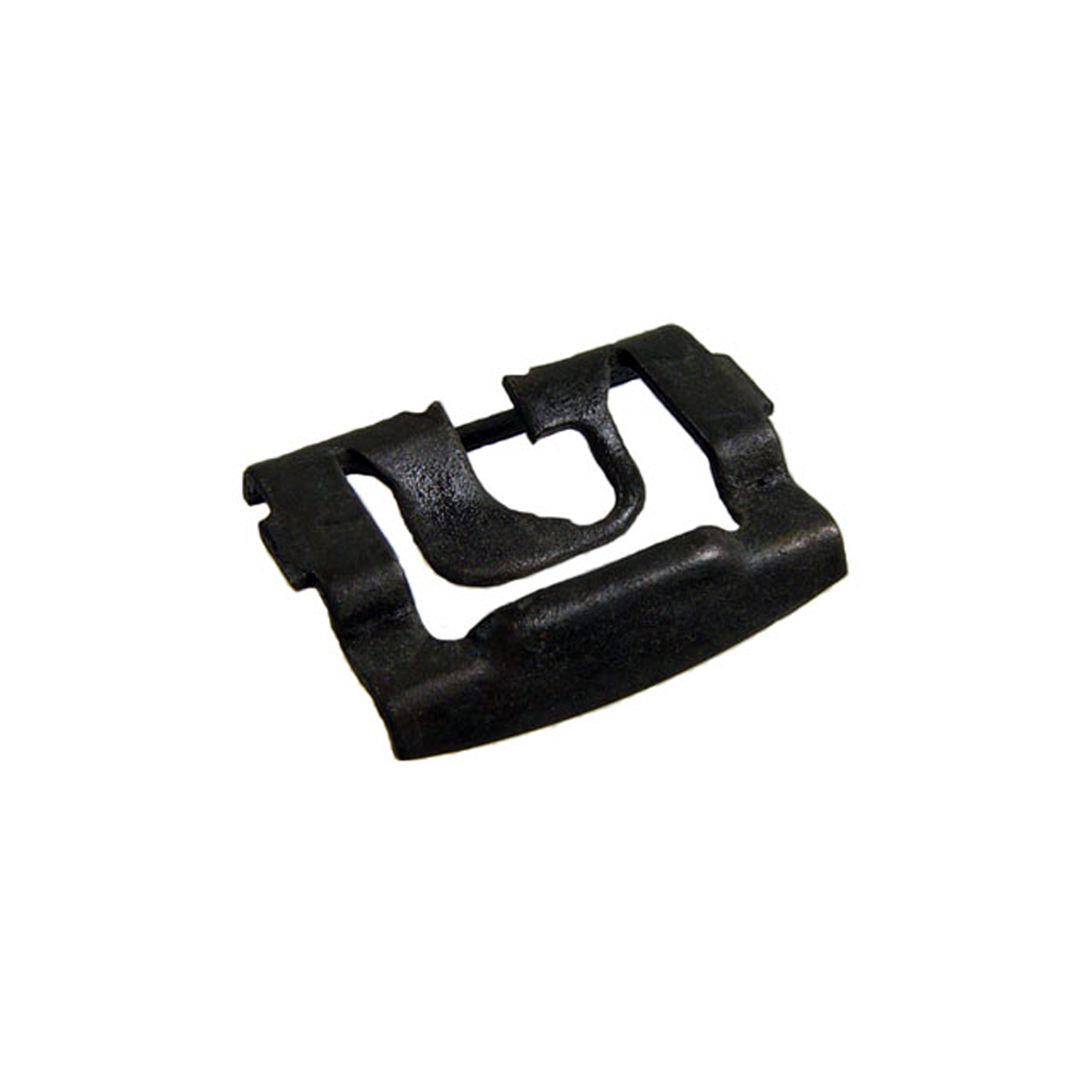 1984 Chrysler New Yorker Windshield and Rear Windshield Molding Clip. Made of steel-WF 216Windshield and Rear Windshield Molding Clip. Made of steel. 1-1/8" X 5/8". Each
Why Choose Metro?
For over 100 years, Metro Moulded Parts has been the pinnacle of quality in classic car restoration parts. Our commitment to precision and authenticity in every component ensures a perfect fit and an OEM-level appearance.
- Expert Craftsmanship & Quality: Each part is a testament to our dedication to reliability and perfection, crafted from original designs and thoroughly tested.
- Advanced Technology: We use cutting-edge techniques to create flawless, long-lasting parts that surpass others in performance.
- SuperSoft Sponge – The Ultimate Door Seal: Not only are our door seals 30% softer than competitors', but they're also guaranteed to never leak. They effectively reduce wind and road noise, enhancing your classic car's comfort and driving experience.
- Proudly American: Our parts are a product of American craftsmanship, made in the USA with a spirit of excellence and heritage.
- Unrivaled Warranty: We back our products with a 30-year industry-leading warranty, a testament to our confidence in their quality.
Join us in preserving the legacy of classic cars with parts that are crafted for perfection, not just made.