
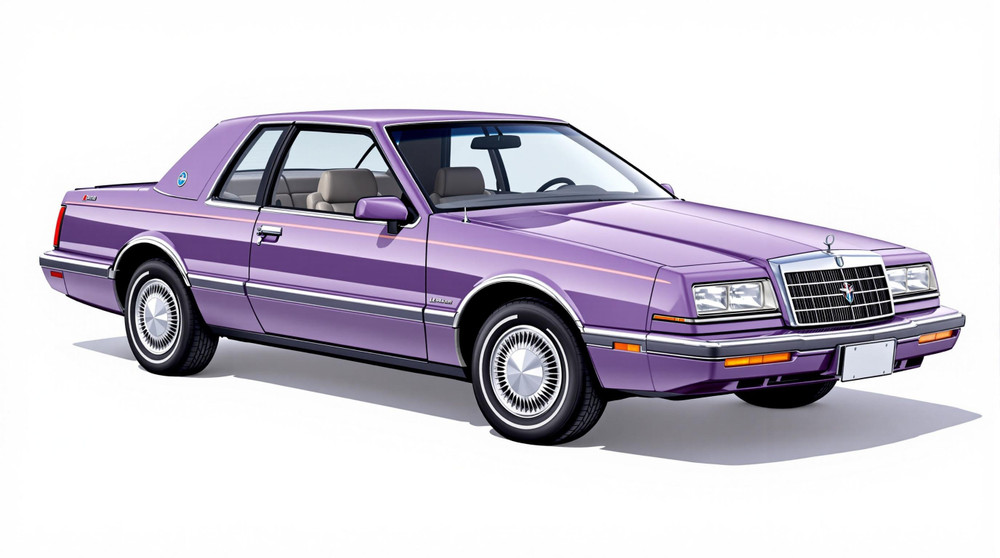
Image of 1988 Chrysler Lebaron, Note: These illustrations use artistic license and may differ from actual historical models.
Performance Metrics
Fundamental Metrics
Emotional Appeal
MMP Rating
| Engine Specifications | |
|---|---|
| Engine: | 2.2L Turbo I4, 2.5L I4 |
| Displacement: | 135-153 cu in. |
| Horsepower: | 100-150 hp |
| Torque: | 125-170 lb-ft |
| Compression Ratio: | 8.1:1 (2.2L Turbo), 8.9:1 (2.5L) |
| Ignition System: | Electronic |
| Cooling System: | Liquid-cooled |
| Performance Specifications | |
| 0-60 Time: | 9.5 seconds |
| 1/4 Mile Time: | 17 seconds |
| Top Speed: | 120 mph |
| Transmission and Drive | |
| Drive Type: | FWD |
| Transmission Type: | 3-speed automatic, 5-speed manual |
| Fuel and Efficiency | |
| Fuel System Type: | Fuel injection |
| MPG: | 20 city / 28 highway |
| Dimensions and Brakes | |
| Brakes: | Front disc / rear drum |
| Wheelbase: | 100.3 in. |
| Weight: | 2,600 lbs |
Note: Specifications for classic cars are given to the best of our ability, considering the limited and variant data available.
1988 Chrysler LeBaron: An American Luxury Car with Turbo Attitude
The 1988 Chrysler LeBaron could be a smooth, well-appointed commuter, a stylish convertible, or a turbocharged coupe, depending on how it was ordered. That range was central to its appeal: Chrysler put comfort, contemporary design, and a little performance under one familiar name.
Chrysler’s LeBaron name had roots in the custom-coachbuilding world. LeBaron, Inc. supplied elegant body designs for luxury cars before Chrysler began using the name on its own models. By the late 1970s, LeBaron had become a standalone Chrysler line. The 1988 version belonged to the era when the company was building a broad family of front-wheel-drive cars from its K-car engineering, while giving the LeBaron a more upscale look and feel.
One especially memorable part of the LeBaron story was its convertible. Chrysler had helped revive the American factory-built convertible market in 1982, after several years when domestic manufacturers had largely abandoned the body style. By 1988, the LeBaron convertible had become a familiar sight, combining open-air motoring with practical front-wheel drive.
Three Body Styles, One LeBaron Name
The 1988 LeBaron name covered several distinct cars. Buyers could choose a two-door coupe, a two-door convertible, or a four-door sedan. The coupe and convertible shared a sleek, rounded design, while the sedan was a more upright, family-oriented model with its own proportions and a roomier cabin. Equipment and engine availability varied by body style and trim, so a LeBaron badge alone does not tell the whole story.
The convertible is often the most instantly recognizable version today. Its power-operated fabric top, formal rear deck, and long two-door profile gave it a distinctly American character. The coupe offered a similar silhouette with a fixed roof, while the sedan appealed to drivers who wanted a comfortable Chrysler without giving up rear doors and everyday practicality.
Styling and Cabin Comfort
Chrysler gave the coupe and convertible soft, aerodynamic contours that looked modern beside the squared-off cars still common in the 1980s. The hood sat low, the windshield swept back, and the body sides were gently rounded rather than sharply creased. Details such as the formal grille, bright trim, and carefully shaped rear end kept the car from looking anonymous. The sedan was less sporty, but its more traditional shape suited its role as a comfortable family car.
Inside, the LeBaron aimed above basic transportation. Depending on trim, buyers could find plush cloth, vinyl, or leather upholstery, supportive front seats, carpeting, wood-tone or metallic accents, and a well-equipped center console. Higher-specification cars could add leather seating and upgraded audio, giving the cabin a more luxurious atmosphere. Materials and assembly were typical of mainstream American cars of the period: inviting and feature-rich when new, though aging plastics, worn seat bolsters, and sagging headliners are common concerns now.
Factory paint choices varied by body style and trim, but the palette included familiar 1980s shades such as white, black, red, blue, silver or gray, and several muted metallic and burgundy tones. White and red convertibles are particularly evocative of the era, while dark colors can emphasize the coupe’s formal lines. Original paint and trim combinations are worth checking against the car’s factory documentation, especially on a claimed high-specification example.
1980s Technology and Equipment
The LeBaron’s technology was a mix of useful convenience features and period-specific flair. Depending on configuration, equipment could include power windows and locks, cruise control, air conditioning, a power top, upgraded stereo systems, and electronic instrumentation or trip-computer features. Some Chrysler models of the period also offered electronic voice alerts, a memorable feature that could announce warnings such as a door being ajar. These items were often optional, so equipment differs substantially from car to car.
Under the skin, front-wheel drive helped free up cabin space and gave the LeBaron predictable traction in rain and light snow. The turbocharged four-cylinder models added another layer of engineering interest. Chrysler’s turbo program had become an important part of its performance identity, and the LeBaron let buyers combine that technology with a comfortable, well-equipped body.
Engines, Acceleration, and Road Manners
Engine choices depended on body style and trim. Four-cylinder versions used Chrysler’s 2.2-liter or 2.5-liter engines, while some LeBarons were available with a 3.0-liter Mitsubishi-built V6. Turbocharged 2.2-liter engines offered the most distinctive performance, with output varying by version and equipment. A five-speed manual could be found on some combinations, while many cars used an automatic transmission.
Performance figures should be treated as estimates because engine, transmission, body style, and test conditions all make a difference. A naturally aspirated four-cylinder LeBaron generally feels relaxed rather than quick, with typical 0-to-60-mph times in roughly the 11-to-13-second range. A turbocharged version can make the same run in about 8 to 10 seconds when healthy. Top speed is likewise configuration-dependent, but approximately 105 to 120 mph is a reasonable period-car estimate, not a guaranteed specification for every 1988 model.
On the road, the LeBaron favors comfort over sharp handling. Its suspension is tuned to take the sting out of ordinary pavement, and the car feels composed over modest bumps. On winding roads, body roll and front-wheel-drive understeer remind the driver that this is a touring car, not a sports coupe. Strong crosswinds can be more noticeable in the convertible, particularly with the top up, while the coupe and sedan feel more settled.
A non-turbo engine delivers a smooth, workmanlike hum. The turbo adds a deeper mechanical note and a noticeable surge as boost builds, though it is not a modern, instant-on power delivery. The steering is light, the controls are familiar, and the ride makes the LeBaron an easy car to drive around town or cruise in for a longer trip. A well-maintained example feels comfortable and personable; a neglected one can quickly reveal tired suspension parts, turbo problems, or aging electrical components.
Why the LeBaron Mattered
The 1988 LeBaron was not a clean-sheet engineering revolution, but it showed how Chrysler could stretch front-wheel-drive architecture across very different roles. The same model family could serve as a family sedan, a stylish personal coupe, or an open-top cruiser. That flexibility reflected a larger shift in the American market toward more efficient front-wheel-drive cars that still offered comfort and recognizable styling.
Its turbo models also helped keep performance in the conversation during an era of tighter fuel-economy and emissions requirements. Rather than relying only on large-displacement engines, Chrysler used turbocharging to produce stronger power from a relatively compact four-cylinder. The LeBaron’s lasting influence is less about a single breakthrough than about this combination of practical packaging, accessible luxury, and turbocharged character.
Living with a LeBaron Today
Most surviving 1988 LeBarons are best suited to relaxed weekend use, local cruising, or nostalgic ownership. A clean convertible can make an appealing show car, while a turbo coupe or convertible may attract enthusiasts interested in Chrysler’s 1980s turbo era. The sedan is less likely to draw attention at a show, but it can be an enjoyable and unusual period daily driver if properly maintained.
Routine repairs are generally approachable for an experienced home mechanic. The engines are familiar to many independent shops, and common service items such as brakes, belts, hoses, and suspension components are not exotic. The challenge is usually age and parts availability rather than complicated design. Trim pieces, interior components, convertible-top hardware, and model-specific electrical parts can take time to locate. Turbo cars need particular attention to oil supply, cooling, hoses, and the condition of the turbocharger.
Before buying, inspect for rust around the floors, rocker panels, wheel arches, and convertible structure. Test every power accessory, check the transmission for clean shifts, and look for coolant or oil leaks. On a convertible, examine the top fabric, rear window, seals, hydraulic operation, and areas where water may have entered the cabin. A tidy, well-documented car is usually a better purchase than a cheap example with a long list of deferred repairs.
LeBaron Trivia and Common Complaints
The LeBaron name reached across very different kinds of Chrysler. Its earlier association with coachbuilt luxury gave the badge a more prestigious history than its mainstream 1980s role might suggest. The 1982 LeBaron convertible also became a notable part of the domestic convertible comeback, helping prove that American buyers still wanted factory-built open cars.
There is no single 1988 LeBaron production figure that neatly captures every body style and trim, and production totals are often reported differently across sources. A reasonable broad estimate is that Chrysler built somewhere in the low hundreds of thousands across the full LeBaron range for the model year, with the sedan, coupe, and convertible all contributing. The convertible and turbo combinations are less commonly encountered today than ordinary sedans and coupes, though exact rarity depends on engine, trim, and market.
Common criticisms include modest performance from non-turbo engines, some turbo lag, soft handling, and interior materials that have not always aged gracefully. The cars also lack the parts interchangeability and aftermarket support of more popular classic models. On the other hand, their comfort, distinctive styling, and approachable mechanical layout make them appealing to owners who want something more unusual than a typical contemporary classic.
1988 Chrysler LeBaron Values
Values depend heavily on condition, body style, engine, and documentation. In the current U.S. market, a project or rough driver might sell for roughly $1,000 to $3,000. A serviceable, presentable car often falls around $4,000 to $8,000. Excellent convertibles and particularly appealing turbocharged examples can reach approximately $10,000 to $18,000, with exceptional, low-mileage cars sometimes asking more. These are broad estimates rather than fixed price-guide figures, and actual sale prices vary by region and season.
The LeBaron remains an affordable classic rather than a consistently appreciating investment. Values have generally been held down by plentiful surviving cars, modest performance in base form, and the cost of restoring worn interiors or convertible tops. The best examples have a stronger following, especially turbo cars and clean convertibles, but buyers should purchase for enjoyment and condition rather than assuming rapid appreciation.
A Comfortable Classic with a Turbo Side
The 1988 Chrysler LeBaron brought together several sides of 1980s American motoring: front-wheel-drive practicality, soft-edged styling, comfort-focused interiors, an available convertible top, and turbocharged performance in selected versions. It was not a sports car in every configuration, nor was it a hand-built luxury machine. Its appeal lies in the way it could be tailored to different drivers while carrying a name with a surprisingly long history.
Today, a good LeBaron offers a relaxed drive and a vivid snapshot of Chrysler’s effort to make the practical car feel special. Choose a clean sedan for understated nostalgia, a coupe for period style, or a turbo convertible for the fullest expression of the LeBaron personality.
1988 Chrysler Lebaron Catalog of Parts
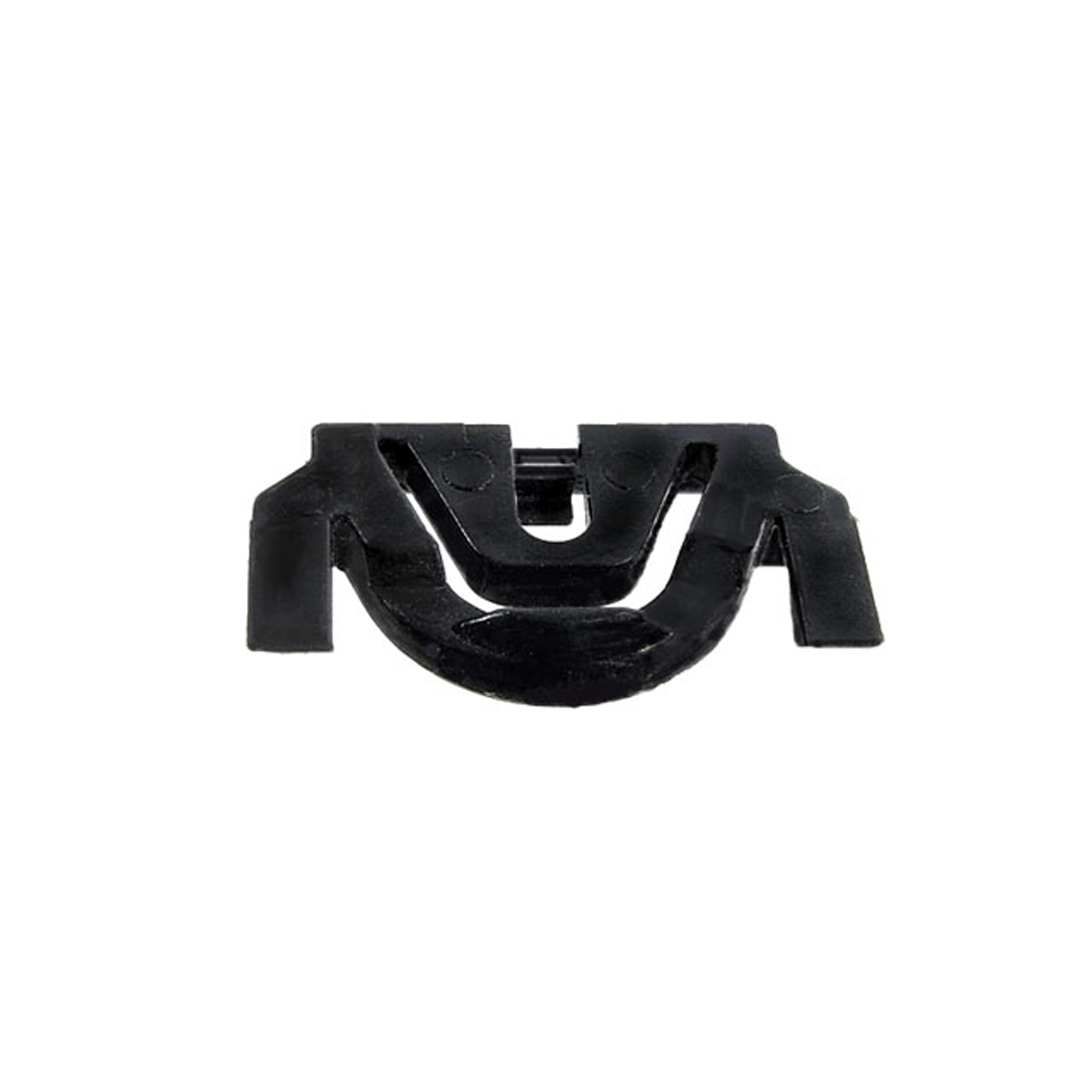 1988 Chrysler LeBaron Windshield and Rear Windshield Reveal Molding Clip-WF 225-AWindshield and Rear Windshield Reveal Molding Clip. Made of nylon. 2" X 11/16". Each
Why Choose Metro?
For over 100 years, Metro Moulded Parts has been the pinnacle of quality in classic car restoration parts. Our commitment to precision and authenticity in every component ensures a perfect fit and an OEM-level appearance.
- Expert Craftsmanship & Quality: Each part is a testament to our dedication to reliability and perfection, crafted from original designs and thoroughly tested.
- Advanced Technology: We use cutting-edge techniques to create flawless, long-lasting parts that surpass others in performance.
- SuperSoft Sponge – The Ultimate Door Seal: Not only are our door seals 30% softer than competitors', but they're also guaranteed to never leak. They effectively reduce wind and road noise, enhancing your classic car's comfort and driving experience.
- Proudly American: Our parts are a product of American craftsmanship, made in the USA with a spirit of excellence and heritage.
- Unrivaled Warranty: We back our products with a 30-year industry-leading warranty, a testament to our confidence in their quality.
Join us in preserving the legacy of classic cars with parts that are crafted for perfection, not just made.