
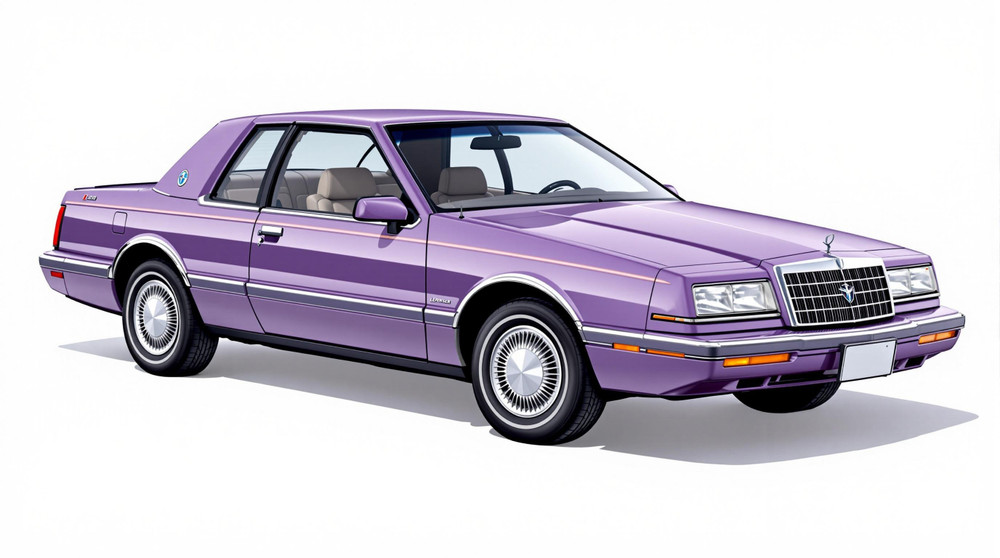
Image of 1989 Chrysler Lebaron, Note: These illustrations use artistic license and may differ from actual historical models.
Performance Metrics
Fundamental Metrics
Emotional Appeal
MMP Rating
| Engine Specifications | |
|---|---|
| Engine Options: | 2.2L Turbo I4, 2.5L I4, 3.0L V6 |
| Displacement Range: | 2.2 - 3.0L |
| Horsepower Range: | 93 - 174 hp |
| Torque: | 122 - 200 lb-ft |
| Compression Ratio: | 8.9:1 - 9.6:1 |
| Ignition System: | Electronic |
| Cooling System: | Liquid-cooled |
| Performance Specifications | |
| 0-60 Time: | 9.5 - 11 seconds |
| 1/4 Mile Time: | 17 - 18 seconds |
| Top Speed: | 110 - 120 mph |
| Transmission and Drive | |
| Drive Type: | FWD |
| Transmission Type: | 3-speed automatic, 4-speed automatic, 5-speed manual |
| Fuel and Efficiency | |
| Fuel System Type: | Fuel Injection |
| MPG: | 20 city / 28 highway |
| Dimensions and Brakes | |
| Brakes: | Front Disc / Rear Drum |
| Wheelbase: | 100.3 inches |
| Weight: | 2,600 - 2,900 lbs |
Note: Specifications for classic cars are given to the best of our ability, considering the limited and variant data available.
1989 Chrysler LeBaron: An Eighties Classic with Two Personalities
The 1989 Chrysler LeBaron could be a polished family sedan, a sleek personal coupe, or an open-air convertible, all under one familiar name. Built by Chrysler during its post-crisis comeback, it blended front-wheel-drive practicality with the upscale details buyers expected from a mid-range American car. Its mix of body styles and available turbocharged engines makes the LeBaron a revealing snapshot of late-1980s automotive design.
The LeBaron name had a long history before this generation. It originated with LeBaron, a coachbuilding firm whose work appeared on high-end Chrysler cars in the 1930s. Chrysler revived the name for more accessible models in the 1970s. By 1989, the lineup included a four-door sedan and the more distinctive two-door coupe and convertible, which had their own styling and platform roots.
One of the model’s most notable chapters began earlier in the decade. The LeBaron convertible helped bring factory-built American convertibles back to the market after domestic automakers had largely abandoned them. By 1989, the convertible was no longer a novelty, but it remained an appealing expression of Chrysler’s newfound confidence.
Distinctive Styling and Cabin Details
The LeBaron’s appearance depended on which body style you chose. The sedan wore a formal, upright look, with a traditional grille, restrained brightwork, and a long, conservative profile. It was designed to look substantial and comfortable rather than sporty.
The coupe and convertible were more dramatic. Their long hoods, low rooflines, and crisp, squared-off surfaces captured the decade’s taste for clean geometric shapes. On many versions, concealed headlamps gave the front end a smooth, upscale appearance when the lights were closed. A convertible added the unmistakable appeal of a power-operated soft top and a more open profile, while the coupe delivered much of the same styling with a fixed roof.
Inside, the LeBaron aimed for a premium feel without entering luxury-car territory. Depending on trim, buyers could find cloth or velour upholstery, leather seating, wood-look accents, padded door panels, and a center console. Higher-specification cars, including Mark Cross-equipped versions, offered more sumptuous leather and dressier trim. The cabin was designed for comfort and ease of use, with broad seats and a relatively upright driving position.
Available factory colors varied by body style and trim, but period-typical choices included white, black, red, blue, silver, gray, and several metallic or champagne shades. White and red convertibles were especially evocative of the era, while darker colors suited the LeBaron sedan’s formal character. Original paint combinations can be an important part of a collector car’s appeal, so buyers should check the body tag and factory records where available.
Body Styles and Trim Choices
The 1989 range covered three main body styles: a four-door sedan, a two-door coupe, and a two-door convertible. The sedan was the practical choice for families and commuters. The coupe offered a personal-luxury profile with a more enclosed, refined feel. The convertible was the head-turner, pairing the coupe’s basic character with open-air motoring.
Trim names and equipment varied across the lineup, but buyers could generally choose from comfort-focused models through sportier GTC versions. The GTC was the more performance-minded choice, particularly when equipped with a turbocharged engine. Leather, power accessories, upgraded audio, and other convenience features helped tailor the car to its original buyer. For modern enthusiasts, the most recognizable versions are usually the convertible and turbocharged GTC.
Why the LeBaron Mattered
The LeBaron was part of Chrysler’s broader recovery story. In the late 1970s, the company faced severe financial trouble. The compact and midsize front-wheel-drive cars developed under the K-car program helped Chrysler cut costs, improve fuel economy, and rebuild its market position. The LeBaron showed how that practical engineering could be adapted into something more stylish and upscale.
Its importance was not that it invented the convertible or turbocharging. Rather, it helped make both feel attainable in a mainstream American showroom. The factory convertible was a particularly visible sign that domestic automakers were willing to return to a body style they had recently left behind. Meanwhile, Chrysler’s turbo models brought strong acceleration to front-wheel-drive cars at a time when performance was increasingly being balanced against fuel economy and emissions regulations.
The LeBaron also reflected a shift in the idea of an American personal car. Instead of relying only on large displacement and rear-wheel drive, it offered front-wheel-drive packaging, a choice of body styles, and optional turbo power. That formula was not unique to Chrysler, but the LeBaron helped popularize it with buyers seeking comfort, style, and a little extra performance.
Engines, Speed, and Road Manners
Engine availability depended on body style and trim. Four-cylinder engines included naturally aspirated 2.5-liter units and turbocharged versions. A 3.0-liter Mitsubishi-built V6 was also available in parts of the range. Output varied by engine and calibration: the ordinary 2.5-liter engine made roughly 100 horsepower, the V6 about 141 horsepower, and turbocharged versions offered substantially more, with output depending on the specific turbo package.
Performance figures also vary with engine, transmission, condition, and testing method. As a general guide, a naturally aspirated LeBaron typically needed around 10 to 12 seconds to reach 60 mph. A V6 car was quicker, commonly in the 9-to-10-second neighborhood, while a healthy turbo model could get there in roughly 7 to 8 seconds. Approximate top speeds ranged from about 105 mph for slower configurations to around 120 mph or a little more for some turbo models. These are estimates, not guaranteed factory figures for every 1989 LeBaron.
On the road, the LeBaron was tuned more for comfort than sharp cornering. Front-wheel drive made it predictable in ordinary driving and useful in wet weather, though a powerful turbo model could tug at the steering wheel under hard acceleration. The suspension absorbed everyday bumps reasonably well, especially on the sedan, while the coupe and convertible felt more personal and somewhat firmer. A convertible with an aging top or worn body structure may produce more creaks and shake than a coupe.
The engine character changes the experience. A naturally aspirated four-cylinder is generally modest and unhurried. The V6 feels smoother, while a turbo car delivers a more pronounced surge once boost arrives. On a winding road, the LeBaron is best enjoyed at a relaxed pace. Its steering and chassis are approachable, but it is not a modern sports car, and strong cornering can bring on front-tire understeer.
Living with a LeBaron Today
Most surviving LeBarons are best suited to weekend cruising, local shows, or occasional summer driving. A clean sedan can still serve as basic transportation, but age is now a greater concern than the model’s original design. Convertibles are especially enjoyable on fair-weather drives, while turbocharged coupes and GTCs offer more enthusiast appeal.
Routine maintenance is straightforward for an owner comfortable with older American cars. Oil changes, brake work, belts, hoses, and many ordinary service items are familiar jobs. The challenge is finding good parts for trim, interior pieces, convertible-top components, and some model-specific electronics. Turbocharged versions require additional attention to the turbocharger, vacuum lines, cooling system, and engine management. Automatic transmissions should be checked for smooth shifts and a solid service history.
Common age-related trouble spots include electrical faults, worn suspension components, cooling-system leaks, rust, deteriorated weather seals, and tired interior materials. On convertibles, inspect the top, rear window, hydraulic mechanism, and surrounding structure carefully. Before buying a turbo car, look for signs of poor modifications or neglected maintenance. A well-kept example is far more appealing than a cheap project with incomplete parts.
LeBaron Trivia and Common Complaints
The LeBaron convertible is part of the early-1980s revival of factory-built domestic convertibles. Its return helped demonstrate that there was still a market for American open-top cars, and it helped pave the way for more convertibles from domestic manufacturers.
The turbocharged GTC is the version most likely to surprise people who think of the LeBaron only as a comfortable cruiser. It paired a relatively ordinary-looking front-wheel-drive car with boost and a more sporting character. Mark Cross trim, meanwhile, gave some cars a distinctly dressy cabin that now feels like a time capsule of late-1980s American luxury.
The LeBaron did not set a major speed or endurance record, and it is not generally associated with a single historic event. Its lasting claim is more cultural and market-focused: it helped bring back the American convertible and showed how a practical front-wheel-drive platform could support a broad range of styles and performance levels.
Its most common criticisms are familiar to owners of many older front-wheel-drive cars. The base engine can feel underpowered, the ride and handling favor comfort over precision, and turbo models can be expensive to sort out if neglected. Interior plastics and electrical components have also aged unevenly. Those drawbacks are balanced by distinctive styling, usable space, and a character that modern cars rarely reproduce.
Collector Values and Availability
The 1989 LeBaron is generally an accessible classic rather than a high-dollar collectible. As a broad 2026 U.S. market estimate, project cars may sell for roughly $500 to $2,000. Running drivers in fair to good condition often fall around $2,000 to $6,000. Clean, well-maintained convertibles, GTCs, and V6 cars may bring approximately $6,000 to $12,000, while exceptional, low-mileage, or especially desirable turbo and Mark Cross examples can reach $12,000 to $20,000 or more.
Condition matters more than mileage alone. A solid, original car with a functioning top and complete interior is usually a better buy than a heavily worn example with a low odometer reading. Rust, accident repairs, faded paint, and missing trim can quickly erase a car’s apparent bargain price.
Exact 1989 production totals vary by body style and are not always easy to verify across the entire LeBaron range. A reasonable best-guess estimate is around 100,000 cars across the sedan, coupe, and convertible lineup combined, with the convertible representing a smaller portion, perhaps in the tens of thousands. That estimate should be treated as approximate rather than an official factory total. LeBarons remain findable, but clean convertibles and desirable turbo models are less common than ordinary sedans.
Prices have spent much of the car’s life in depreciation territory, and most examples remain affordable. Interest has begun to firm up among enthusiasts who appreciate 1980s styling and Chrysler’s turbo era, but values are rising selectively rather than across the board. The best prospects are original, well-documented cars in strong condition, especially convertibles and uncommon performance trims.
Final Take on the 1989 Chrysler LeBaron
The 1989 Chrysler LeBaron combined practical front-wheel-drive engineering with the era’s taste for crisp styling, comfortable interiors, and optional turbo performance. Its sedan, coupe, and convertible each served a different kind of buyer, and its role in the return of the domestic convertible gives it a place in American automotive history.
It may not be the fastest or most refined classic of its decade, but a clean LeBaron has something more memorable than a spec sheet: the unmistakable personality of a time when Chrysler was rebuilding, experimenting, and putting American convertibles back on the road.
1989 Chrysler Lebaron Catalog of Parts
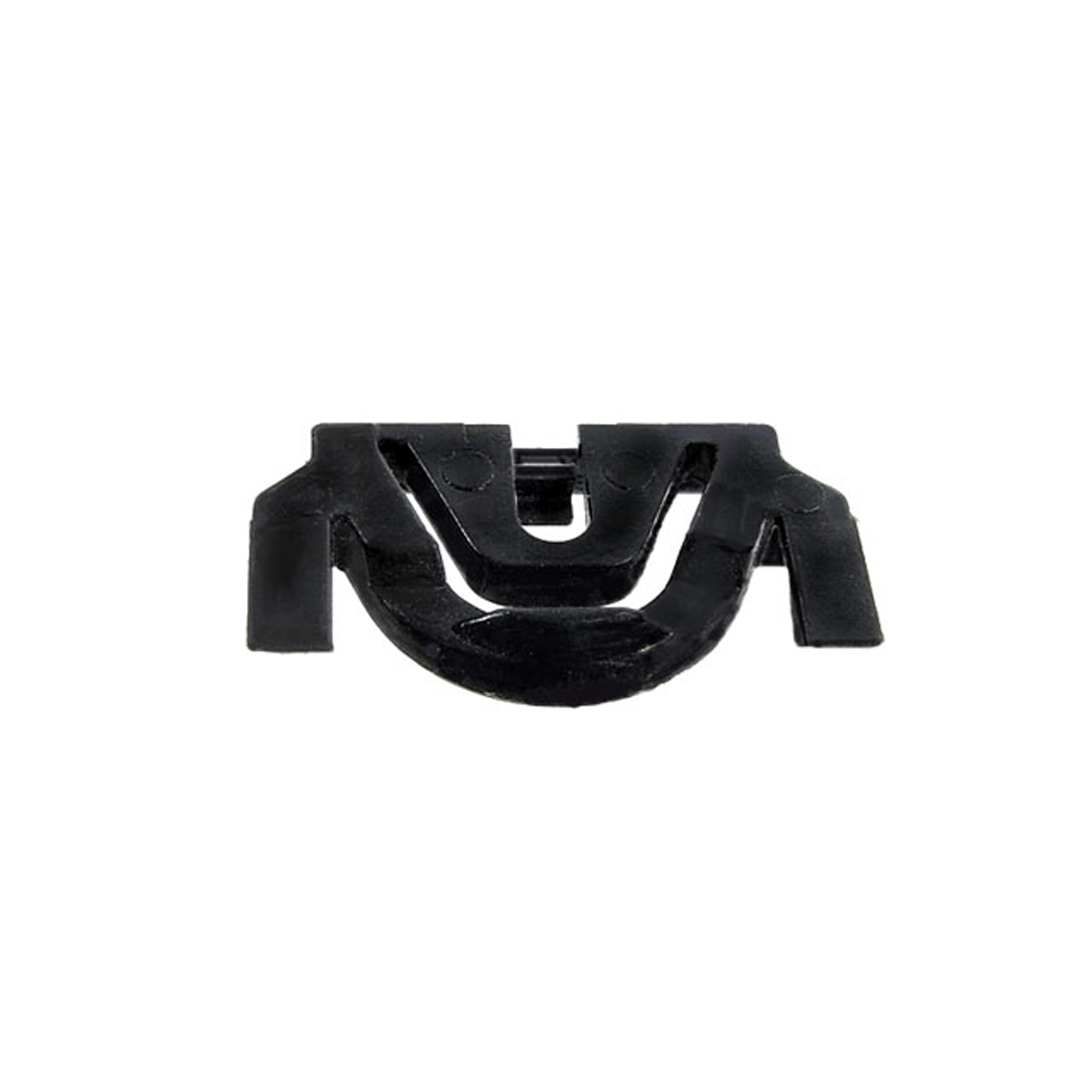 1989 Chrysler LeBaron Windshield and Rear Windshield Reveal Molding Clip-WF 225-AWindshield and Rear Windshield Reveal Molding Clip. Made of nylon. 2" X 11/16". Each
Why Choose Metro?
For over 100 years, Metro Moulded Parts has been the pinnacle of quality in classic car restoration parts. Our commitment to precision and authenticity in every component ensures a perfect fit and an OEM-level appearance.
- Expert Craftsmanship & Quality: Each part is a testament to our dedication to reliability and perfection, crafted from original designs and thoroughly tested.
- Advanced Technology: We use cutting-edge techniques to create flawless, long-lasting parts that surpass others in performance.
- SuperSoft Sponge – The Ultimate Door Seal: Not only are our door seals 30% softer than competitors', but they're also guaranteed to never leak. They effectively reduce wind and road noise, enhancing your classic car's comfort and driving experience.
- Proudly American: Our parts are a product of American craftsmanship, made in the USA with a spirit of excellence and heritage.
- Unrivaled Warranty: We back our products with a 30-year industry-leading warranty, a testament to our confidence in their quality.
Join us in preserving the legacy of classic cars with parts that are crafted for perfection, not just made.