

Image of 1929 Cord L-29, Note: These illustrations use artistic license and may differ from actual historical models.
Performance Metrics
Fundamental Metrics
Emotional Appeal
MMP Rating
| Engine Specifications | |
|---|---|
| Engine: | Lycoming Inline 8 |
| Displacement: | 298.6 cu in (4.9 L) |
| Horsepower: | 125 HP |
| Torque: | Not available |
| Compression Ratio: | Not available |
| Ignition System: | Battery and coil |
| Cooling System: | Water-cooled |
| Performance Specifications | |
| 0-60 Time: | Not available |
| 1/4 Mile Time: | Not available |
| Top Speed: | 80 mph |
| Transmission and Drive | |
| Drive Type: | Front-wheel drive |
| Transmission Type: | 3-speed manual |
| Fuel and Efficiency | |
| Fuel System Type: | Carburetor |
| MPG: | Not available |
| Dimensions and Brakes | |
| Brakes: | 4-wheel drum brakes |
| Wheelbase: | 137.5 in (3,492 mm) |
| Weight: | 4,300 lbs |
Note: Specifications for classic cars are given to the best of our ability, considering the limited and variant data available.
1929 Cord L-29: America’s First Front-Drive Luxury Car
The 1929 Cord L-29 looked as if it had arrived from the future, with a low, stretched silhouette and front-wheel drive at a time when most American cars still carried their power to the rear wheels. Built by the Auburn Automobile Company in Auburn, Indiana, it was the first American production car to bring front-wheel drive to the luxury-car market. Its daring engineering made it a landmark, even if the Great Depression kept it from becoming a commercial success.
The L-29 was the creation of industrialist Errett Lobban Cord, who had already built his reputation by reviving the Auburn and Duesenberg companies. He enlisted engineer Cornelius Van Ranst, drawing on ideas developed by racing innovator Harry Miller. A particularly intriguing result was the car’s unusually low stance: without a conventional driveshaft running beneath the passenger compartment, the chassis could sit lower to the ground than many rivals.
Low, Long, and Unmistakably Cord
The L-29’s proportions do much of the talking. Its long hood, low radiator, flowing fenders, and sweeping beltline give it a dramatic, almost custom-built appearance. The front wheels sit well forward, while the body seems to hug the road. Viewed in profile, the car has a sleek, elongated shape that feels more like a design statement than a typical late-1920s automobile.
Inside, the L-29 offered the comfort expected of a costly luxury car. Depending on body style and specification, buyers could find leather upholstery, carefully finished wood trim, rich carpeting, and polished metal details. The cabin was spacious, and the low floor made possible by the front-drive layout added to its sense of roominess. Materials and appointments varied, especially on cars fitted with coachbuilt bodies.
Factory and coachbuilder offerings included a sedan, brougham, phaeton, cabriolet, and town-car-style versions. The open phaeton and elegant cabriolet are among the most visually striking today, while closed sedans and broughams better suited buyers who wanted year-round comfort. Color choices varied by year and body, with both restrained dark finishes and more individual combinations available. Custom coachwork could bring further variation, so surviving cars do not all share one standard palette.
Front-Wheel Drive Before Its Time
The L-29’s defining innovation was its front-wheel-drive system. Its 298.6-cubic-inch Lycoming L-head inline-eight produced about 125 horsepower and sent power through a three-speed manual transmission to the front wheels. The arrangement required specially engineered joints that could transmit power while the wheels steered, a substantial challenge for production-car engineering of the period.
Front-wheel drive brought practical benefits as well as novelty. With no long driveshaft beneath the cabin, the floor could be lower, helping create the car’s distinctive proportions and a more open passenger compartment. The front wheels also pulled the car forward, which could offer useful traction on slippery surfaces. The system was complex, however, and early front-drive engineering demanded more specialized knowledge than a conventional rear-drive layout.
The L-29’s historical importance lies in showing that front-wheel drive could be used in a full-size American luxury car. It did not immediately persuade the industry to follow, but it demonstrated a design approach that later became central to modern passenger cars. Its blend of advanced layout and dramatic styling also helped establish Cord as a marque willing to take risks other manufacturers avoided.
Performance and Road Manners
With around 125 horsepower moving a substantial luxury chassis, the L-29 was brisk for its class but not a lightweight sports car. Period specifications and modern accounts commonly place top speed in the neighborhood of 80 to 90 mph, depending on bodywork, condition, and gearing. A 0-to-60-mph time is less consistently documented; a reasonable estimate is roughly 20 to 25 seconds. These figures should be treated as approximations rather than a promise for any individual car.
On the road, the straight-eight delivers its power smoothly, with a subdued mechanical hum that becomes more purposeful as the revs rise. The three-speed manual asks for deliberate, unhurried shifts. The car’s long wheelbase and substantial mass help it settle into a steady highway rhythm, while its low stance gives it a different feel from taller contemporaries.
Front-wheel drive can help the L-29 pull through loose or slippery conditions, but the steering and front-drive hardware make it a car to guide rather than hustle. At low speeds, steering effort can be considerable, and sharp turns call for planning. On winding roads, its size and period suspension remind the driver that this is a grand touring luxury car, not a modern sports coupe. Over bumps, the ride is composed by the standards of its era, though age, tire choice, and suspension condition make a major difference today.
Owning and Maintaining an L-29
Today, the L-29 is best suited to touring, concours events, museum display, and carefully chosen vintage-car gatherings. Its rarity, value, and specialized mechanical layout make it an unlikely daily driver. A well-sorted example can be enjoyed on the road, but regular use requires a knowledgeable owner and a sympathetic approach to its age.
Routine service follows familiar vintage-car principles, including attention to lubrication, ignition, cooling, brakes, and the condition of the eight-cylinder engine. The front-drive system is the more specialized part of the job. Components such as the drive joints, transmission, and steering-related hardware may require expertise and parts that are not as readily available as those for common American classics. Restoration is possible, but it is not generally a straightforward project for an average home mechanic working without specialist support.
Rare Details and Common Criticisms
Approximately 4,400 L-29s were built between 1929 and 1932, with commonly cited production totals near 4,429. Exact figures can vary by source and accounting method. That limited run, combined with the passage of nearly a century, makes the model uncommon on today’s market. There is no single authoritative count of surviving cars, and availability depends heavily on condition and body style.
The L-29’s bold engineering did not overcome the timing of its launch. It entered the market just as the 1929 stock-market crash and the Great Depression undermined demand for expensive automobiles. Its high price, substantial size, and complex front-drive system also limited its appeal. The car is sometimes criticized for being more ambitious than practical, but that tension is part of what makes it historically compelling: Cord pursued a striking technical idea even when the market was turning against luxury-car experimentation.
Collector Values and Market Outlook
Values depend sharply on body style, originality, restoration quality, and documentation. As a broad 2026 guide, a project or incomplete car might fall around $50,000 to $100,000, while a sound driver-quality example could bring roughly $100,000 to $200,000. A highly restored, especially desirable, or concours-level car may reach $200,000 to $350,000 or more. These are estimates, not appraisals, and individual auction results can vary widely.
The L-29 is a low-production collectible with a strong story, but it occupies a specialist corner of the market. Exceptional examples tend to attract serious interest, while cars needing extensive work can be challenging because restoration costs are high. In recent years, the broader market for significant prewar cars has been selective: top-quality examples remain sought after, while average cars have generally seen steadier, more modest movement. For an L-29, provenance, condition, and the quality of its mechanical restoration matter more than a simple year-to-year price trend.
Why the Cord L-29 Still Matters
The 1929 Cord L-29 combined a powerful inline-eight, an advanced front-wheel-drive layout, and a remarkably low, graceful body at a time when most luxury cars followed a far more conventional formula. It was expensive, technically ambitious, and introduced at an unforgiving moment in American history, yet its influence and visual character have endured.
Nearly a century later, the L-29 remains more than a rare prewar automobile. It is a rolling reminder that great design sometimes comes from asking a different question: not how to improve the familiar, but how to make the familiar obsolete.
1929 Cord L-29 Catalog of Parts
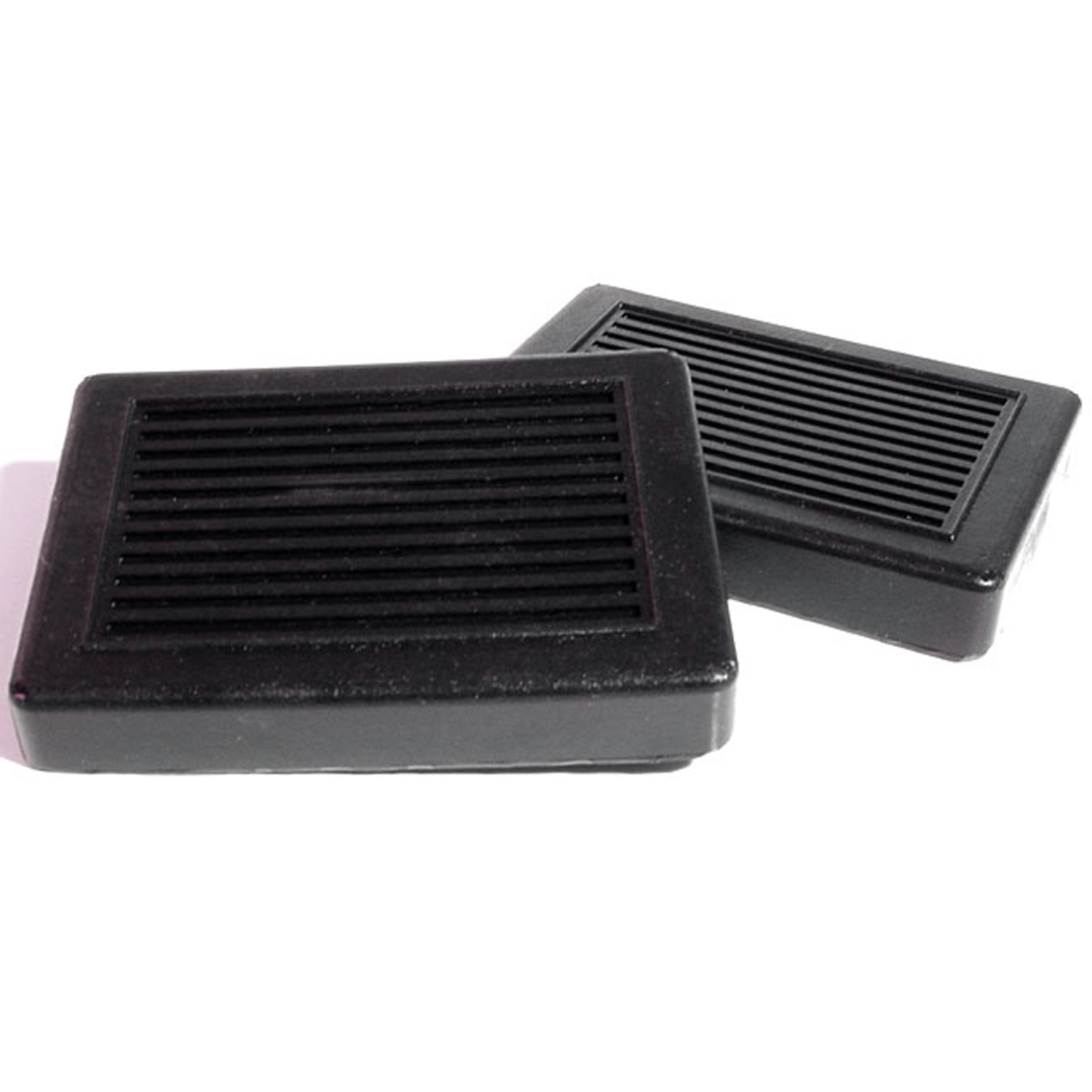 1929 Cord L-29 Clutch and Brake Pedal Pads. 3" wide X 3-7/8" long. Pair-CB 21Clutch and Brake Pedal Pads. 3" wide X 3-7/8" long. Pair
 1929 Cord L-29 Headlight Bar to Radiator Shell Grommet. Perfect. 1-1/8" I-CG 31Headlight Bar to Radiator Shell Grommet. Perfect. 1-1/8" I.D. Each
 1929 Cord L-29 Headlamp Cable Grommet. 9/16" I.D., 1-5/16" O.D. Each-CG 32Headlamp Cable Grommet. 9/16" I.D., 1-5/16" O.D. Each
 1929 Cord L-29 Windshield Base Pad. Made in three pieces For Cord Convertible. Each-MP 471Windshield Base Pad For Cord Convertible. Made in three pieces. Each
 1929 Cord L-29 License Bracket Pad. 5" wide X 4-1/5" long. Each-MP 472License Bracket Pad. 5" wide X 4-1/5" long. Each
 1929 Cord L-29 Headlight Bar Pads. 2-1/8" wide X 4-1/8" long. Pair-MP 474Headlight Bar Pads. 2-1/8" wide X 4-1/8" long. Pair
 1929 Cord L-29 Tail-light Base Pads. 3-1/4" wide X 3" long. Pair-MP 475Tail-light Base Pads. 3-1/4" wide X 3" long. Pair
 1929 Cord L-29 Side Door Lock Pads. 2-1/2" wide X 1-1/4" long. Pair-MP 476Side Door Lock Pads. 2-1/2" wide X 1-1/4" long. Pair
 1929 Cord L-29 Door Handle Pads. 2-5/8" wide X 1-1/2" long. Pair-MP 477Door Handle Pads. 2-5/8" wide X 1-1/2" long. Pair
 1929 Cord L-29 Front Spring Insulators. Made of tough rubber-RP 23Front Spring Insulators. Made of tough rubber. Upper and lower halves are molded separately. Good fit for proper compression. Complete 8-piece set
 1929 Cord L-29 U-Joint Dust Cover Assembly. Made of hard rubber-RP 29U-Joint Dust Cover Assembly. Made of hard rubber. 4-Piece set includes two dust cover assemblies, with each dust cover made in tow halves. 1-1/4" I.D., 4" O.D.
 1929 Cord L-29 Firewall Grommet. Fits 7/8" hole., 3/8" center hole. Each-SM 89Firewall Grommet. Fits 7/8" hole., 3/8" center hole. Each
 1929 Cord L-29 Firewall Grommet. Fits 7/8" hole., 9/16" center hole-SM 90Firewall Grommet. Fits 7/8" hole., 9/16" center hole. Each
 1929 Cord L-29 Suspension Seal. 1-3/16" O.D., 7/16" I.D. Each-XB 90Suspension Seal. 1-3/16" O.D., 7/16" I.D. Each
Why Choose Metro?
For over 100 years, Metro Moulded Parts has been the pinnacle of quality in classic car restoration parts. Our commitment to precision and authenticity in every component ensures a perfect fit and an OEM-level appearance.
- Expert Craftsmanship & Quality: Each part is a testament to our dedication to reliability and perfection, crafted from original designs and thoroughly tested.
- Advanced Technology: We use cutting-edge techniques to create flawless, long-lasting parts that surpass others in performance.
- SuperSoft Sponge – The Ultimate Door Seal: Not only are our door seals 30% softer than competitors', but they're also guaranteed to never leak. They effectively reduce wind and road noise, enhancing your classic car's comfort and driving experience.
- Proudly American: Our parts are a product of American craftsmanship, made in the USA with a spirit of excellence and heritage.
- Unrivaled Warranty: We back our products with a 30-year industry-leading warranty, a testament to our confidence in their quality.
Join us in preserving the legacy of classic cars with parts that are crafted for perfection, not just made.