

Image of 1930 Cord L-29, Note: These illustrations use artistic license and may differ from actual historical models.
Performance Metrics
Fundamental Metrics
Emotional Appeal
MMP Rating
| Engine Specifications | |
|---|---|
| Engine: | Lycoming Inline 8 |
| Displacement: | 298.6 cu in (4.9 L) |
| Horsepower: | 125 hp |
| Torque: | Not available |
| Compression Ratio: | Not available |
| Ignition System: | Battery and coil |
| Cooling System: | Water-cooled |
| Performance Specifications | |
| 0-60 Time: | Not available |
| 1/4 Mile Time: | Not available |
| Top Speed: | 80 mph |
| Transmission and Drive | |
| Drive Type: | Front-wheel drive |
| Transmission Type: | 3-speed manual |
| Fuel and Efficiency | |
| Fuel System Type: | Carburetor |
| MPG: | Not available |
| Dimensions and Brakes | |
| Brakes: | 4-wheel drum brakes |
| Wheelbase: | 137.5 in (3,492 mm) |
| Weight: | 4,300 lbs |
Note: Specifications for classic cars are given to the best of our ability, considering the limited and variant data available.
1930 Cord L-29: A Luxury Car That Drove Differently
The 1930 Cord L-29 looked like a luxury car from the future, and it drove in a way few American cars could match. Built by the Auburn Automobile Company under the direction of industrialist E.L. Cord, the L-29 brought front-wheel drive to a stylish, full-size American automobile at a time when rear-wheel drive was the norm.
The model was introduced in 1929 and sold through 1932, with the 1930 L-29 representing one of its key production years. Its layout allowed the body to sit unusually low, giving the car a long, graceful profile without the raised driveshaft tunnel common in conventional cars. The L-29’s unusual engineering was more than a talking point: it made the Cord one of the most distinctive American luxury cars of its era.
Its timing was both bold and difficult. The L-29 arrived just as the Great Depression began to strain the market for expensive automobiles. Despite limited sales, it became an enduring example of what ambitious engineering and dramatic styling could achieve.
Long Hood, Low Stance, Distinctive Cord Styling
The L-29’s proportions make an immediate impression. Its long hood stretches forward from a low, upright grille, while the front wheels sit noticeably farther ahead than on many contemporary cars. Sweeping fenders, a sharply raked windshield, and a clean beltline complete a profile that appears in motion even when the car is parked. The low stance was not simply a styling trick. It was made possible by placing the engine and transmission in a front-wheel-drive layout.
The styling is commonly associated with designer Alan Leamy, working within E.L. Cord’s Auburn organization. The result was elegant rather than flamboyant: a substantial car with carefully balanced curves and a strong visual identity. The L-29 was long, but its relatively low body helped it look sleek instead of bulky.
Depending on body style and specification, buyers could choose from open and closed coachwork. Offerings included a Phaeton, Cabriolet, Brougham, and Sedan, with variations in coachwork and equipment. The open Phaeton and Cabriolet show off the car’s flowing lines especially well, while the Sedan and Brougham gave buyers a more sheltered, formal touring experience. The elegant open cars are among the most instantly recognizable L-29s today.
Paint choices varied by year and body configuration. Period palettes included rich colors such as dark blue, green, maroon, and black, with contrasting or two-tone treatments available on some cars. A buyer could tailor the overall effect to be understated or more vivid, and original color combinations are an important detail for restorers and collectors.
Cabin Craftsmanship and 1930s Technology
Inside, the L-29 was built to feel like a genuine luxury car. Upholstery materials varied with body style and specification, with leather common in open cars and quality cloth or leather used in closed models. Polished wood trim, carefully finished fittings, and a broad instrument panel gave the cabin a formal, substantial character. These were hand-finished automobiles, not mass-market transportation, and their interiors reflected that positioning.
The headline innovation was front-wheel drive. The Lycoming inline eight-cylinder engine powered the front wheels through a three-speed manual transmission and a system of joints that allowed the driven wheels to steer. Moving the powertrain to the front helped eliminate the usual driveshaft running beneath the cabin. It also gave the L-29 its unusually low floor and allowed the body to be mounted closer to the road.
The car also used four-wheel hydraulic brakes, a valuable feature on a heavy automobile. Together, the front-drive layout, low stance, and hydraulic braking made the L-29 technically ambitious for its time, even though its unusual hardware demanded more specialized maintenance than a conventional car.
Why the Cord L-29 Mattered
The L-29 was one of the earliest American production luxury cars to use front-wheel drive. It was not the first front-wheel-drive automobile ever built, but it helped bring the idea to a wider audience in the United States. Its layout showed that front drive could be used in a large, prestigious car rather than only in a small or experimental vehicle.
Front-wheel drive shaped the car’s appearance as much as its engineering. Without a rear axle carrying power from the engine, designers had more freedom with the floor and body proportions. The L-29’s low silhouette became a visual expression of its mechanical layout, making the technology easy to see even to people who knew little about how the car worked.
The Cord name would become even more famous later in the decade with the front-wheel-drive 810 and 812 models. Those cars used a different design and more advanced styling, but the L-29 had already established the company’s reputation for daring engineering. Its influence is best understood as part of that larger Cord story: a willingness to challenge conventional layouts and make mechanical innovation a central part of a car’s identity.
1930 Cord L-29 Performance and Road Manners
The L-29 used a Lycoming 298.6-cubic-inch inline eight producing about 125 horsepower. A three-speed manual transmission sent power to the front wheels. Period performance figures vary, but a top speed in the neighborhood of 80 mph is commonly cited. Reaching 60 mph could take roughly 20 seconds, depending on the car’s condition, body style, gearing, and load. Those figures were respectable for a large luxury car, though the L-29 was designed for composed touring rather than rapid acceleration.
Behind the wheel, the car’s size and weight are immediately apparent. The long hood fills the driver’s view, while the low seating position makes the road feel close. The straight-eight delivers its power smoothly, with a muted mechanical hum that suits the car’s dignified character. The manual gearbox calls for deliberate shifts, and drivers need to become familiar with the feel of the front-drive system.
On a smooth road, the L-29 feels planted and substantial. Its weight helps it settle over broad undulations, though sharp bumps can still be felt through the chassis, as they can in many cars of the period. On winding roads, the front wheels must both steer and transmit engine power, so the car does not behave exactly like a rear-drive touring car. Steering effort can be heavy at low speeds, and the car rewards smooth inputs rather than abrupt cornering.
It is best driven with patience. The L-29’s appeal comes from its presence, unusual engineering, and relaxed touring manner, not from modern levels of speed or precision.
Living With an L-29 Today
Today, an L-29 is primarily a show car, touring car, or centerpiece in a serious collection. Its size, age, rarity, and specialist mechanical layout make it impractical as an everyday vehicle. Owners who do tour in one typically plan routes carefully, travel at a measured pace, and carry the tools and parts appropriate to a prewar automobile.
Maintenance requires knowledge of both vintage-car systems and Cord-specific front-drive components. Routine service is familiar territory for an experienced classic-car mechanic, but parts such as driveline joints, transmission components, and model-specific trim can take time to source. Restoration work is also more involved than on a common American car from the period because fewer donor parts and specialist resources are available.
Reliability depends heavily on the quality of the restoration and the car’s maintenance history. A well-sorted L-29 can be enjoyed on suitable tours, but it should not be treated like a modern car that can be driven hard and serviced anywhere. For the average owner without specialist support, repairs can be challenging and expensive.
Rare Facts and Common Criticisms
Approximately 5,010 L-29s were built, according to commonly cited production estimates, making the model rare by any standard. Production ran from 1929 through 1932, and the car’s limited numbers reflect both its high price and the economic pressure of the Depression. Its scarcity today is made more significant by the fact that surviving examples vary widely in body style, condition, and originality.
The L-29’s most notable claim is its place among the first American production luxury cars with front-wheel drive. Its proportions are also a useful clue to its engineering: the long hood and low body were not just stylistic choices, but consequences of the way the powertrain was arranged.
Common criticisms include modest acceleration for a car of its price, complicated front-drive hardware, and the difficulty of finding parts and qualified repair help. The car’s weight and steering demands can also make it tiring in slow, congested driving. Those compromises are part of the L-29’s history: its engineering was daring, but it was not necessarily simpler or cheaper to own than a conventional luxury car.
1930 Cord L-29 Collector Values
Collector values depend strongly on body style, originality, restoration quality, and documented history. As a broad current estimate in U.S. dollars, a car needing substantial work might fall around $100,000 to $180,000. A presentable, well-restored example could bring roughly $200,000 to $350,000, while an exceptional or especially desirable car may exceed $400,000. Rare coachwork, outstanding provenance, and concours-level restoration can push a sale higher, but top results are not guaranteed.
The L-29 is rarely available compared with better-known classics, and suitable examples may not appear on the open market for long periods. Its values have generally benefited from its rarity, engineering significance, and distinctive design, though the market is selective. Restoration costs can exceed what a buyer might recover at resale, so condition and quality matter more than simply choosing the cheapest car.
For collectors, the L-29 is best viewed as a long-term specialty automobile rather than a guaranteed short-term investment. A well-documented example with correct components and a respected restoration is likely to attract the strongest interest.
The Cord L-29’s Lasting Appeal
The 1930 Cord L-29 combined a Lycoming straight-eight, front-wheel drive, hydraulic brakes, and dramatic low-slung styling in a luxury car built during one of the hardest periods in American automotive history. It was costly, mechanically unusual, and never a mass-market success, but it showed how profoundly engineering could shape a car’s appearance and character.
More than nine decades later, the L-29 remains a rolling statement of ambition. Its long hood and low stance still turn heads, while its front-drive layout tells the story of a manufacturer willing to take a different road.
1930 Cord L-29 Catalog of Parts
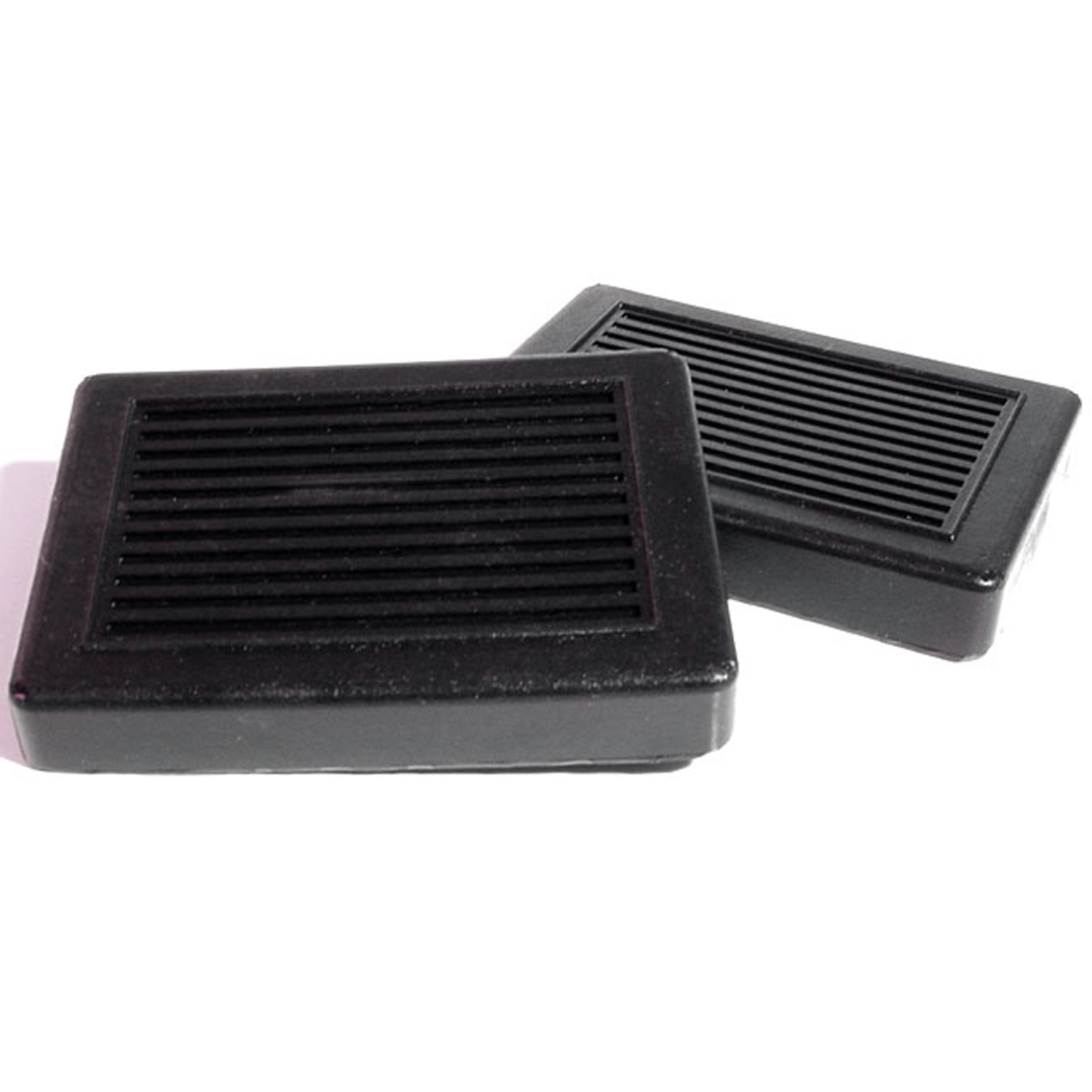 1930 Cord L-29 Clutch and Brake Pedal Pads. 3" wide X 3-7/8" long. Pair-CB 21Clutch and Brake Pedal Pads. 3" wide X 3-7/8" long. Pair
 1930 Cord L-29 Headlight Bar to Radiator Shell Grommet. Perfect. 1-1/8" I-CG 31Headlight Bar to Radiator Shell Grommet. Perfect. 1-1/8" I.D. Each
 1930 Cord L-29 Headlamp Cable Grommet. 9/16" I.D., 1-5/16" O.D. Each-CG 32Headlamp Cable Grommet. 9/16" I.D., 1-5/16" O.D. Each
 1930 Cord L-29 Windshield Base Pad. Made in three pieces For Cord Convertible. Each-MP 471Windshield Base Pad For Cord Convertible. Made in three pieces. Each
 1930 Cord L-29 License Bracket Pad. 5" wide X 4-1/5" long. Each-MP 472License Bracket Pad. 5" wide X 4-1/5" long. Each
 1930 Cord L-29 Headlight Bar Pads. 2-1/8" wide X 4-1/8" long. Pair-MP 474Headlight Bar Pads. 2-1/8" wide X 4-1/8" long. Pair
 1930 Cord L-29 Tail-light Base Pads. 3-1/4" wide X 3" long. Pair-MP 475Tail-light Base Pads. 3-1/4" wide X 3" long. Pair
 1930 Cord L-29 Side Door Lock Pads. 2-1/2" wide X 1-1/4" long. Pair-MP 476Side Door Lock Pads. 2-1/2" wide X 1-1/4" long. Pair
 1930 Cord L-29 Door Handle Pads. 2-5/8" wide X 1-1/2" long. Pair-MP 477Door Handle Pads. 2-5/8" wide X 1-1/2" long. Pair
 1930 Cord L-29 Front Spring Insulators. Made of tough rubber-RP 23Front Spring Insulators. Made of tough rubber. Upper and lower halves are molded separately. Good fit for proper compression. Complete 8-piece set
 1930 Cord L-29 U-Joint Dust Cover Assembly. Made of hard rubber-RP 29U-Joint Dust Cover Assembly. Made of hard rubber. 4-Piece set includes two dust cover assemblies, with each dust cover made in tow halves. 1-1/4" I.D., 4" O.D.
 1930 Cord L-29 Firewall Grommet. Fits 7/8" hole., 3/8" center hole. Each-SM 89Firewall Grommet. Fits 7/8" hole., 3/8" center hole. Each
 1930 Cord L-29 Firewall Grommet. Fits 7/8" hole., 9/16" center hole-SM 90Firewall Grommet. Fits 7/8" hole., 9/16" center hole. Each
 1930 Cord L-29 Suspension Seal. 1-3/16" O.D., 7/16" I.D. Each-XB 90Suspension Seal. 1-3/16" O.D., 7/16" I.D. Each
Why Choose Metro?
For over 100 years, Metro Moulded Parts has been the pinnacle of quality in classic car restoration parts. Our commitment to precision and authenticity in every component ensures a perfect fit and an OEM-level appearance.
- Expert Craftsmanship & Quality: Each part is a testament to our dedication to reliability and perfection, crafted from original designs and thoroughly tested.
- Advanced Technology: We use cutting-edge techniques to create flawless, long-lasting parts that surpass others in performance.
- SuperSoft Sponge – The Ultimate Door Seal: Not only are our door seals 30% softer than competitors', but they're also guaranteed to never leak. They effectively reduce wind and road noise, enhancing your classic car's comfort and driving experience.
- Proudly American: Our parts are a product of American craftsmanship, made in the USA with a spirit of excellence and heritage.
- Unrivaled Warranty: We back our products with a 30-year industry-leading warranty, a testament to our confidence in their quality.
Join us in preserving the legacy of classic cars with parts that are crafted for perfection, not just made.