

Image of 1932 Cord L-29, Note: These illustrations use artistic license and may differ from actual historical models.
Performance Metrics
Fundamental Metrics
Emotional Appeal
MMP Rating
| Engine Specifications | |
|---|---|
| Engine: | Lycoming Inline 8 |
| Displacement: | 298.6 cu in (4.9 L) |
| Horsepower: | 125 hp |
| Torque: | Not available |
| Compression Ratio: | Not available |
| Ignition System: | Battery and coil |
| Cooling System: | Water-cooled |
| Performance Specifications | |
| 0-60 Time: | Not available |
| 1/4 Mile Time: | Not available |
| Top Speed: | 80 mph |
| Transmission and Drive | |
| Drive Type: | Front-wheel drive |
| Transmission Type: | 3-speed manual |
| Fuel and Efficiency | |
| Fuel System Type: | Carburetor |
| MPG: | Not available |
| Dimensions and Brakes | |
| Brakes: | 4-wheel drum brakes |
| Wheelbase: | 137.5 in (3,492 mm) |
| Weight: | 4,700 lbs |
Note: Specifications for classic cars are given to the best of our ability, considering the limited and variant data available.
1932 Cord L-29: The American Luxury Car That Drove Ahead
The 1932 Cord L-29 looks as if it arrived from the future, but its most remarkable feature was hidden beneath its long hood: it sent power to the front wheels. Built by the Auburn Automobile Company under the direction of industrialist E. L. Cord, the L-29 was an ambitious luxury car that challenged convention at a time when most American automobiles used rear-wheel drive and a tall central driveshaft.
The L-29 entered production in 1929 and remained in the catalog through 1932. Its advanced layout drew on the front-wheel-drive racing work of engineer Harry Miller, with development for the production car led by engineer Cornelius Van Ranst. A distinctive detail was the way its front-drive engineering let designers lower the body and move the passenger compartment forward. The result was a car with an unusually long, low profile and no transmission tunnel rising through the middle of the cabin.
That innovation arrived during a difficult period. The Great Depression sharply reduced demand for costly automobiles, and the L-29 was expensive even by luxury-car standards. Its production run was short, but it secured Cord a lasting place in automotive history as one of America’s boldest early experiments in front-wheel drive.
Long Hood, Low Stance, Fine Coachwork
The L-29’s proportions are its calling card. Its low, sweeping body, long hood, slim fenders, and carefully shaped radiator shell give it a dramatic presence without relying on excess ornament. Because the front-drive layout eliminated the need for a conventional driveshaft beneath the cabin, the body could sit lower than many contemporary cars. The front wheels were set well forward, while the passenger compartment seemed to flow between the axles rather than perch high above them.
Inside, the L-29 was finished as a premium automobile, with upholstery, wood trim, and fittings that varied by body style and specification. Owners could expect a spacious cabin and a notably low floor. The exact materials and details depended on the individual car, but careful trim and coachwork were central to the model’s luxury appeal. As with many cars of the era, surviving examples may have been retrimmed or restored, so originality can vary.
Factory and catalog listings include several body styles, commonly described as the Cabriolet, Brougham, Sedan, and Town Car. The open Cabriolet is among the most recognizable, showcasing the car’s long profile with the top lowered. Closed bodies offered more weather protection and a formal appearance, while custom coachwork added further variety. Color choices depended on year and specification; period cars were offered in a range that could include dark, rich shades as well as lighter finishes. Deep reds, blues, greens, and black are especially evocative choices today, though the original paint history of any particular car should be verified.
Front-Wheel Drive Before Its Time
The L-29’s defining technology was its front-wheel-drive system. Rather than sending power through a long driveshaft to a rear differential, the car drove its front wheels. The engine sat behind the front axle, with the transmission and final-drive components arranged to deliver power forward. This unusual packaging helped create a low floor and generous cabin, while giving the car proportions that stood apart from conventional luxury machines.
Front-wheel drive also presented serious engineering challenges. The front wheels had to steer and transmit engine torque at the same time, requiring specialized joints and careful management of the forces acting through the steering. The system was sophisticated for its era, but it added complexity compared with a straightforward rear-drive layout.
The L-29 is often discussed alongside the racing innovations of Harry Miller, whose front-drive competition cars helped demonstrate the potential of driving the front wheels. The Cord was not simply a racing car converted for the road, but it brought a distinctly advanced drivetrain concept to American luxury-car buyers. Later front-wheel-drive cars would benefit from decades of further development, yet the L-29 remains a striking early example of the idea in a production automobile.
Performance and the Feel Behind the Wheel
Power came from a Lycoming L-head inline-eight displacing about 298.6 cubic inches, or 4.9 liters. Output is generally quoted at approximately 125 horsepower, routed through a three-speed manual transmission. Period specifications and surviving cars can differ in detail, so figures should be treated as representative rather than universal.
Depending on condition, gearing, body style, and test conditions, an L-29 could reach roughly 80 mph, with some accounts placing its maximum speed higher. A precise factory 0-to-60 mph figure is difficult to establish. Given the car’s substantial weight and modest output by modern standards, a period-style estimate would be in the neighborhood of 20 to 25 seconds, not a quick sprint by contemporary standards. The L-29 was built for dignified touring, not stoplight acceleration.
On the road, the straight-eight delivers a smooth, measured sound rather than a sharp or aggressive note. The long wheelbase helps the car settle over broad undulations, while its low stance gives it a different feel from many tall, upright cars of the early 1930s. On rough roads, however, its age, weight, suspension condition, and period tires matter more than any brochure promise. A well-maintained example can feel composed, but it should not be expected to absorb potholes like a modern luxury sedan.
The front-drive layout can make the steering feel different from that of a conventional rear-drive car, particularly under acceleration or on uneven surfaces. Windy roads call for smooth inputs and sensible speeds. The L-29 rewards a driver who plans ahead, operates its manual gearbox thoughtfully, and leaves plenty of room for braking. It is best experienced as a grand touring car from another era, not as a machine to hustle through corners.
Ownership: A Showpiece With Real Mechanical Needs
Today, most L-29s are collector cars, show cars, or occasional touring machines. Their rarity, size, and historical importance make them less practical as daily transportation. A carefully prepared example can participate in vintage events and measured touring, but regular use requires a specialist’s attention and a realistic understanding of prewar-car limitations.
Maintenance is more demanding than on a common classic car. The front-drive system is unusual, and parts or expertise may take time to locate. The engine itself follows the mechanical principles of its era, but the complete drivetrain requires someone familiar with Cord engineering. Owners should also pay close attention to cooling, fuel and ignition systems, brakes, tires, and the condition of the steering and front-drive joints. The car’s weight and vintage braking equipment make proper setup essential.
For an average owner without specialist support, repairs can be challenging. Routine servicing is manageable for an experienced classic-car enthusiast, but major drivetrain work is a job for a shop with relevant knowledge. Before buying, a thorough inspection by a Cord specialist is especially valuable. Documentation, restoration records, and evidence that the front-drive components have been maintained can make a substantial difference to the ownership experience.
Short Production, Lasting Curiosity
Approximately 4,429 Cord L-29s were built across the model’s production years. That makes the car scarce, though the number of surviving, correctly restored examples is smaller still. Its short run reflects both the high price and the economic conditions of the early 1930s, rather than a lack of ambition or engineering interest.
The L-29 is sometimes confused with the later Cord 810 and 812, the better-known models with hidden headlights and a more sharply streamlined design. The L-29 came first and has a very different appearance, but both cars share the Cord name and a reputation for technical daring.
There is no widely recognized L-29 land-speed or endurance record that defines the model. Its achievement was different: bringing a complex front-wheel-drive layout to a low-volume American luxury car. Its greatest “record” is the impression it still makes when parked beside more conventional cars of its time.
Common criticisms are fair to acknowledge. The drivetrain was complicated, the price put the car beyond the reach of most buyers, and the Great Depression made that challenge even harder. Its front-drive system also demanded careful engineering and specialist maintenance. Those drawbacks do not erase the L-29’s importance; they help explain why such an ambitious car was produced in limited numbers.
Collector Values and Market Outlook
Values vary widely with body style, originality, restoration quality, provenance, and mechanical condition. As a broad current-market estimate, a project or driver-quality example might fall around $100,000 to $200,000, while a well-restored car could bring roughly $200,000 to $400,000. Exceptional examples, particularly those with desirable coachwork, strong history, or concours-level restoration, may exceed that range. These are guide estimates, not guaranteed sale prices, and individual auction results can differ considerably.
The L-29 is rare enough that buyers may wait for the right example rather than choose from a steady supply. Values have generally benefited from the model’s historical significance and distinctive engineering, but the market for large prewar cars can be selective. Over time, well-documented, high-quality examples are likely to remain the most resilient. Restoration costs can be substantial, so a car’s purchase price alone is not a reliable measure of its eventual ownership cost.
Why the 1932 Cord L-29 Still Matters
The 1932 Cord L-29 combined a Lycoming straight-eight, front-wheel drive, a low-slung body, and high-end coachwork in a package that was unusual even among luxury cars. It was expensive and mechanically complex, and its timing was unfortunate. Yet it offered a glimpse of a different automotive future, one where drivetrain layout could reshape the cabin and the car’s entire stance.
Nearly a century later, the L-29 remains more than a handsome prewar collectible. It is a rolling argument for bold engineering, a reminder that innovation does not always arrive at the right moment, and one of the most distinctive American luxury cars of its generation.
1932 Cord L-29 Catalog of Parts
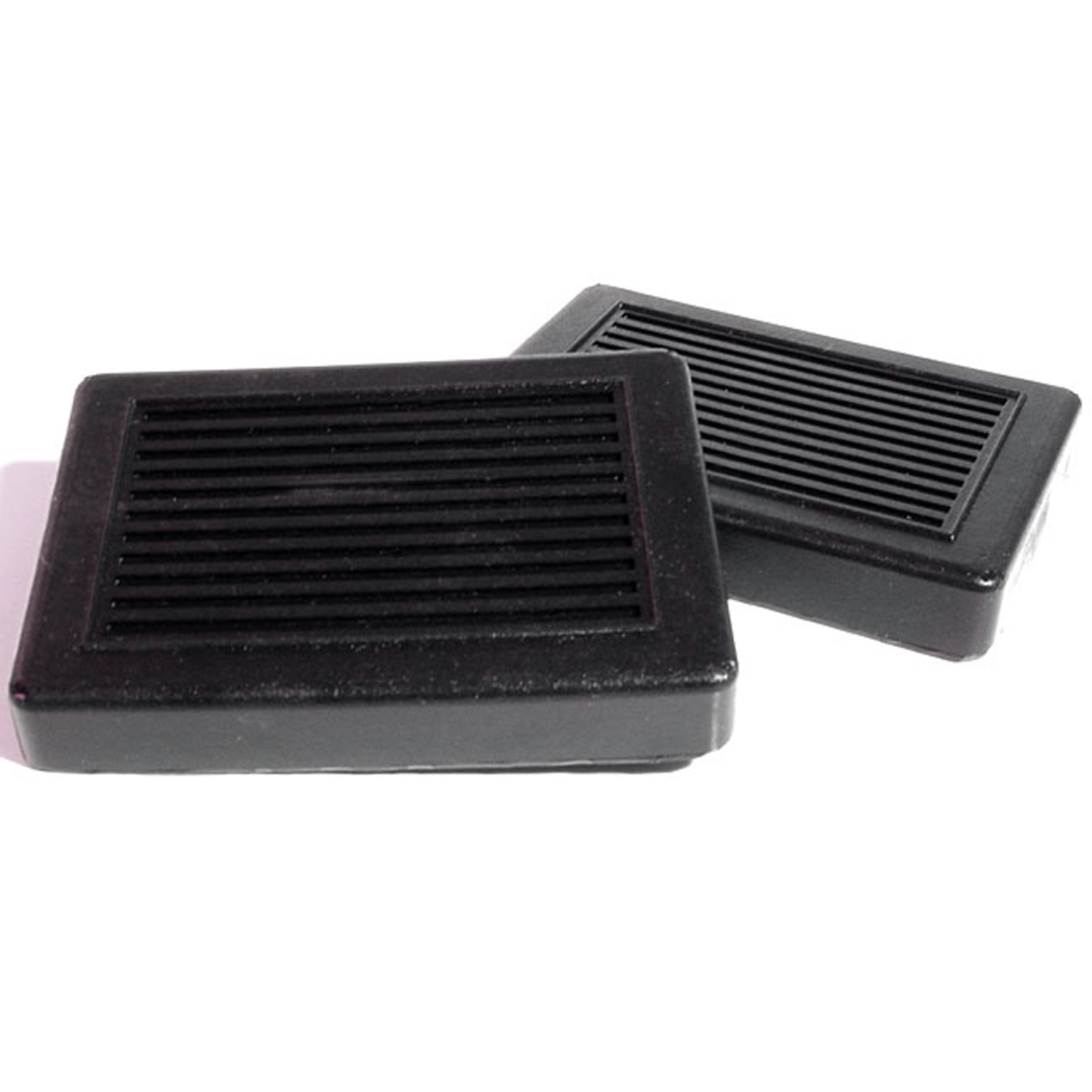 1932 Cord L-29 Clutch and Brake Pedal Pads. 3" wide X 3-7/8" long. Pair-CB 21Clutch and Brake Pedal Pads. 3" wide X 3-7/8" long. Pair
 1932 Cord L-29 Headlight Bar to Radiator Shell Grommet. Perfect. 1-1/8" I-CG 31Headlight Bar to Radiator Shell Grommet. Perfect. 1-1/8" I.D. Each
 1932 Cord L-29 Headlamp Cable Grommet. 9/16" I.D., 1-5/16" O.D. Each-CG 32Headlamp Cable Grommet. 9/16" I.D., 1-5/16" O.D. Each
 1932 Cord L-29 Windshield Base Pad. Made in three pieces For Cord Convertible. Each-MP 471Windshield Base Pad For Cord Convertible. Made in three pieces. Each
 1932 Cord L-29 License Bracket Pad. 5" wide X 4-1/5" long. Each-MP 472License Bracket Pad. 5" wide X 4-1/5" long. Each
 1932 Cord L-29 Headlight Bar Pads. 2-1/8" wide X 4-1/8" long. Pair-MP 474Headlight Bar Pads. 2-1/8" wide X 4-1/8" long. Pair
 1932 Cord L-29 Tail-light Base Pads. 3-1/4" wide X 3" long. Pair-MP 475Tail-light Base Pads. 3-1/4" wide X 3" long. Pair
 1932 Cord L-29 Side Door Lock Pads. 2-1/2" wide X 1-1/4" long. Pair-MP 476Side Door Lock Pads. 2-1/2" wide X 1-1/4" long. Pair
 1932 Cord L-29 Door Handle Pads. 2-5/8" wide X 1-1/2" long. Pair-MP 477Door Handle Pads. 2-5/8" wide X 1-1/2" long. Pair
 1932 Cord L-29 Front Spring Insulators. Made of tough rubber-RP 23Front Spring Insulators. Made of tough rubber. Upper and lower halves are molded separately. Good fit for proper compression. Complete 8-piece set
 1932 Cord L-29 U-Joint Dust Cover Assembly. Made of hard rubber-RP 29U-Joint Dust Cover Assembly. Made of hard rubber. 4-Piece set includes two dust cover assemblies, with each dust cover made in tow halves. 1-1/4" I.D., 4" O.D.
 1932 Cord L-29 Firewall Grommet. Fits 7/8" hole., 3/8" center hole. Each-SM 89Firewall Grommet. Fits 7/8" hole., 3/8" center hole. Each
 1932 Cord L-29 Firewall Grommet. Fits 7/8" hole., 9/16" center hole-SM 90Firewall Grommet. Fits 7/8" hole., 9/16" center hole. Each
 1932 Cord L-29 Suspension Seal. 1-3/16" O.D., 7/16" I.D. Each-XB 90Suspension Seal. 1-3/16" O.D., 7/16" I.D. Each
Why Choose Metro?
For over 100 years, Metro Moulded Parts has been the pinnacle of quality in classic car restoration parts. Our commitment to precision and authenticity in every component ensures a perfect fit and an OEM-level appearance.
- Expert Craftsmanship & Quality: Each part is a testament to our dedication to reliability and perfection, crafted from original designs and thoroughly tested.
- Advanced Technology: We use cutting-edge techniques to create flawless, long-lasting parts that surpass others in performance.
- SuperSoft Sponge – The Ultimate Door Seal: Not only are our door seals 30% softer than competitors', but they're also guaranteed to never leak. They effectively reduce wind and road noise, enhancing your classic car's comfort and driving experience.
- Proudly American: Our parts are a product of American craftsmanship, made in the USA with a spirit of excellence and heritage.
- Unrivaled Warranty: We back our products with a 30-year industry-leading warranty, a testament to our confidence in their quality.
Join us in preserving the legacy of classic cars with parts that are crafted for perfection, not just made.