

Image of 1937 Cord 812, Note: These illustrations use artistic license and may differ from actual historical models.
Performance Metrics
Fundamental Metrics
Emotional Appeal
MMP Rating
| Engine Specifications | |
|---|---|
| Engine: | Lycoming V8 |
| Displacement: | 288.6 cubic inches (4.7 liters) |
| Horsepower: | 125 horsepower |
| Torque: | Not available |
| Compression Ratio: | 6.5:1 |
| Ignition System: | Battery and coil |
| Cooling System: | Water-cooled |
| Performance Specifications | |
| 0-60 Time: | Estimated 15 seconds |
| 1/4 Mile Time: | Not available |
| Top Speed: | 80-110 mph |
| Transmission and Drive | |
| Drive Type: | Front-wheel drive |
| Transmission Type: | 4-speed preselector semi-automatic |
| Fuel and Efficiency | |
| Fuel System Type: | Carburetor |
| MPG: | Not available |
| Dimensions and Brakes | |
| Brakes: | Hydraulic drum brakes |
| Wheelbase: | 125 inches |
| Weight: | 3,700 lbs |
Note: Specifications for classic cars are given to the best of our ability, considering the limited and variant data available.
1937 Cord 812: The American Classic That Looked Decades Ahead
The 1937 Cord 812 arrived with hidden headlights, front-wheel drive, and a long, low body that seemed to have rolled in from the future. Built by the Auburn Automobile Company under industrialist E. L. Cord, it was more than a striking luxury car: it was one of the boldest attempts to rethink how an American automobile could look and work.
The 812 followed the Cord 810, introduced in 1935. Both were designed by Gordon Buehrig, but the 1937 model is especially remembered for its optional supercharger and the chrome exhaust pipes that ran along the hood. A memorable detail from the car’s early life is that the 810’s dramatic styling drew such attention at its 1935 New York Auto Show debut that it became a sensation before customers had even experienced its unconventional mechanical layout.
Streamlined Style and Thoughtful Detail
The 812’s front end is its unmistakable calling card. Instead of a conventional upright grille, the nose was smooth and rounded, with fine horizontal louvers defining its shape. The fenders flowed into the body rather than sitting apart from it, while the low hood and clean side panels gave the car a streamlined, almost aircraft-inspired look. A small crank inside the cabin raised and lowered the concealed headlamps, turning a practical feature into a bit of theater.
Supercharged examples are easy to spot by their exposed, chrome-plated exhaust pipes, which sweep along the sides of the hood. They look like a styling flourish, but they also serve a real purpose by carrying exhaust from the supercharger-equipped engine. Together with the long body, flowing fenders, and rear-mounted spare tire on some versions, these details gave the Cord a presence few contemporary cars could match.
Inside, the Cord was designed as a luxury automobile, with broad seating, quality upholstery, and a distinctive instrument panel packed with gauges. Leather was available, and trim and upholstery choices varied by body style and specification. The cabin feels more like a carefully designed cockpit than the upright, wood-and-chrome interiors common in many cars of the era. Buyers could choose from a range of paint colors, with rich shades such as maroon, blue, gray, and tan among the period palette. Exact color names and availability varied by year and model.
The 812 came in several body styles, including four-door sedans such as the Westchester and Beverly, as well as open models such as the Phaeton and two-door Sportsman. The elegant open cars are especially coveted today, while the distinctive sedans offer a more practical way to enjoy the Cord’s design. Supercharging was an option rather than a feature of every 812.
Engineering That Took a Different Road
The Cord’s most important innovation was its front-wheel-drive layout. Its 289-cubic-inch Lycoming V8 sat ahead of the passenger compartment and sent power to the front wheels through a four-speed, electrically selected, vacuum-operated transmission. This arrangement helped create the car’s unusually low, flat floor and long, clean hood. It also made the Cord stand apart from most American luxury cars, which used a conventional front-engine, rear-wheel-drive layout.
The transmission was advanced in concept but could be temperamental in practice. Drivers selected gears through a small control near the steering column, while vacuum mechanisms performed much of the shifting work. When properly adjusted and operated, the system was a striking piece of engineering. When worn or out of adjustment, it could be frustrating. The pop-up headlights, front-wheel drive, independent front suspension, and carefully integrated body design added to the impression that the 812 was built to challenge convention rather than follow it.
The Cord’s influence is clearest in its styling. Its low, streamlined proportions and integrated fenders anticipated themes that became common in later automotive design. The 810 also earned lasting recognition as a design landmark, including a place in the Museum of Modern Art’s celebrated 1951 exhibition of significant automobile design. The Cord did not invent every feature associated with its appearance, but it combined them in a way that still looks coherent and striking nearly a century later.
V8 Performance and Road Manners
The naturally aspirated Lycoming V8 produced about 125 horsepower. With the optional centrifugal supercharger, output rose to roughly 170 horsepower. Period performance figures and modern test results vary, so acceleration estimates should be treated as approximations. A standard 812 is generally credited with a 0-to-60-mph time in the low-to-mid teens, while a healthy supercharged car may manage the run in roughly 9 to 11 seconds. Depending on gearing and condition, top speed is commonly quoted at around 100 mph for an unsupercharged car and approximately 110 to 120 mph for a supercharged one.
On a smooth road, the 812 feels low and planted, with the front wheels pulling the car through a bend rather than pushing it from behind. Its independent front suspension helps it cope with uneven pavement, though the experience should not be confused with that of a modern touring car. Steering can feel heavy at low speeds, and a car with decades-old suspension components will reveal bumps more clearly than a contemporary luxury vehicle.
Driving a Cord also requires some mechanical sympathy. The transmission rewards a driver who understands its controls and gives the vacuum-shift system time to work. The V8 supplies a deep, measured rumble, while a supercharged model adds a more forceful exhaust note from those prominent side pipes. The result is less about effortless modern speed and more about feeling connected to a machine whose engineering is part of the driving experience.
Living With a Cord 812
Today, most 812s are cherished collector cars, shown at concours events, driven on club tours, or taken out for special occasions. They are not typical daily drivers. Their age, rarity, and specialized systems make regular use possible for a committed owner, but not especially convenient.
Maintenance is a major part of ownership. The engine is robust when properly maintained, but the transmission and its vacuum-operated controls need careful adjustment. Superchargers, retractable headlights, and specialized front-drive components can also require expertise. Parts support exists through Cord clubs and specialist suppliers, but the average general-purpose repair shop may not have the experience or parts needed to diagnose the car quickly. Prospective buyers should favor a well-documented example with a recent inspection by a marque specialist over a cheaper car with unresolved mechanical issues.
Notable Facts and Common Complaints
The Cord 810 and 812 are often grouped together because they share the same basic design and engineering. A commonly cited estimate puts combined production at about 2,972 cars, with roughly 1,800 of those being 812s. Figures can vary among reference sources, and surviving cars are fewer still. That limited production is one reason a Cord can draw a crowd even among other celebrated prewar classics.
The car’s innovations also came with trade-offs. The transmission’s complexity and reputation for troublesome shifting are frequent criticisms, as are the difficulty of finding specialist service and the expense of maintaining rare components. Its advanced appearance can make people expect modern road manners, but the Cord remains a 1930s automobile: it needs thoughtful operation, careful upkeep, and realistic expectations.
There is no single universally accepted “record” that defines the 812. Its best-known achievement is cultural rather than competitive: it became one of the era’s most recognizable expressions of American automotive design. It is also a regular presence in major classic-car collections and museum displays, where its unusual shape and front-wheel-drive engineering continue to attract attention.
Collector Values and Availability
As a broad 2026 guide, a Cord 812 in fair or driver-quality condition may fall around $100,000 to $200,000, while a well-restored, desirable example can bring roughly $200,000 to $400,000. A rare, highly original, or concours-quality car may exceed that range. Supercharged open models, particularly desirable Sportsman or Phaeton examples, can command several hundred thousand dollars, with exceptional cars potentially reaching $500,000 or more. Actual sale prices depend heavily on body style, originality, restoration quality, history, and mechanical condition.
Only a small number of 812s appear on the market in any given year, and the best examples may be sold privately or through specialist auctions. Values have generally benefited from the model’s rarity and design reputation, though the market for prewar cars can be uneven. Well-restored, correctly documented cars tend to hold the strongest appeal. Buyers should also budget for specialist maintenance, since purchase price is only part of the cost of ownership.
Why the 1937 Cord 812 Still Matters
The 1937 Cord 812 combined a Lycoming V8, front-wheel drive, concealed headlights, and a dramatic streamlined body in a package that was ambitious even by modern standards. Its complex transmission could be troublesome, and its rarity makes ownership demanding, but those flaws are part of the story of a car that tried to move the automobile forward rather than simply refine what already existed.
Nearly 90 years later, the Cord 812 remains more than a beautiful prewar classic. It is a reminder that bold engineering and unforgettable design can make a car feel ahead of its time long after the road has changed around it.
1937 Cord 812 Catalog of Parts
 1937 Cord 812 Muffler Cushion. 1-7/16" Square, 1/2" Hole. Each-BC 21Muffler Cushion. 1-7/16" Square, 1/2" Hole. Each
 1937 Cord 812 Front Stabilizer Bar Bushing-BN 100Front Stabilizer Bar Bushing. 2-1/24" high X 1-5/8" wide X 1-1/2" long. Each
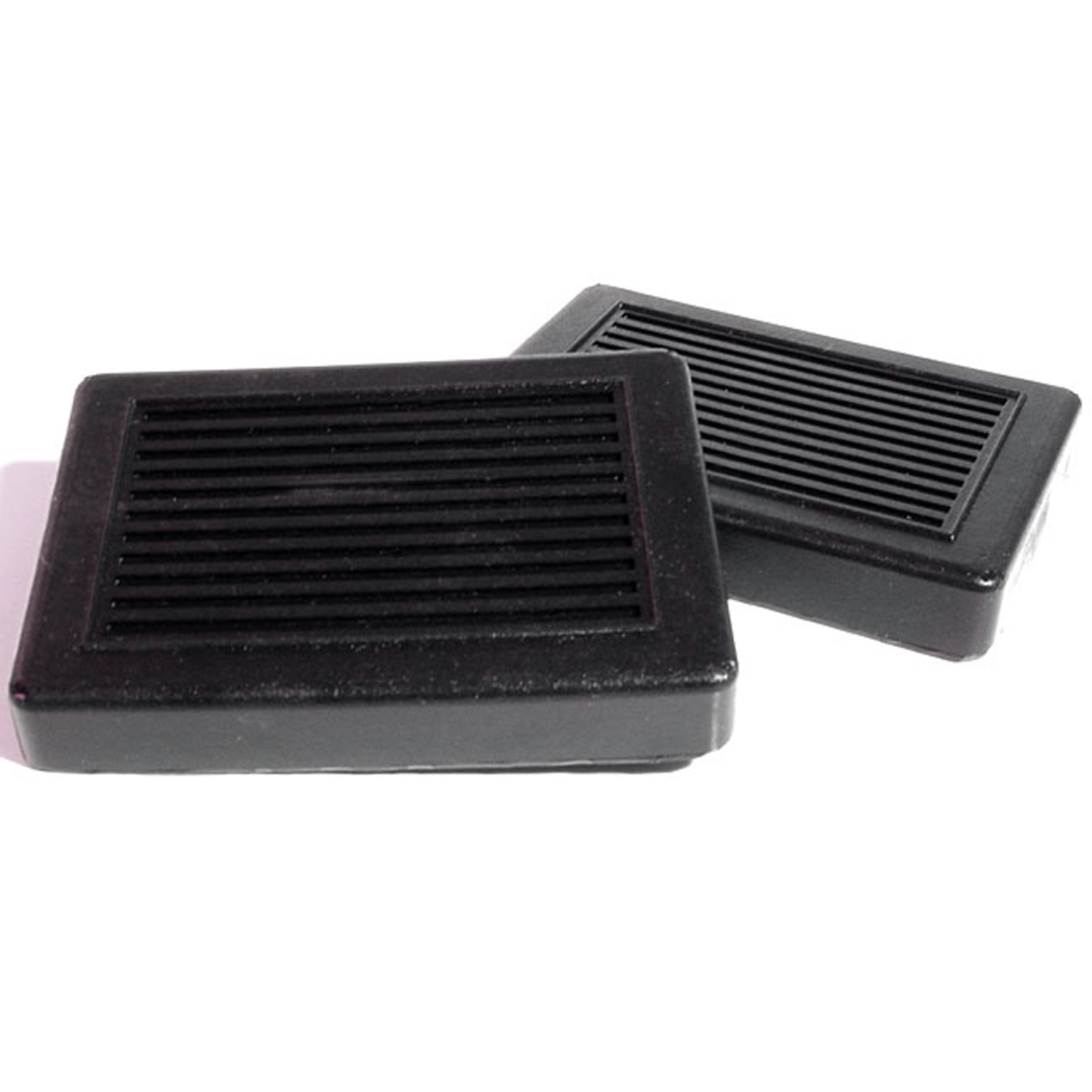 1937 Cord 812 Clutch and Brake Pedal Pads. 3" wide X 3-7/8" long. Pair-CB 21Clutch and Brake Pedal Pads. 3" wide X 3-7/8" long. Pair
 1937 Cord 812 Headlamp Cable Grommet. 9/16" I.D., 1-5/16" O.D. Each-CG 32Headlamp Cable Grommet. 9/16" I.D., 1-5/16" O.D. Each
 1937 Cord 812 Tail-light Base Pads. Uniform thickness. 5-1/8" O.D-MP 470Tail-light Base Pads. Uniform thickness. 5-1/8" O.D. Pair
 1937 Cord 812 Windshield Base Pad. Made in three pieces For Cord Convertible. Each-MP 471Windshield Base Pad For Cord Convertible. Made in three pieces. Each
 1937 Cord 812 License Bracket Pad. 5" wide X 4-1/5" long. Each-MP 472License Bracket Pad. 5" wide X 4-1/5" long. Each
Why Choose Metro?
For over 100 years, Metro Moulded Parts has been the pinnacle of quality in classic car restoration parts. Our commitment to precision and authenticity in every component ensures a perfect fit and an OEM-level appearance.
- Expert Craftsmanship & Quality: Each part is a testament to our dedication to reliability and perfection, crafted from original designs and thoroughly tested.
- Advanced Technology: We use cutting-edge techniques to create flawless, long-lasting parts that surpass others in performance.
- SuperSoft Sponge – The Ultimate Door Seal: Not only are our door seals 30% softer than competitors', but they're also guaranteed to never leak. They effectively reduce wind and road noise, enhancing your classic car's comfort and driving experience.
- Proudly American: Our parts are a product of American craftsmanship, made in the USA with a spirit of excellence and heritage.
- Unrivaled Warranty: We back our products with a 30-year industry-leading warranty, a testament to our confidence in their quality.
Join us in preserving the legacy of classic cars with parts that are crafted for perfection, not just made.