

Image of 1950 Crosley Hot Shot, Note: These illustrations use artistic license and may differ from actual historical models.
Performance Metrics
Fundamental Metrics
Emotional Appeal
MMP Rating
| Engine Specifications | |
|---|---|
| Engine: | 44 cubic inch 4-cylinder |
| Displacement: | 44 cubic inches |
| Horsepower: | 26.5 horsepower |
| Torque: | Estimated at 32.5 lb-ft |
| Compression Ratio: | 7.5:1 |
| Ignition System: | Battery Ignition |
| Cooling System: | Water-cooled |
| Performance Specifications | |
| 0-60 Time: | 19.3 seconds |
| 1/4 Mile Time: | Estimated at 23.4 seconds |
| Top Speed: | 75 mph |
| Transmission and Drive | |
| Drive Type: | Rear-wheel drive |
| Transmission Type: | 3-speed manual |
| Fuel and Efficiency | |
| Fuel System Type: | Carburetor |
| MPG: | Estimated at 35 mpg |
| Dimensions and Brakes | |
| Brakes: | Hydraulic drum brakes |
| Wheelbase: | 85 inches |
| Weight: | 1,175 lbs |
Note: Specifications for classic cars are given to the best of our ability, considering the limited and variant data available.
1950 Crosley Hot Shot: America’s Pocket-Sized Sports Car
The 1950 Crosley Hot Shot was proof that a sports car did not need a big engine, a long hood, or a famous European badge to make a memorable entrance. Built by Crosley Motors, the small Cincinnati-based automaker founded by industrialist Powel Crosley Jr., the Hot Shot was a lightweight, two-seat roadster with an unusually spirited personality. Its best-known moment came at Sebring, where a Crosley Hot Shot won the overall result in the 1950 six-hour race, an early milestone in American sports-car racing.
The Hot Shot belonged to a brief but inventive chapter in postwar American motoring. While Detroit’s major manufacturers concentrated on larger, more powerful cars, Crosley pursued compact, economical vehicles. The Hot Shot turned that practical engineering into a tiny sports car, pairing a modest four-cylinder engine with low weight and nimble dimensions.
Small Roadster, Big Personality
The Hot Shot’s styling is simple and purposeful. Its low nose, upright grille, rounded fenders, exposed wheels, and short rear deck give it the look of a miniature road racer. The open cockpit sits close to the body, and the car’s compact proportions make its wheels seem almost oversized. It is not sleek in the modern wind-tunnel sense, but its honest, stripped-down appearance is a big part of its charm.
Inside, the Hot Shot is equally straightforward. Two occupants sit in a narrow cabin with basic instrumentation, simple controls, and little in the way of trim or sound insulation. Materials were practical rather than luxurious, reflecting Crosley’s emphasis on low weight and affordability. The sparse cabin also makes the car feel more connected to the road than a larger, more insulated postwar automobile.
Hot Shot colors varied by year and production, and original paint can be difficult to confirm on cars that have been restored or repainted. Bright reds, yellows, and other vivid shades suit the car’s sporting character and are popular with owners, but a buyer seeking originality should check factory records and surviving paint beneath trim or hardware rather than rely on a color’s popularity today.
Body Style and Equipment
The Hot Shot was a two-seat roadster, not a range of sedan and coupe variants. Its basic, open body and cut-down sides helped keep weight down, while weather protection was minimal compared with a conventional convertible. Crosley’s later Super Sports, introduced for 1951, offered a related but more finished sports-car alternative. The Hot Shot itself remains the most recognizable expression of Crosley’s lightweight sports-car idea.
Under the skin, the car used a small 44-cubic-inch, water-cooled four-cylinder engine. By this period Crosley had moved away from its earlier copper-brazed engine construction to a cast-iron-block design. The engine used an overhead camshaft, an advanced layout for an inexpensive American car of the time. A manual gearbox and the car’s low curb weight helped make the most of its limited horsepower.
Crosley also made an important technical contribution with its four-wheel disc-brake experiment. The company introduced production disc brakes on Crosleys in 1949, years before they became common on American passenger cars. Early systems could suffer from corrosion, and Crosley moved back to conventional drum brakes. Brake equipment can vary with production date and prior repairs, so collectors should inspect the actual hardware on an individual 1950 car.
Why the Hot Shot Mattered
The Hot Shot stood apart from most American cars of 1950 because it approached performance from the opposite direction. Rather than relying on a large engine and a heavy chassis, Crosley kept the car small and light. That philosophy anticipated the appeal of later compact sports cars, where nimble handling and a lively driving experience mattered as much as outright horsepower.
Its racing success gave the concept credibility. At the 1950 Sebring event, then a six-hour race rather than the famous 12-hour contest that began in 1952, a Crosley Hot Shot took the overall win. The result was remarkable for such a small car competing against larger machinery. It remains one of the most memorable achievements in Crosley’s history and a vivid reminder that good power-to-weight balance can make a modest engine surprisingly effective.
The Hot Shot did not transform mass-market American design, and Crosley’s company was too small to shape the industry on the scale of Detroit’s major manufacturers. Its lasting influence is more specific: it demonstrated an American appetite for compact, economical cars with genuine sporting intent, and it helped establish Crosley as one of the country’s most inventive independent automakers.
Performance and Road Manners
The 1950 Hot Shot’s 44-cubic-inch engine produced about 26.5 horsepower. That figure sounds modest, but the car weighed roughly 1,100 pounds, depending on equipment and condition. Period performance figures vary, but a sound, correctly tuned example is generally associated with a top speed in the neighborhood of 70 to 75 mph. A 0-to-60-mph time was not a headline factory measure for a car of this class; modern estimates commonly put acceleration in the low-to-mid 20-second range, with results depending heavily on gearing, engine condition, and road conditions.
On a smooth, winding road, the Hot Shot feels agile and eager. Its narrow dimensions and low mass make it easy to place through corners, and the driver does not have to hustle a heavy chassis. The trade-off is a firm, unsettled ride over bumps. Short wheelbase and lightweight construction mean potholes and rough pavement are felt directly, while crosswinds can push the little roadster around more than they would a heavier car.
Behind the wheel, the experience is tactile rather than refined. The engine has to work hard, the cabin offers little shelter from wind and mechanical noise, and the driver is closely involved with every shift and steering input. That directness is the point. At sensible speeds, the Hot Shot feels like a tiny sports racer with license plates, not a scaled-down modern touring car.
Living With a Crosley Hot Shot
Today, most Hot Shots are used as show cars, weekend drivers, vintage-racing participants, or part of a Crosley collection. Their compact size makes them easy to store, and their distinctive shape attracts attention wherever they appear. They can be driven on local roads, but modern traffic speeds and the car’s limited crash protection make route choice and defensive driving important.
Routine mechanical work is often approachable for an experienced home mechanic. The simple layout and small engine can make basic service less intimidating than on a complex modern car. However, Crosley-specific parts, correct engine components, and original trim may take patience to find. A pre-purchase inspection should include the engine, cooling system, gearbox, chassis, brakes, and any repairs to the small body panels. Correctly identifying whether the car has disc or drum brakes is also worthwhile.
Reliability depends more on the quality of restoration and maintenance than on the badge alone. A well-sorted Hot Shot can be enjoyable, but an old cooling system, neglected ignition, worn drivetrain, or improvised brake repair can quickly spoil the fun. Buyers should also look for evidence of careful work, since the car’s simplicity can tempt past owners to make repairs that function but are not historically correct.
Fast Facts and Common Criticisms
The Hot Shot’s Sebring win is its standout racing fact, but the car’s short production run is another reason it has a devoted following. Approximately 2,500 Hot Shots are commonly cited across the model’s 1949-to-1952 run. That is a useful broad estimate, not a precise count of surviving cars or of 1950 production alone.
Its most frequent criticisms are easy to understand: the engine is small, the ride is firm, weather protection is limited, and the cabin is basic. The early disc brakes also became controversial because corrosion could affect their performance. Those compromises were part of the Hot Shot’s lightweight, low-cost formula, but they matter when assessing a car for regular road use.
Collector Value and Availability
The Hot Shot is uncommon, though it is not impossible to find through specialist dealers, auctions, club networks, and online listings. Condition, originality, mechanical sorting, and the quality of any restoration have a major effect on value. As a broad current-market estimate, project cars may fall around $5,000 to $12,000, usable drivers often land near $12,000 to $25,000, and very good or professionally restored examples can reach roughly $25,000 to $40,000 or more. Exceptional provenance or a particularly correct restoration can command a premium.
Values have generally strengthened as interest in unusual postwar cars and early American sports-car history has grown, although the market is specialized and prices can vary widely. A Hot Shot is not as liquid as a mass-produced classic, so buyers should focus on condition and documentation rather than assuming every example will appreciate at the same rate.
A Tiny Car With a Lasting Story
The 1950 Crosley Hot Shot combined compact dimensions, clever engineering, and an unexpectedly serious sporting streak. Its overhead-cam four-cylinder, experimental disc-brake chapter, and Sebring victory give it a place in automotive history well beyond its size. It may be too small, noisy, and elemental for some modern drivers, but that is also what makes it special: the Hot Shot delivers an unusually direct connection to the road and to the resourceful independent spirit of postwar American motoring.
1950 Crosley Hot Shot Catalog of Parts
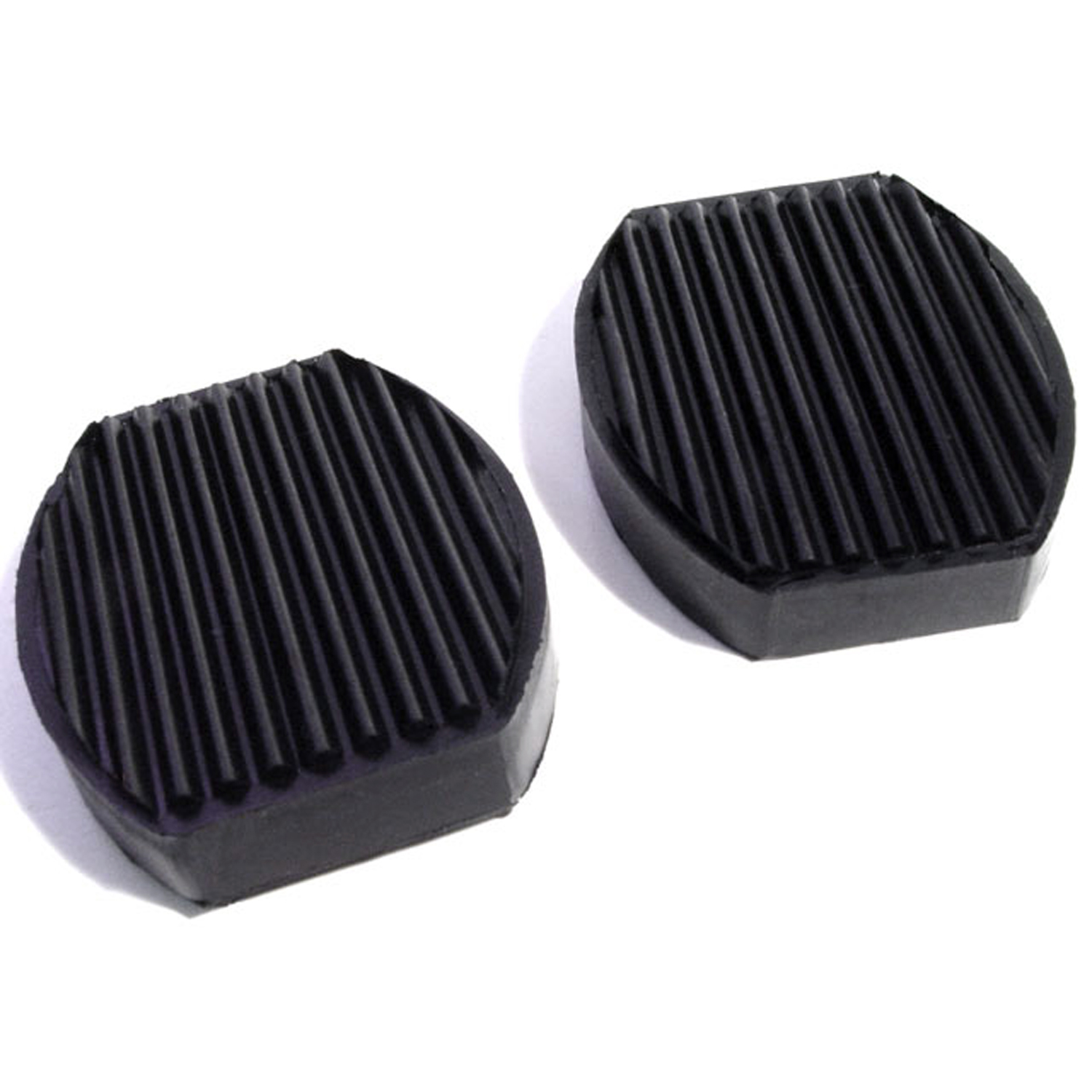 1950 Crosley Hot Shot Clutch and Brake Pedal Pads. 2-5/16" wide X 2-3/4" long-CB 104Clutch and Brake Pedal Pads. 2-5/16" wide X 2-3/4" long. Pair
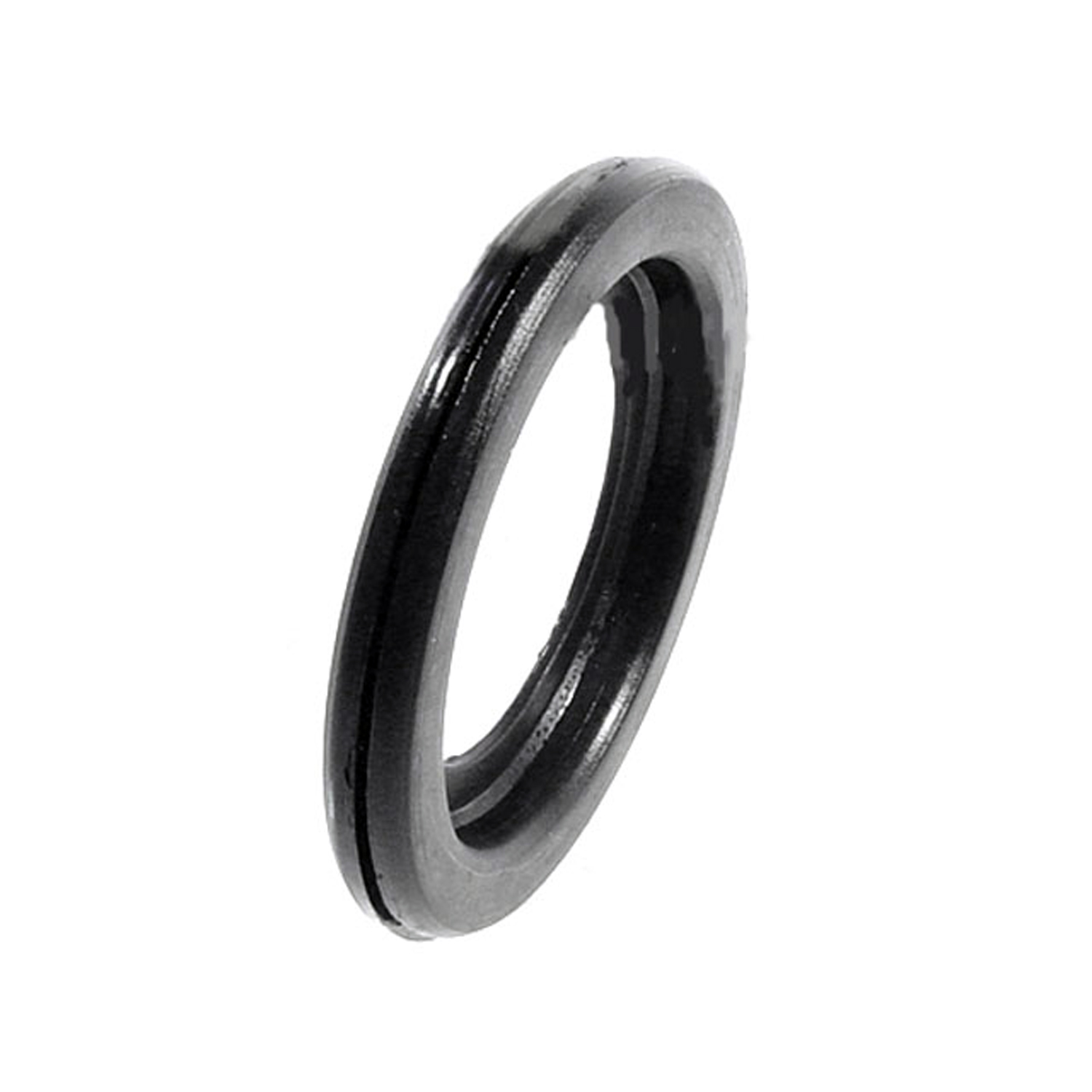 1950 Crosley Hot Shot Gas Filler Grommet. Two used per car. 1-3/8" I.D-GF 33Gas Filler Grommet. Two used per car. 1-3/8" I.D., 2-3/8" O.D. Each
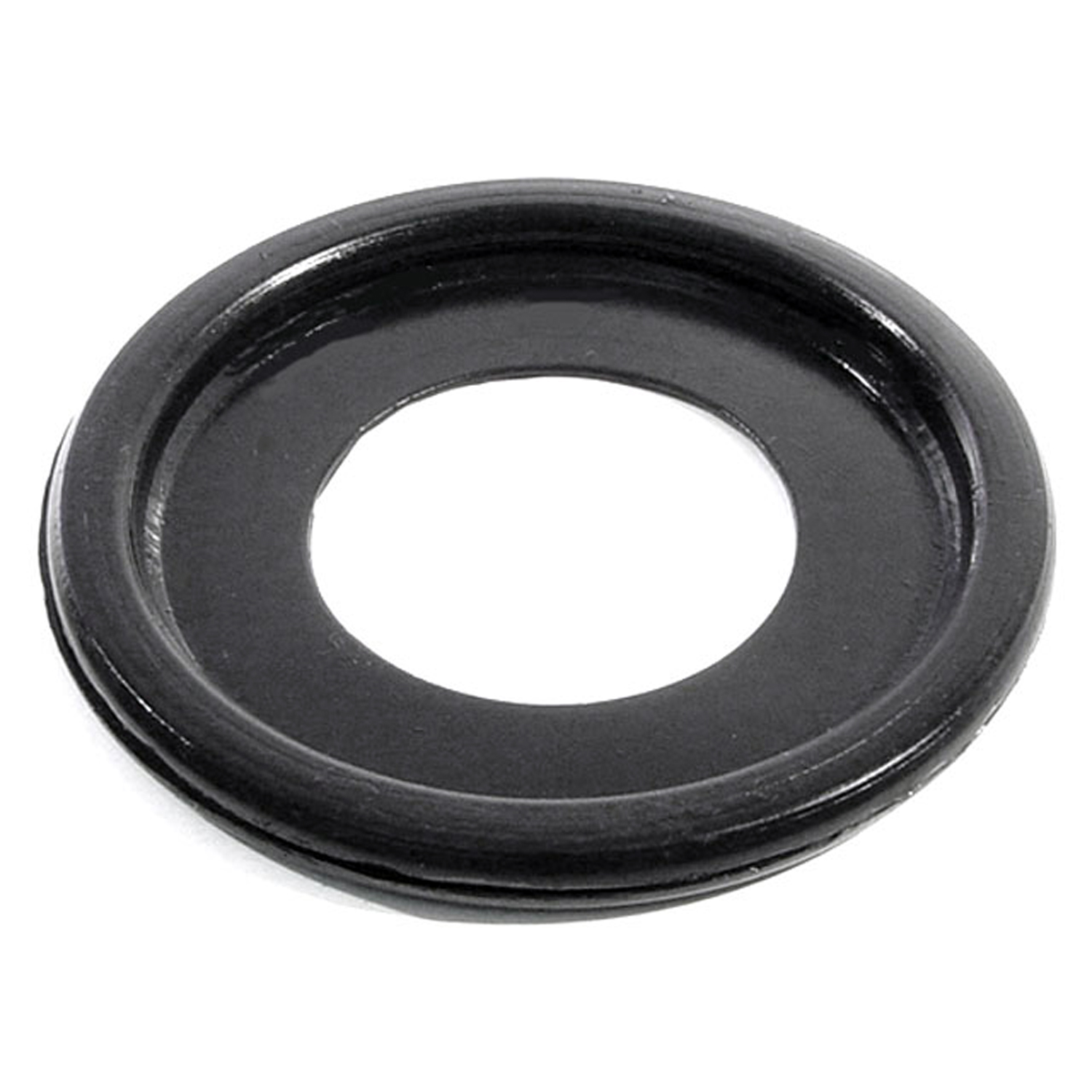 1950 Crosley Hot Shot Gas Filler Grommet. 1-1/4" I.D., 2-11/16" O.D. Each-GF 34Gas Filler Grommet. 1-1/4" I.D., 2-11/16" O.D. Each
Why Choose Metro?
For over 100 years, Metro Moulded Parts has been the pinnacle of quality in classic car restoration parts. Our commitment to precision and authenticity in every component ensures a perfect fit and an OEM-level appearance.
- Expert Craftsmanship & Quality: Each part is a testament to our dedication to reliability and perfection, crafted from original designs and thoroughly tested.
- Advanced Technology: We use cutting-edge techniques to create flawless, long-lasting parts that surpass others in performance.
- SuperSoft Sponge – The Ultimate Door Seal: Not only are our door seals 30% softer than competitors', but they're also guaranteed to never leak. They effectively reduce wind and road noise, enhancing your classic car's comfort and driving experience.
- Proudly American: Our parts are a product of American craftsmanship, made in the USA with a spirit of excellence and heritage.
- Unrivaled Warranty: We back our products with a 30-year industry-leading warranty, a testament to our confidence in their quality.
Join us in preserving the legacy of classic cars with parts that are crafted for perfection, not just made.