

Image of 1950 Crosley Standard, Note: These illustrations use artistic license and may differ from actual historical models.
Performance Metrics
Fundamental Metrics
Emotional Appeal
MMP Rating
| Engine Specifications | |
|---|---|
| Engine: | 44 cubic inch 4-cylinder |
| Displacement: | 44 cubic inches |
| Horsepower: | 26.5 horsepower |
| Torque: | Estimated at 32 lb-ft |
| Compression Ratio: | 7.0:1 |
| Ignition System: | Battery Ignition |
| Cooling System: | Water-cooled |
| Performance Specifications | |
| 0-60 Time: | Not available due to the vehicle's age and limited performance data |
| 1/4 Mile Time: | Not available due to the vehicle's age and limited performance data |
| Top Speed: | 50 mph |
| Transmission and Drive | |
| Drive Type: | Rear-wheel drive |
| Transmission Type: | 3-speed manual |
| Fuel and Efficiency | |
| Fuel System Type: | Carburetor |
| MPG: | Estimated at 35 mpg |
| Dimensions and Brakes | |
| Brakes: | Hydraulic drum brakes |
| Wheelbase: | 80 inches |
| Weight: | 1,100 lbs |
Note: Specifications for classic cars are given to the best of our ability, considering the limited and variant data available.
1950 Crosley Standard: America’s Small-Car Original
The 1950 Crosley Standard made a bold case for doing more with less: it was a real American car with a remarkably small footprint, a tiny four-cylinder engine, and a price aimed at practical buyers. Built by Crosley Motors of Cincinnati, Ohio, it reflected the vision of industrialist Powel Crosley Jr., whose ventures ranged from radios and household appliances to automobiles.
The Crosley story began before the Second World War, but production resumed in earnest after it ended. By 1950, the company offered compact sedans, wagons, convertibles, and sporty models for drivers who wanted inexpensive transportation in a country increasingly enamored with bigger cars. The Standard was the straightforward, entry-level sedan: modest, economical, and unusually easy to park by American standards.
One detail gives Crosley an enduring place in automotive history. The company introduced disc brakes on its 1949 cars, an early and remarkable move for an American production manufacturer. The system was short-lived, but it showed the ambitious engineering that could be found beneath the Crosley’s simple exterior.
Compact Styling and Simple Comfort
The Crosley Standard’s styling was neat and upright rather than glamorous. Its narrow body, short hood, rounded fenders, and small wheels gave it a distinctly petite profile beside the full-size sedans of the day. The upright windshield and simple grille kept the front end practical, while the compact proportions made the car look almost European in a postwar American parking lot.
Inside, the Standard kept things just as uncomplicated. The cabin was designed around basic transportation, with painted metal surfaces, straightforward controls, and durable upholstery rather than lavish trim. Depending on the car’s equipment and restoration history, upholstery may be cloth, vinyl, or a combination. It was not a luxury interior, but its simple layout made the controls easy to understand and the cabin relatively easy to maintain.
Paint choices varied by year, market, and surviving factory documentation. Crosleys appeared in cheerful solid colors as well as more subdued shades, with red, blue, green, and cream among the colors associated with the marque. Bright colors suit the Standard particularly well, accentuating its friendly shape, though original paint codes and trim details are worth checking when evaluating a specific car.
The Standard name refers to the basic sedan specification, not to a single body style shared across the entire Crosley range. In 1950, buyers could also find Crosley wagons, convertibles, and sporty open models such as the Hotshot. The little sedan is the most representative choice for everyday Crosley character, while the Hotshot is usually the most recognizable to sports-car enthusiasts.
Small-Car Engineering With Big Ambitions
Crosley’s engineering philosophy set it apart from the prevailing American formula. Instead of relying on a large engine and heavy body, the company emphasized low weight, compact dimensions, and economy. That approach was not yet mainstream in the United States, where many buyers equated size and power with value.
The Standard’s four-cylinder engine displaced about 44 cubic inches, or 724 cc, and produced roughly 26.5 horsepower. It drove through a four-speed manual transmission, an appealingly flexible setup for a car of this size. Earlier Crosleys became known for the unusual CoBra engine, whose copper-brazed steel construction was an inventive but troublesome experiment. By the 1950 model year, Crosley had moved to a more conventional cast-iron engine block, addressing durability concerns.
Crosley also deserves credit for bringing disc braking into the American production-car conversation. Its early system was not a trouble-free success, and the company moved away from it as practical issues emerged. Still, the experiment anticipated a technology that would later become standard across the industry. The Standard’s broader significance is less about one perfect invention than about a small manufacturer willing to try ideas larger companies were slower to adopt.
Performance and Driving Feel
With around 26.5 horsepower and a very light body, the Crosley Standard was built for modest, economical motoring rather than fast highway travel. Period performance figures are not consistently documented for every body and configuration. A reasonable estimate for a healthy sedan is a top speed in the neighborhood of 60 to 65 mph, with zero to 60 mph taking roughly 30 seconds or more. Those figures should be treated as estimates, not guaranteed factory test results.
The four-speed gearbox helps the driver make the most of the small engine. Acceleration is leisurely, and keeping pace with modern traffic requires planning, especially on steep grades or busy roads. The engine has a busy, high-revving character compared with a typical large American six or V8. Its light mechanical buzz is part of the experience, not a sign that the car is pretending to be something it is not.
On smooth local roads, the Standard feels nimble and easy to place. Its short dimensions make narrow streets and parking spaces less intimidating, while the light weight helps it feel responsive at low speeds. Bumps are more noticeable than they would be in a heavy sedan, and crosswinds or passing trucks can demand a firm hand on the wheel. On winding roads, the car’s compact size is enjoyable, but its modest power and period tires call for a relaxed pace.
Living With a Crosley Standard
Today, most Standards are used as show cars, weekend classics, or part of a microcar collection. They can still be driven on quiet roads, but the car’s limited power, small size, and vintage safety equipment make route selection important. Modern highways are generally a less comfortable setting than scenic back roads or local cruising.
Maintenance can be approachable for an owner comfortable with basic mechanical work. The engine bay is small, the systems are relatively simple, and many jobs do not require specialized electronic equipment. Parts availability is more limited than for common American classics, however, so owners often rely on Crosley clubs, specialist suppliers, and other enthusiasts. Before buying, check engine condition, cooling, brakes, electrical components, and the availability of model-specific trim.
Reliability depends heavily on careful upkeep and the quality of previous repairs. As with any microcar, overheating, neglected lubrication, tired wiring, and hard-to-find replacement pieces can turn a bargain project into an extended restoration. A well-maintained example is far more rewarding than a cheap car with missing parts.
Crosley Facts and Common Criticisms
The Crosley Standard belonged to a small-car line that included some genuinely adventurous ideas. The brand’s brief disc-brake experiment is the headline technology story, while the transition from the unusual CoBra engine to a cast-iron design illustrates the challenges of developing new engineering with limited resources.
Crosley sports models also found attention in early American sports-car competition, helping the marque earn a reputation beyond basic economy transportation. That racing interest belongs most directly to models such as the Hotshot, rather than the Standard sedan, but it helped reinforce the idea that a small Crosley could be more than a cheap commuter.
The most common criticisms are easy to understand: the Standard is slow by modern expectations, cramped for larger occupants, and not suited to fast roads. Early engine and brake experiments also contributed to the company’s reputation for unusual, sometimes challenging engineering. Those shortcomings are part of the story, but they should be weighed against what Crosley was trying to accomplish: affordable, lightweight transportation in a market that often preferred bigger and heavier cars.
Collector Values and Availability
Crosley production was modest beside that of the major American manufacturers. The company built roughly 80,000 to 85,000 automobiles across its production years, from the prewar period through 1952. A precise production count for the 1950 Standard sedan alone is difficult to pin down, so a reasonable estimate is several thousand cars, with approximately 7,000 to 8,000 Crosleys of all types produced during the 1950 model year. Surviving, complete Standards are much less common than those original totals might suggest.
As a broad current-market estimate, a project car may sell for around $3,000 to $7,000, while a usable driver or decent restoration could fall in the $8,000 to $18,000 range. A highly finished example with strong originality may bring roughly $20,000 to $30,000, though condition, provenance, body style, and local demand can shift prices substantially. These are guide ranges, not a formal appraisal.
Crosleys occupy a specialist corner of the collector market. Their values have generally benefited from growing interest in microcars and unusual postwar engineering, but they do not have the broad buyer pool of a classic Chevrolet or Ford. Exceptional restorations can attract strong interest; ordinary cars tend to trade according to condition and parts completeness. For most buyers, the appeal is character and historical importance rather than a promise of rapid appreciation.
Why the 1950 Crosley Standard Matters
The 1950 Crosley Standard was small, inexpensive, and refreshingly different from the big American cars surrounding it. Its compact sedan body, economical four-cylinder engine, simple cabin, and experimental engineering made it a distinctive answer to postwar transportation needs. It was not fast or luxurious, but it offered a practical alternative and helped keep lightweight, efficient car design in the conversation.
Today, the Standard stands as a charming reminder that automotive history is not made only by the biggest manufacturers or the most powerful engines. Sometimes a little car with a big idea leaves the most memorable mark.
1950 Crosley Standard Catalog of Parts
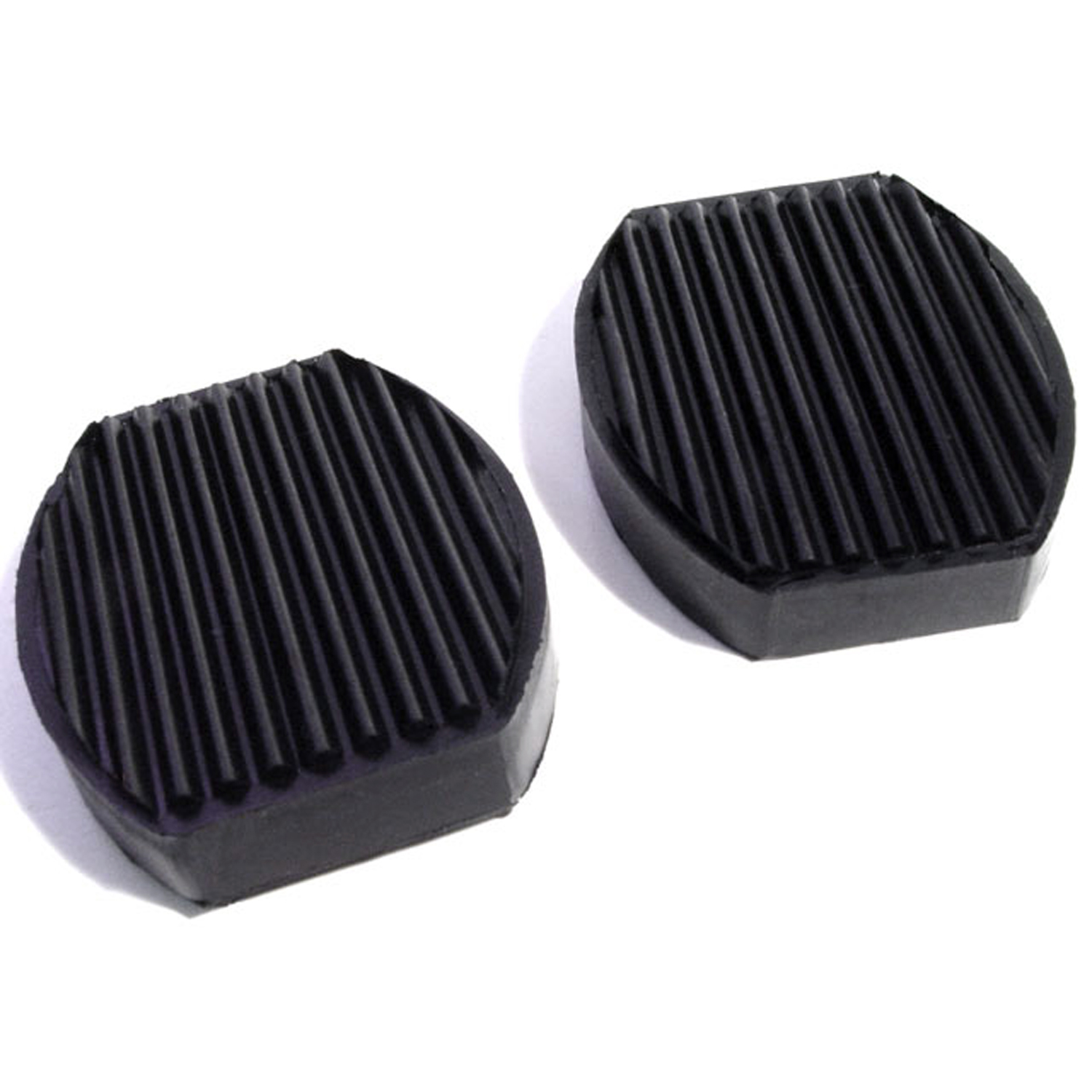 1950 Crosley Standard Clutch and Brake Pedal Pads. 2-5/16" wide X 2-3/4" long-CB 104Clutch and Brake Pedal Pads. 2-5/16" wide X 2-3/4" long. Pair
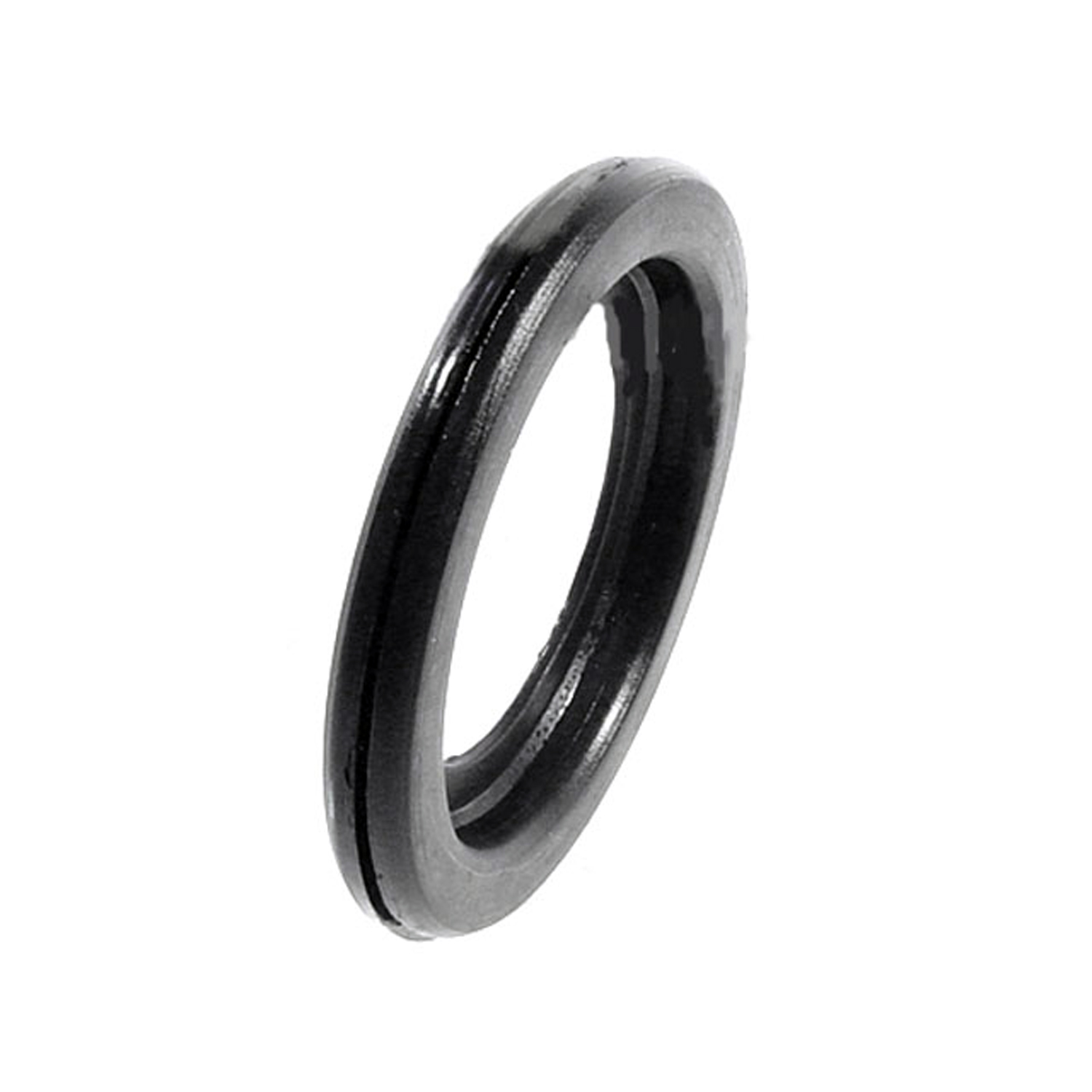 1950 Crosley Standard Gas Filler Grommet. Two used per car. 1-3/8" I.D-GF 33Gas Filler Grommet. Two used per car. 1-3/8" I.D., 2-3/8" O.D. Each
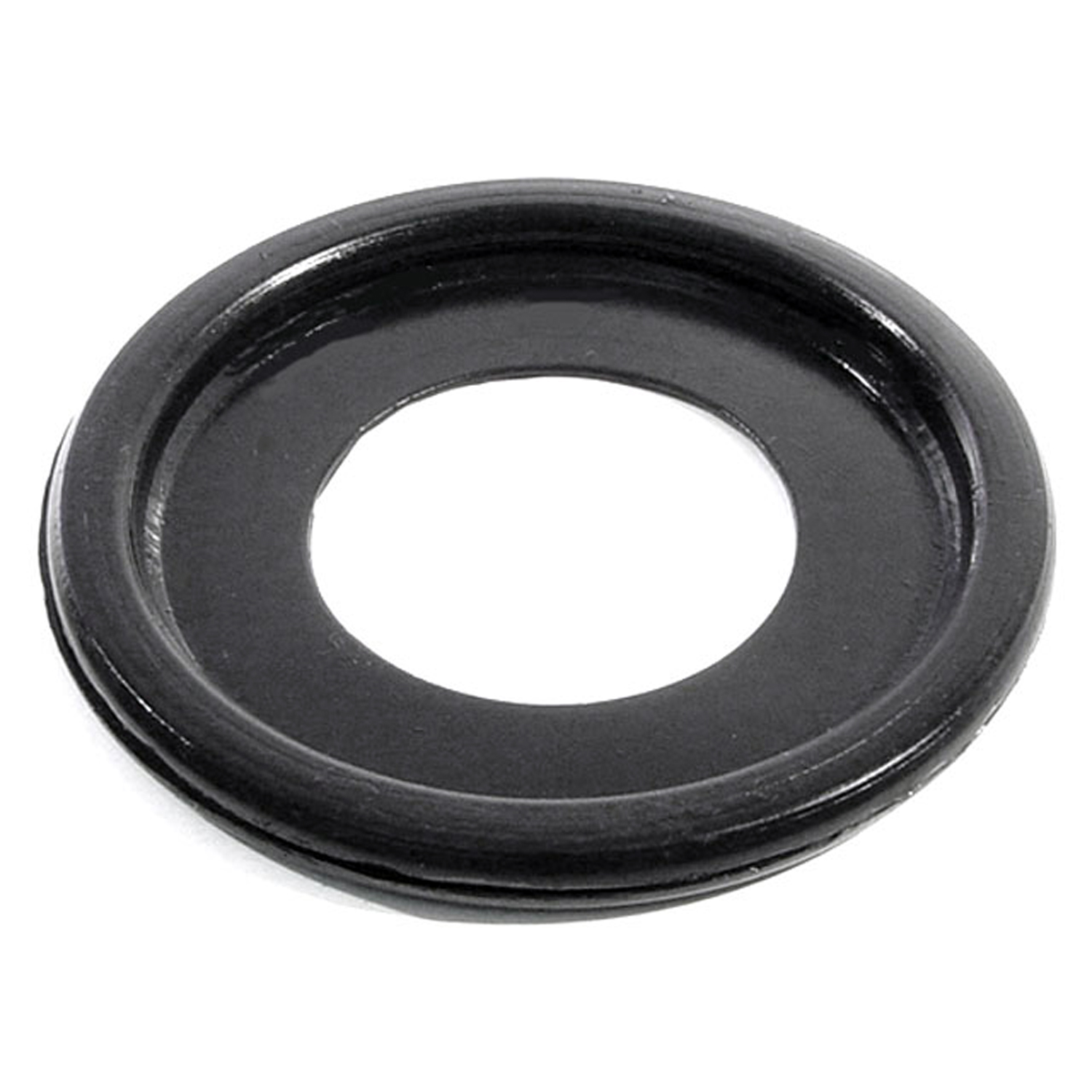 1950 Crosley Standard Gas Filler Grommet. 1-1/4" I.D., 2-11/16" O.D. Each-GF 34Gas Filler Grommet. 1-1/4" I.D., 2-11/16" O.D. Each
Why Choose Metro?
For over 100 years, Metro Moulded Parts has been the pinnacle of quality in classic car restoration parts. Our commitment to precision and authenticity in every component ensures a perfect fit and an OEM-level appearance.
- Expert Craftsmanship & Quality: Each part is a testament to our dedication to reliability and perfection, crafted from original designs and thoroughly tested.
- Advanced Technology: We use cutting-edge techniques to create flawless, long-lasting parts that surpass others in performance.
- SuperSoft Sponge – The Ultimate Door Seal: Not only are our door seals 30% softer than competitors', but they're also guaranteed to never leak. They effectively reduce wind and road noise, enhancing your classic car's comfort and driving experience.
- Proudly American: Our parts are a product of American craftsmanship, made in the USA with a spirit of excellence and heritage.
- Unrivaled Warranty: We back our products with a 30-year industry-leading warranty, a testament to our confidence in their quality.
Join us in preserving the legacy of classic cars with parts that are crafted for perfection, not just made.