
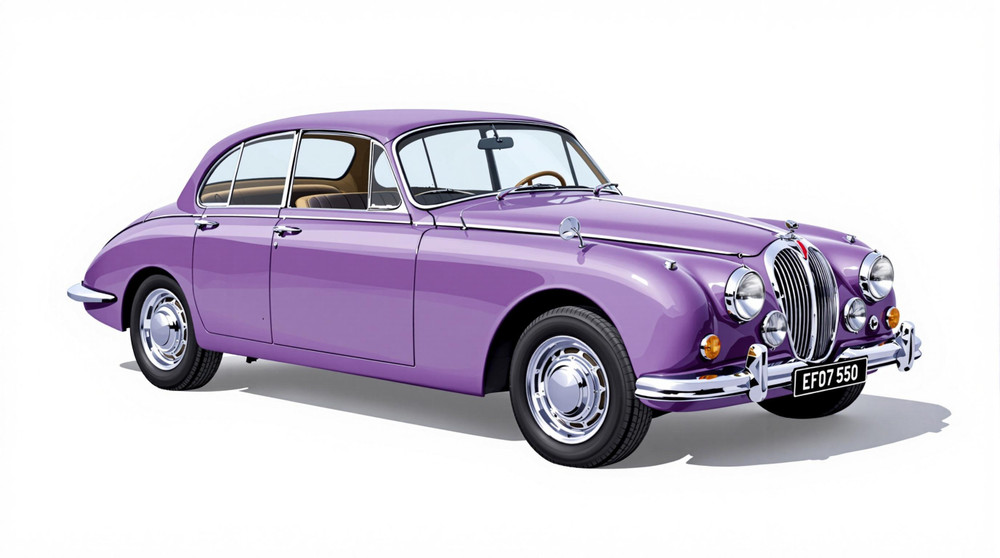
Image of 1969 Daimler 250, Note: These illustrations use artistic license and may differ from actual historical models.
Performance Metrics
Fundamental Metrics
Emotional Appeal
MMP Rating
| Engine Specifications | |
|---|---|
| Engine: | 2.5L V8 |
| Displacement: | 2548 cc |
| Horsepower: | 140-150 hp |
| Torque: | 155 lb-ft |
| Compression Ratio: | 8.0:1 |
| Ignition System: | Electronic ignition system |
| Cooling System: | Liquid-cooled |
| Performance Specifications | |
| 0-60 Time: | 10 seconds |
| 1/4 Mile Time: | 17 seconds |
| Top Speed: | 112 mph |
| Transmission and Drive | |
| Drive Type: | Rear-wheel drive |
| Transmission Type: | 3-speed automatic or 4-speed manual |
| Fuel and Efficiency | |
| Fuel System Type: | Twin SU carburetors |
| MPG: | 18-20 mpg |
| Dimensions and Brakes | |
| Brakes: | Disc brakes on all four wheels |
| Wheelbase: | 107.4 inches |
| Weight: | 3,200 lbs |
Note: Specifications for classic cars are given to the best of our ability, considering the limited and variant data available.
1969 Daimler 250: A Small Saloon with V8 Charm
The 1969 Daimler 250 is a compact British saloon with an unusually grand secret: beneath its restrained, formal styling sits a smooth 2.5-litre V8. Built by Daimler, then part of Jaguar, it combined the familiar shape and sporting chassis of the Jaguar Mark 2 with Daimler’s distinctive engine and more discreet luxury. The result was an elegant alternative to the larger, more imposing executive cars of its day.
The car began life in 1962 as the Daimler 2.5 V8. Jaguar had acquired Daimler in 1960 and wanted a smaller saloon to broaden the marque’s range. The new model used the Jaguar Mark 2’s monocoque body and running gear, but its engine and detailing gave it a character of its own. In 1967, the name was shortened to Daimler 250. The 1969 model was among the last of this compact V8 series, as the newer XJ-based Daimler Sovereign arrived to take the marque into a larger, more modern era.
One intriguing detail is that the 250’s V8 was not simply a smaller version of a Jaguar engine. It was designed by Edward Turner, best known for influential motorcycle engines, and was related to the unit used in Daimler’s SP250 sports car. That compact, lightweight powerplant gave the 250 a distinctive identity in a class where six-cylinder engines were much more common.
Classic Mark 2 Shape, Daimler Details
The Daimler 250 shares the Mark 2’s handsome proportions: a tall, chrome-edged grille, four round headlamps, slim pillars, a gently curved roofline and a neatly tapered boot. Its glass area feels generous by modern standards, while the upright cabin and rounded bodywork give it the purposeful, slightly formal stance of a traditional British saloon.
Daimler’s most recognizable exterior feature is the fluted grille. Fine vertical ridges distinguish it from the Jaguar’s mesh grille, while Daimler badges and other restrained trim changes complete the transformation. It is an understated way to signal that this is something different, rather than a dramatic redesign of the Jaguar.
The 250 was offered as a four-door saloon. There was no factory coupe or estate version, so the saloon is both the standard and the iconic body style. Buyers could specify different transmission and equipment combinations, but the core appeal remained the same: a compact luxury car with space for family or business use and enough performance to feel lively on open roads.
Leather, Wood and Period Comfort
Inside, the 250 has the warm, traditional atmosphere expected of a British luxury car. Leather upholstery, polished wood veneer across the dashboard and door cappings, deep carpets and generous use of chrome create a cabin that feels special without being ostentatious. The broad dashboard places the instruments and controls within easy reach, and the large steering wheel suits the car’s relaxed touring character.
Color choices varied with market and model year. Period shades included classic reds, greens, blues, silver tones and white, paired with complementary leather interiors. Dark green and deep red are especially evocative choices today, while silver and pale colors can emphasize the car’s clean, formal lines. Exact paint and trim availability depended on the original specification, so surviving cars are best judged by their individual records and condition.
A Distinctive V8 in a Compact Saloon
The 2,548cc Daimler V8 is an all-aluminium, overhead-valve engine with hemispherical combustion chambers and twin SU carburettors. It produces approximately 140 bhp and around 155 lb-ft of torque, giving the 250 a useful blend of smoothness and performance. A three-speed Borg-Warner automatic transmission was a popular choice, while a four-speed manual gearbox was also available, with overdrive offered on some specifications.
Four-wheel disc brakes were a notable feature for a saloon of this size and era. The car also used independent front suspension and a live rear axle, with the basic chassis layout shared with the Jaguar Mark 2. Together, these features helped deliver a car that felt more capable and composed than its discreet appearance might suggest.
Period figures vary by test and transmission, but a top speed of roughly 110 to 112 mph and a 0-to-60 mph time in the region of 10 to 12 seconds are sensible estimates. Those numbers made the Daimler 250 brisk for a refined family saloon in the 1960s, especially in automatic form.
How the Daimler 250 Drives
The V8 is the star of the driving experience. It has a smooth, rounded note that becomes more purposeful as the revs rise, but it is generally quieter and less theatrical than a high-strung sports-car engine. The automatic suits the car’s easygoing nature, making it relaxed in traffic and comfortable on longer journeys. A manual example offers more involvement and makes better use of the engine’s willingness to rev.
On a winding road, the 250 feels compact and surprisingly agile for a luxury saloon. Its steering and suspension give the driver a clear sense of what the front wheels are doing, while the rear-wheel-drive layout rewards smooth inputs. It is not a modern sports sedan, and hard cornering can bring body roll and a lively rear axle, but the car is engaging without being demanding.
Over bumps, the suspension provides a comfortable, supple ride, though worn dampers, tired bushings or old tyres can make a classic example feel unsettled. In strong crosswinds, the upright body catches more air than a contemporary low-slung car. A well-maintained 250, however, feels planted and composed at touring speeds, with the V8 delivering power in a smooth, effortless way.
Why It Mattered to Daimler
The Daimler 250 was more than a badge-engineered variation on a Jaguar. It gave buyers a distinct choice within Jaguar’s expanding family: the Mark 2’s sharp handling and compact proportions, combined with Daimler identity and a quiet, refined V8. The fluted grille made the relationship visible, while the engine gave it a mechanical difference that owners could appreciate every time they started the car.
Its significance lies less in introducing a wholly new design or technology than in showing how effectively a manufacturer could create a separate character from an established platform. The 250 helped preserve Daimler’s identity under Jaguar ownership and offered a smaller, more accessible entry point to the marque. Its blend of a traditional luxury cabin, all-round disc brakes and compact V8 remains a compelling formula for collectors today.
It also stands apart from some of its better-known contemporaries. The Jaguar Mark 2 was celebrated for its sporting reputation, while the Daimler 250 presented a more discreet, refined alternative. Compared with many executive saloons of the period, it was compact and relatively nimble, yet still offered the finish and presence expected of a premium British car.
Ownership, Maintenance and Reliability
Today, the 250 is most often used as a weekend classic, touring car or show vehicle. A sound example can also handle occasional everyday duties, but its age makes regular use dependent on careful maintenance and a willingness to deal with old-car realities. It is not a sensible choice for someone seeking modern-car reliability without hands-on attention.
Parts support is generally helped by the car’s shared structure and many mechanical components with the Jaguar Mark 2. The Daimler V8 has its own specific parts and expertise requirements, so buyers should seek out a specialist familiar with the engine. Routine service work is straightforward for an experienced classic-car owner, but significant engine, gearbox or body repairs can be costly.
Rust is a major inspection point. Check the sills, floors, wheel arches, jacking points, inner wings and areas around the suspension mountings. Mechanical condition matters just as much: look for cooling problems, oil leaks, poor hot starting, noisy valve gear and rough automatic shifts. A documented restoration and a healthy, correctly maintained engine are usually worth paying more for than a shiny car with hidden structural corrosion.
Facts and Myths Worth Knowing
The engine’s designer, Edward Turner, brought experience from both car and motorcycle engineering. The Daimler V8’s compact dimensions were a practical advantage in a small saloon, and its use in both the 250 and the SP250 gives the engine a link to two quite different kinds of Daimler.
The 250 was not a major racing or speed-record car, and it is not known for holding a significant production-car record. Its appeal is more about refinement and character than competition history. Nor is there a single celebrity ownership story that defines the model. Its quieter reputation is part of the attraction: it offers classic British luxury without the constant attention sometimes drawn by a famous sporting badge.
A common criticism is that the car can be expensive to restore, particularly if corrosion has spread through the monocoque structure. Some owners also find the automatic gearbox leisurely by modern standards, while others consider it a natural match for the smooth V8. The cabin, though luxurious for its era, lacks modern safety and convenience equipment, so expectations should be set accordingly.
Collector Values and Availability
Production of the Daimler 2.5 V8 and 250 series is commonly quoted at around 17,620 cars in total. That makes it uncommon today, but not impossibly rare. Survivors appear on the market in the UK and elsewhere, though the best cars can take patience to find. Production totals describe cars built, not the number that remain in roadworthy condition.
As a broad 2026 estimate, values in the United States might run from about $15,000 to $25,000 for a usable driver, around $25,000 to $40,000 for a well-presented and mechanically sound example, and roughly $40,000 to $60,000 or more for an exceptional, correctly restored car. UK prices may be lower in absolute terms, with many good cars likely to fall around £12,000 to £25,000 and top examples exceeding that range. These are estimates, not guaranteed sale prices. Rust, originality, history, mechanical quality and the quality of any restoration make a substantial difference.
Values have generally followed the broader classic-car market, with condition and provenance driving the strongest results. The 250 is not usually treated as a high-growth investment, but its combination of Daimler rarity, Jaguar Mark 2 looks and V8 character gives it durable enthusiast appeal. Excellent cars are likely to remain the most sought after, while projects can become costly quickly.
A Quietly Special British Classic
The 1969 Daimler 250 brings together an elegant saloon body, a beautifully distinctive V8 and the comfort of a traditional British luxury car. Its Mark 2 foundations give it engaging road manners, while Daimler’s fluted grille and Edward Turner engine set it apart from the Jaguar that shares its shape.
It may not be the loudest or most famous classic saloon of its generation, but that is precisely its charm. The Daimler 250 is a refined, individual alternative that rewards careful ownership with a memorable blend of style, mechanical character and understated presence.
1969 Daimler 250 Catalog of Parts
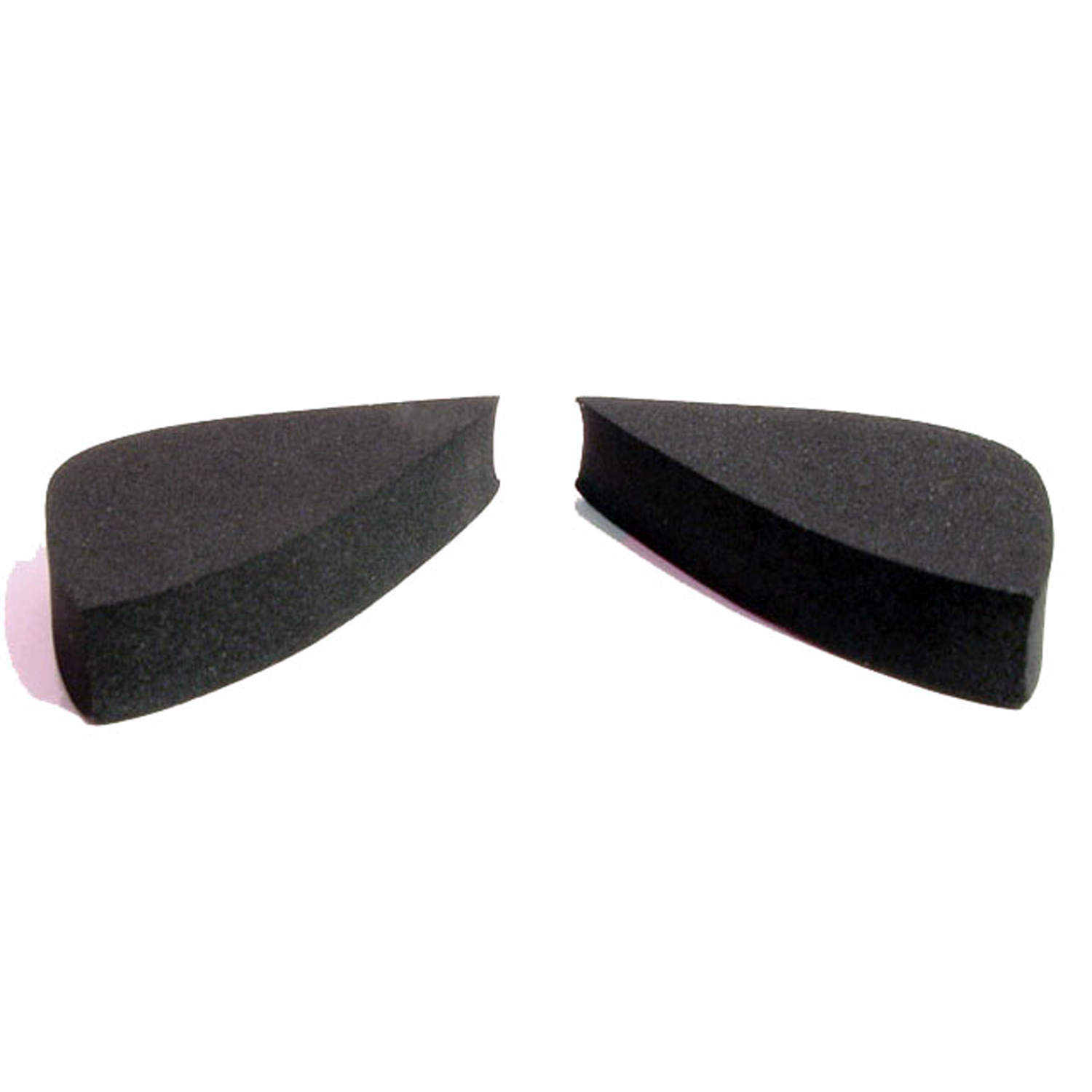 1969 Daimler 250 Rear Door Hinge Seal. Pair-ALP 23Rear Door Hinge Seal. Pair
Why Choose Metro?
For over 100 years, Metro Moulded Parts has been the pinnacle of quality in classic car restoration parts. Our commitment to precision and authenticity in every component ensures a perfect fit and an OEM-level appearance.
- Expert Craftsmanship & Quality: Each part is a testament to our dedication to reliability and perfection, crafted from original designs and thoroughly tested.
- Advanced Technology: We use cutting-edge techniques to create flawless, long-lasting parts that surpass others in performance.
- SuperSoft Sponge – The Ultimate Door Seal: Not only are our door seals 30% softer than competitors', but they're also guaranteed to never leak. They effectively reduce wind and road noise, enhancing your classic car's comfort and driving experience.
- Proudly American: Our parts are a product of American craftsmanship, made in the USA with a spirit of excellence and heritage.
- Unrivaled Warranty: We back our products with a 30-year industry-leading warranty, a testament to our confidence in their quality.
Join us in preserving the legacy of classic cars with parts that are crafted for perfection, not just made.