
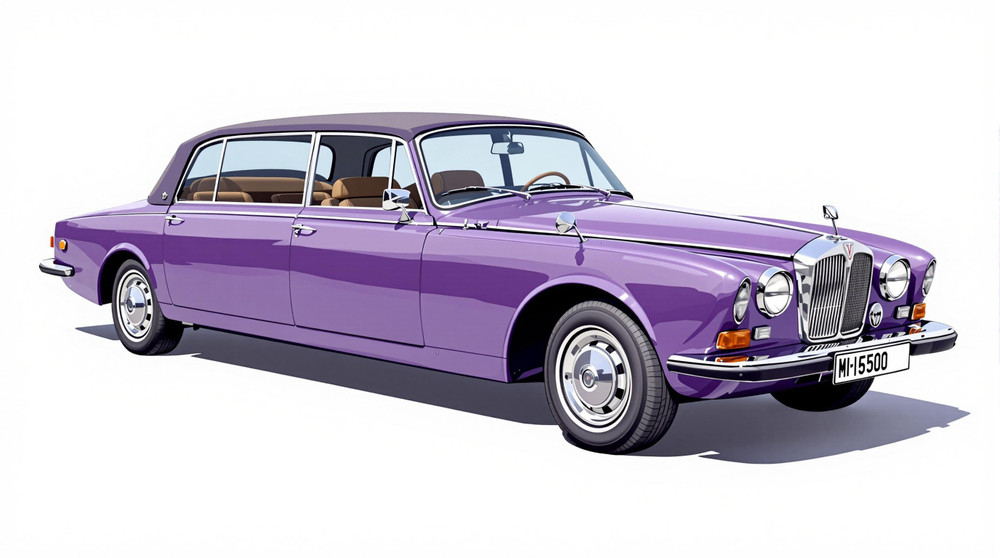
Image of 1975 Daimler Limo, Note: These illustrations use artistic license and may differ from actual historical models.
Performance Metrics
Fundamental Metrics
Emotional Appeal
MMP Rating
| Engine Specifications | |
|---|---|
| Engine: | 4.2L I6 |
| Displacement: | 4.2L |
| Horsepower: | 140-150 HP |
| Torque: | 210-220 lb-ft |
| Compression Ratio: | 8.1:1 |
| Ignition System: | Electronic Ignition |
| Cooling System: | Liquid Cooled |
| Performance Specifications | |
| 0-60 Time: | 13-15 seconds |
| 1/4 Mile Time: | Estimated at 18-20 seconds |
| Top Speed: | 100-105 mph |
| Transmission and Drive | |
| Drive Type: | Rear Wheel Drive |
| Transmission Type: | 3-speed automatic |
| Fuel and Efficiency | |
| Fuel System Type: | Carburetor |
| MPG: | 10-12 mpg |
| Dimensions and Brakes | |
| Brakes: | Disc Brakes |
| Wheelbase: | 133 inches |
| Weight: | 4500 lbs |
Note: Specifications for classic cars are given to the best of our ability, considering the limited and variant data available.
1975 Daimler Limousine: The DS420 in Detail
The 1975 Daimler limousine turned the act of arriving into a ceremony. Long, formal and quietly imposing, it was the Daimler DS420, a hand-finished British state limousine built for royal households, dignitaries, hotels and anyone who needed more than ordinary rear-seat accommodation.
Daimler was by then part of Jaguar, and the DS420 combined Jaguar engineering with the craftsmanship of Vanden Plas, the coachbuilder responsible for its distinctive passenger compartment. Introduced in 1968, the model remained in production until 1992, an unusually long life for a prestige car. A 1975 example belongs to the model’s established middle years, when its familiar formula of smooth power, generous space and formal British styling was already proven.
One compelling measure of the DS420’s place in British life is how often it served as official transport. Royal households and government institutions used examples for decades, while hotels and funeral directors also valued the car’s dignified presence. It was not simply a luxury saloon made larger. It was a purpose-built limousine designed around the comfort and privacy of its passengers.
Formal Lines and Vanden Plas Craft
The DS420’s exterior is imposing without being flamboyant. Its long bonnet leads to a tall, upright grille, flanked by paired headlamps and topped by the traditional Daimler grille motif. A high roof, broad doors and an extended rear cabin give the car its unmistakable proportions. The rear overhang and generous glass area emphasize that this is a car for passengers, not a sporting saloon stretched for effect.
Inside, the rear compartment is the main event. Depending on specification, passengers could enjoy deeply upholstered seats, wood trim, carpeting, reading lights, fold-out occasional seats and a glass partition separating the chauffeur from the cabin. Materials and equipment varied between cars, particularly where a vehicle was ordered for a royal household, hotel or other institutional buyer. The overall impression is one of a private drawing room rather than a conventional car interior.
The driver’s area is more businesslike, with a large steering wheel, clear instruments and controls arranged for chauffeur use. Power steering and automatic transmission helped make the long car manageable in urban traffic. Air conditioning and other comfort equipment could be fitted, but the details differed by market and commission, so buyers should check the specification of an individual car rather than assume every feature was standard.
Black is the color most closely associated with formal Daimler limousines, and it remains a popular choice among collectors. Dark blue, maroon and other dignified shades also suit the car’s character. Some examples were finished in colors selected for a particular operator or institution.
The DS420 was principally a four-door limousine, with interior layouts and equipment tailored to the customer. Coachbuilders also converted cars for specialized work, including hearse and ceremonial roles. Those conversions are part of the model’s wider story, but they should not be confused with a broad range of standard factory body styles.
A Long-Running British Institution
The DS420’s significance lies less in introducing a revolutionary technology than in refining the traditional chauffeur-driven limousine. It brought Jaguar mechanical components and modern running gear into a spacious, hand-finished body that could serve demanding official and commercial customers. Its combination of scale, comfort and serviceability helped it compete in a market where prestige alone was not enough.
Its main contemporaries included expensive Rolls-Royce limousines and other specialist British cars. The Daimler offered comparable formality while drawing on Jaguar’s engineering resources and production network. That balance helped keep it in service long after many rivals had been replaced. The DS420’s longevity also made it a familiar sight in royal, diplomatic and ceremonial settings, helping define the image of the classic British state car.
Production ended in 1992 after roughly 24 years. The model’s extended run is one of its most remarkable achievements: the basic brief remained relevant across changing tastes, regulations and technology. Few specialist limousines have enjoyed such a long production life.
Jaguar Power, Limousine Pace
A 1975 DS420 uses Jaguar’s 4.2-litre XK straight-six, paired with a three-speed automatic transmission. Period figures are commonly quoted at around 245 horsepower, though published outputs can vary depending on how power was measured. The engine’s real strength is its broad, smooth delivery, which suits a heavy limousine far better than high-revving urgency.
Expect a top speed in the region of 100 mph and a 0-to-60 mph time of roughly 15 to 17 seconds when the car is in good condition. These are approximate figures, not a promise for every example. Vehicle weight, maintenance, gearing and test conditions all affect performance. The DS420 was built to carry passengers in comfort, not to win traffic-light contests.
On a smooth road, the ride is calm and composed, with the long wheelbase helping the car settle over undulations. Large bumps and broken surfaces remind the driver of its substantial weight and age, while tight bends demand a measured approach. It is not a car to hurry down a narrow, winding lane: steering inputs are deliberate, and body roll is part of the experience.
From behind the wheel, the engine’s muted six-cylinder note and the automatic transmission’s unhurried shifts encourage relaxed progress. The high seating position, broad bonnet and sheer length require attention when parking or navigating confined streets. With a professional chauffeur at the wheel, however, the passenger experience is the point: a quiet cabin, generous legroom and a ride designed to make the journey feel important.
Living with a DS420
Most owners use a DS420 as a show car, wedding car, ceremonial vehicle or occasional tourer. Some remain in commercial service with specialist operators. It can be driven on public roads, but its size, fuel consumption and maintenance needs make it an impractical everyday choice for most people.
Mechanical parts are not entirely exotic because the car shares important components and engineering with Jaguar models of the era. A capable classic-car mechanic can service the engine and automatic transmission, and many routine jobs are familiar to Jaguar specialists. The challenge is that the DS420 is much more than its engine: its long body, bespoke trim, electrical equipment and specialist interior fittings can make restoration expensive.
Rust is a major inspection priority. Check the structure and floors, sills, wheel arches, door bottoms and areas around the windscreen and rear bodywork. Also inspect the cooling system, brakes, steering, suspension, transmission and electrical components. On a limousine, damaged woodwork, worn upholstery, a faulty partition or missing specialist fittings can add considerably to the bill. A thorough pre-purchase inspection by someone familiar with DS420s is money well spent.
Notable Details and Common Complaints
The DS420’s 24-year production run and its association with royal and official transport are its standout claims to fame. It also had a second life in commercial service, especially as a hotel limousine or funeral vehicle. Such use reflects the car’s original strengths: a substantial cabin, formal appearance and mechanical base that could be maintained by established specialists.
There is no widely recognized production record or speed record attached to the DS420. Its distinction is more practical and cultural: it remained a working British limousine for generations. Total production is generally estimated at about 4,141 cars across the model’s full run. That figure covers all years, not just 1975, and the exact number built in that model year is not readily established.
Common criticisms are easy to understand. The car is very large, slow by modern standards and thirsty, while replacement work on bespoke trim and body components can be costly. Some drivers also find the automatic transmission and soft ride too relaxed. Those drawbacks are closely tied to the qualities that make the DS420 appealing: it was designed to carry people in comfort and dignity, not to behave like a sports saloon.
Collector Values and Market Outlook
Values depend heavily on condition, provenance, originality and the quality of any restoration. As a broad current-market estimate, a usable but imperfect DS420 might sell for around $15,000 to $30,000 USD. A well-maintained, presentable example could fall in the $30,000 to $50,000 range, while an exceptional restoration or car with notable history may be worth more. Projects can cost less, but a low purchase price can quickly be overtaken by restoration expenses.
About 4,141 cars were produced over the entire DS420 run, making the model uncommon rather than impossibly rare. Availability varies by country, and cars often appear through specialist dealers, classic auctions or limousine operators. A specific 1975 example with excellent history and an untouched, high-quality interior may be harder to find than the overall production figure suggests.
Prices have generally been shaped more by condition and running costs than by rapid speculative demand. Top-quality, historically significant cars can attract strong interest, but ordinary examples remain relatively attainable compared with many Rolls-Royce limousines. The best prospects for long-term value are cars with sound structure, documented maintenance and original or professionally restored interiors.
Why the 1975 Daimler Still Matters
The 1975 Daimler DS420 brought together Jaguar mechanicals, Vanden Plas craftsmanship and the practical requirements of chauffeur-driven transport. Its formal styling, spacious cabin and long production life made it a fixture of British ceremonial motoring, while its commercial roles gave it a working life beyond the royal and official spotlight.
It is not quick, compact or inexpensive to maintain. But for collectors who appreciate presence, passenger comfort and a genuine link to Britain’s limousine tradition, the DS420 offers something few modern cars can replicate: the feeling that the journey itself is part of the occasion.
1975 Daimler Limo Catalog of Parts
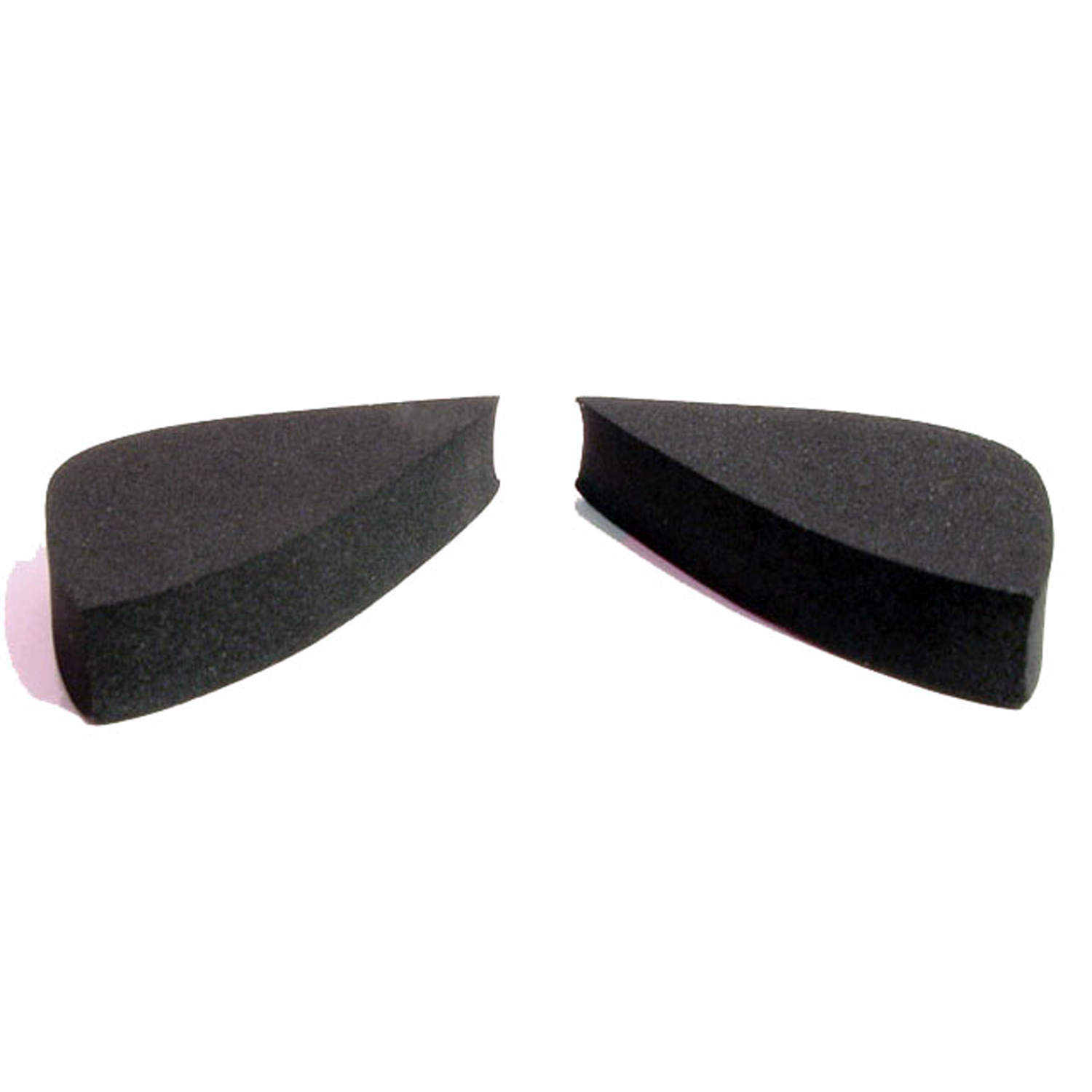 1975 Daimler LIMO Rear Door Hinge Seal. Pair-ALP 23Rear Door Hinge Seal. Pair
Why Choose Metro?
For over 100 years, Metro Moulded Parts has been the pinnacle of quality in classic car restoration parts. Our commitment to precision and authenticity in every component ensures a perfect fit and an OEM-level appearance.
- Expert Craftsmanship & Quality: Each part is a testament to our dedication to reliability and perfection, crafted from original designs and thoroughly tested.
- Advanced Technology: We use cutting-edge techniques to create flawless, long-lasting parts that surpass others in performance.
- SuperSoft Sponge – The Ultimate Door Seal: Not only are our door seals 30% softer than competitors', but they're also guaranteed to never leak. They effectively reduce wind and road noise, enhancing your classic car's comfort and driving experience.
- Proudly American: Our parts are a product of American craftsmanship, made in the USA with a spirit of excellence and heritage.
- Unrivaled Warranty: We back our products with a 30-year industry-leading warranty, a testament to our confidence in their quality.
Join us in preserving the legacy of classic cars with parts that are crafted for perfection, not just made.