
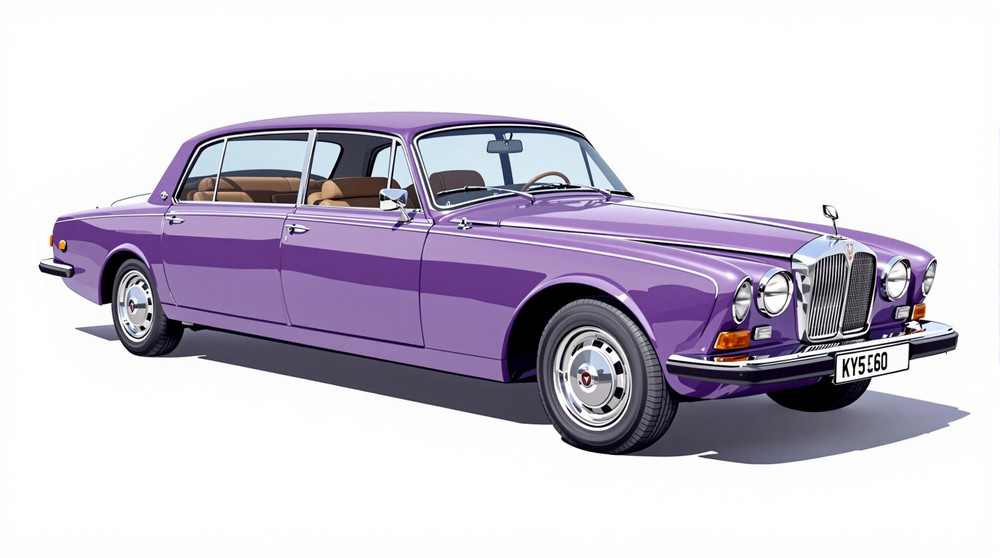
Image of 1976 Daimler Limo, Note: These illustrations use artistic license and may differ from actual historical models.
Performance Metrics
Fundamental Metrics
Emotional Appeal
MMP Rating
| Engine Specifications | |
|---|---|
| Engine: | 4.2L XK I6 |
| Displacement: | 4.2L |
| Horsepower: | 140-150 HP |
| Torque: | 210-220 lb-ft |
| Compression Ratio: | 8.0:1 |
| Ignition System: | Electronic ignition |
| Cooling System: | Liquid-cooled |
| Performance Specifications | |
| 0-60 Time: | 13-15 seconds |
| 1/4 Mile Time: | 19-21 seconds |
| Top Speed: | 100-105 mph |
| Transmission and Drive | |
| Drive Type: | Rear-wheel drive |
| Transmission Type: | 3-speed automatic |
| Fuel and Efficiency | |
| Fuel System Type: | Carburetor |
| MPG: | 10-12 mpg |
| Dimensions and Brakes | |
| Brakes: | Disc brakes |
| Wheelbase: | 120 inches |
| Weight: | 4,500 lbs |
Note: Specifications for classic cars are given to the best of our ability, considering the limited and variant data available.
1976 Daimler DS420 Limousine: A British Grand Tourer Built for Six
Nearly 19 feet long and finished with the quiet formality of a state occasion, the 1976 Daimler DS420 limousine was built to carry important people without ever appearing to hurry. The name “Daimler limo” usually refers to this model, a hand-finished British flagship produced by Daimler, then part of Jaguar, with bodywork completed by coachbuilder Vanden Plas.
The DS420 debuted in 1968 and remained in production until 1992, an unusually long run for a specialist luxury car. Its combination of traditional craftsmanship, Jaguar engineering and limousine-scale comfort made it a familiar sight at royal households, embassies, hotels and funeral services. One remarkable measure of its staying power: the model continued to serve official and ceremonial roles decades after its launch.
Formal Styling and Coachbuilt Craftsmanship
The DS420’s proportions were the first thing anyone noticed. Its long bonnet, upright grille, tall roofline and extended passenger compartment gave it an unmistakably ceremonial presence. At roughly 19 feet long, it was imposing without relying on flamboyant styling. The effect was more country-house elegance than show-business excess, with restrained chrome and carefully balanced lines lending the car its dignified look.
Vanden Plas built and trimmed the limousine body, giving the interior a level of finish associated with traditional coachbuilding. The rear compartment was the star: a broad, comfortable bench seat, generous legroom and a partition separating passengers from the driver. Depending on specification, the cabin could include facing occasional seats, rich carpeting, wood trim, reading lights, privacy glass and a drinks cabinet. Leather and high-quality cloth upholstery were both seen, with materials and fittings varying by order.
Up front, the driver had a more practical, Jaguar-derived cockpit. The DS420 was designed to be chauffeur-operated, but its power steering and automatic transmission made a very large car manageable in town. Features such as air conditioning, electric windows and upgraded audio equipment could be specified, though equipment varied among individual cars and markets.
Black was a natural choice for official, hotel and funeral work, while dark blue, maroon, green and silver also suited the car’s formal character. Many DS420s were ordered in understated colors, although private owners could choose more personalized finishes. The best-known body style was the standard limousine. Landaulette versions, with a folding roof over the rear passenger area, added extra ceremony, while specialist firms also converted cars for funeral and other professional use.
Engineering Behind the Long Wheelbase
Under the long bonnet sits Jaguar’s familiar 4.2-litre XK inline-six, a smooth, durable engine with a deep history in the company’s saloons and sports cars. In the DS420 it was paired with a three-speed automatic transmission. The powertrain was selected less for dramatic acceleration than for quiet, dependable progress with a full complement of passengers.
Power steering and power-assisted brakes were important practical features in a car of this size. The suspension was tuned for a composed ride rather than sharp cornering, and the limousine’s substantial weight helped it settle over the road. Buyers could also order equipment such as air conditioning, a welcome addition in a spacious cabin with a large glass area.
A Royal and Diplomatic Mainstay
The DS420 occupied a particular niche in British motoring. It offered the presence and passenger space of a purpose-built limousine while using established Jaguar mechanical components. That combination made it more supportable than an entirely bespoke design and gave it a distinctly British alternative to grand European luxury cars.
Its long production life is part of its significance. From the late 1960s into the early 1990s, the DS420 served royal households, government departments, diplomatic missions and commercial operators. It became especially associated with official transport and ceremonial duties, where its formal styling and spacious rear cabin mattered more than outright speed. Its lasting influence is less about introducing a single new technology and more about showing how proven mass-produced engineering could underpin a refined, coachbuilt limousine.
Performance: Smooth Rather Than Swift
Performance figures depend on the car’s specification, condition and the source quoting them. A healthy 4.2-litre DS420 is generally credited with a top speed around 105 to 110 mph and a 0-to-60 mph time in the neighborhood of 13 to 15 seconds. Those are respectable figures for a long, heavy limousine, but acceleration was never its defining talent.
The engine delivers its power with a steady six-cylinder hum, and the automatic transmission favors smooth, unhurried shifts. From the driver’s seat, the bonnet seems to go on forever, while the high seating position and large turning circle make careful maneuvering essential. Power steering reduces the effort, but narrow streets and tight car parks still demand patience.
On a bumpy road, the DS420’s soft suspension and long wheelbase help it glide over imperfections, especially for rear passengers. On a winding lane, its size and weight become more apparent: it is best driven with measured inputs, not hustled like a sports saloon. In crosswinds or at speed, the driver needs to stay alert to the car’s broad, substantial body. The ideal experience is a quiet, relaxed cruise, with the engine turning smoothly and passengers enjoying the ride.
Living with a Daimler DS420
Most DS420s were not bought as everyday family transport. They worked as chauffeur cars, wedding vehicles, hotel limousines, funeral cars and official vehicles. Today, they are more likely to appear at weddings, classic-car gatherings, film and television work, or as prized pieces in a private collection.
The Jaguar-derived engine and transmission are familiar to classic-car specialists, and many mechanical parts can be sourced through established Jaguar and Daimler networks. That does not make ownership effortless. The car’s size complicates storage and workshop access, while its bespoke body, interior trim, electrical equipment and specialist fittings can be costly to restore. Rust, neglected cooling systems, worn suspension and tired automatic transmissions all deserve close inspection before purchase.
A mechanically sound example can be straightforward for a specialist to maintain, but this is not an ideal first project for an owner expecting inexpensive, do-it-yourself repairs. Body and trim restoration can quickly exceed the cost of routine servicing, so a detailed inspection and a realistic maintenance budget are essential.
Little-Known DS420 Facts
The DS420’s production run lasted about 24 years, from 1968 to 1992. Approximately 4,116 examples were built across the model’s run, including different body configurations and specialist conversions. Exact production figures for the 1976 model year are not readily established, so it is safer to think of that year as one part of a relatively small overall production total rather than assign it a precise count.
The model’s royal and official associations are central to its reputation. Daimler limousines were used for formal transport by royal and diplomatic clients, and DS420s became a familiar sight outside hotels, churches and ceremonial venues. Their working lives could be surprisingly long: many remained in service well after newer luxury cars had arrived.
Common criticisms are easy to understand. The DS420 is enormous, thirsty by modern standards and slow to accelerate for its size. It can also be expensive to restore properly, particularly when specialist bodywork or interior components are involved. Its appeal lies elsewhere: passenger comfort, dignified presence and the experience of travelling in a traditionally built British limousine.
Collector Values and Availability
Values vary widely with condition, history, body style and the quality of any restoration. As a broad current-market estimate, a usable but imperfect DS420 might sell for around US$15,000 to US$30,000. A well-presented, roadworthy example could fall in the US$30,000 to US$60,000 range, while an exceptional restoration or especially desirable landaulette may ask considerably more. These are guide ranges, not fixed valuations, and location can make a substantial difference.
DS420s are uncommon compared with ordinary classic saloons, but they are not unobtainable. Specialist dealers and classic-car auction houses bring them to market periodically. Prices have generally been supported by the model’s visual impact and ceremonial appeal, though the cost of restoration and a relatively narrow buyer pool can limit values. In other words, a well-maintained car is likely to be easier to sell than a neglected project, but the DS420 is best bought for its character rather than as a guaranteed investment.
Why the 1976 Daimler Still Matters
The 1976 Daimler DS420 brought together a proven Jaguar powertrain, Vanden Plas craftsmanship and the spacious dignity expected of a chauffeur-driven limousine. It was not built to win races or conquer city parking. It was built to make a journey feel like an occasion.
With its long, formal lines and unmistakably smooth six-cylinder character, the DS420 remains one of the defining British limousines of its era. It is a grand reminder that automotive prestige is not always measured in speed. Sometimes it is measured in the calm, confident arrival of a car that seems to own the whole street.
1976 Daimler Limo Catalog of Parts
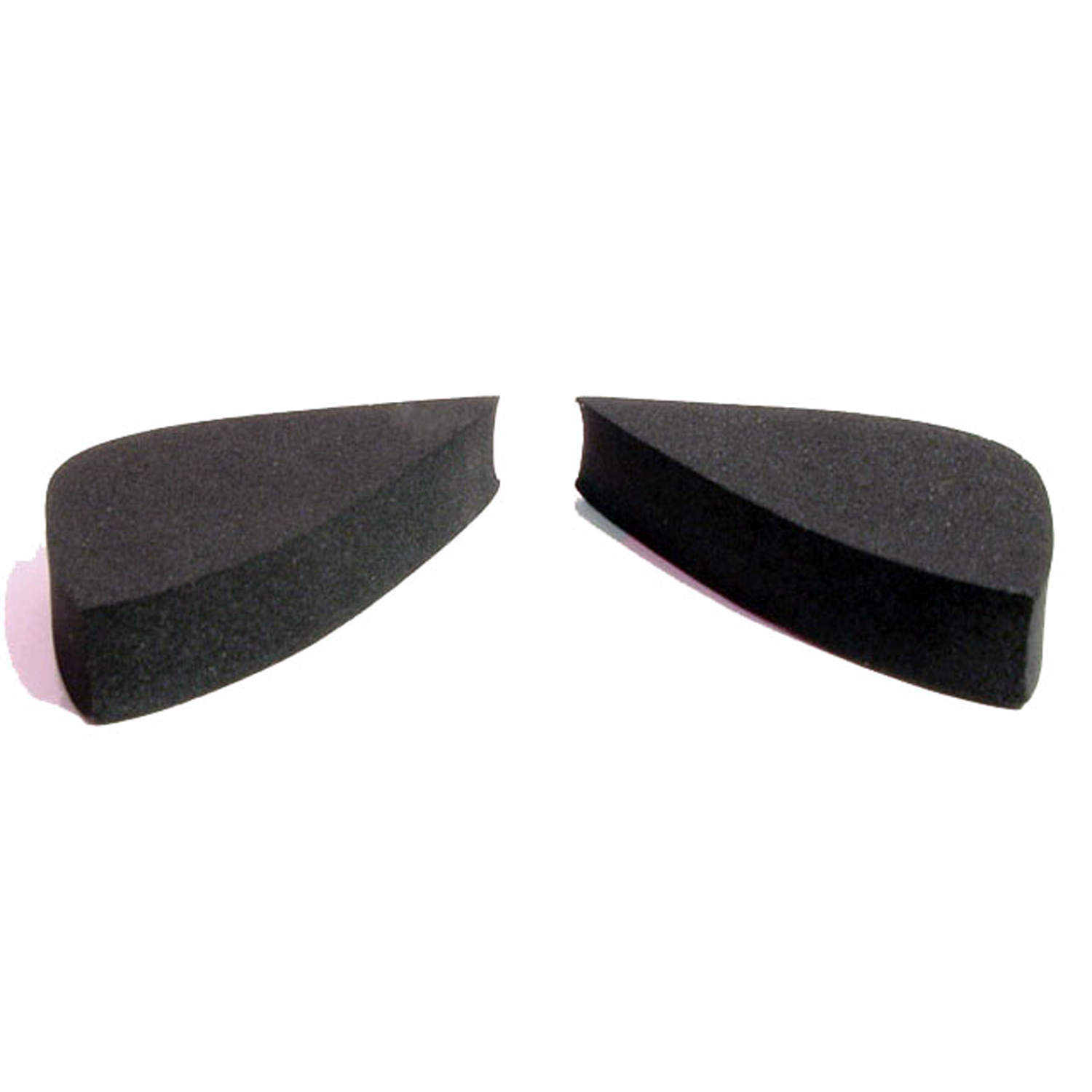 1976 Daimler LIMO Rear Door Hinge Seal. Pair-ALP 23Rear Door Hinge Seal. Pair
Why Choose Metro?
For over 100 years, Metro Moulded Parts has been the pinnacle of quality in classic car restoration parts. Our commitment to precision and authenticity in every component ensures a perfect fit and an OEM-level appearance.
- Expert Craftsmanship & Quality: Each part is a testament to our dedication to reliability and perfection, crafted from original designs and thoroughly tested.
- Advanced Technology: We use cutting-edge techniques to create flawless, long-lasting parts that surpass others in performance.
- SuperSoft Sponge – The Ultimate Door Seal: Not only are our door seals 30% softer than competitors', but they're also guaranteed to never leak. They effectively reduce wind and road noise, enhancing your classic car's comfort and driving experience.
- Proudly American: Our parts are a product of American craftsmanship, made in the USA with a spirit of excellence and heritage.
- Unrivaled Warranty: We back our products with a 30-year industry-leading warranty, a testament to our confidence in their quality.
Join us in preserving the legacy of classic cars with parts that are crafted for perfection, not just made.